
29 October, 2026 | Kolkata
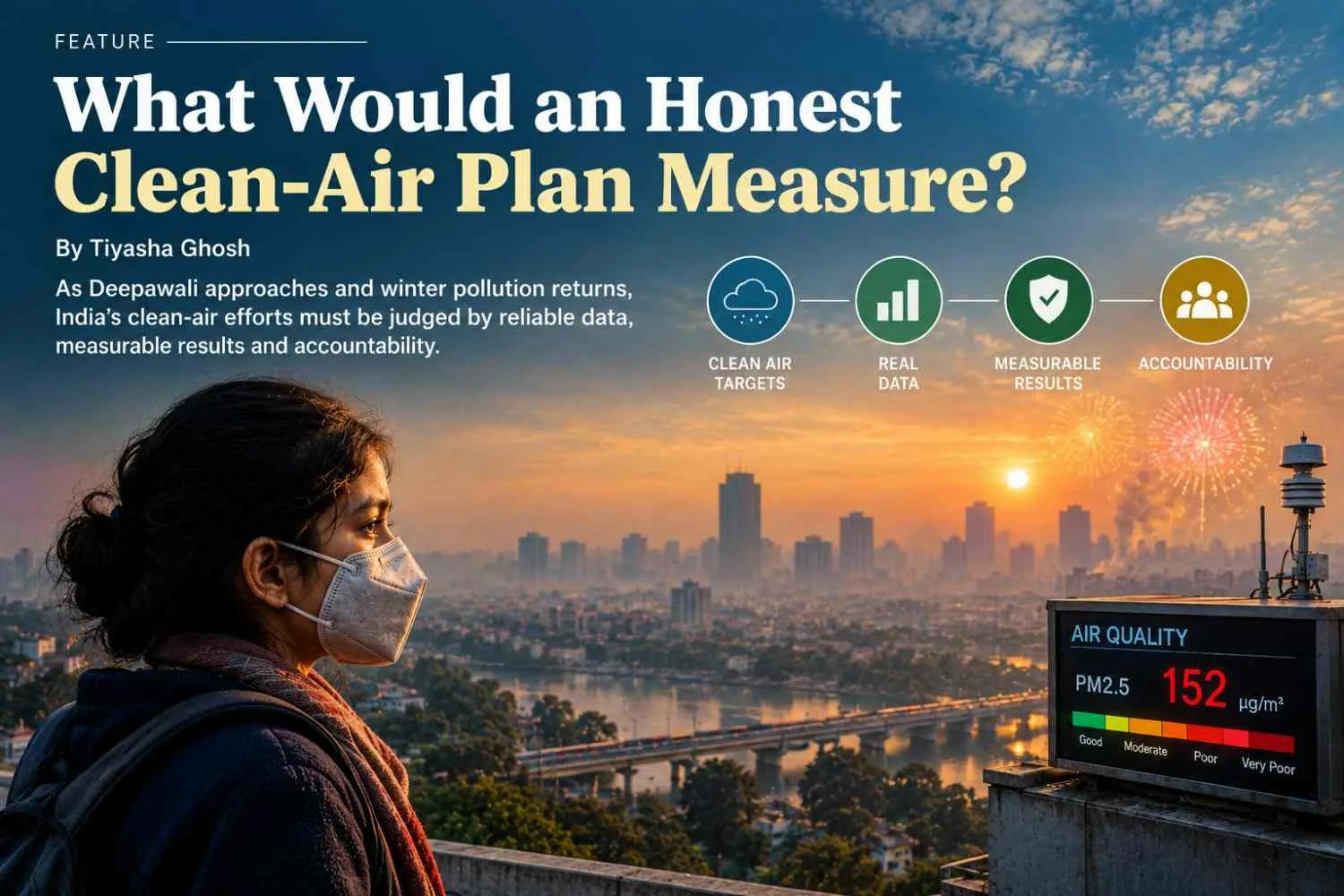
| As Deepawali approaches and winter pollution returns, India’s clean-air efforts must be judged by reliable data, measurable results and accountability. |
Summary India has reported progress under its National Clean Air Programme, but lower pollution levels do not automatically mean that cities have achieved safe air. Reliable monitoring, evidence of effective action and clear responsibility are essential to judge whether clean-air plans are working. |
Are Clean-Air Plans Reducing Pollution - or Mainly Reporting Progress?
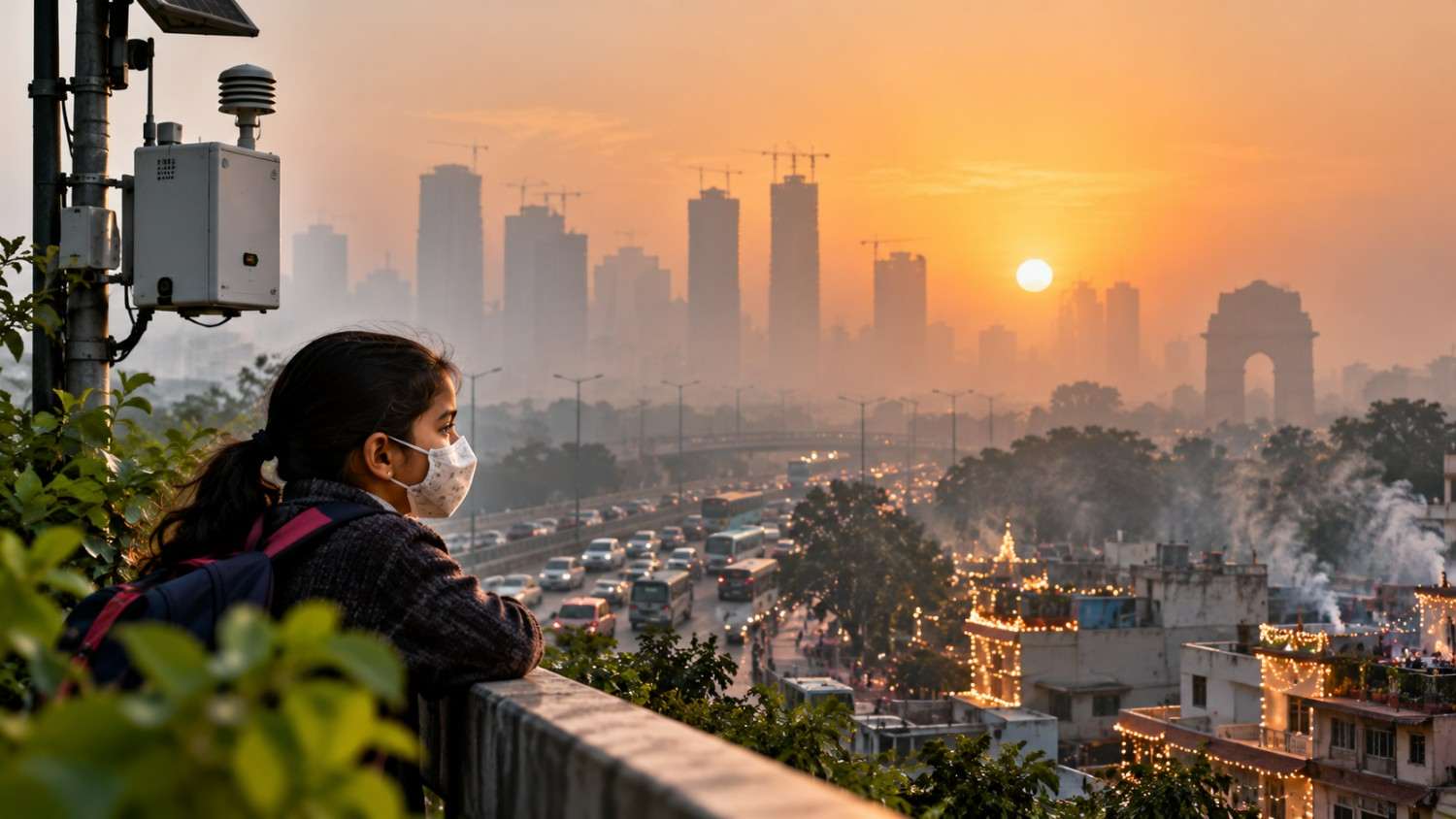
Every winter, polluted air becomes a familiar concern for millions of people across India. Families worry about breathing difficulties, children playing outdoors, elderly relatives and the health risks of travelling through polluted streets. As Deepawali approaches and seasonal conditions begin to change, these concerns become even more urgent.
Governments announce new measures, cities report improvements and funds are allocated to tackle pollution. But one important question remains: how can we tell whether these efforts are actually making the air safer to breathe?
An effective clean-air plan must do more than announce targets or report reductions. It must demonstrate what has improved, which measures have made a difference and who is responsible when progress falls short.
1. Is the Data Reliable Enough to Show Real Progress?
The first test is whether air quality is being measured consistently and accurately.
In September 2026, the Union government reported that 108 of the 130 cities covered by the National Clean Air Programme (NCAP) recorded lower PM10 levels in the financial year 2025–26 than in the 2017–18 baseline year. PM10 refers to airborne particles small enough to enter the respiratory system. The government also reported that 14 cities had met the prescribed national PM10 standard.
These figures indicate progress in several cities. However, lower pollution levels do not necessarily mean that the air has become safe to breathe.
A January 2026 assessment by the Centre for Research on Energy and Clean Air (CREA), covering 100 NCAP cities with sufficient data, found that 77 recorded lower PM10 levels than their respective baseline levels. Of these 77 cities, 68 still exceeded the national standard.
The two assessments cover different reporting periods and city samples, so their figures should not be treated as a direct comparison. Together, however, they highlight an important distinction: improvement and clean air are not the same thing.
An honest assessment must report both. It should also identify gaps in monitoring, explain how the figures were calculated and make the underlying data accessible to the public.
2. Are the Measures Producing Measurable Results?
The second test is whether pollution-control measures address the sources responsible for poor air quality.
Road dust, vehicle emissions, industrial activity, waste burning and household fuels can all contribute to air pollution. Their relative importance varies between locations. A city cannot control pollution effectively without understanding where its emissions originate and which sources contribute most to the problem.
CREA’s January 2026 assessment reported that a substantial share of NCAP funding had been directed towards road-dust management, while comparatively smaller shares went towards transport, industrial pollution, household fuel use and public awareness.
Road cleaning and dust control can be necessary, but spending alone does not demonstrate success. Authorities must show whether these interventions reduced pollution, how much they cost and whether the improvements lasted.
For example, if a city reports lower particulate pollution, it should explain which measures were introduced, when they were implemented and how their impact was evaluated. Independent studies and source-apportionment research can help determine whether the reported improvement is linked to a particular intervention or whether other factors may have contributed.
Public money should therefore be assessed through measurable outcomes, not simply by how much has been spent.
3. Who Is Accountable When Pollution Crosses City and State Boundaries?
Air pollution does not stop at administrative borders. Emissions from one region can affect the air people breathe elsewhere, making coordination between states and neighbouring regions essential.
A study published by the Centre for Study of Science, Technology and Policy (CSTEP) in August 2026 examined the movement of pollution across regions of the Indo-Gangetic Plain. Its findings estimated that around 39% of annual PM2.5 pollution in the National Capital Region came from other regions of India.
PM2.5 consists of extremely fine particles that can penetrate deep into the lungs. The findings underline why a city cannot address the problem through local action alone.
Effective regional cooperation requires clear responsibilities for governments and relevant sectors, shared monitoring systems and coordinated measures to reduce emissions. Authorities must also be able to identify delays, track commitments and hold responsible agencies accountable for their performance.
The issue is also one of public fairness. Outdoor workers, daily commuters and people living near busy roads or industrial areas may face repeated exposure to polluted air. They need practical protection and timely public-health guidance, alongside sustained action on transport, industry, waste management and other pollution sources.
What Should an Honest Clean-Air Plan Look Like?
A credible clean-air plan should answer three basic questions: Is the data reliable? Are the measures reducing pollution? And can the responsible authorities demonstrate what they have achieved?
The answers should be supported by transparent monitoring, independent evaluation, clear spending records and regular public reporting. Where evidence is incomplete, that limitation should be acknowledged rather than obscured by a headline reduction.
Clean air cannot be achieved through a single announcement or a seasonal campaign. It requires sustained action, coordination across regions and a willingness to revise measures that are not producing the intended results.
As winter approaches, the real measure of progress is not how many promises are made or how much money is spent. It is whether pollution levels are moving towards safe standards, whether people are better protected and whether governments can demonstrate, with evidence, what their actions have achieved.
An honest clean-air plan must make progress measurable, responsibility visible and results open to public scrutiny.
Sources:
- Press Information Bureau (PIB) — India’s Path to Blue Skies, 7 September 2026.
https://www.pib.gov.in/PressNoteDetails.aspx?ModuleId=3&NoteId=159871&id=159871&lang=2®=48 - Centre for Research on Energy and Clean Air (CREA) — Tracing the Hazy Air 2026: Progress Report on NCAP, 9 January 2026.
https://energyandcleanair.org/publication/2026-progress-report-on-national-clean-air-programme/ - Centre for Study of Science, Technology and Policy (CSTEP) — Beyond State Boundaries: Quantifying Interstate Air Pollution Transport and Sectoral Solutions in the Indo-Gangetic Plain, 19 August 2026.
https://cstep.in/publication/beyond-state-boundaries-quantifying-interstate-air-pollution-transport-and-sectoral-solutions-in-the-indo-gangetic-plain/






Add a Comment