
Introduction
Along the muddy fringes of estuaries, salt pans, and mangrove edges across the world grows a modest, fleshy-leaved little plant that few passers-by would look at twice. Suaeda maritima, commonly called sea-blite, annual seablite or herbaceous seep weed, is exactly this kind of unassuming survivor. It thrives where almost nothing else can: in soils so saline that ordinary crops wilt and die within days. Yet this same salt-tolerance is what has made the plant valuable for thousands of years to coastal communities, who have eaten its tender shoots, used its ash and ground leaves as a savoury seasoning, and turned to its extracts for a surprising range of home remedies.
In recent decades, modern phytochemical and pharmacological research has begun to catch up with this traditional wisdom, confirming that Suaeda maritima contains an unusually rich mixture of antioxidants, flavonoids, vitamins and minerals. At the same time, food scientists in several countries have started developing the plant into a commercial “green salt” or low-sodium seasoning powder, offering an alternative to ordinary table salt for people who need to watch their sodium intake. This article looks at the botany and characteristics of Suaeda maritima, reviews its herbal and medicinal benefits, explains how green salt is prepared from the plant and discusses why this preparation matters for human health.
Botanical Characteristics
Taxonomy and Names
Suaeda maritima (L.) Dumort. belongs to the family Amaranthaceae, in the subfamily Suaedoideae, within the order Caryophyllales. It was formerly often classified in the older family Chenopodiaceae, which modern taxonomy now treats as part of Amaranthaceae. The plant carries a long list of regional common names, reflecting how widely it is recognised along coastlines: sea-blite, annual seablite, herbaceous seepweed and white sea-blite in English; and in parts of South Asia, names such as umari keerai in Tamil, referring to its use as a leafy pot-herb.
Morphology
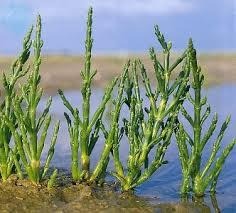
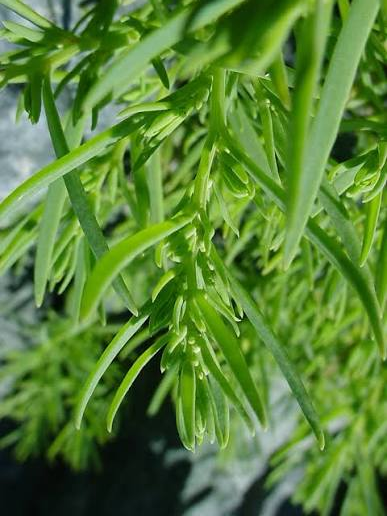
Suaeda maritima is typically an annual herb, though some varieties behave as short-lived perennials in milder climates. It usually grows to a modest height of around 15 to 35 centimetres, occasionally reaching closer to a metre where conditions are especially favourable, forming low, spreading, much-branched clumps. Its most distinctive feature is its foliage: narrow, cylindrical to slightly flattened, fleshy leaves that store water and dilute the salt the plant absorbs from its surroundings. This succulence gives the leaves a glossy, almost waxy appearance, and the whole plant often takes on shades of yellow-green, blue-green, or, later in the season, reddish-purple as anthocyanin pigments build up under stress.
The flowers are small, inconspicuous, and greenish, lacking showy petals; they are wind-pollinated and self-fertile, appearing from mid-summer into autumn depending on latitude. Seeds are tiny, dark, and glossy, and ripen a little after flowering. Because the plant completes its life cycle within a single growing season, it produces large numbers of seeds that can persist in the soil seed bank of salt marshes for later germination.
Habitat and Distribution
As a true halophyte, Suaeda maritima is specially adapted to grow in saline and even markedly alkaline soils, including tidal mudflats, salt marshes, the upper edges of mangrove stands, salt pans, and disturbed ground near salted roads. It prefers light, sandy, or loamy soils that stay consistently moist, and it cannot tolerate shade, so it is almost always found in open, sun-exposed coastal ground. The species has an extremely broad natural distribution, occurring along coastlines of Europe, Africa, Asia, and the Americas, which has made it a useful biological indicator of saline and alkaline soils in ecological surveys.
Physiologically, the plant copes with high salinity through several linked strategies: succulence, which dilutes absorbed salts within enlarged leaf cells; selective ion transport, which channels excess sodium into vacuoles away from sensitive cell machinery; and the accumulation of compatible solutes such as glycine betaine, which help the plant maintain internal water balance under osmotic stress. Molecular studies on Suaeda species have identified numerous salt-responsive genes, reflecting just how finely tuned this plant is to its harsh environment.
Phytochemical Composition
Chemical analyses of Suaeda maritima have revealed a notably rich and varied composition. The plant contains dietary fibre, protein, carbohydrates, and a modest amount of fat, alongside a wide range of bioactive secondary metabolites, including alkaloids, glycosides, flavonoids, sterols, phenolic compounds, and tannins. Pigments such as beta-carotene contribute to its nutritional value, while its vitamin content is particularly striking: researchers have measured very high levels of vitamin E and appreciable vitamin C, both well above what is typically found in common leafy vegetables.
The mineral profile is equally impressive. Suaeda leaves are reported to contain useful amounts of calcium, phosphorus, iron, copper, zinc, manganese, and selenium, in addition to the sodium and potassium one would expect from a salt-accumulating plant. Its amino acid profile includes all of the essential amino acids alongside a range of non-essential ones, and its lipid fraction is dominated by unsaturated fatty acids, with linoleic acid, an omega-6 polyunsaturated fat, making up the largest share. Studies using gas chromatography-mass spectrometry on seablite extracts have identified compounds such as phytol, myo-inositol, and several unsaturated fatty acid derivatives as major constituents, alongside substantial polysaccharide and flavonoid content in related Suaeda species.
Herbal and Medicinal Benefits
Suaeda maritima has a long history of use in traditional and folk medicine among coastal communities, and this has been progressively validated by laboratory research over the past two decades. The plant's pharmacological potential is generally attributed to its dense mixture of phenolics, flavonoids, tannins, and vitamins, which together give its extracts strong antioxidant capacity and a range of downstream biological effects.
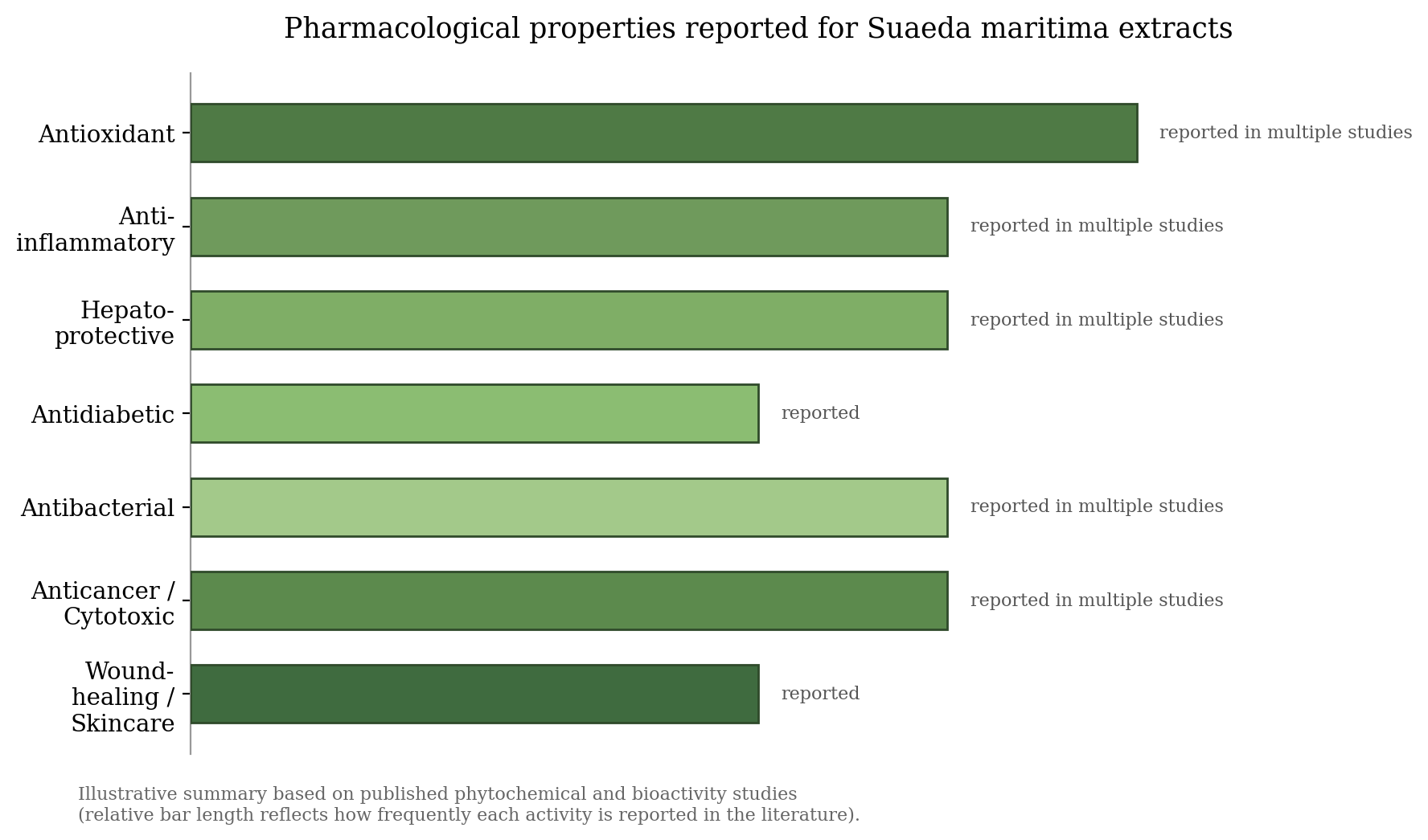
Pharmacological properties reported for Suaeda maritima extracts in published phytochemical and bioactivity studies.
Antioxidant Activity
Extracts of Suaeda maritima consistently show the ability to neutralise free radicals, an effect closely tied to their high phenolic and flavonoid content. Root extracts in particular have shown strong radical-scavenging activity and the ability to inhibit lipid peroxidation, a process that damages cell membranes and is implicated in ageing and many chronic diseases. This antioxidant capacity underlies many of the plant's other reported benefits, since oxidative stress is a common thread linking inflammation, liver damage, and abnormal cell growth.
Hepato-protective Effects
Several studies describe hepato-protective activity in Suaeda sp. extracts, meaning they help defend liver tissue against damage from toxins or oxidative stress. This aligns with the traditional use of related seepweed species as a liver tonic in some folk medicine systems, and is thought to result from the combined antioxidant and anti-inflammatory action of the plant's phenolic compounds.
Anticancer and Cytotoxic Properties
Laboratory investigations into crude extracts of Suaeda sp., prepared at different polarities, have reported selective cytotoxic effects against cancer cell lines alongside antioxidant activity, suggesting the plant may hold promise as a source of natural anticancer leads. While such findings are encouraging, they come from cell-based and extract-level studies rather than human clinical trials, so they should be regarded as a foundation for further research rather than a proven treatment.
Antidiabetic and Antibacterial Potential
Suaeda maritima has also been investigated for antidiabetic properties, with some studies suggesting its extracts can help moderate blood sugar responses, complementing broader reports across the wider Suaeda genus of reduced blood cholesterol and lipid levels with regular consumption. Alongside this, antibacterial activity has been documented against a range of microorganisms, hinting at potential uses in natural preservation and topical antimicrobial applications.
Skincare and Wound Healing
A notable line of research from Thailand examined the root extract of Suaeda maritima specifically for skincare applications. That study found the extract to be rich in tannins and triterpenes, with substantial total phenolic and flavonoid content. In laboratory tests, the extract inhibited both free-radical activity and lipid peroxidation, and when applied to human skin fibroblast cultures, it increased cell proliferation and narrowed the gap in a simulated wound, indicating genuine wound-healing potential. This positions Suaeda maritima root extract as a promising ingredient for natural anti-ageing and skin-repair cosmetic formulations.
Anti-inflammatory and Antiviral Reports
Broader reviews of halophyte plants along the Black Sea coast, examining both Salicornia europaea and Suaeda maritima, describe additional biological activities including anti-inflammatory, antidepressant, antimicrobial, and antiviral effects, alongside the antioxidant, hepatoprotective, and anticancer properties already discussed. Together, these findings support the idea that halophytes such as Suaeda maritima are a promising, still under-explored source of bioactive compounds for functional foods, dietary supplements, and novel herbal preparations.
Culinary Uses and Nutritional Role
Long before scientists began analysing its phytochemistry, coastal communities were already eating Suaeda maritima as a leaf vegetable. Its young leaves and tender shoots have a naturally salty, slightly succulent flavour, and are traditionally eaten raw in small quantities within salads, or cooked and mixed with other vegetables to balance out the saltiness. In some regions, the young shoots are pickled in vinegar and served as a relish, while the seeds themselves are edible, raw or cooked, though less commonly used than the leaves and shoots.
Because the plant absorbs and concentrates minerals from its saline habitat, it functions almost like a living seasoning: a small amount of chopped seablite can replace part of the added salt in a dish while also contributing fibre, vitamins and antioxidant compounds that ordinary refined salt cannot provide. This dual role, as both food and seasoning, is the traditional root from which the modern idea of “green salt” has grown.
Green Salt: Preparation from Suaeda maritima
“Green salt” is the name given to a low-sodium, mineral-rich seasoning powder made by drying and grinding the leaves (and sometimes the whole young shoots) of salt-accumulating plants. The best-known commercial green salt is made from Salicornia, a related succulent halophyte also known as glasswort or sea asparagus, but the same basic method applies to Suaeda and several food-science studies have specifically explored dried, powdered seablite as a partial substitute for ordinary salt in seasoning blends, marinades and even bread. One patented process describes producing a nutrient-rich herbal salt from halophytic plants of the Salicornia and Suaeda genera by growing them on saline soils, harvesting and solar-drying the biomass, and then charring and controlled incineration to concentrate the mineral content, though this industrial route is only one of several ways the plant can be processed.
For household or small-scale artisanal preparation, the process is considerably simpler and closer to how other dried herbal seasonings are made. The steps below describe a typical leaf-powder method suited to home kitchens or small food enterprises.
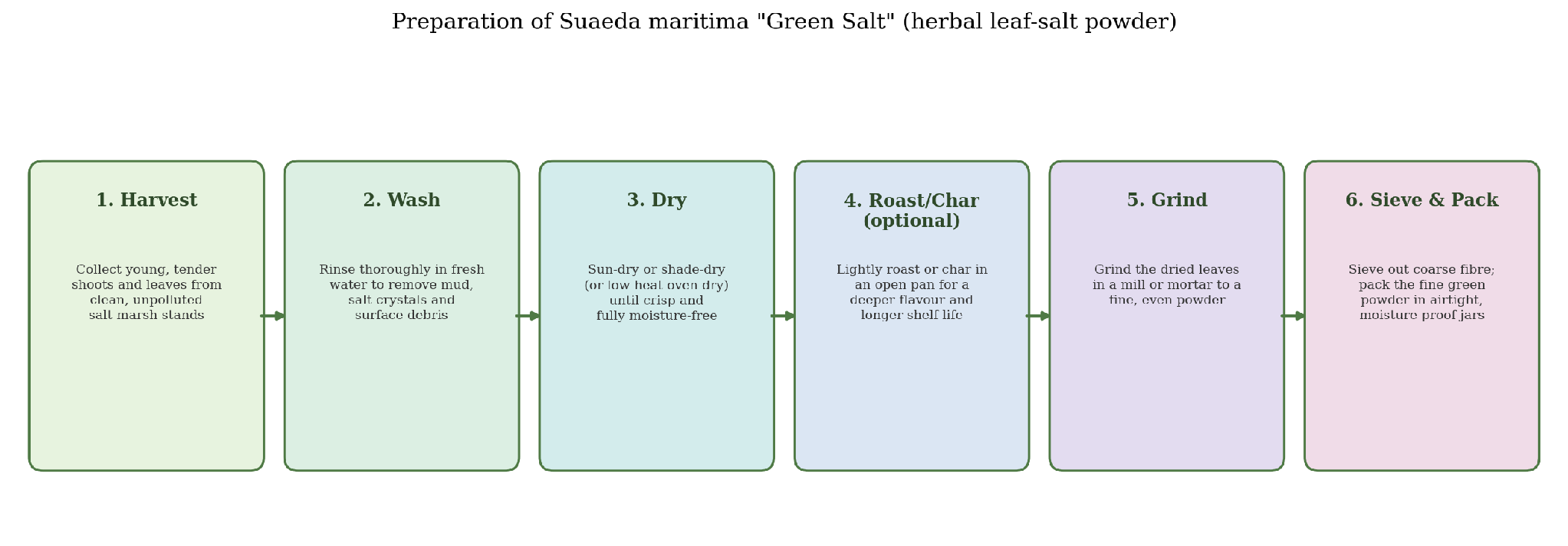
General workflow for preparing Suaeda maritima leaf-powder “green salt” at a household or small-batch scale.
Step-by-Step Preparation
Harvesting: Young, tender shoots and leaves are hand-picked from clean, unpolluted salt-marsh or coastal stands, ideally before flowering, when the leaves are most succulent and least fibrous.
Washing: The harvested material is rinsed thoroughly in fresh water to remove mud, sand, loose surface salt crystals, and any debris picked up during harvesting.
Drying: The washed leaves are spread thinly and dried, either under the sun, in a shaded, well-ventilated space, or in a low-temperature dehydrator or oven, until they become crisp and fully free of moisture. Careful drying preserves colour and nutrient content better than high-heat methods.
Roasting or charring (optional): Some traditional preparations lightly roast or char the dried material in an open pan before grinding, which deepens the flavour, darkens the colour slightly, and can extend shelf life; this step is optional and varies by regional practice.
Grinding: The fully dried leaves are ground, using a mill, blender, or traditional mortar and pestle, into a fine, even, deep-green powder.
Sieving and packing: The ground powder is sieved to remove any coarse fibre or stem fragments, then packed into airtight, moisture-proof containers to protect it from humidity and preserve its colour and aroma.
The resulting green salt is a fine, vividly coloured powder that carries a naturally salty, slightly earthy, umami-like flavour. Because it is made from the whole leaf rather than purified sodium chloride, it retains dietary fibre, plant pigments, vitamins, and the mineral spread naturally present in the plant, distinguishing it clearly from refined table salt both in composition and in taste.
Health Significance and Benefits of Green Salt
The growing interest in Suaeda-based and Salicornia-based green salts is closely tied to global concern about excessive dietary sodium. Ordinary table salt is almost entirely sodium chloride, and most guidance on healthy eating recommends keeping total sodium intake within a moderate daily limit, since habitually high intake is linked to elevated blood pressure and greater long-term cardiovascular risk. Green salt made from halophyte leaves offers a way to bring a genuinely salty taste to food while reducing the proportion of the seasoning that is pure sodium chloride, since a meaningful part of its weight is fibre, plant minerals, and other compounds rather than sodium alone.
Beyond sodium reduction, several specific health-related points are worth highlighting.
Lower relative sodium content: Because green salt is a whole-leaf powder rather than pure salt, gram for gram it typically delivers less sodium than table salt, helping people moderate intake without giving up a salty flavour entirely.
Broader mineral profile: Alongside sodium and potassium, the powder carries calcium, magnesium, iron, zinc, and other trace minerals drawn from the plant's saline habitat, offering a more rounded mineral contribution than refined salt.
Antioxidant and vitamin content: The retained flavonoids, phenolics, and vitamins C and E contribute antioxidant activity that ordinary salt cannot provide, aligning with the broader herbal benefits described earlier in this article.
Dietary fibre: Because the whole leaf is dried and ground rather than extracted, green salt retains plant fibre, adding a nutritional dimension entirely absent from mineral salt.
Reduced-sodium food product development: Food scientists have explored dried seablite powder as an ingredient in low-sodium fish marinades, seasoning blends, and even sodium-reduced bread, suggesting practical applications for people managing blood pressure or kidney-related dietary restrictions under medical guidance.
It is worth noting that green salt is a seasoning and dietary supplement, not a medicine, and individuals with specific health conditions, particularly kidney disease or conditions requiring strict mineral or sodium control, should discuss any substantial dietary change, including switching seasoning types, with a qualified healthcare provider or dietitian before making adjustments.
Ecological and Economic Significance
Beyond its direct culinary and medicinal value, Suaeda maritima plays a meaningful ecological role. As a pioneer halophyte, it stabilises bare saline mudflats, helping other salt-marsh vegetation establish over time, and its dense stands provide shelter and forage habitat for invertebrates and shorebirds along many coastlines. Its reliable presence on saline and alkaline soils also makes it a useful bio-indicator, helping researchers and land managers assess soil salinity levels without needing extensive chemical testing.
Economically, halophyte crops such as Suaeda and Salicornia are attracting growing interest as “saline agriculture” options: crops that can be cultivated using seawater or brackish water on coastal land unsuitable for conventional farming. This offers a route to generating income and food security in coastal and arid regions without competing for scarce fresh water, while simultaneously producing a genuinely novel, mineral-rich food and seasoning ingredient. Small-scale green salt production, in particular, has been highlighted as a way to create livelihoods for coastal communities, including women-led artisanal enterprises in some regions, while making productive use of land that would otherwise remain marginal.
Conclusion
Suaeda maritima is a striking example of how an unassuming coastal weed can turn out to be both botanically remarkable and practically valuable. Its succulent, salt-tolerant physiology allows it to thrive where few other plants can survive, and this same adaptation has given rise to a leaf chemistry unusually rich in antioxidants, vitamins, and minerals. Traditional use of the plant as a leafy vegetable and folk remedy is now supported by a growing body of research pointing to genuine antioxidant, hepatoprotective, antibacterial, antidiabetic, anticancer, and skin-healing properties. Its transformation into “green salt,” a dried, ground leaf powder used as a lower-sodium, mineral-rich seasoning, brings these benefits directly into the kitchen, offering a natural, plant-based alternative for people looking to season their food more mindfully. As interest in saline agriculture and functional, plant-derived foods continues to grow, Suaeda maritima seems likely to move further from the margins of the salt marsh into the modern pantry.
Select References
Sahu, B.B. & Shaw, B.P. (2009). Isolation, identification and expression analysis of salt-induced genes in Suaeda maritima. BMC Plant Biology.
Peddi, P. et al. (2021). Green synthesis, characterization, antioxidant, antibacterial, and photocatalytic activity of Suaeda maritima aqueous extract-mediated copper oxide nanoparticles. Journal of Genetic Engineering and Biotechnology.
Various authors (2022). Evaluation of cytotoxic and antioxidant activities of different polarities extracts of Suaeda maritima. Journal of King Saud University – Science.
Various authors (2024/2025). Root of Seablite (Suaeda maritima), the Medicinal Halophyte for Skincare Application. PMC.
Various authors (2024). Salicornia europaea L. and Suaeda maritima (L.) Dumort: bioactive compounds and future perspectives. Biotechnology & Biotechnological Equipment.
Tongkam et al. GC-MS Analysis of Suaeda maritima and its Application as a Salt Substitute in Fish Marinade Powder. Indonesian Journal of Science and Technology.
Preparation of Suaeda Tea Through Semi-Solid Fermentation. PMC.
Preparation of nutrient rich salt of plant origin (patent document, halophytic Salicornia/Suaeda process).
PFAF Plant Database and Wikipedia entries on Suaeda maritima (botanical characteristics and edible uses).
About Author

Siddhartha Chatterjee
Dynamic professional with over 14 years of diverse experience spanning academic leadership, applied scientific research, government administration and rural development sector. Proven expertise in scientific research on observational oceanography and modelling, disaster risk management, coastal ecology, spearheading educational institutions, designing interdisciplinary course module, skill up-gradation of backward communities and organizing student-centric training programs in an unsupervised way. Adept in educational planning, handling time bound projects, effective utilization of human resource, need-based grooming/mentoring, overseeing administrative work and critical thinking.





Add a Comment