
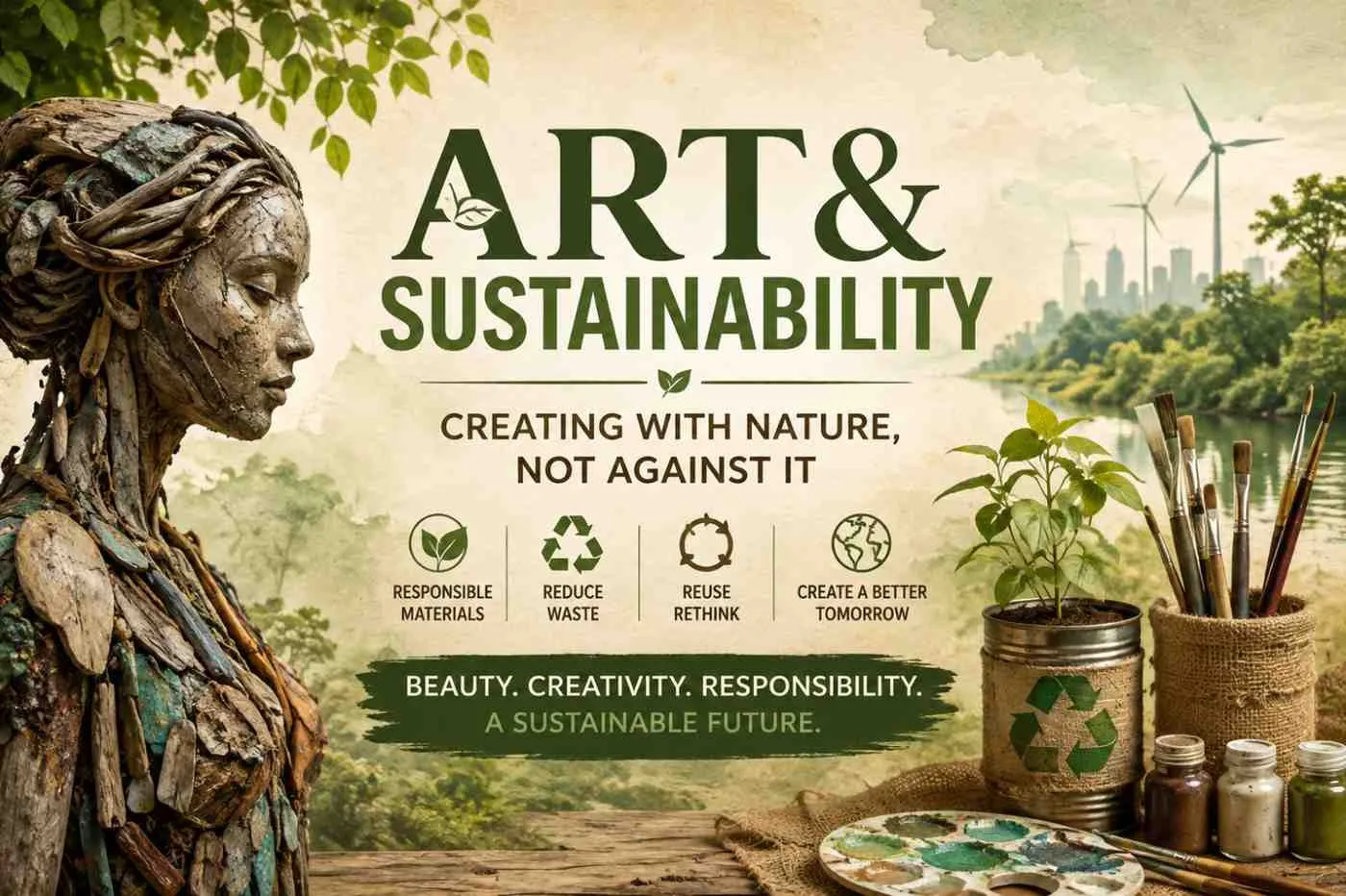
Sustainability is not only about saving the planet; it is also about changing the way we create, consume and live. Art and design can help us imagine a world where beauty and responsibility go hand in hand.
By Ankan Bandyopadhyay
At one point in human history, artists mainly created paintings around religion, mythology and stories of the divine. Art gradually changed as society changed. The Renaissance brought a greater interest in the individual and the human experience. Later, artists began to question traditional ideas about what art could be and where it could exist. This eventually led to movements such as Land Art, where nature itself became the subject, material and sometimes even the space of the artwork.
This relationship between art and nature has continued to evolve. Today, sustainability has become an important subject not only in art but also in design, architecture, fashion and everyday life.
 Artists, writers, poets and designers are increasingly using their work to make people aware of environmental problems. Art has the power to make people stop, look and think. A painting about a polluted river may communicate something that a page full of statistics cannot. A sculpture made from discarded plastic can make us realise how much waste we produce every day.
This is where art and sustainability meet.
What does sustainability really mean?
In simple words, sustainability means using what we have responsibly so that future generations can also use it.
It does not mean that we have to stop making things or stop enjoying beautiful objects. It means we need to think about how things are made, what they are made from, how long they will last and what happens to them after we stop using them.
Take a simple example: a plastic bottle may be used for a few minutes, but the material can remain in the environment for hundreds of years. If millions of people use and throw away such products every day, the problem becomes enormous.
This is why sustainability has to become part of the way we think about design.
Design begins with a material
A designer makes choices every day. What material should be used? How much of it is required? Can it be repaired? Can it be reused? What happens when the product is no longer useful?
For example, many companies are replacing unnecessary plastic packaging with paper, cardboard or cloth. A cloth bag can be used repeatedly instead of receiving a new plastic bag every time we go shopping.
Even advertising materials can be reconsidered. Posters and hoardings often use materials that are difficult to reuse or recycle. Could some of these be made from cloth or other reusable materials? Such changes may seem small, but when adopted on a large scale, they can make a significant difference.
Businesses have an important role to play here. Sustainability cannot be the responsibility of individuals alone. Manufacturers, brands, designers and policymakers must also take responsibility for the materials they introduce into society.
What happens to our waste?
Look around us.
Garbage is often found along roadsides. Plastic bottles and wrappers collect in drains. Plastic waste enters rivers and eventually reaches the sea. Animals can mistake plastic for food or become trapped in it. What looks like a small piece of waste to one person can become part of a much larger environmental problem.
We often think of waste as something that disappears once it leaves our hands. But it does not disappear. It simply goes somewhere else.
This is why our everyday habits matter.
The practice of automatically giving a plastic bag with every purchase needs to change. We can carry reusable bags instead. We can use refillable bottles instead of buying disposable ones. We can repair things instead of immediately replacing them.
Even something as simple as having properly maintained waste bins at important public places can encourage better waste disposal. But infrastructure alone is not enough. People also need to be aware of why responsible waste disposal matters.
Sustainability begins with both systems and behaviour.
Can art change the way we think?
Artists have a unique role in this conversation.
An artist does not always have to create a work that directly says, "Save the environment." Sometimes the material itself can communicate the message.
Imagine a large sculpture made entirely from discarded plastic bottles. The viewer does not need a long explanation to understand that the amount of plastic waste around us has become enormous.
This idea of transforming discarded objects into art is not new. Assemblage, for example, brings together everyday or discarded objects to create an artwork. Pablo Picasso's Bull's Head is a famous example. Picasso created the work by combining a bicycle seat and handlebars to suggest the head and horns of a bull. The work demonstrates how an ordinary object can be given a completely different meaning through creative thinking.
Artists such as Louise Nevelson also became known for constructing large sculptural compositions from found wooden objects. Her work shows how discarded or ordinary materials can be reorganised into something visually powerful.
The important lesson is that an object does not necessarily become useless simply because it has completed its original purpose.
From waste to creativity
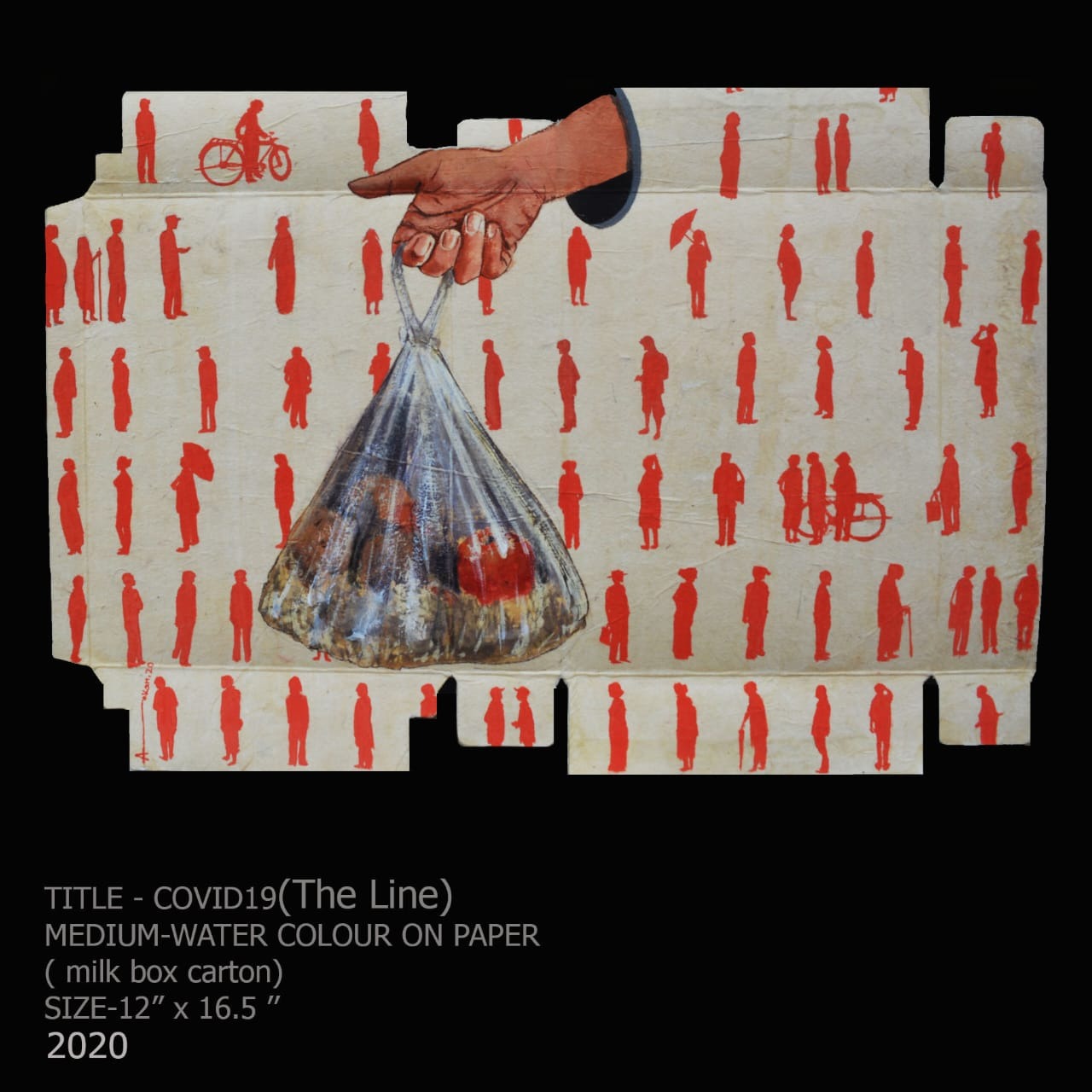
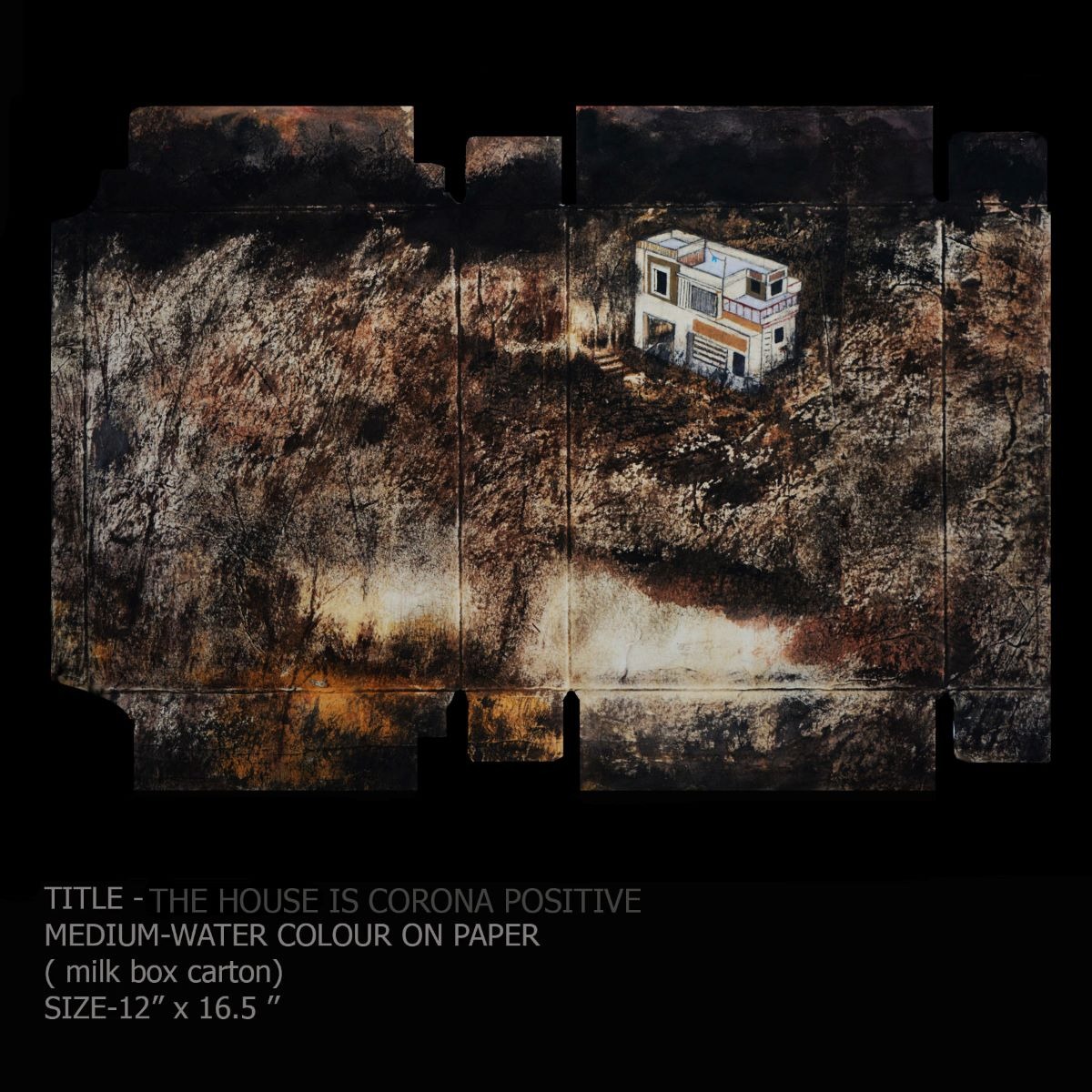
This idea became personal to me during the COVID-19 pandemic.
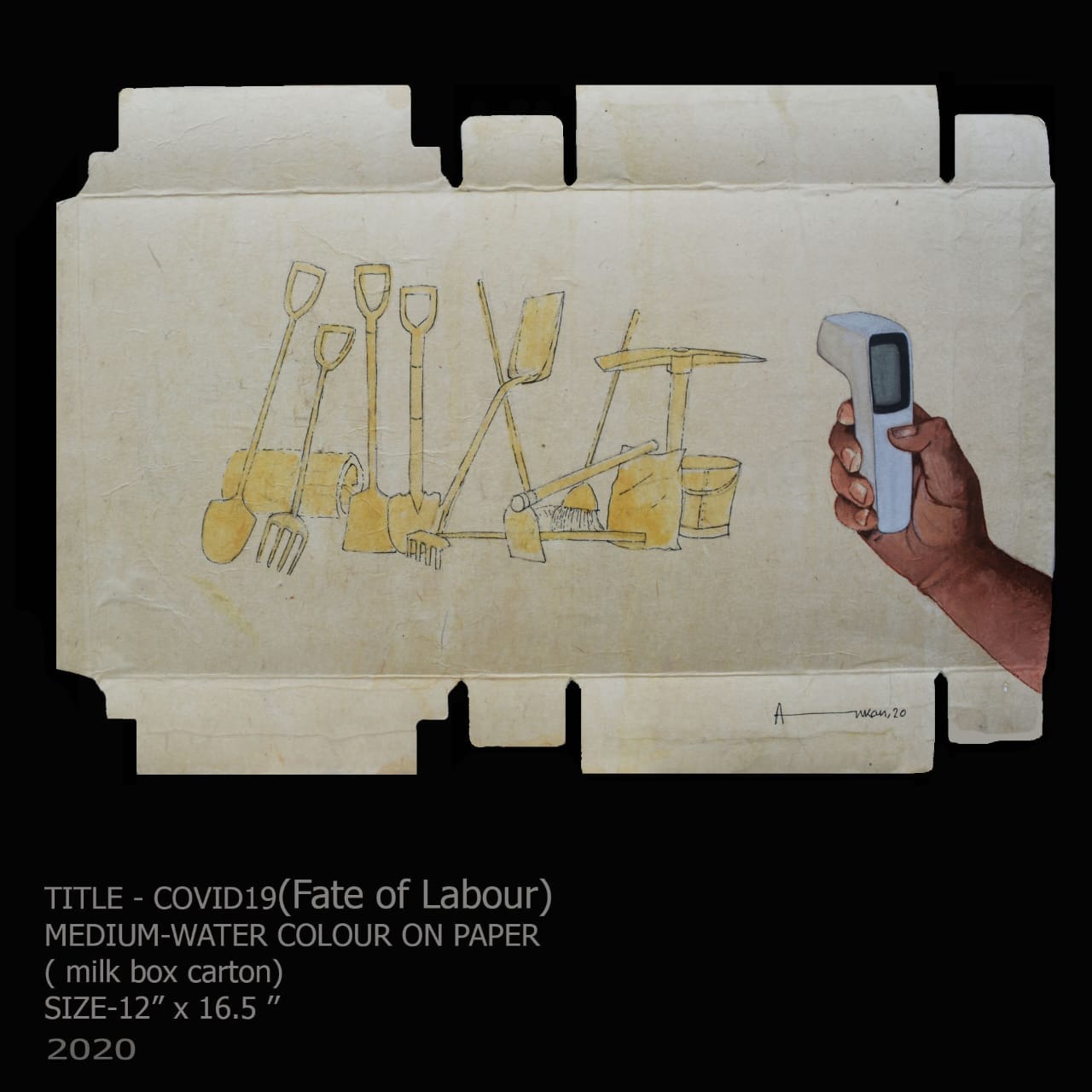
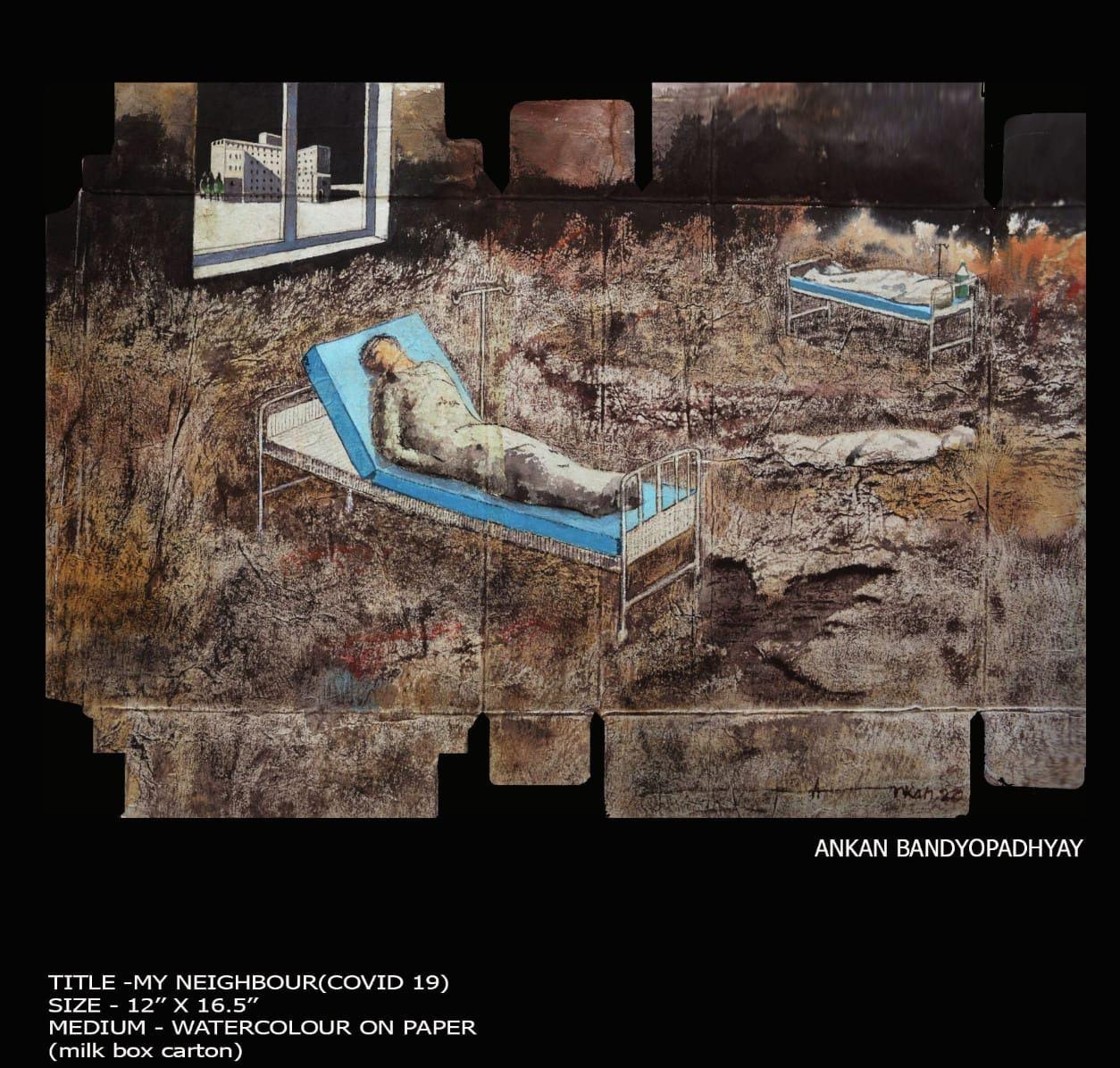
During the lockdown, it was difficult to purchase art materials, including paper, from stationery shops. Instead of stopping my practice, I began looking around me for materials that were already available.
I started painting on discarded milk cartons and sweet boxes.
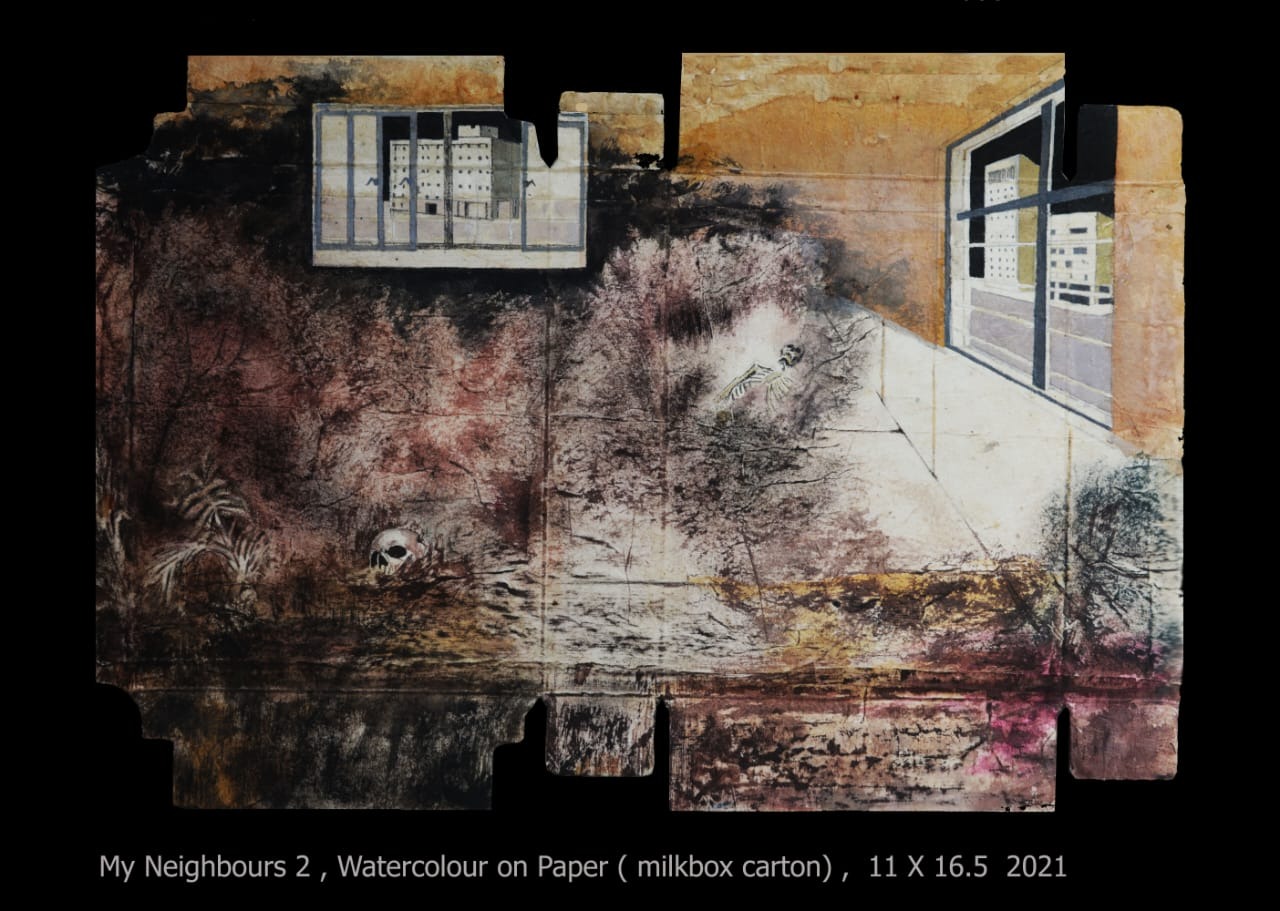
Something that was originally considered waste became my canvas.
What began as a practical solution gradually became a creative process that I genuinely enjoyed. It made me look at everyday objects differently. A box was no longer simply a box. It could become a surface, a material and eventually a piece of art.
This experience made me realise that sustainability does not always require expensive technology or complicated solutions. Sometimes, it begins with looking at an ordinary object differently.
Learning sustainability through art
 Education can play a major role in developing this way of thinking.
In schools, children often make crafts and objects as part of their work education. These activities may seem simple, but they teach children something important: objects can be transformed.
A torn piece of cloth can become a doormat or a bag. Old newspapers can become envelopes or decorative objects. Plastic bottles can become flower pots or vases. Waste cardboard can become models and sculptures.
Children can also learn about natural materials through traditional art practices.
In Bengal and other parts of India, traditional practices such as alpana, wall painting and various forms of folk art connect creativity with local materials, culture and surroundings. Pattachitra artists, for example, traditionally work with natural and locally available materials, including handmade surfaces and natural pigments.
These practices remind us that sustainable thinking is not necessarily a new invention. Many traditional communities have historically worked with local materials because they had limited resources and understood the value of not wasting them.
Modern design can learn from this knowledge.
Designing less: Dematerialisation
One important idea in sustainable design is dematerialisation.
The word may sound complicated, but the idea is quite simple: use less material to provide the same function.
For example, if a product can be made lighter without becoming weaker, less material may be required to manufacture it.
Think about packaging. Does a product really need three layers of packaging? Does a large box need to be used for a small object? Can the packaging itself be reused?
These are design questions.
A sustainable designer does not simply ask, "How can I make this product beautiful?"
They also ask:
How much material do I need?
Where does this material come from?
How long will the product last?
Can it be repaired?
What will happen to it after it is discarded?
This is where design becomes more responsible.
Designing for a circular economy
Another important concept is the circular economy
The traditional model is often:
Take → Make → Use → Throw Away
The circular economy tries to change this into:
Make → Use → Repair → Reuse → Remanufacture → Recycle.
For example, imagine a chair.
In a traditional system, a broken chair might simply be thrown away and replaced with a new one. In a circular system, the chair could be designed so that individual parts can be repaired or replaced. The wood or metal could potentially be reused when the chair is no longer needed.
The goal is to keep materials in use for as long as possible.
This is why durability, repair and reuse are important parts of sustainable design.
If a product lasts ten years instead of one year, fewer products need to be manufactured and discarded. If a product can be repaired instead of thrown away, its useful life increases.
Sometimes, the most sustainable product is simply the one that we do not need to replace.
Choosing better materials
Material selection is another important part of sustainability.
Designers can look for materials that are less harmful to the environment and consider their entire life cycle — from where the material comes from to how it is manufactured, transported, used and finally disposed of.
This applies to fashion as well.
The textile industry produces enormous amounts of waste. Designers and consumers can therefore explore natural fibres, recycled materials, longer-lasting garments and better ways of repairing and reusing clothes.
Traditional textile and craft practices can also provide inspiration. Many Indian craft traditions have developed around local materials, local skills and techniques passed down through generations.
Instead of always searching for something new, perhaps we should also learn to value what already exists.
Architecture and sustainability
Sustainable thinking does not stop at products and artworks. It is also changing architecture.
Today, architects are increasingly thinking about sustainability before designing a building. Instead of depending entirely on air conditioning, buildings can be designed to make better use of natural ventilation and shading. Local materials can be considered to reduce transportation requirements. Natural light can reduce the need for artificial lighting during the day.
The basic question is simple:
How can a building provide comfort while consuming fewer resources?
A sustainable house does not necessarily have to look unusual or futuristic. Sometimes it can simply use traditional knowledge more intelligently.
In hot climates, for example, architectural features such as courtyards, shaded windows, thick walls and natural ventilation have historically helped buildings remain comfortable without depending entirely on mechanical cooling.
Modern technology can work together with such traditional knowledge rather than replacing it completely.
Sustainability is everyone's responsibility
Artists and designers can create new possibilities, but they cannot solve the environmental crisis alone.
Businesses need to rethink production. Governments need to create better waste-management systems. Schools need to educate children. Communities need to support responsible practices. And ordinary people need to change their everyday habits.
A person carrying a reusable bag may seem insignificant. A designer reducing the amount of material in a product may seem insignificant. A student turning waste cardboard into an artwork may seem insignificant.
But sustainability is made up of these small decisions.
When millions of people make better choices, the impact becomes much larger.
Creating a different future
Art has always reflected the world around us. It has recorded our beliefs, our struggles, our cultures and our dreams. Today, environmental concerns are becoming an important part of that story.
Perhaps the role of the artist and designer today is not only to create something beautiful, useful or interesting. It is also to ask whether what we create is necessary, responsible and respectful of the world around us.
My own experience of painting on discarded cartons taught me something very simple: sometimes, sustainability begins when we stop seeing something as waste.
A discarded box can become a canvas.
An old piece of cloth can become a bag.
A plastic bottle can become a planter.
Scrap can become a sculpture.
A damaged product can become something repairable.
And an ordinary idea can become a movement when many people begin to believe in it.
We do not necessarily need to stop creating.
We need to learn how to create better.
The future of sustainable design may not be about choosing between creativity and the environment. It may be about understanding that the two can exist together.
Because when art learns from nature, and design learns to respect resources, creativity does not become smaller.
It becomes more meaningful.
ABOUT AUTHOR

Ankan Bandyopadhyay (born 1986, in Kolkata, West Bengal) is an Indian painter. He obtained a BFA and MFA in Painting from Rabindra Bharati University, Kolkata. His paintings intricately depict the evolving perspectives of individuals and society, reflecting changes in both psychology and societal dynamics over time.
His works have been displayed at the CIMA Gallery (Kolkata), Emami Art (Kolkata),19th Asian Art Biennale (Bangladesh) , 62nd National Exhibition Lalit Kala Akademi (New Delhi) and many more.
Presently he is a professor of Ecole Intuit Lab, Techno India University he lives and works at his studio in Kolkata.



2 Comments
S.Madhur
This is so relevant and an absolute necessity in the present day and age. Very well written!
S.Madhur
This is so relevant and an absolute necessity in the present day and age. Very well written!