
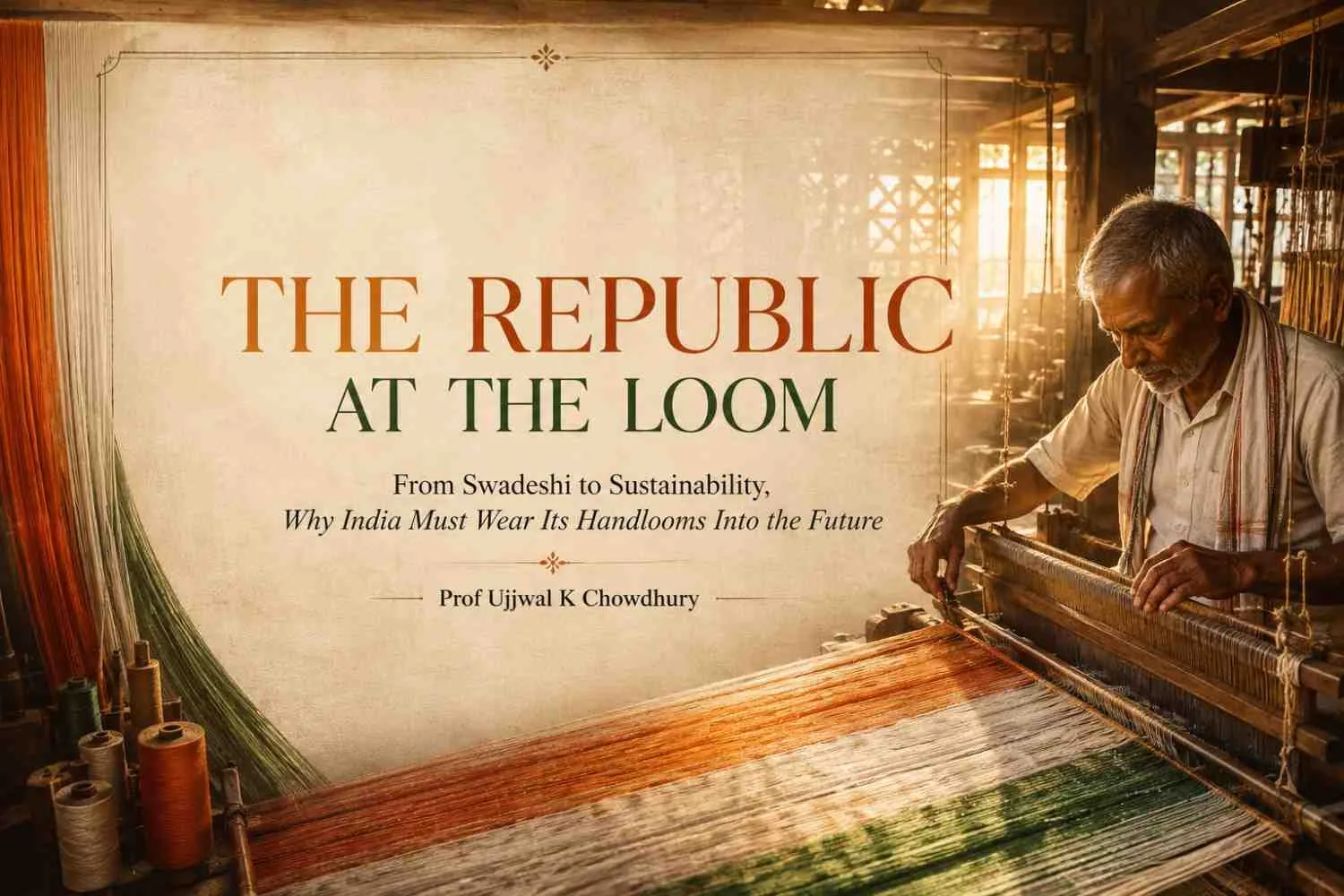
From Swadeshi to Sustainability, Why India Must Wear Its Handlooms Into the Future
Prof Ujjwal K Chowdhury
| A century ago, Indian cloth became an instrument of freedom. Today, the handloom faces a different battle—against invisibility, imitation, industrial speed, uncertain incomes and disposable fashion. Yet the same loom offers India something remarkably contemporary: millions of livelihoods, women-led grassroots enterprise, cultural identity, low-energy production and the possibility of a more conscious wardrobe. On National Handloom Day, the question is no longer whether handloom deserves preservation. It is whether India can turn its extraordinary textile inheritance into an aspirational economy of the future. |
| Summary: India celebrates its 12th National Handloom Day on 7 August 2026, linking the occasion to the Swadeshi Movement formally proclaimed on this date in 1905. The sector continues to support more than 35 lakh weavers and allied workers, with women accounting for over 72% of the workforce. But handloom faces formidable pressures: mechanised production, misleading imitations, price competition, unstable artisan earnings, raw-material challenges and changing consumer behaviour. At the same time, new research is strengthening handloom’s environmental case, while design, digital commerce, traceability, branding and technology are opening new markets. The next handloom movement must therefore go beyond nostalgia. India needs to make authentic handloom desirable, verifiable, contemporary and economically rewarding to those who create it. |
| Keywords: Indian Handloom, National Handloom Day, Swadeshi, Indian Weavers, Sustainable Fashion, Slow Fashion, Bengal Handloom, Jamdani, Tant, Banarasi, Ikat, Kanchipuram, Artisa\n Livelihoods, Women Weavers, Handloom Mark, India Handloom Brand, Vocal for Local, Conscious Consumption |
Hashtags: #NationalHandloomDay #HandloomDay2026 #IndianHandloom #ChooseHandloom #WearIndia #WeaveTheFuture #SustainableFashion #SlowFashion #IndianWeavers #BengalHandloom #SupportArtisans #VocalForLocal #MadeInIndia #ConsciousFashion #SustainableIndia |
A Freedom Movement You Could Wear
There are moments in history when an ordinary object stops being ordinary.
For India, cloth became one such object.
On 7 August 1905, amid the growing resistance to the partition of Bengal, the Swadeshi Movement was formally proclaimed at a massive meeting in Calcutta Town Hall. Indians were urged to reject imported goods and revive indigenous production. Textiles were central to that political imagination. What one wore could become a declaration of economic independence.
More than a century later, India commemorates that moment every 7 August as National Handloom Day. The first observance was inaugurated in Chennai in 2015. This year marks the 12th National Handloom Day.
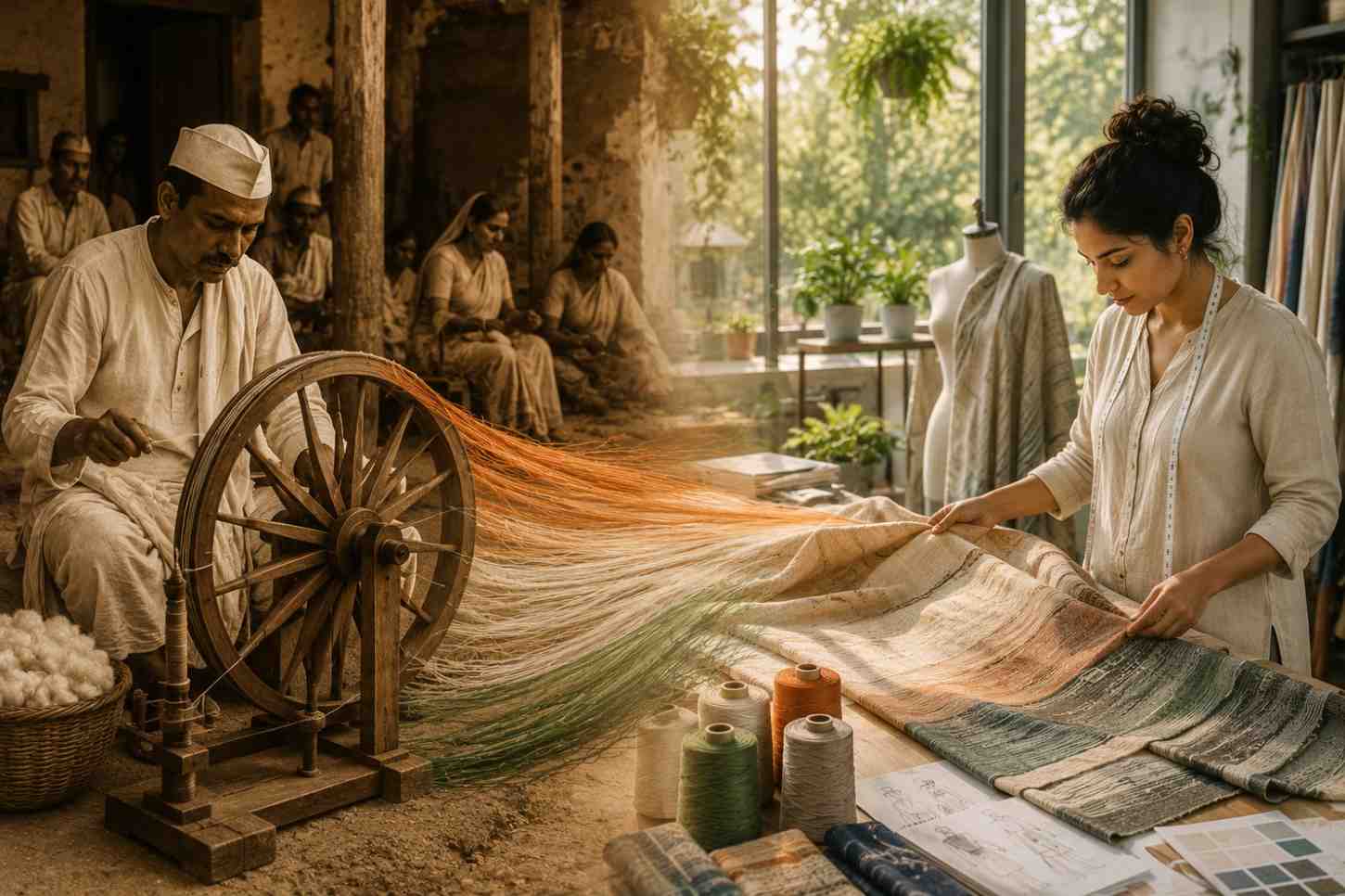
That history makes handloom different from almost every other consumer product.
Handloom is cloth. But it is also memory. Work. Geography. Culture. Enterprise. And, once again, choice.
The great question of 2026 is whether India will merely admire that inheritance—or build an economy around it.
35 Lakh People Behind the Fabric
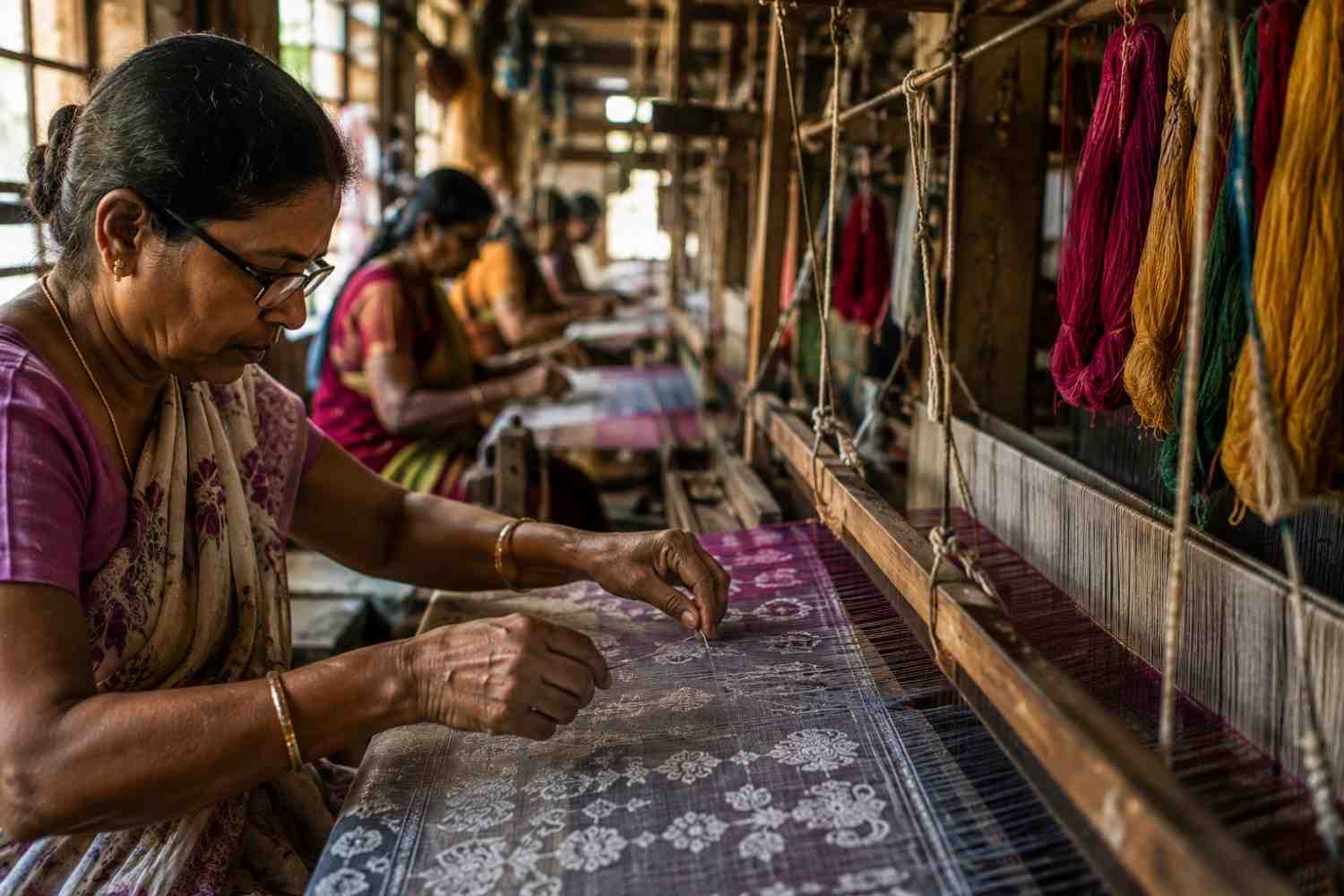
The handloom conversation often starts with beautiful saris. It should start with people.
India's Fourth All India Handloom Census done in 2019-20 recorded 35.22 lakh handloom weavers and allied workers—about 26.74 lakh weavers and another 8.48 lakh allied workers. Of the total workforce, roughly 25.46 lakh are women, more than 72%. The country had approximately 28.20 lakh handlooms when the census was conducted.
That makes handloom one of India's most important decentralised livelihood systems.
Behind a finished piece can stand an entire economic chain: cotton and silk producers, yarn suppliers, reelers, spinners, dyers, warp makers, designers, weavers, finishers, traders and sellers.
Unlike a giant garment factory, much of this economy is dispersed through homes and small workshops.
A loom may stand beside a kitchen.
A grandmother may understand a motif without ever having studied design.
A daughter may prepare yarn while another member of the family works the loom.
Knowledge passes not through manuals, but through observation, rhythm and repetition.
That is why when a weaving household abandons its loom, India does not merely lose a unit of production.
It can lose a library that was never written down.
India Is Not One Handloom Story. It Is Hundreds
Try reducing Indian handloom to one aesthetic and the idea collapses immediately.
Banarasi brocades carry one vocabulary. Kanchipuram another. Sambalpuri and Pochampally Ikat make mathematics out of resist-dyed yarn. Chanderi finds elegance in translucence. Paithani speaks through colour and peacocks. Kani weaving turns shawls into painstaking compositions. Assam's textiles carry extraordinary traditions of their own.
And then there is Bengal.
Tant. Jamdani. Baluchari. Garad. Dhaniakhali. Begampuri.
Each belongs not merely to a product category but to a landscape and social history.
The scale of India's diversity was visible again in the Ministry of Textiles' Weaves of India Festival, which ran up to National Handloom Day this year and brought together 116 heritage weaves.
One nation has somehow accumulated hundreds of ways of crossing warp and weft.
That is cultural capital few countries can replicate.
Bengal: Where the Loom Carries Memory
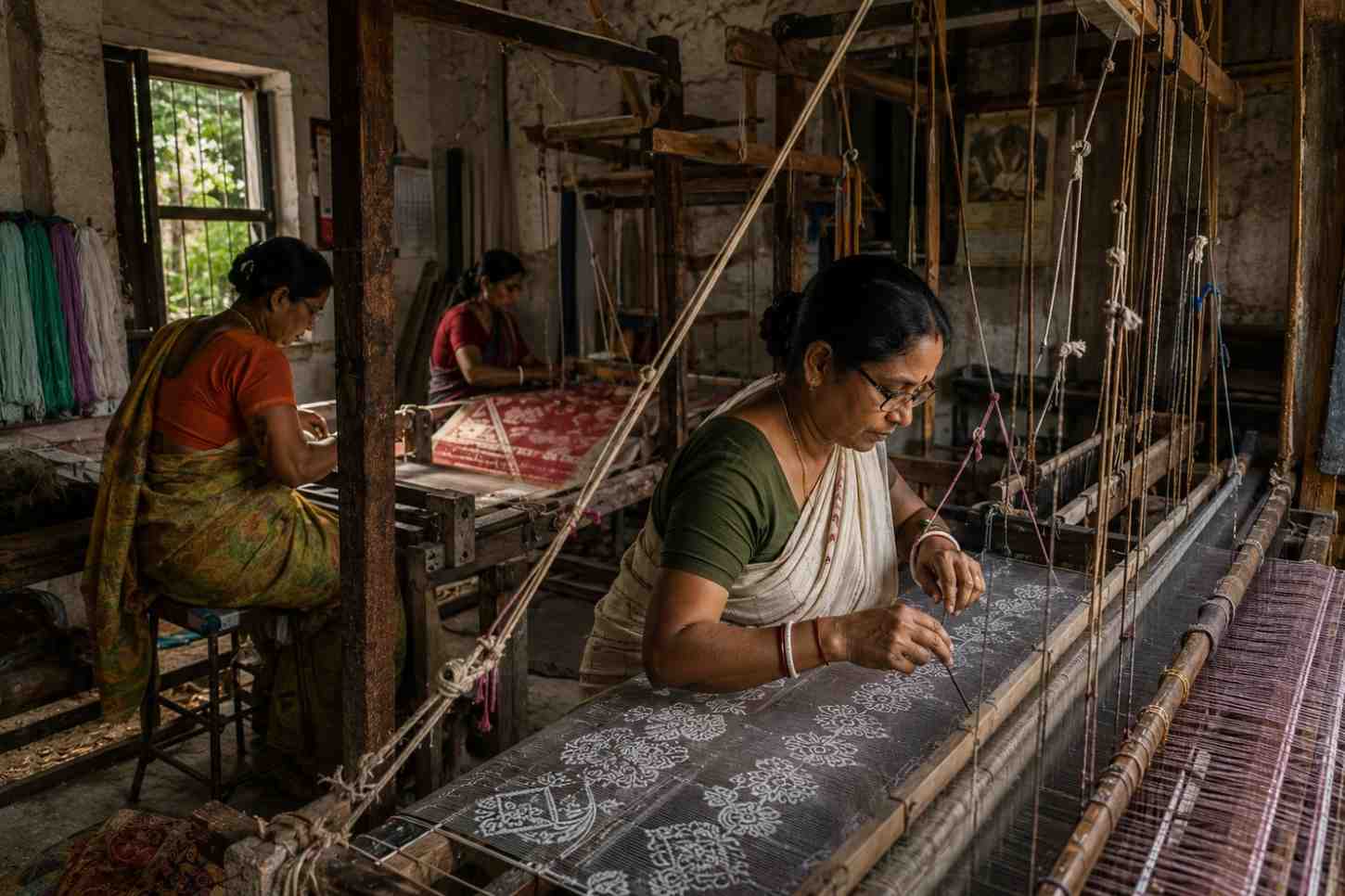
The Bengal story deserves particular attention because the Swadeshi story itself is inseparable from Bengal.
The latest national census data listed more than 6.3 lakh handloom workers in West Bengal, making the state one of India's largest handloom livelihood centres.
Travel through weaving belts such as Nadia and other traditional clusters and the paradox becomes visible.
On one side is extraordinary skill.
On the other is economic vulnerability.
A Jamdani motif can require extraordinary patience. A Baluchari can carry narrative complexity that turns fabric almost into illustration. A fine Tant derives beauty precisely from an apparent simplicity that machinery can imitate visually without replicating the making.
And therein lies the problem.
The shopper sees two saris.
The weaver knows that they represent two completely different economic systems.
If the customer cannot tell the difference, the cheaper system usually wins.
When Price Wins, Craft Can Lose
Handloom should not wage war on machinery.
India needs powerlooms. It needs efficient textile factories. It needs an internationally competitive garment industry employing millions.
The problem begins when mass-produced cloth and authentic handloom are placed in the marketplace as though they were identical products—or when machine-made imitations are sold using the cultural prestige of handwoven traditions.
A handloom artisan simply cannot compete with the speed of mechanised production on price per metre.
Nor should that be the competition.
The value of handloom lies precisely in human labour, small-batch production, variations, complex craft, provenance and cultural character.
India has long recognised this structural vulnerability. The Handlooms (Reservation of Articles for Production) Act, 1985 protects specified products from being manufactured on powerlooms, and enforcement inspections continue. Parliamentary data released in 2026 showed lakhs of powerloom inspections under the Act in recent years.
Authenticity is therefore not merely a marketing issue.
It is an economic justice issue.
The China Question Needs More Precision
There is understandable concern about cheap synthetic fibres, polyester, imported yarn and low-cost textiles entering Indian markets. An anti-dumping investigation is currently underway into Polyester Textured Yarn imported from China, demonstrating that synthetic-yarn competition is a live issue in India's wider textile economy.
But the handloom debate should resist simplistic slogans.
Government data presented to Parliament this year says imports classified specifically as handloom products have remained nominal, averaging around ₹14.1 crore annually over the preceding three years.
So the greater threat to the Indian weaver is not simply "foreign handloom".
It is a much wider ecosystem of cheap synthetic substitutes, industrial scale, imitation, weak differentiation and a consumer culture trained to compare everything primarily by price.
A patriotic case for Indian handloom therefore does not require hostility towards another country.
It requires something more constructive:
make Indian craftsmanship economically competitive on value rather than impossibly competitive on speed.
The Poverty Hidden Behind the Beautiful Sari
This is where the romance of craft must confront economics.
Customers may admire a ₹10,000, ₹20,000 or ₹50,000 handwoven sari without knowing how much of that value finally reaches the people who produced it.
The artisan often occupies one of the weakest negotiating positions in the value chain. Production takes time. Cash flow does not wait. Yarn must be purchased. Families must be fed. Unsold inventory ties up scarce working capital.
The Government acknowledged in a 2025 parliamentary reply that it had not conducted a specific study assessing the income levels and working conditions of women in the handloom sector, although third-party evaluations of schemes indicated improvements in earnings, working days and working conditions among beneficiaries.
This itself points to the next reform requirement.
India needs better real-time livelihood data.
How much does the primary weaver receive?
How much time does a product require?
Who captures the retail margin?
Are younger family members staying in the profession?
Preserving a craft without ensuring a respectable income for the craftsperson is not preservation.
It is museumisation.
Sustainability: Move From Poetry to Proof
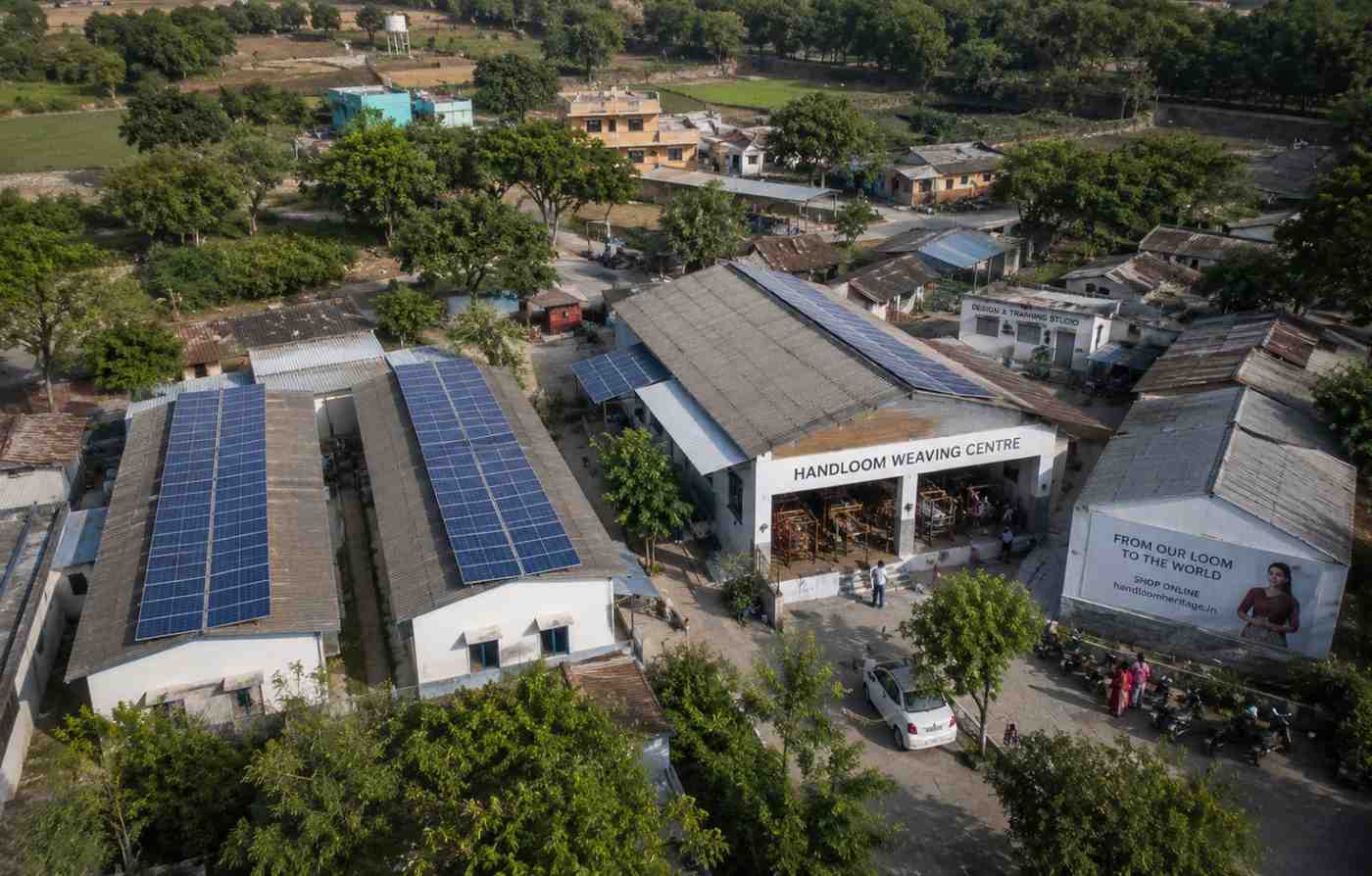
Handloom is frequently called sustainable. That claim needs to be both celebrated and qualified.
At the weaving stage, a manually operated loom requires little of the industrial energy demanded by mechanised weaving. That is an enormous inherent advantage.
And the environmental argument is becoming measurable.
In 2025, the Ministry of Textiles and IIT Delhi released Carbon Footprint Assessment in the Indian Handloom Sector: Methods and Case Studies, examining products including cotton bedsheets, floor mats, Ikat and Banarasi saris.
Subsequent research presented by the IIT Delhi team reported that a studied handloom cotton bedsheet had a carbon footprint of about 1.30 kg CO₂-equivalent—nearly four times lower than the comparable powerloom product assessed. The work also showed why one cannot lazily label every handloom item "green": energy and fuel used elsewhere in production, chemicals, dyeing and other processes still matter.
That distinction is crucial.
A handwoven polyester product dyed through a highly polluting process and transported repeatedly across continents does not become environmentally perfect simply because the final weaving was manual.
True sustainability must examine:
fibre → farming → yarn → dye → water → energy → weaving → transport → durability → reuse → end-of-life.
Handloom begins with an enormous advantage.
Now India needs to improve the rest of the chain.
Slow Fashion Before We Invented the Term
The global fashion industry is searching for ideas such as slow fashion, traceability, artisanal production, durability, circularity, local supply chains and storytelling.
India has practised many of these ideas for generations.
The grandmother's sari becoming the granddaughter's sari is circular fashion.
Repairing a border rather than discarding an entire garment is circular fashion.
A locally woven textile produced in small quantities is slow fashion.
A motif carrying the identity of a particular weaving community is traceability through culture.
Handloom therefore should not be positioned merely as something ancient that environmentally conscious consumers must rescue out of sympathy.
That is terrible branding.
Handloom should be sold as premium intelligence: beautiful, tactile, breathable, distinctive, culturally rich and—when responsibly produced—environmentally compelling.
Heritage Must Enter the Wardrobe of the 25-Year-Old

If handloom remains associated only with ceremonial saris, government emporia and nostalgia, its market will remain unnecessarily narrow.
Handloom belongs in shirts.
Jackets.
Dresses.
Trousers.
Sneakers and accessories.
Curtains.
Cushions.
Throws.
Bed linen.
Tableware.
Boutique hospitality.
Corporate gifting.
Contemporary interiors.
The government's own recent outreach acknowledges the need for reinvention. In April 2026, Vishwa Sutra – Weaves of India for the World paired 30 Indian handloom traditions with design inspirations from 30 countries, explicitly placing traditional textiles within a contemporary global design narrative.
The ecosystem has also expanded beyond traditional Khadi institutions, cooperatives and state emporia. Retailers, designer labels and platforms such as Fabindia, Taneira, Jaypore, GoCoop, Raw Mango and Anavila have, in different ways, helped introduce craft-based textiles to contemporary consumers.
The lesson is simple.
Do not ask the young to dress like the past. Give them the past with which to design the future.
The Weaver Needs Technology—Just Not a Replacement
Technology need not be the enemy of handloom.
Technology can make weaving less physically punishing.
It can improve jacquards.
Map designs.
Predict demand.
Verify provenance.
Translate an artisan's story.
Photograph products professionally.
Connect rural clusters directly to urban and international customers.
Digitise inventories.
Improve payments.
Reduce middlemen.
The Government's current architecture includes the National Handloom Development Programme and Raw Material Supply Scheme, along with support for upgraded looms, design, skills, marketing, branding, e-commerce, credit and social security.
The government-backed Indiahandmade digital marketplace is another attempt to connect artisans and weavers more directly to online consumers.
The question is not whether technology will enter handloom.
It already has.
The question is whether technology will replace the artisan—or increase the artisan's power.
Choose the second.
Ask One Question: Who Wove My Cloth?
Consumers finally constitute the last—and perhaps most powerful—policy instrument.
You do not need to become a textile historian.
Just become slightly more curious.
Look for credible authentication such as the Handloom Mark and, where applicable, the India Handloom Brand, which was introduced to combine handloom identity with quality and compliance parameters.
Ask the retailer what the weave is.
Ask where it came from.
Ask whether it is genuinely handwoven.
Ask what fibre was used.
Ask how to care for it so that it lasts.
And then do something even more important:
Use it.
Do not turn handloom into precious fabric permanently imprisoned in cupboards.
Wear the sari.
Wear the shirt.
Use the runner.
Put the handwoven cushion on the sofa.
Gift the stole.
Take handloom into offices, campuses, hotels, homes, festivals and international conferences.
Traditions survive through use, not reverence alone.
A New Swadeshi for a New Century
The original Swadeshi asked Indians to understand that consumption had political consequences.
The same insight is relevant today, but the vocabulary can evolve.
Buying handloom can be pro-jobs without being anti-machine.
Pro-India without being anti-world.
Pro-artisan without romanticising poverty.
Pro-sustainability without greenwashing.
Pro-tradition without resisting modern design.
And pro-market—provided the market learns to recognise genuine value.
India's handloom exports themselves show that opportunity exists: provisional government data puts exports of handloom products at about ₹1,359 crore in 2025–26, up from ₹1,201 crore the previous year.
The ambition should be far greater.
India does not merely possess handlooms.
India possesses one of the world's greatest distributed design laboratories.
Millions of hands.
Hundreds of textile languages.
Generations of tacit knowledge.
An extraordinary archive of colour, geometry, fibre and technique.
The real tragedy would not be that machines become faster.
They will.
The tragedy would be if India became wealthier while the people who carry this knowledge became too poor to continue carrying it.
Wear India. Weave the Future.
Perhaps somewhere tonight, as National Handloom Day celebrations conclude, a shuttle is still moving.
Left.
Right.
Left.
Right.
Thread crossing thread.
The sound is remarkably similar to the sound it made when Swadeshi entered India's political vocabulary 121 years ago.
But the loom is no longer asking us to boycott.
It is asking us to choose.
Choose authenticity over imitation when we can.
Choose durability over disposability.
Choose craftsmanship over anonymous sameness.
Choose a product whose purchase can travel backwards—from our wardrobe to a retailer, from the retailer to a producer, from the producer to a weaving household.
And choose an India where modernity does not require the destruction of memory.
Because every genuine handloom contains two stories.
One is the story woven into the fabric.
The other is the story of the person who wove it.
This National Handloom Day, preserve both.
Choose Handloom. Wear India. Support the Weaver. Protect the Craft. Weave the Future.



Add a Comment