
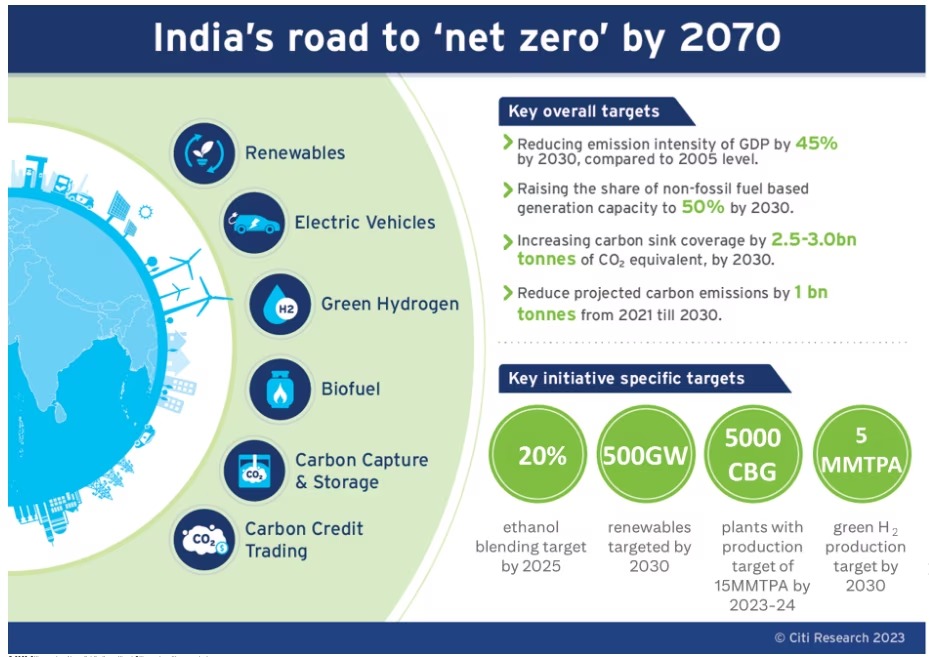
India has set ambitious renewable energy targets. The government aims for 500 gigawatts of non fossil fuel capacity by 2030. But for a business owner or facility manager, national targets matter less than a single practical question. How do I actually install solar panels on my factory roof or buy wind power for my office? The answer involves navigating a complex landscape of central policies, state regulations, subsidy schemes, net metering rules, open access provisions, and utility company procedures. The good news is that the framework exists and is improving. The challenging news is that it varies significantly by state. Understanding the policy pipeline is not optional for a business serious about renewable transition. It is the difference between a smooth, profitable installation and a stalled, frustrating project.
The two page electricity bill and the question that started everything
Let us begin with a small scene that might feel familiar. A manufacturing company owner in Gujarat sits down with the monthly electricity bill. It is thick this year. Two pages instead of one. The tariff has gone up again. Diesel for the backup generator is more expensive too. He looks at the roof of his factory, which is flat, wide, and baking under the afternoon sun for ten months of the year. And he asks a simple question. Why is this roof not saving me money?
That question, asked in a thousand boardrooms and shop floors across India, is the real engine of the renewable transition. Not climate summits. Not corporate social responsibility reports. Just a business owner looking at an unshaded roof and a rising electricity bill.
But that question quickly leads to a second, more complicated question. How do I actually do this? Who do I talk to? What forms do I fill? How much will it cost upfront? When will I see savings? What happens when I generate more power than I need? What happens when I generate less? These are not technical questions. They are policy questions. And they are the subject of this guide.
The three pathways. Onsite, open access, and the green choice
Before we dive into policies, we need to understand the three basic ways a business can use renewable energy in India. Each pathway has different rules, different economics, and different paperwork.
» Onsite generation. This is the most common and the most straightforward. You install solar panels on your own rooftop or on unused land within your factory premises. You use the electricity directly. Any excess can be sent back to the grid if your state allows net metering. The main policy questions here involve building permits, grid connection approvals, and metering arrangements.
» Open access. This is for businesses that cannot install enough onsite capacity because their roof is too small, shaded, or structurally weak. Under open access, you buy renewable power from a solar or wind farm located elsewhere, and the utility company transmits it through the grid to your facility. You pay the generator for the power and the utility for the transmission. The main policy questions here involve interstate or intrastate transmission charges, banking provisions, and cross subsidy surcharges.
» Green power option. Some discoms (distribution companies) now offer tariffs where you pay a small premium to source a portion of your power from renewable sources without installing anything yourself. This is the simplest administratively but often the least economical because the premium may not reflect the true cost savings of renewable energy.
Most Indian businesses start with pathway one, move to pathway two if needed, and consider pathway three only if the first two are not feasible.
The central government. The architect of the framework
The central government sets the broad rules. The Ministry of New and Renewable Energy is the primary agency. It designs schemes, provides subsidies, and issues guidelines. The Central Electricity Regulatory Commission sets tariffs and rules for interstate transmission. The Solar Energy Corporation of India acts as a implementing agency for many large scale schemes.
For a business owner, the central government matters most for two reasons. Subsidies and basic rights. The central government offers capital subsidies for rooftop solar installations, particularly for smaller systems. For a typical business, the subsidy might cover twenty to thirty percent of the cost, though the exact percentage and eligibility criteria change over time. The subsidy is usually channeled through state nodal agencies, which means you apply at the state level even though the funding comes from Delhi.
More importantly, the central government has established the basic legal right for consumers to generate their own electricity through renewable sources. This is enshrined in various regulations and has been affirmed by the Appellate Tribunal for Electricity. No state can simply ban rooftop solar. They can only regulate it. That said, the central framework is only a framework. The real detail lies with the states.
The state government. Where the real decisions happen
If the central government is the architect, the state government is the builder. And every builder works a little differently.
Electricity is a concurrent subject in India's constitution, which means both central and state governments have jurisdiction. But operational control over distribution lies firmly with the states. Each state has its own electricity regulatory commission, its own discoms, and its own policies on net metering, banking, cross subsidies, and open access.
This is where many businesses get stuck. A policy that works beautifully in Karnataka might be nearly impossible to implement in Uttar Pradesh. A solar installation that pays for itself in three years in Tamil Nadu might take seven years in West Bengal. The technology is identical. The difference is policy.
Let us break down the key state level policies you need to understand.
Net metering. The policy that makes rooftop solar sing
Net metering is the single most important policy for onsite solar. Here is how it works. Your solar panels generate electricity during the day. Your factory uses what it needs immediately. Any excess power flows back into the grid, and your electricity meter runs backwards. At night or on cloudy days, you draw power from the grid as usual. At the end of the billing cycle, you pay only for the net amount you consumed. If you generated more than you consumed, you get a credit on your next bill.
Net metering makes rooftop solar financially attractive because it essentially uses the grid as a free battery. You do not need to buy expensive storage to use the power you generate. The grid stores it for you.
However, not all states offer true net metering. Some states offer net billing instead, where excess power is purchased by the discom at a lower rate than the retail tariff. Others cap net metering capacity at a certain percentage of your sanctioned load, often at eighty or ninety percent. Others limit net metering to systems below a certain size, typically one megawatt or less for commercial consumers.
Before you invest in rooftop solar, you must check your state's net metering policy. Call your discom. Ask for the latest regulations. Speak to a local solar installer who has done projects recently. The policy landscape changes frequently, and outdated information can ruin your financial model.
Banking and banking charges. The hidden cost of open access
If you are using open access to buy power from a remote solar farm, you will encounter a concept called banking. Banking allows you to send excess power generated during sunny months to the grid and withdraw it during less sunny months. This is important because solar generation varies by season. Summer months might produce a surplus. Monsoon months might produce a deficit.
Banking is incredibly valuable, but discoms do not offer it for free. They charge banking fees, typically a percentage of the energy banked, often ranging from two to fifteen percent. A high banking fee can significantly reduce the financial benefit of open access solar.
Some states also impose cross subsidy surcharges on open access consumers. The logic, from the discom's perspective, is that large commercial and industrial consumers pay higher tariffs that effectively subsidise residential and agricultural consumers. When a large business switches to open access renewable power, the discom loses that high paying customer. The cross subsidy surcharge is meant to recover some of that lost revenue.
These charges are not unfair. Discoms have legitimate financial concerns. But they can make open access uneconomical in some states. You must factor them into your calculations.
The subsidy maze. How to find your way through
The central government offers subsidies for rooftop solar, but accessing them requires patience. The process typically works like this.
1. First, you identify an approved vendor. The Ministry of New and Renewable Energy maintains a list of approved solar panel and inverter models. Some state nodal agencies also maintain empanelled lists of installers. Using an unapproved vendor can disqualify you from the subsidy.
2. Second, you submit an application through the national portal for rooftop solar. The portal guides you through the process, connects you to your discom, and tracks your application status. Many businesses find this portal helpful, though it is still evolving.
3. Third, you receive a technical feasibility approval from your discom. They will inspect your roof, check your electrical infrastructure, and confirm that your grid connection can handle the solar system. This step can take anywhere from two weeks to three months depending on your discom.
4. Fourth, you install the system through your approved vendor. The vendor handles all electrical work, mounting structures, and grid integration.
5. Fifth, you submit a completion report and a request for inspection. The discom inspects the installation, installs a bidirectional meter if needed, and authorises interconnection.
6. Sixth, you start generating and the subsidy is released. The subsidy is typically credited to your bank account within a month or two of commissioning.
The entire process can take four to eight months for a first time applicant. That sounds slow, and it is. But it has improved significantly in recent years. The national portal has reduced paperwork. Many discoms now have dedicated rooftop solar cells. And once your first system is installed, any future expansion is much faster.
The virtual net metering option for smaller businesses
Not every business owns its own roof. Many small enterprises, retail shops, and offices rent their premises. For them, rooftop solar is not an option because the landlord may not agree or the lease is too short.
Virtual net metering is designed for exactly this situation. Under virtual net metering, a group of consumers can collectively own or subscribe to a solar installation located elsewhere, and the power generated is credited to their individual bills in proportion to their share.
For example, a shopping complex with ten small shops could install solar panels on the common roof. Each shop receives a credit on its electricity bill based on its share of the investment. The shops that rent their space benefit even though they do not own the building.
Virtual net metering is still in early stages in India. A few states including Delhi, Karnataka, and Tamil Nadu have active virtual net metering policies. Others are developing them. If you are a small business owner or a tenant, this is a policy to watch.
The renewable purchase obligation. A hidden driver of change
There is one more policy that indirectly affects businesses. The renewable purchase obligation requires certain categories of electricity consumers, including large commercial and industrial users, to source a minimum percentage of their power from renewable sources. The percentage is set by the central and state regulators and typically increases every year.
If you meet your obligation through your own solar installation or through open access, you are compliant. If you do not, you may have to purchase renewable energy certificates from other generators who have exceeded their obligations.
For most businesses, the renewable purchase obligation is not a penalty. It is simply a reinforcement of what you already want to do. But it is worth understanding because it creates a baseline demand for renewable power and gives you another reason to act.
The closing thought. The roof is waiting
Let us return to that factory owner in Gujarat. He asked his question. He navigated the policy maze. He found a good vendor. He filled the forms. He waited for approvals. And one morning, the discom engineer came, flipped the switch, and his meter started running backwards.
He did not become an environmental activist. He did not write a sustainability report. He simply decided that paying for sunshine made more sense than paying for coal. The policies were there to help him, imperfect but functional. He used them.
The roof is waiting for you too. The sun is still free. The policies, for all their complexity, are on your side. The only question is when you will start.


Add a Comment