Sustainable Supply Chains

Encourages ethical, transparent, and environmentally responsible practices across the entire supply chain.

Showing 6

10 Aug 2026

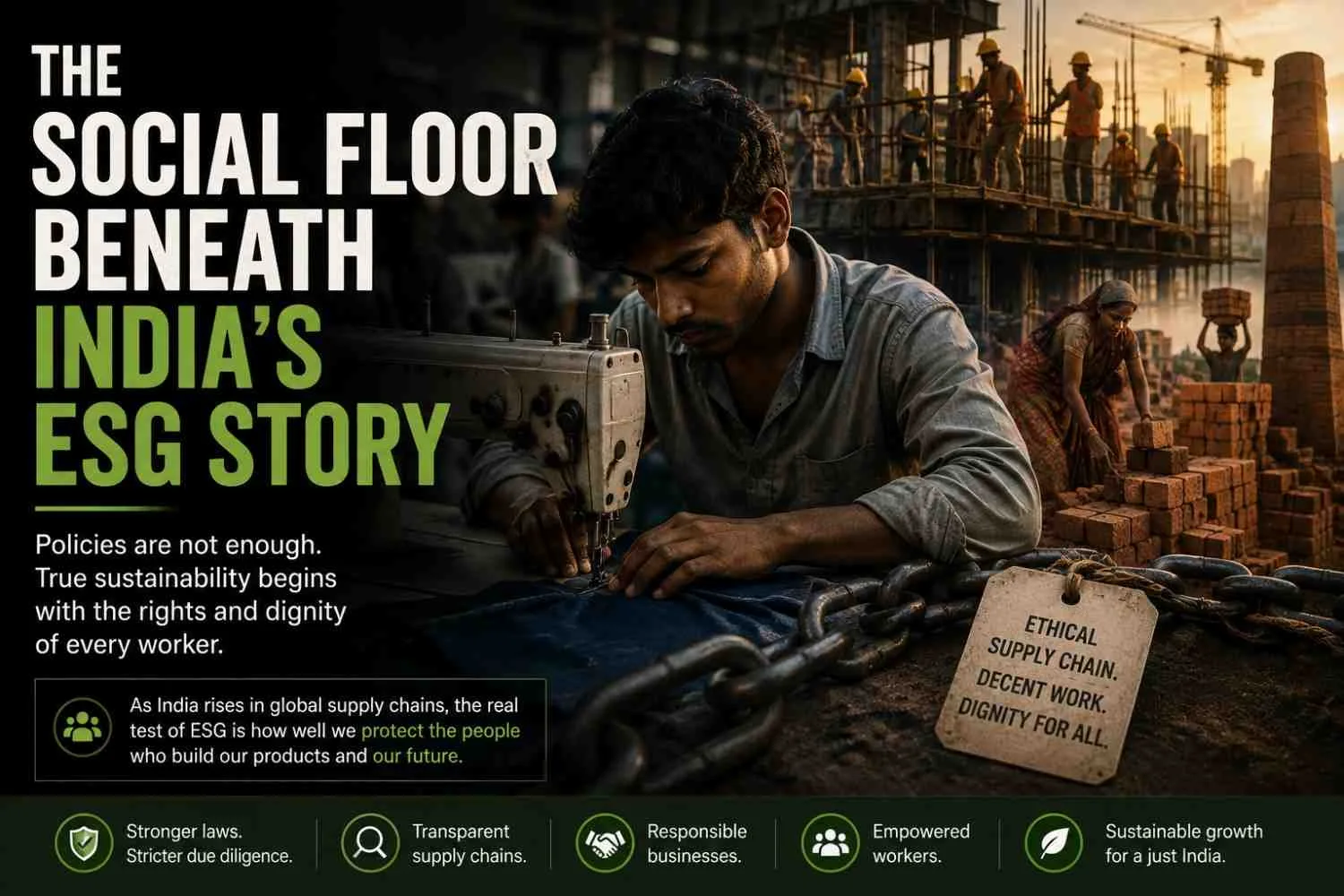
Kolkata | August 7, 2026 As India strengthens its position in global supply chains, responsible sourcing has become just as important as sustainable production. While companies increasingly promote ESG commitments and ethical procurement, concerns over bonded labour, migrant-worker exploitation and weak rehabilitation continue to challenge the credibility of these claims. The real question is no longer whether businesses have policies- but whether those policies protect workers on the ground. Quick SummaryIndia's ambition to become a global manufacturing and sourcing hub is placing greater attention on labour rights across supply chains. International buyers, particularly in Europe, now expect companies to prove that products are made without forced or bonded labour, making human-rights due diligence a critical part of ESG reporting. While governments have intensified anti-bonded labour campaigns and many large companies have strengthened supplier monitoring, challenges remain in sectors such as brick kilns, quarrying, textiles and construction, where migrant workers often face debt, poor working conditions and limited access to legal protections. Experts argue that rescue operations alone are insufficient unless rehabilitation, fair wages and long-term livelihood support are ensured. As global regulations become stricter, India's competitiveness will increasingly depend not only on environmental sustainability but also on how effectively it safeguards the rights and dignity of workers throughout its supply chains. Keywords Bonded Labour, Forced Labour, Human Rights, ESG, Supply Chains, Human Rights Due Diligence, Responsible Sourcing, Migrant Workers, Labour Rights, Ethical Supply Chains, Corporate ESG, India ESG, Worker Welfare, Sustainable Business, Social Sustainability, Global Trade, EU Due Diligence, ESG Compliance, Responsible Procurement, India Labour Can India Build Global Supply Chains Without Leaving Workers Behind? India's ESG journey is no longer judged only by carbon emissions, renewable energy targets or environmental commitments. Gradually, investors, regulators and consumers around the world are asking a more fundamental question: Who made the product, and under what conditions? As global supply chains become more transparent, labour rights have emerged as one of the strongest indicators of corporate sustainability. This shift comes at a critical moment for India. As the country strengthens its position as a global manufacturing hub through initiatives such as Make in India and the Production-Linked Incentive (PLI) schemes, it is attracting companies looking to diversify their supply chains. But with this opportunity comes greater scrutiny. International buyers now expect more than quality products and competitive prices- they also want assurance that goods are produced without forced labour, child labour or exploitative working conditions. At the heart of this challenge is bonded labour, one of India's oldest and most persistent labour-rights issues. Although the practice was abolished under the Bonded Labour System (Abolition) Act, 1976, cases continue to emerge across several industries. Workers caught in cycles of debt, informal employment and labour contracting arrangements often remain trapped in exploitative conditions despite legal protections. The issue goes far beyond legal compliance. Labour rights have become a key part of ESG performance. A company may reduce emissions, invest in clean energy and publish detailed sustainability reports, but if exploitation exists anywhere within its supply chain, those achievements are seen as incomplete. For global investors and responsible businesses, environmental responsibility and human rights are now inseparable. This changing landscape is also reshaping corporate practices. Large listed companies, exporters and multinational buyers are strengthening supplier checks, conducting labour audits and integrating human-rights due diligence into their procurement processes. These measures are aimed not only at meeting international expectations but also at reducing the legal, financial and reputational risks associated with unethical supply chains. However, experts caution that stronger corporate policies alone will not eliminate the problem. A large share of India's workforce remains employed in the informal sector, where monitoring is limited and many workers have little awareness of their rights or access to effective grievance mechanisms. As India seeks to expand its role in global manufacturing and trade, ensuring that economic growth is matched by stronger labour protections has become one of the country's most pressing sustainability priorities.The Hidden Reality of Bonded Labour Despite stronger laws and growing corporate commitments, bonded labour continues to exist across parts of India. Rather than disappearing, it has become less visible, often hidden within informal employment, labour contracting systems and migrant-worker networks that receive limited oversight.Some of the highest risks of bonded labour continue to be reported in sectors such as brick kilns, stone quarries, textiles, construction and small manufacturing units. In many cases, workers are recruited through middlemen who offer advance payments or small loans. What begins as financial support can soon turn into a cycle of debt, leaving workers unable to leave their jobs until the amount is repaid- a practice widely recognised as debt bondage. Migrant workers are particularly at risk. Many travel long distances in search of work without formal contracts, proper documentation or access to social security. Language barriers, dependence on labour contractors and limited awareness of their legal rights often make it difficult for them to report exploitation or seek help. According to labour experts, these conditions can lead to unpaid wages, excessive working hours and restrictions on workers' freedom, especially in labour-intensive sectors. In response, government agencies have stepped up efforts to identify and rescue bonded labourers through district administrations and Bonded Labour Vigilance Committees. States such as Telangana have expanded inspections and rescue operations, while the National Human Rights Commission (NHRC) and organisations such as International Justice Mission India (IJM India) continue to support rescue, legal action and rehabilitation. However, experts stress that rescue is only the beginning of the process. The bigger challenge is helping survivors rebuild their lives. Under the Central Sector Scheme for Rehabilitation of Bonded Labourers, rescued workers are entitled to financial assistance, skill development and livelihood support. However, implementation remains uneven across states. Delays in issuing Release Certificates, slow disbursal of rehabilitation funds and limited follow-up support often leave survivors vulnerable to returning to the same exploitative conditions. Organisations such as Aajeevika Bureau and SEWA Bharat have repeatedly pointed out that financial insecurity remains one of the biggest reasons many rescued workers return to informal employment. Without stable livelihoods, social protection and long-term support, breaking the cycle of bonded labour becomes extremely difficult. Businesses, too, are facing growing pressure to strengthen labour oversight throughout their supply chains. Companies are now expected to look beyond their immediate suppliers by scrutinising labour contractors, monitoring subcontractors and ensuring that temporary and migrant workers receive the same protections and rights as permanent employees.For many organisations, protecting labour rights is no longer just about regulatory compliance, it has become a key part of responsible business practices and long-term ESG performance. Where Labour-Risk Vulnerabilities Are Highest  Brick kilns Quarrying Textiles Construction Small Manufacturing When Human Rights Become a Trade Requirement The discussion around bonded labour is no longer confined to human rights- it has become a business priority. As global markets place greater emphasis on responsible sourcing, Indian companies are finding that labour practices now influence market access, investor confidence and brand reputation as much as product quality or pricing.A major reason for this shift is the European Union's Corporate Sustainability Due Diligence Directive (CSDDD) and other emerging international regulations. These require companies to identify, prevent and address human-rights risks across their supply chains. Global buyers are no longer satisfied with just supplier declarations. They expect evidence that workers are recruited fairly, paid properly and employed under safe and ethical conditions, particularly in sectors that have historically been linked to labour exploitation. In response, many Indian exporters and large listed companies are strengthening their human-rights due diligence processes. Supplier agreements are gradually incorporating labour-rights clauses, mandatory compliance requirements and independent audits. Businesses are also looking beyond their direct suppliers to examine labour contractors and subcontractors, where informal employment practices are often more difficult to monitor. Many companies in sectors such as manufacturing, construction, logistics and platform-based services are investing in digital worker registration, attendance systems and grievance mechanisms to improve transparency. Others are working with independent auditors and civil society organisations to assess labour conditions instead of relying solely on internal reports. These efforts are aimed not only at meeting international regulations but also at reducing legal, operational and reputational risks in an ESG-focused business environment. However, experts caution that due diligence should go beyond paperwork. Audits conducted in the presence of management, pre-announced inspections or supplier self-declarations often fail to reflect the actual conditions faced by workers. Labour-rights organisations argue that meaningful due diligence requires confidential worker interviews, regular field visits and independent grievance mechanisms that allow workers to raise concerns without fear of retaliation. The situation is particularly challenging for migrant workers employed through third-party contractors. While many companies have adopted strong ESG policies, they often have limited visibility into the working conditions of people employed beyond their direct workforce. Bridging this gap between corporate commitments and on-ground realities remains one of the biggest challenges in building truly responsible supply chains. As India strengthens its position as a global manufacturing hub, businesses are realising that long-term competitiveness will depend not only on production capacity and product quality but also on their ability to uphold human rights throughout the supply chain. For global buyers, a sustainable product begins with fair treatment of the worker long before it reaches the consumer. Progress Is Visible, But Challenges Persist Government agencies say India has made significant progress in tackling bonded labour over the past decade. Several states have stepped up rescue operations; labour inspections have become more focused and rehabilitation programmes continue to receive policy support. Authorities also point to stronger coordination between government departments, district-level vigilance committees and awareness campaigns as important steps towards identifying and protecting vulnerable workers. Businesses also highlight improvements in their labour practices. Many large listed companies now require suppliers to follow human-rights standards, conduct regular labour audits and provide grievance mechanisms for workers. ESG reporting has also broadened the focus from workplace safety to issues such as ethical recruitment, fair wages and responsible sourcing.For companies serving international markets, these measures have become essential for maintaining investor confidence and meeting global buyer expectations. However, organisations working closely with affected communities present a more cautious assessment. Groups such as Aajeevika Bureau, SEWA Bharat and International Justice Mission India (IJM India) argue that while rescue operations have improved, long-term rehabilitation remains a major challenge. Many rescued workers continue to face financial hardship, while delays in rehabilitation support, limited livelihood opportunities and difficulties in accessing government benefits often leave them vulnerable to exploitation again. Labour-rights organisations also point out that migrant workers frequently remain outside formal monitoring systems, making it difficult to identify abuse until it becomes severe. Experts also caution that corporate compliance reports do not always reflect the realities of the entire supply chain. Most audits focus on direct suppliers, while smaller subcontractors and labour contractors- where the risk of exploitation is often highest receive much less attention. Without independent worker interviews, confidential grievance mechanisms and regular field verification, important labour issues can remain hidden despite positive ESG disclosures. For this reason, many experts believe that the next stage of India's ESG journey should focus less on expanding policies and more on measuring real outcomes. The true test of progress is not the number of audits conducted or policies announced, but whether workers receive fair wages, safe working conditions, access to benefits and effective protection when their rights are violated.   Closing this gap between policy and implementation will be crucial if India has to build supply chains that meet both national labour standards and rising global expectations. From Compliance to Competitiveness Worker Rights → Responsible Supply Chains → Stronger ESG → Investor Confidence → Export Competitiveness   Why Protecting Workers Is Good for Business Labour rights are no longer seen as just a legal requirement. They have become an important measure of how companies are judged by investors, regulators and global buyers. Today, a strong ESG profile is not defined only by lower emissions or renewable energy investments- it is also shaped by how businesses treat the people working across their supply chains. This shift is changing the way companies operate. Investors are paying greater attention to labour-related risks, while international buyers expect businesses to prove that their products are made under fair and ethical working conditions. Companies that cannot demonstrate responsible recruitment, safe workplaces and effective grievance mechanisms risk damaging their reputation, losing investor confidence and facing challenges in global markets. At the same time, organisations that invest in better labour practices are discovering clear business benefits. Fair wages, transparent supply chains and safe working conditions can improve employee morale, reduce operational disruptions and build stronger relationships with customers and investors. Protecting workers is no longer just about meeting regulations- but becoming a competitive advantage. For India, this shift carries particular significance. As the country strengthen its position as a global manufacturing hub, the credibility of its supply chains will depend not only on production capacity but also on the confidence that goods are produced under fair and lawful conditions. Sustainable economic growth cannot be achieved without protecting the people who drives it. Ultimately, India's ESG journey will be judged not only by how successfully it cuts emissions or expands clean industries, but also by how effectively it safeguards the rights and dignity of its workforce. Ending bonded labour requires much more than rescue operations or compliance reports.   It demands fair wages, timely rehabilitation, secure livelihoods and supply chains where every worker is visible, protected and treated with dignity. As global markets continue to demand greater transparency, businesses that place human rights at the centre of their ESG strategies will be better positioned to earn trust, attract investment and compete internationally. In the end, India's success as a global manufacturing and sourcing destination will depend not only on what it produces, but on how well it protects the people who produce it.    Sources:  Ministry of Labour & Employment, Government of India – Bonded Labour System (Abolition) Act, labour welfare schemes and rehabilitation policies.https://labour.gov.in/ National Human Rights Commission (NHRC) – Reports and advisories on bonded labour, migrant workers and human-rights protection.https://nhrc.nic.in/ International Justice Mission (IJM) India – Bonded labour rescue, rehabilitation and survivor case studies.https://www.ijm.org/india Aajeevika Bureau – Research and policy work on migrant labour, safe migration and labour rights.https://www.aajeevika.org/ SEWA Bharat – Informal workers, women's livelihoods and labour rights.https://www.sewabharat.org/ J-PAL South Asia – Evidence-based research on labour markets, migration and public policy.https://www.povertyactionlab.org/south-asia Telangana Labour Department – State-level bonded labour rescue initiatives, inspections and rehabilitation measures.https://labour.telangana.gov.in/ Central Consumer Protection Authority (CCPA) (for broader ethical business and consumer accountability where relevant)https://consumeraffairs.nic.in/ ESIC (Employees' State Insurance Corporation) – Worker welfare, social security and benefit access.https://www.esic.gov.in/  International Labour Organization (ILO) – Global standards on forced labour, decent work and supply-chain due diligence.https://www.ilo.org/                   ...Read more
07 Aug 2026

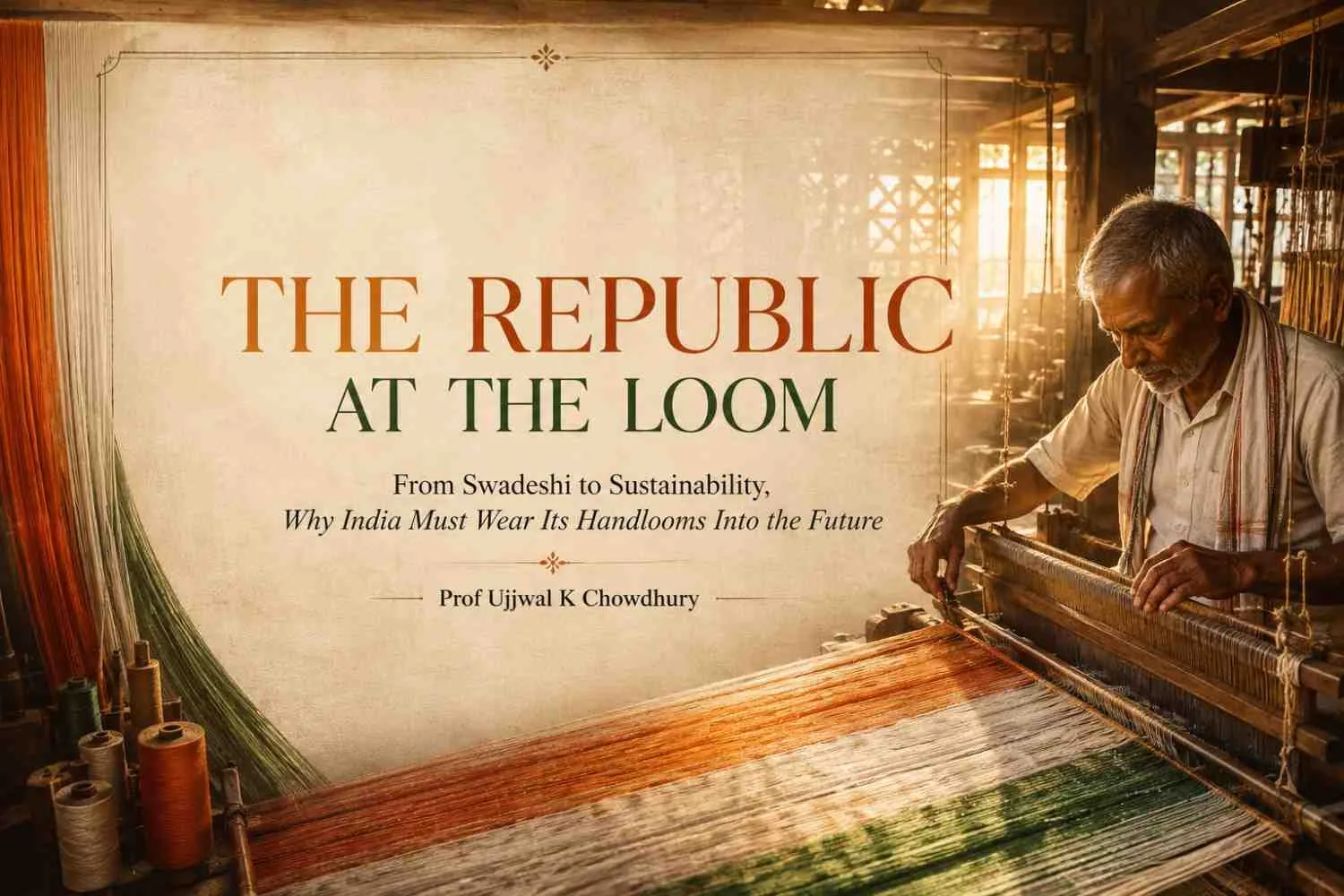
From Swadeshi to Sustainability, Why India Must Wear Its Handlooms Into the Future Prof Ujjwal K Chowdhury A century ago, Indian cloth became an instrument of freedom. Today, the handloom faces a different battle—against invisibility, imitation, industrial speed, uncertain incomes and disposable fashion. Yet the same loom offers India something remarkably contemporary: millions of livelihoods, women-led grassroots enterprise, cultural identity, low-energy production and the possibility of a more conscious wardrobe. On National Handloom Day, the question is no longer whether handloom deserves preservation. It is whether India can turn its extraordinary textile inheritance into an aspirational economy of the future. Summary:India celebrates its 12th National Handloom Day on 7 August 2026, linking the occasion to the Swadeshi Movement formally proclaimed on this date in 1905. The sector continues to support more than 35 lakh weavers and allied workers, with women accounting for over 72% of the workforce. But handloom faces formidable pressures: mechanised production, misleading imitations, price competition, unstable artisan earnings, raw-material challenges and changing consumer behaviour. At the same time, new research is strengthening handloom’s environmental case, while design, digital commerce, traceability, branding and technology are opening new markets. The next handloom movement must therefore go beyond nostalgia. India needs to make authentic handloom desirable, verifiable, contemporary and economically rewarding to those who create it. Keywords: Indian Handloom, National Handloom Day, Swadeshi, Indian Weavers, Sustainable Fashion, Slow Fashion, Bengal Handloom, Jamdani, Tant, Banarasi, Ikat, Kanchipuram, Artisa\n Livelihoods, Women Weavers, Handloom Mark, India Handloom Brand, Vocal for Local, Conscious Consumption Hashtags: #NationalHandloomDay #HandloomDay2026 #IndianHandloom #ChooseHandloom #WearIndia #WeaveTheFuture #SustainableFashion #SlowFashion #IndianWeavers #BengalHandloom #SupportArtisans #VocalForLocal #MadeInIndia #ConsciousFashion #SustainableIndia A Freedom Movement You Could Wear There are moments in history when an ordinary object stops being ordinary. For India, cloth became one such object. On 7 August 1905, amid the growing resistance to the partition of Bengal, the Swadeshi Movement was formally proclaimed at a massive meeting in Calcutta Town Hall. Indians were urged to reject imported goods and revive indigenous production. Textiles were central to that political imagination. What one wore could become a declaration of economic independence. More than a century later, India commemorates that moment every 7 August as National Handloom Day. The first observance was inaugurated in Chennai in 2015. This year marks the 12th National Handloom Day.  That history makes handloom different from almost every other consumer product. Handloom is cloth. But it is also memory. Work. Geography. Culture. Enterprise. And, once again, choice. The great question of 2026 is whether India will merely admire that inheritance—or build an economy around it. 35 Lakh People Behind the Fabric The handloom conversation often starts with beautiful saris. It should start with people. India's Fourth All India Handloom Census done in 2019-20 recorded 35.22 lakh handloom weavers and allied workers—about 26.74 lakh weavers and another 8.48 lakh allied workers. Of the total workforce, roughly 25.46 lakh are women, more than 72%. The country had approximately 28.20 lakh handlooms when the census was conducted.  That makes handloom one of India's most important decentralised livelihood systems. Behind a finished piece can stand an entire economic chain: cotton and silk producers, yarn suppliers, reelers, spinners, dyers, warp makers, designers, weavers, finishers, traders and sellers. Unlike a giant garment factory, much of this economy is dispersed through homes and small workshops. A loom may stand beside a kitchen. A grandmother may understand a motif without ever having studied design. A daughter may prepare yarn while another member of the family works the loom. Knowledge passes not through manuals, but through observation, rhythm and repetition. That is why when a weaving household abandons its loom, India does not merely lose a unit of production. It can lose a library that was never written down. India Is Not One Handloom Story. It Is Hundreds Try reducing Indian handloom to one aesthetic and the idea collapses immediately. Banarasi brocades carry one vocabulary. Kanchipuram another. Sambalpuri and Pochampally Ikat make mathematics out of resist-dyed yarn. Chanderi finds elegance in translucence. Paithani speaks through colour and peacocks. Kani weaving turns shawls into painstaking compositions. Assam's textiles carry extraordinary traditions of their own. And then there is Bengal. Tant. Jamdani. Baluchari. Garad. Dhaniakhali. Begampuri. Each belongs not merely to a product category but to a landscape and social history. The scale of India's diversity was visible again in the Ministry of Textiles' Weaves of India Festival, which ran up to National Handloom Day this year and brought together 116 heritage weaves.  One nation has somehow accumulated hundreds of ways of crossing warp and weft. That is cultural capital few countries can replicate. Bengal: Where the Loom Carries Memory The Bengal story deserves particular attention because the Swadeshi story itself is inseparable from Bengal. The latest national census data listed more than 6.3 lakh handloom workers in West Bengal, making the state one of India's largest handloom livelihood centres.  Travel through weaving belts such as Nadia and other traditional clusters and the paradox becomes visible. On one side is extraordinary skill. On the other is economic vulnerability. A Jamdani motif can require extraordinary patience. A Baluchari can carry narrative complexity that turns fabric almost into illustration. A fine Tant derives beauty precisely from an apparent simplicity that machinery can imitate visually without replicating the making. And therein lies the problem. The shopper sees two saris. The weaver knows that they represent two completely different economic systems. If the customer cannot tell the difference, the cheaper system usually wins. When Price Wins, Craft Can Lose Handloom should not wage war on machinery. India needs powerlooms. It needs efficient textile factories. It needs an internationally competitive garment industry employing millions. The problem begins when mass-produced cloth and authentic handloom are placed in the marketplace as though they were identical products—or when machine-made imitations are sold using the cultural prestige of handwoven traditions. A handloom artisan simply cannot compete with the speed of mechanised production on price per metre. Nor should that be the competition. The value of handloom lies precisely in human labour, small-batch production, variations, complex craft, provenance and cultural character. India has long recognised this structural vulnerability. The Handlooms (Reservation of Articles for Production) Act, 1985 protects specified products from being manufactured on powerlooms, and enforcement inspections continue. Parliamentary data released in 2026 showed lakhs of powerloom inspections under the Act in recent years.  Authenticity is therefore not merely a marketing issue. It is an economic justice issue. The China Question Needs More Precision There is understandable concern about cheap synthetic fibres, polyester, imported yarn and low-cost textiles entering Indian markets. An anti-dumping investigation is currently underway into Polyester Textured Yarn imported from China, demonstrating that synthetic-yarn competition is a live issue in India's wider textile economy.  But the handloom debate should resist simplistic slogans. Government data presented to Parliament this year says imports classified specifically as handloom products have remained nominal, averaging around ₹14.1 crore annually over the preceding three years.  So the greater threat to the Indian weaver is not simply "foreign handloom". It is a much wider ecosystem of cheap synthetic substitutes, industrial scale, imitation, weak differentiation and a consumer culture trained to compare everything primarily by price. A patriotic case for Indian handloom therefore does not require hostility towards another country. It requires something more constructive: make Indian craftsmanship economically competitive on value rather than impossibly competitive on speed.     The Poverty Hidden Behind the Beautiful Sari This is where the romance of craft must confront economics. Customers may admire a ₹10,000, ₹20,000 or ₹50,000 handwoven sari without knowing how much of that value finally reaches the people who produced it. The artisan often occupies one of the weakest negotiating positions in the value chain. Production takes time. Cash flow does not wait. Yarn must be purchased. Families must be fed. Unsold inventory ties up scarce working capital. The Government acknowledged in a 2025 parliamentary reply that it had not conducted a specific study assessing the income levels and working conditions of women in the handloom sector, although third-party evaluations of schemes indicated improvements in earnings, working days and working conditions among beneficiaries.  This itself points to the next reform requirement. India needs better real-time livelihood data. How much does the primary weaver receive? How much time does a product require? Who captures the retail margin? Are younger family members staying in the profession? Preserving a craft without ensuring a respectable income for the craftsperson is not preservation. It is museumisation. Sustainability: Move From Poetry to Proof Handloom is frequently called sustainable. That claim needs to be both celebrated and qualified. At the weaving stage, a manually operated loom requires little of the industrial energy demanded by mechanised weaving. That is an enormous inherent advantage. And the environmental argument is becoming measurable. In 2025, the Ministry of Textiles and IIT Delhi released Carbon Footprint Assessment in the Indian Handloom Sector: Methods and Case Studies, examining products including cotton bedsheets, floor mats, Ikat and Banarasi saris.  Subsequent research presented by the IIT Delhi team reported that a studied handloom cotton bedsheet had a carbon footprint of about 1.30 kg CO₂-equivalent—nearly four times lower than the comparable powerloom product assessed. The work also showed why one cannot lazily label every handloom item "green": energy and fuel used elsewhere in production, chemicals, dyeing and other processes still matter.  That distinction is crucial. A handwoven polyester product dyed through a highly polluting process and transported repeatedly across continents does not become environmentally perfect simply because the final weaving was manual. True sustainability must examine: fibre → farming → yarn → dye → water → energy → weaving → transport → durability → reuse → end-of-life. Handloom begins with an enormous advantage. Now India needs to improve the rest of the chain. Slow Fashion Before We Invented the Term The global fashion industry is searching for ideas such as slow fashion, traceability, artisanal production, durability, circularity, local supply chains and storytelling. India has practised many of these ideas for generations. The grandmother's sari becoming the granddaughter's sari is circular fashion. Repairing a border rather than discarding an entire garment is circular fashion. A locally woven textile produced in small quantities is slow fashion. A motif carrying the identity of a particular weaving community is traceability through culture. Handloom therefore should not be positioned merely as something ancient that environmentally conscious consumers must rescue out of sympathy. That is terrible branding. Handloom should be sold as premium intelligence: beautiful, tactile, breathable, distinctive, culturally rich and—when responsibly produced—environmentally compelling. Heritage Must Enter the Wardrobe of the 25-Year-Old If handloom remains associated only with ceremonial saris, government emporia and nostalgia, its market will remain unnecessarily narrow. Handloom belongs in shirts. Jackets. Dresses. Trousers. Sneakers and accessories. Curtains. Cushions. Throws. Bed linen. Tableware. Boutique hospitality. Corporate gifting. Contemporary interiors. The government's own recent outreach acknowledges the need for reinvention. In April 2026, Vishwa Sutra – Weaves of India for the World paired 30 Indian handloom traditions with design inspirations from 30 countries, explicitly placing traditional textiles within a contemporary global design narrative.  The ecosystem has also expanded beyond traditional Khadi institutions, cooperatives and state emporia. Retailers, designer labels and platforms such as Fabindia, Taneira, Jaypore, GoCoop, Raw Mango and Anavila have, in different ways, helped introduce craft-based textiles to contemporary consumers. The lesson is simple. Do not ask the young to dress like the past. Give them the past with which to design the future. The Weaver Needs Technology—Just Not a Replacement Technology need not be the enemy of handloom. Technology can make weaving less physically punishing. It can improve jacquards. Map designs. Predict demand. Verify provenance. Translate an artisan's story. Photograph products professionally. Connect rural clusters directly to urban and international customers. Digitise inventories. Improve payments. Reduce middlemen. The Government's current architecture includes the National Handloom Development Programme and Raw Material Supply Scheme, along with support for upgraded looms, design, skills, marketing, branding, e-commerce, credit and social security.  The government-backed Indiahandmade digital marketplace is another attempt to connect artisans and weavers more directly to online consumers.  The question is not whether technology will enter handloom. It already has. The question is whether technology will replace the artisan—or increase the artisan's power. Choose the second. Ask One Question: Who Wove My Cloth? Consumers finally constitute the last—and perhaps most powerful—policy instrument. You do not need to become a textile historian. Just become slightly more curious. Look for credible authentication such as the Handloom Mark and, where applicable, the India Handloom Brand, which was introduced to combine handloom identity with quality and compliance parameters.  Ask the retailer what the weave is. Ask where it came from. Ask whether it is genuinely handwoven. Ask what fibre was used. Ask how to care for it so that it lasts. And then do something even more important: Use it. Do not turn handloom into precious fabric permanently imprisoned in cupboards. Wear the sari. Wear the shirt. Use the runner. Put the handwoven cushion on the sofa. Gift the stole. Take handloom into offices, campuses, hotels, homes, festivals and international conferences. Traditions survive through use, not reverence alone. A New Swadeshi for a New Century The original Swadeshi asked Indians to understand that consumption had political consequences. The same insight is relevant today, but the vocabulary can evolve. Buying handloom can be pro-jobs without being anti-machine. Pro-India without being anti-world. Pro-artisan without romanticising poverty. Pro-sustainability without greenwashing. Pro-tradition without resisting modern design. And pro-market—provided the market learns to recognise genuine value. India's handloom exports themselves show that opportunity exists: provisional government data puts exports of handloom products at about ₹1,359 crore in 2025–26, up from ₹1,201 crore the previous year.  The ambition should be far greater. India does not merely possess handlooms. India possesses one of the world's greatest distributed design laboratories. Millions of hands. Hundreds of textile languages. Generations of tacit knowledge. An extraordinary archive of colour, geometry, fibre and technique. The real tragedy would not be that machines become faster. They will. The tragedy would be if India became wealthier while the people who carry this knowledge became too poor to continue carrying it. Wear India. Weave the Future. Perhaps somewhere tonight, as National Handloom Day celebrations conclude, a shuttle is still moving. Left. Right. Left. Right. Thread crossing thread. The sound is remarkably similar to the sound it made when Swadeshi entered India's political vocabulary 121 years ago. But the loom is no longer asking us to boycott. It is asking us to choose. Choose authenticity over imitation when we can. Choose durability over disposability. Choose craftsmanship over anonymous sameness. Choose a product whose purchase can travel backwards—from our wardrobe to a retailer, from the retailer to a producer, from the producer to a weaving household. And choose an India where modernity does not require the destruction of memory. Because every genuine handloom contains two stories. One is the story woven into the fabric. The other is the story of the person who wove it. This National Handloom Day, preserve both. Choose Handloom. Wear India. Support the Weaver. Protect the Craft. Weave the Future.   ...Read more

31 Jul 2026

From overseas investments to recycling and responsible mining, India's critical minerals strategy is entering a decisive phase Kolkata | July 30, 2026:Every electric vehicle, solar panel, wind turbine and battery storage system relies on a set of resources that often remain out of public view- critical minerals.    Lithium, cobalt, nickel, graphite and rare earth elements, have become indispensable to the global clean energy transition, making them strategically important today as fossil fuels were in the past. As countries accelerate efforts to decarbonise their economies, India is also strengthening its approach in securing these resources. Through overseas partnerships, investments in mineral-rich regions, domestic refining, recycling initiatives and policy reforms, the country is working to build a more resilient critical mineral supply chain. The objectives extend beyond supporting renewable energy projects. It is also about strengthening energy security, expanding domestic manufacturing and reducing dependence on imports. The urgency has grown as global competition for critical minerals continues to intensify. Much of the world's refining and processing capacity remains concentrated in a few countries, leaving supply chains vulnerable to geopolitical tensions, trade restrictions and market disruptions.In response, India is focusing on a two-pronged approach-strengthening international cooperation to secure mineral supplies while building domestic refining capacity to convert raw minerals into battery-grade materials at home.Experts say this reflects an important shift in the global conversation. Securing access to mineral deposits is no longer enough. Gradually, countries are seeking greater control over the entire value chain - from extraction and refining to manufacturing, recycling and reusing. Recycling is emerging as another key part of this transition. As electric vehicle adoption grows, used batteries and electronic waste are expected to become valuable secondary sources of lithium, cobalt and nickel. Recovering these materials can reduce pressure on fresh mining, lower environmental impacts and strengthen resource security while creating new opportunities in advanced recycling and material recovery. Although recycling alone cannot meet future demand, experts believe it will play an important role in building a more circular economy.Securing critical minerals is necessary, but far from sufficient. Mining often takes place in ecologically sensitive regions that support forests, rivers and Indigenous communities. Around the world, concerns over biodiversity loss, land acquisition, water stress and community displacement have intensified alongside expanding mineral exploration. Conservationists argue that the transition to clean energy should not come at the expense of environmental protection or local livelihoods. This has elevated responsible mining to a core priority.Experts believe every critical mineral project should include transparent environmental assessments, meaningful community consultation, fair compensation and continuous ecological monitoring. They stress on a fundamental shift: local communities must be partners in building the future, not just recipients of its consequences. The discussion reflects a broader evolution in the sustainability agenda. Climate action is no longer measured only by the number of renewable energy projects or electric vehicles on the road. It also depends on whether the resources powering these technologies are extracted responsibly, processed efficiently and managed sustainably throughout their life cycle.For India, the years ahead will determine whether industrial growth, resource security and environmental responsibility can advance together. Progress will depend not only on overseas agreements or new processing facilities, but on building a supply chain that is transparent, resilient and socially inclusive. Ultimately, the clean energy transition will be defined not just by what we build, but by how we build it. It will also be judged by the choices made long before those technologies reach consumers.   The countries that lead the future will not simply be those with the largest mineral reserves, but those that develop supply chains that are ethical, resilient and circular. For India, the real challenge is not only securing the minerals that power a greener economy, but proving that sustainable development begins with responsible decisions at every stage of the journey! The true success of the clean energy transition lies not only in its destination, but in ensuring that every step along the way is sustainable. Sources: Ministry of Mines, Government of India – National Critical Mineral Mission, policy updates and official announcements.Ministry of Mines – Critical MineralsCouncil on Energy, Environment and Water (CEEW) – Analysis on the India–US Critical Minerals Agreement, domestic processing and supply-chain resilience.India–US Critical Minerals: The Midstream Test (CEEW) Ministry of External Affairs (MEA) – Quad Critical Minerals Initiative Framework and international cooperation.Quad Critical Minerals Initiative FrameworkInternational Energy Agency (IEA) – Critical Minerals Policy Tracker covering global supply chains, recycling and responsible mineral policies.IEA Critical Minerals Policy TrackerReuters – Reporting on India's expanding critical mineral partnerships and efforts to strengthen exploration, processing and recycling.India in talks over critical minerals partnerships ...Read more

12 May 2026

Sustainable supply chains are the new expectation. Large Indian and multinational companies are setting ambitious targets for carbon reduction, ethical sourcing, and environmental compliance. They pass these targets down to their suppliers. But here is the problem that no one likes to talk about. The suppliers who feel the weight of these demands are often small and medium enterprises. A factory with fifty workers, a modest turnover, and no dedicated sustainability team. A family owned foundry that has supplied the same component for twenty years. A textile unit in a Tier 2 city where the owner barely has time to manage production, let alone fill out carbon accounting spreadsheets. These smaller suppliers are the backbone of Indian manufacturing. They are also the most vulnerable link in the sustainability chain. If big buyers simply demand compliance without offering support, the result is not a greener supply chain. It is a hidden, unspoken crisis of supplier anxiety, falsified reports, and quietly lost business relationships. The alternative is partnership. This article explores the real story of small suppliers under pressure and offers a practical path forward for buyers who truly want to build sustainable supply chains, not just check a box. The phone call that changed everythingLet us begin with a small story. A factory owner in Coimbatore has run a small precision engineering unit for nearly two decades. He employs around seventy people. He makes metal components for an automotive company. His order book is steady. His quality is good. His delivery is reliable. One Tuesday morning, he receives a phone call from his big buyer. Not the usual purchase manager. Someone from a new department called Supplier Sustainability. The voice on the line is polite but firm. They explain that the company now requires all suppliers to complete a new sustainability assessment. There is an online portal. There are more than fifty questions. The deadline is thirty days. And by the way, a third party audit of environmental compliance will be required by the end of the quarter. The factory owner puts the phone down. He stares at the ceiling. He does not have a computer in his factory office that can comfortably run an online portal. He does not have a person who understands terms like scope one emissions or wastewater discharge limits. He has a production manager, a quality controller, and an accountant who still uses paper ledgers. He has no sustainability team. He has no budget for an audit. He has no idea where to begin. This is not a story of a bad buyer or a bad supplier. It is a story of a mismatch. The buyer has moved into a new era of supply chain accountability. The supplier is still operating in the old era, not because of laziness but because no one helped them transition. And now, the distance between them feels impossibly wide. The hidden economy of small suppliers in IndiaTo understand why this mismatch matters, we need to appreciate the scale of India's small and medium enterprise economy. There are more than six crore micro, small, and medium enterprises in India. They contribute nearly thirty percent of the country's gross domestic product. They employ more than eleven crore people. They are the second largest source of employment after agriculture. In manufacturing supply chains specifically, small and medium enterprises are everywhere. They make the components that go into larger assemblies. They provide the packaging, the fasteners, the coatings, the sub assemblies, and the specialised parts that big factories do not produce themselves. An automobile company's final vehicle might be assembled in a large plant, but that plant depends on hundreds of small suppliers for everything from seat fabric to brake pads to windshield wipers. These small suppliers are typically lean. They operate on thin margins. They reinvest most of their profits back into basic operations. They rarely have the luxury of forward planning. Their owners wake up every morning thinking about raw material prices, wage bills, power cuts, and delivery deadlines. Sustainability, in the sense that a multinational company uses the word, is simply not on their radar. And yet, these are precisely the suppliers that large buyers now want to transform. The demand that landed without a manualLet us be honest about what happens when a big buyer sends a sustainability questionnaire to a small supplier. The supplier opens the document. They see questions like these. Please provide your greenhouse gas emissions inventory for the past three financial years, broken down by scope one, scope two, and scope three categories. Please share your Science Based Targets initiative approved emission reduction targets. Please confirm that all your subcontractors comply with our supplier code of conduct. Please provide evidence of wastewater treatment meeting Central Pollution Control Board standards. Please share your occupational health and safety management system certification. Please provide a breakdown of your energy consumption by source, including the percentage from renewable sources. A small supplier reads these questions and feels a distinct emotion. Not inspiration. Not motivation. Panic. And then resentment. And then a quiet, desperate calculation about whether to ignore the request or simply lose the customer. Many small suppliers choose a different option. They hire a consultant. Not a genuine sustainability expert, but someone who knows how to fill out forms and produce documents that look acceptable. The consultant writes the answers. The supplier pays a fee. The buyer receives a completed assessment. Everyone moves on. The sustainability outcome is exactly zero. This is the tragedy of demand without support. Big buyers spend time and money creating elaborate assessment frameworks. Small suppliers spend time and money learning how to game those frameworks. The environment gains nothing. Trust erodes on both sides. The three things small suppliers actually needIf you ask small suppliers what they need to become more sustainable, they will not ask for grand visions or ambitious targets. They will ask for three simple things that big buyers rarely provide. The first thing is clarity. A small supplier needs to know what specific, measurable actions are most important. Not fifty seven questions. Not a hundred page code of conduct. Three things. This year, we want you to measure your electricity consumption. Next year, we want you to switch to LED lighting. The year after, we want you to conduct a waste audit. Clear, sequential, achievable. A small supplier can work with that framework. The second thing is capacity building. A small supplier needs training, tools, and templates. Can the buyer provide a simple spreadsheet for tracking energy use? Can the buyer offer a free webinar on basic environmental compliance? Can the buyer share examples of what good practice looks like for a factory of similar size? This is not charity. It is enlightened self interest. A supplier who knows how to improve is a supplier who will improve. The third thing is financial support. Some sustainability improvements cost money. A small supplier cannot always afford the upfront investment, even if the long term savings are clear. Can the buyer offer low interest financing, longer payment terms, or shared investment in shared infrastructure? Even modest financial support can unlock genuine change. These three things, clarity, capacity building, and financial support, are not expensive for a big buyer to offer. But they require a shift in mindset. From policing to partnership. From compliance to collaboration. The audit trap and the trust deficitLet us talk about audits, because audits have become a flashpoint in buyer supplier relationships. A big buyer wants assurance that its supply chain is sustainable. So it hires an auditing firm. The auditing firm visits the small supplier. They walk the factory floor. They review documents. They interview workers. They produce a report with findings and corrective actions. This sounds reasonable. But here is what actually happens in many cases. The audit is announced in advance. The supplier has time to prepare. A temporary file of compliance documents is created. Workers are coached on what to say. The factory floor is cleaned for the day. The auditor, who is paid by the buyer and knows that finding zero problems might look suspicious, writes up a few minor non conformances. The supplier agrees to fix them. No one checks whether the fixes actually happen. Everyone moves on. This is not because suppliers are dishonest or auditors are lazy. It is because the system is structured for performance rather than genuine transformation. A two hour audit once a year cannot possibly verify the day to day reality of a factory's operations. Real sustainability is about what happens on the other three hundred and sixty four days. A better approach exists. It is called continuous improvement partnership. Instead of a single annual audit, the buyer and supplier agree on a set of indicators that the supplier tracks and shares monthly. Energy use per unit of output. Water use per unit of output. Waste sent to landfill. Overtime hours as a proxy for worker welfare. The supplier reports honestly, and the buyer responds with support, not punishment, when numbers move in the wrong direction. Over time, trust builds. And trust, not audits, is what drives real change. A success story from the Indian textile sectorThere is a notable example of buyer supplier partnership in the Indian textile sector. A large international apparel brand realised that its small weaving and dyeing suppliers in Tamil Nadu were struggling with wastewater compliance. The brand could have simply cut them off and found new suppliers. Instead, they chose a different path. The brand invested in a common effluent treatment plant that served multiple small suppliers in the same industrial cluster. The brand paid for the design and a portion of the construction. The suppliers paid a modest user fee that was lower than what they would have paid to build their own individual treatment systems. A local non profit organisation provided training on operation and maintenance. The result was clean water, shared cost, and stronger relationships. Within two years, the entire cluster achieved compliance that no single supplier could have afforded alone. This is the model that works. Not one buyer telling one supplier what to do alone. Multiple buyers, multiple suppliers, and shared infrastructure solving a shared problem. Indian industrial clusters are perfectly suited to this approach. The geography is concentrated. The relationships are long standing. The potential for collective action is enormous. The responsible buyer's framework for small supplier engagementIf you are a large buyer reading this and you want to do better, here is a practical framework. It contains five principles that have been tested in Indian supply chains. The first principle is to segment your suppliers. Not all suppliers are the same. A large, sophisticated supplier with its own sustainability team can handle detailed questionnaires and third party audits. A small, family owned supplier cannot. Group your suppliers by size, capability, and risk. Apply different expectations to different segments. Do not treat everyone the same. The second principle is to start with materiality. What are the most significant environmental and social risks in your supply chain? For a small metal finishing unit, the answer might be wastewater. For a small packaging unit, the answer might be plastic waste. For a small textile unit, the answer might be energy efficiency. Focus on the one or two issues that truly matter. Ignore the rest until the basics are in place. The third principle is to provide tools, not just targets. A target without a tool is a wish. A target with a tool is a plan. Give your small suppliers simple, free, practical tools. A spreadsheet to track electricity. A checklist for waste segregation. A template for calculating water consumption. Make it easy for them to do the right thing. The fourth principle is to reward improvement, not perfection. A small supplier that reduces its energy intensity by ten percent this year has done something real. Acknowledge that progress in your supplier scorecard. Offer preferential sourcing or better payment terms for demonstrated improvement. Perfection is a destination. Improvement is a journey. Reward the journey. The fifth principle is to collaborate with competitors. Your small suppliers also sell to other large buyers. If you all demand different sustainability standards, the supplier is caught in an impossible web of conflicting requirements. Engage with your competitors. Agree on common standards, common tools, and common reporting formats for shared suppliers. Reduce the burden. Increase the impact. The cost of doing nothingLet us end with a sobering thought. Some big buyers will read this article and decide that helping small suppliers is too much trouble. They will simply drop suppliers who cannot comply and find larger, more sophisticated suppliers who already have sustainability systems in place. This is a losing strategy for three reasons. First, there are not enough large, sophisticated suppliers to replace the small ones. The Indian economy depends on its small and medium enterprise backbone. If every buyer only sourced from large suppliers, supply chains would struggle to meet demand. Second, dropping small suppliers does not make the world cleaner. It simply shifts the environmental and social impact elsewhere, out of sight, out of mind, but still present. A responsible buyer takes responsibility for its entire value chain, not just the visible parts. Third, the regulatory tide is turning. Soon, laws such as the European Union's Corporate Sustainability Due Diligence Directive will require buyers to actively manage sustainability in their supply chains, including the smallest suppliers. Ignoring the problem now only means scrambling to fix it later under tighter deadlines and greater pressure. The smarter path is the harder path. Engage. Train. Support. Partner. Build the sustainable supply chain together, one small factory at a time. Conclusion: A factory transformedLet us return to that factory owner in Coimbatore. His big buyer did not drop him. Instead, they sent a young sustainability associate to spend two days at his factory. Not to audit. To help. She sat with his accountant and set up a simple energy tracking sheet. She walked the floor with his production manager and identified three low cost fixes. Install an automatic shutoff for compressed air leaks. Replace old fluorescent lights with LEDs. Segregate metal scrap for recycling. One year later, the factory had reduced its electricity consumption by nearly twenty percent. Metal scrap sales had increased significantly. The workers took pride in the clean, organised floor. And the big buyer renewed the contract with a modest price premium for demonstrated improvement. The factory owner still does not know what scope three emissions are. He still does not have a sustainability team. But his factory is genuinely, measurably greener than it was. And that happened not because of a demand, but because of a partnership. That is the small factory's load. And that is how responsible buyers help carry it. ...Read more

12 May 2026

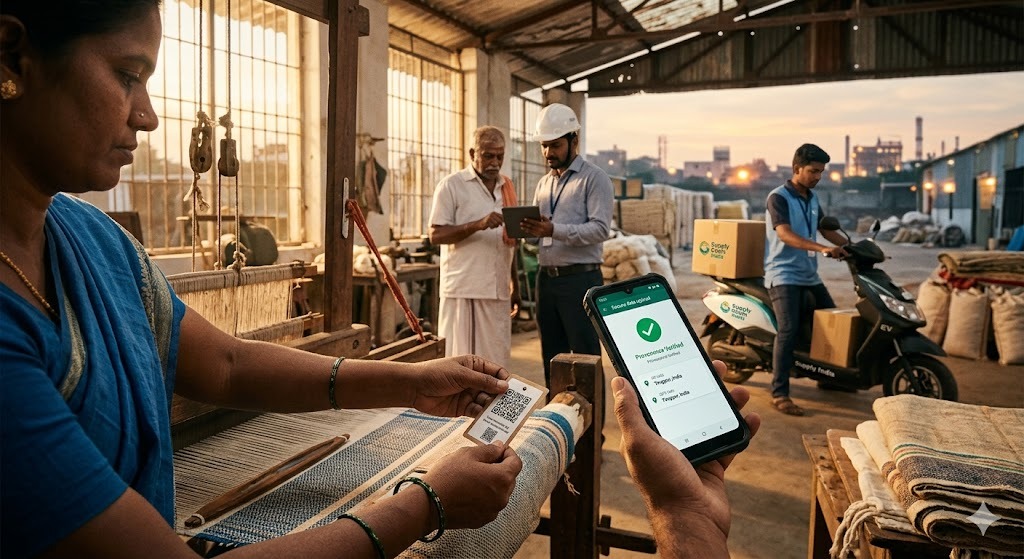
In the bustling industrial corridors, where the rhythmic hum of textile machinery provides a constant soundtrack to daily life, a profound transformation is taking place. It is a shift that is less about the speed of the looms and more about the stories they tell. For decades, the global supply chain was a black box. Raw cotton entered one end, and a finished garment emerged from the other, with very little clarity regarding what happened in between. Today, that opacity is being replaced by a digital pulse of trust, driven by the urgent need for sustainable supply chains that are ethical, transparent, and environmentally responsible. When we talk about transparency and traceability in a professional context, we often drift toward cold terminology like “decentralized ledgers” or “automated data harvesting.” But in the Indian landscape, these technologies are deeply humanized. They represent the bridge between a small-scale organic farmer in Vidarbha and a conscious consumer in a metropolitan hub like Mumbai or London. To write about this for a professional website, we must explore how India is uniquely positioned to lead the world in tech-enabled, human-centric supply chain integrity. The Human Necessity of Knowing the SourceIn a supply chain, transparency is the "what" and "how," while traceability is the "who" and "where." For a professional organization, these are no longer just "nice-to-have" ESG metrics. they are fundamental requirements for risk mitigation. In India, where supply chains are often fragmented and involve a high degree of informal labor, the challenge of traceability is significant. However, it is precisely this complexity that makes the human story so compelling. Consider the journey of a single piece of jewellry crafted in Jaipur. Traditionally, the provenance of the gemstones used might be obscured through half a dozen middle brokers. By implementing traceability tools, a professional brand can now verify that the stones were ethically mined and that the artisans were paid a fair, living wage. This isn't just about compliance with international labor laws. it is about honoring the craftsmanship and the human rights of the individuals at the very start of the value chain. Blockchain as a Tool for EmpowermentOne of the most potent tools in the professional arsenal for supply chain integrity is blockchain. While the hype around cryptocurrency has fluctuated, the underlying utility of a tamper-proof, transparent ledger remains a game-changer for Indian procurement. Empowering the First MileIn many Indian sectors, the "first mile", the point where raw materials are produced, is the most vulnerable. Blockchain allows for the creation of a digital identity for smallholder farmers or local weavers. Every time a bag of cotton or a bundle of silk changes hands, the transaction is recorded. This creates a "digital footprint" that serves two purposes. First, it provides the brand with an ironclad audit trail to prove environmental claims, such as organic certification or pesticide-free farming. Second, and perhaps more importantly, it provides the producer with a formal record of their output. For a farmer in rural India, this digital history can be life-changing, serving as proof of income that allows them to access formal banking services and credit for the first time. The technology acts as a silent advocate for the marginalized, bringing them into the formal economy with dignity. Eliminating the Information GapFor professionals in logistics and operations, blockchain solves the "information asymmetry" that often leads to inefficiency and waste. In the Indian food supply chain, where cold chain infrastructure is still maturing, real-time traceability can track the temperature and handling of perishable goods from a farm in Himachal Pradesh to a retail shelf in Delhi. By reducing spoilage through better visibility, we aren't just saving money. we are ensuring that the hard work of the farmer isn't wasted and that the environmental resources used to grow that food weren't expended in vain. AI and the Prediction of Ethical RiskWhile blockchain records the past, Artificial Intelligence (AI) is being used by Indian tech firms to predict the future of supply chain ethics. This is where the professional narrative moves from "reporting" to "proactive management." Mapping the Unseen TierMost large corporations have a decent handle on their Tier 1 suppliers—the factories they deal with directly. However, the ethical risks often hide in Tier 2 or Tier 3, the subcontractors and raw material processors. In the Indian context, AI tools are now being used to analyze vast amounts of disparate data, from satellite imagery of mining sites to local news reports and social media sentiment. If an AI algorithm detects a sudden spike in production at a Tier 1 factory that doesn't align with their known capacity, it can flag a "subcontracting risk." This allows procurement professionals to investigate whether work is being offloaded to unauthorized workshops where labor standards might be lower. This "human-in-the-loop" AI approach doesn't replace human auditors. it gives them a high-powered lens to focus their efforts where they are needed most. Climate Resilience for the Supply ChainAI is also being used to humanize environmental responsibility. By analyzing weather patterns and soil health data across different Indian regions, companies can help their suppliers adapt to climate change. If a drought is predicted in a specific cotton-growing belt, a brand can work with its suppliers to implement water-saving technologies before a crisis hits. This shifts the relationship from a transactional one to a partnership focused on mutual survival and long-term sustainability. Digital Product Passports: A New Standard for Indian ExportsAs India aims to become a global manufacturing hub, the adoption of Digital Product Passports (DPP) is becoming a strategic necessity. A DPP is essentially a "digital twin" of a physical product that contains all the information about its composition, origin, and recyclability. The Competitive Edge for Indian ManufacturersFor an Indian manufacturer exporting to Europe or North America, a DPP is a ticket to market entry. It allows a professional buyer to scan a QR code and instantly see the carbon footprint of the item, the percentage of recycled content, and instructions for how to disassemble the product at the end of its life. This level of transparency forces a "design-led" approach to the supply chain. Engineers in Pune or Chennai are no longer just designing for function. they are designing for circularity. The human element here is the pride in creating products that are built to last and designed to be reborn. It aligns the technical prowess of Indian industry with the global demand for a "cradle-to-cradle" economy. The Role of Logistics: Greening the Last MileIn the dense urban environments of Mumbai or Kolkata, the "last mile" of the supply chain is where the environmental impact is most visible. The professional shift toward electric vehicles (EVs) for delivery is a crucial part of the sustainable supply chain story, but it also has a profound human impact. Improving Urban LiveabilityWhen a major Indian e-commerce player switches its delivery fleet to electric scooters and vans, the immediate benefit is a reduction in Scope 3 emissions. However, the human benefit is the reduction in noise and air pollution in residential neighborhoods. The delivery partners themselves—often young men and women navigating stressful traffic—benefit from vehicles that are easier to maintain and cheaper to operate. The professional narrative here should focus on "co-benefits." A sustainable supply chain doesn't just improve the company's ESG score. it improves the quality of life for the communities in which it operates. It turns a logistical necessity into a social good. Overcoming the Human Resistance to TransparencyDespite the benefits, the journey toward total transparency in Indian supply chains is not without friction. There is an inherent fear among many smaller suppliers that "transparency" is just a fancy word for "more surveillance" or "lower margins." Building a Culture of CollaborationTo successfully implement these technologies, professional leaders must foster a culture of trust. Transparency cannot be a top-down mandate. it must be a collaborative effort. This involves: Incentivizing Data Sharing: Suppliers should be rewarded for transparency. This could mean better payment terms, longer-term contracts, or access to low-interest "green loans" for those who provide accurate sustainability data. Simplifying the Tech Interface: For a warehouse manager in a Tier 2 city, a traceability tool needs to be as intuitive as a messaging app. The human-centered design of supply chain software is critical for widespread adoption. Education and Training: We must move away from the "policing" model of auditing. Instead, professional organizations should invest in training their suppliers on *why* this data matters and how it can help them grow their own businesses. The Ethical Imperative: Beyond the Bottom LineAt the end of the day, a sustainable supply chain is an ethical choice. It is an acknowledgment that every dollar spent by a corporation has a ripple effect through society. In India, where the gap between the corporate boardroom and the village farm can feel immense, traceability is the thread that sews these worlds together. When a professional website discusses these topics, it must remind the reader that behind every data point on a blockchain ledger is a human being. There is a weaver who spent weeks on a handloom, a truck driver who spent nights on the highway, and a factory worker who takes pride in the quality of their output. The Power of Radical HonestyThe final frontier of the sustainable supply chain is "radical honesty." This means being transparent not just about the successes, but also about the challenges. If a company discovers a breach of its ethical code deep in its Indian supply chain, the professional response is not to hide it, but to acknowledge it, investigate the root cause, and work with the supplier to fix it. This humanized approach to "corrective action" builds much more long-term brand equity than a polished, but hollow, sustainability report. It shows that the company is committed to the *process* of improvement, recognizing that the journey toward a truly sustainable future is a marathon, not a sprint. A Vision for India’s LeadershipIndia has a historic opportunity to define what a sustainable supply chain looks like for the 21st century. We have the technical talent to build world-class traceability platforms, the industrial scale to make a global impact, and a cultural heritage that traditionally valued resourcefulness and community. As professionals, our task is to integrate these elements into a cohesive strategy. We must build supply chains that are not just efficient, but also kind. We must create systems where transparency is used to empower, not to exploit. And we must ensure that as our goods move across the globe, they carry with them the values of integrity, respect, and environmental stewardship. The digital pulse of trust is beating louder every day. From the digital payment received by a farmer to the QR code scanned by a shopper, the story of the Indian supply chain is being rewritten. It is a story of a country that is no longer content to be a "low-cost" provider, but is instead striving to be a "high-trust" partner in the global quest for a sustainable future. Call to Action for the Professional ReaderThe transition to a transparent and sustainable supply chain is no longer a futuristic concept. it is a present-day mandate. To begin this journey, professional organizations in India should: 1.Map the Human Landscape: Go beyond the Tier 1 suppliers. Use technology to understand who is really making your products and under what conditions.2. Invest in Partnerships: View your suppliers as partners in sustainability. Provide them with the tools and the training they need to join you on this journey.3. Celebrate the Stories: Use your platform to highlight the human stories of your supply chain. Let your customers see the faces and hear the voices of the people who bring your brand to life.4. Embrace Technology with a Purpose: Don't just adopt blockchain or AI because it is trendy. Use it to solve specific human and environmental challenges within your value chain. By humanizing the tech and professionalizing the ethics, we can create a supply chain that truly serves the people and the planet. This is the new standard of excellence for Indian business, and it is a journey that starts with a single, transparent step. ...Read more

12 May 2026

The modern world runs on supply chains. Every product people use in their daily lives has travelled through a long network of manufacturers, suppliers, warehouses, transport systems, retailers, and workers before reaching consumers. From a mobile phone assembled using materials sourced across multiple countries to vegetables transported from farms to urban supermarkets, supply chains form the invisible foundation of the global economy. For decades, businesses focused primarily on making supply chains faster, cheaper, and more efficient. Speed and cost reduction became major priorities in an increasingly competitive marketplace. However, this approach often overlooked the environmental and social consequences hidden behind production and distribution systems. Today, the conversation around supply chains is changing rapidly. Rising environmental concerns, climate change, resource depletion, labour rights issues, and growing consumer awareness have forced businesses to rethink how products are sourced, manufactured, packaged, and transported. As a result, sustainability is no longer viewed as a secondary corporate responsibility. It has become an essential part of long term business strategy and economic resilience. This shift has brought greater attention to the idea of sustainable supply chains. A sustainable supply chain focuses on ethical, environmentally responsible, transparent, and socially conscious practices throughout every stage of production and distribution. The goal is not only to deliver products efficiently but also to minimise environmental harm, protect worker welfare, conserve resources, and create systems that remain viable for the future. For a country like India, where manufacturing, agriculture, logistics, retail, and exports play major roles in the economy, sustainable supply chains have become increasingly important. India’s future growth will depend not only on industrial expansion but also on how responsibly that growth is managed. Understanding Sustainable Supply ChainsA supply chain includes every process involved in moving a product from raw material extraction to final consumer delivery. This includes sourcing, manufacturing, packaging, transportation, warehousing, retail operations, and waste management. A sustainable supply chain seeks to improve these processes by reducing environmental impact and promoting ethical practices at every stage. This means businesses are increasingly expected to think beyond profits alone. They are now being evaluated based on how responsibly they operate, how transparently they source materials, how fairly they treat workers, and how effectively they reduce pollution and waste. Sustainability within supply chains generally focuses on three major areas: Environmental responsibility involves reducing carbon emissions, conserving water and energy, minimising waste generation, and lowering pollution caused by manufacturing and transportation activities. Social responsibility focuses on fair wages, safe working conditions, labour rights, diversity, inclusion, and ethical sourcing practices. Economic sustainability ensures that businesses remain financially stable while investing in long term responsible growth rather than short term exploitation of resources or labour. Together, these elements create supply chains that are more resilient, trustworthy, and future ready. Why Sustainable Supply Chains Matter More Than EverThe importance of sustainable supply chains has grown significantly over the last decade due to several global challenges. Climate change has become one of the defining concerns of modern society. Industries, transportation networks, and manufacturing systems contribute heavily to greenhouse gas emissions. Global supply chains, especially those dependent on fossil fuel transportation and mass production, generate enormous environmental impact every year. At the same time, consumers have become more aware of how products are made and where they come from. Many people today want greater transparency regarding sourcing practices, environmental responsibility, and labour conditions. Businesses can no longer assume that consumers only care about price and convenience. Investors and governments are also increasing pressure on companies to adopt Environmental, Social, and Governance standards. Businesses that fail to prioritise sustainability may face reputational risks, regulatory challenges, and declining consumer trust. The COVID-19 pandemic further exposed the vulnerability of traditional global supply chains. Disruptions in manufacturing, transportation, and sourcing revealed how fragile highly centralised and unsustainable systems could become during global crises. Sustainable supply chains are increasingly viewed as more resilient because they prioritise efficiency, adaptability, local sourcing, responsible resource management, and long term planning. India’s Growing Role in Global Supply ChainsIndia has emerged as one of the world’s major manufacturing and sourcing destinations. Industries such as textiles, pharmaceuticals, agriculture, electronics, automotive production, and information technology contribute significantly to both domestic growth and international trade. Cities such as Mumbai, Bengaluru, Chennai, Hyderabad, and Kolkata play major roles in manufacturing, logistics, exports, and technology driven supply chain management. As India strengthens its position in global trade networks, sustainability is becoming increasingly important for maintaining competitiveness. International buyers and investors are placing greater emphasis on ethical sourcing, environmental responsibility, and transparency within supplier networks. Indian businesses are therefore facing growing pressure to modernise supply chain operations and align with global sustainability expectations. At the same time, India also possesses unique advantages in this transition. Traditional practices such as repairing products, minimising waste, reusing materials, and supporting local production have long existed within Indian communities. Many sustainability principles that are now being discussed globally were historically embedded in everyday life across various regions of the country. Modern sustainable supply chain strategies can build upon these cultural foundations while integrating new technologies and business practices. The Environmental Impact of Traditional Supply ChainsTraditional supply chains often create significant environmental damage at multiple stages of operation. Manufacturing facilities consume large quantities of energy and water. Transportation systems dependent on diesel and fossil fuels generate high carbon emissions. Excessive packaging creates enormous plastic waste, while poor waste management practices contribute to pollution and landfill expansion. Fast production cycles also encourage overconsumption and resource depletion. Products are often designed for short term use rather than durability, leading to higher waste generation and increased demand for raw materials. In India, environmental stress caused by industrial expansion is becoming increasingly visible. Air pollution, contaminated water bodies, overflowing landfills, and declining natural resources are affecting both urban and rural communities. Industrial zones surrounding major cities often face severe environmental challenges due to untreated waste discharge, excessive emissions, and inefficient production systems. Sustainable supply chains aim to reduce these impacts through cleaner production methods, renewable energy adoption, efficient transportation systems, sustainable packaging, and circular economy practices. Sustainable Manufacturing and Responsible ProductionManufacturing lies at the centre of most supply chains. As a result, improving sustainability within production systems has become a major priority for industries worldwide. Indian manufacturers are increasingly exploring ways to reduce environmental impact while improving operational efficiency. Many companies are adopting energy efficient machinery, water recycling systems, renewable energy infrastructure, and waste reduction programs. The textile sector provides an important example. India is one of the world’s largest textile producers, but textile manufacturing also consumes significant amounts of water and chemicals. Sustainable textile initiatives now focus on reducing water usage, improving waste treatment, promoting recycled fabrics, and supporting ethical labour practices. Similarly, the automotive industry is gradually shifting toward cleaner technologies, electric mobility, and more sustainable sourcing of materials. Sustainable manufacturing does not simply benefit the environment. It often improves long term profitability by lowering resource consumption, reducing waste management costs, and improving energy efficiency. Businesses are increasingly realising that environmental responsibility and economic performance can work together rather than against each other. Ethical Sourcing and Human ResponsibilitySustainability is not only about environmental protection. It is also deeply connected to human welfare and ethical responsibility. Supply chains often involve large networks of workers, including factory employees, farmers, transport workers, warehouse staff, and small suppliers. In some industries, poor labour conditions, unsafe workplaces, unfair wages, and exploitation remain serious concerns. Consumers today are asking more questions about who makes the products they buy and under what conditions those products are produced. Ethical sourcing focuses on ensuring fair treatment, safe working environments, and responsible labour practices throughout supply chains. In India, sectors such as textiles, agriculture, handicrafts, and manufacturing employ millions of workers, including many from economically vulnerable communities. Improving supply chain ethics can therefore have a significant social impact. Fair wages, worker safety, skill development opportunities, and responsible sourcing practices contribute not only to sustainability but also to broader social progress. Many Indian businesses are now recognising that worker welfare is closely linked to long term productivity, reputation, and operational stability. The Rise of Green LogisticsTransportation forms one of the largest sources of emissions within supply chains. Trucks, cargo ships, airplanes, and delivery vehicles consume massive amounts of fuel while moving products across regions and countries. As e commerce and online retail continue growing rapidly in India, logistics networks are becoming even more important. Green logistics focuses on reducing the environmental impact of transportation systems through cleaner technologies and more efficient operations. Companies are increasingly exploring electric delivery vehicles, route optimisation software, shared transportation systems, and fuel efficient fleets to lower emissions. Urban delivery systems are also evolving. Several businesses are introducing electric two wheelers and bicycles for last mile delivery services in congested city environments. Warehousing operations are similarly becoming more sustainable through solar powered facilities, energy efficient lighting systems, and automated inventory management technologies. These changes may appear gradual, but collectively they represent a major transformation in how supply chains operate. Technology and Supply Chain TransparencyTechnology is playing a major role in making supply chains more transparent and sustainable. Consumers and regulators increasingly expect businesses to provide clear information regarding sourcing practices, environmental performance, and production standards. Digital systems now allow companies to track products across supply chain stages more accurately. Technologies such as artificial intelligence, blockchain systems, Internet of Things devices, and data analytics are helping businesses improve visibility and efficiency. For example, companies can now monitor energy usage, transportation emissions, supplier compliance, and inventory movement in real time. This improved transparency helps businesses identify inefficiencies, reduce waste, and strengthen accountability. In India, the growth of digital infrastructure and technology startups is creating new opportunities for supply chain innovation. Logistics technology platforms, smart warehousing systems, and sustainability tracking software are becoming increasingly common across industries. Technology alone cannot solve sustainability challenges, but it provides powerful tools for supporting more responsible decision making. Consumer Awareness and Changing ExpectationsOne of the biggest drivers of sustainable supply chains is changing consumer behaviour. People today are becoming more conscious of environmental and ethical issues. Consumers increasingly notice packaging waste, excessive plastic usage, unethical sourcing practices, and environmentally harmful business operations. Younger generations especially tend to value sustainability more strongly when making purchasing decisions. This shift is encouraging businesses to rethink product design, packaging choices, and sourcing strategies. Sustainability is gradually becoming part of brand identity rather than simply a marketing trend. Companies that fail to adapt may struggle to maintain consumer trust in the future. Challenges in Building Sustainable Supply ChainsDespite growing awareness and progress, sustainable supply chains still face several challenges. One major obstacle is cost. Sustainable technologies, renewable energy systems, ethical sourcing programs, and environmentally friendly materials may require significant investment, especially for smaller businesses. Supply chains are also highly complex and interconnected. Large companies often depend on extensive supplier networks spread across multiple regions and countries. Ensuring sustainability across every level of these networks can be difficult. Infrastructure limitations also remain a challenge in many developing regions. Transportation inefficiencies, inconsistent waste management systems, and limited renewable energy access can slow progress. Additionally, sustainability standards and reporting systems are still evolving. Businesses sometimes struggle with measuring environmental impact accurately or maintaining consistent supplier compliance. However, despite these challenges, the direction of change is becoming increasingly clear. Building a Greener Future Through Sustainable Supply ChainsThe future of business will depend heavily on sustainability. Companies that invest in responsible supply chains today are likely to become more resilient, trusted, and competitive in the long term. Sustainable supply chains support a future where economic growth does not come at the cost of environmental destruction or human exploitation. For India, this transition carries enormous significance. As one of the world’s fastest growing economies, India has the opportunity to shape industrial growth differently by integrating sustainability into the foundation of development itself. This requires collaboration between businesses, governments, technology providers, workers, and consumers. Policies supporting renewable energy, ethical manufacturing, waste reduction, and green logistics will play important roles in accelerating progress. Educational institutions and training programs can also help prepare future professionals for sustainability focused industries and responsible business management. Most importantly, sustainability must become part of everyday business thinking rather than an isolated initiative. ConclusionSustainable supply chains represent a major shift in how businesses approach production, distribution, and responsibility. They reflect a growing understanding that economic success cannot be separated from environmental protection and social well being. The products people use every day carry environmental and human stories behind them. Sustainable supply chains aim to ensure those stories are built on responsibility, fairness, efficiency, and long term thinking. India’s role in this transformation will continue to grow as industries modernise and global sustainability expectations increase. Businesses that embrace cleaner technologies, ethical sourcing, transparent operations, and responsible logistics will help shape a greener and more resilient economy. The transition will not happen overnight. Challenges involving cost, infrastructure, awareness, and implementation still remain. However, the momentum toward sustainability is becoming stronger across industries and societies worldwide. Ultimately, sustainable supply chains are about more than business operations alone. They are about creating systems that respect both people and the planet while supporting future generations. A greener future will not depend only on what products are made, but also on how responsibly those products travel through the world before reaching our hands. ...Read more