
Kolkata |24 August, 2026
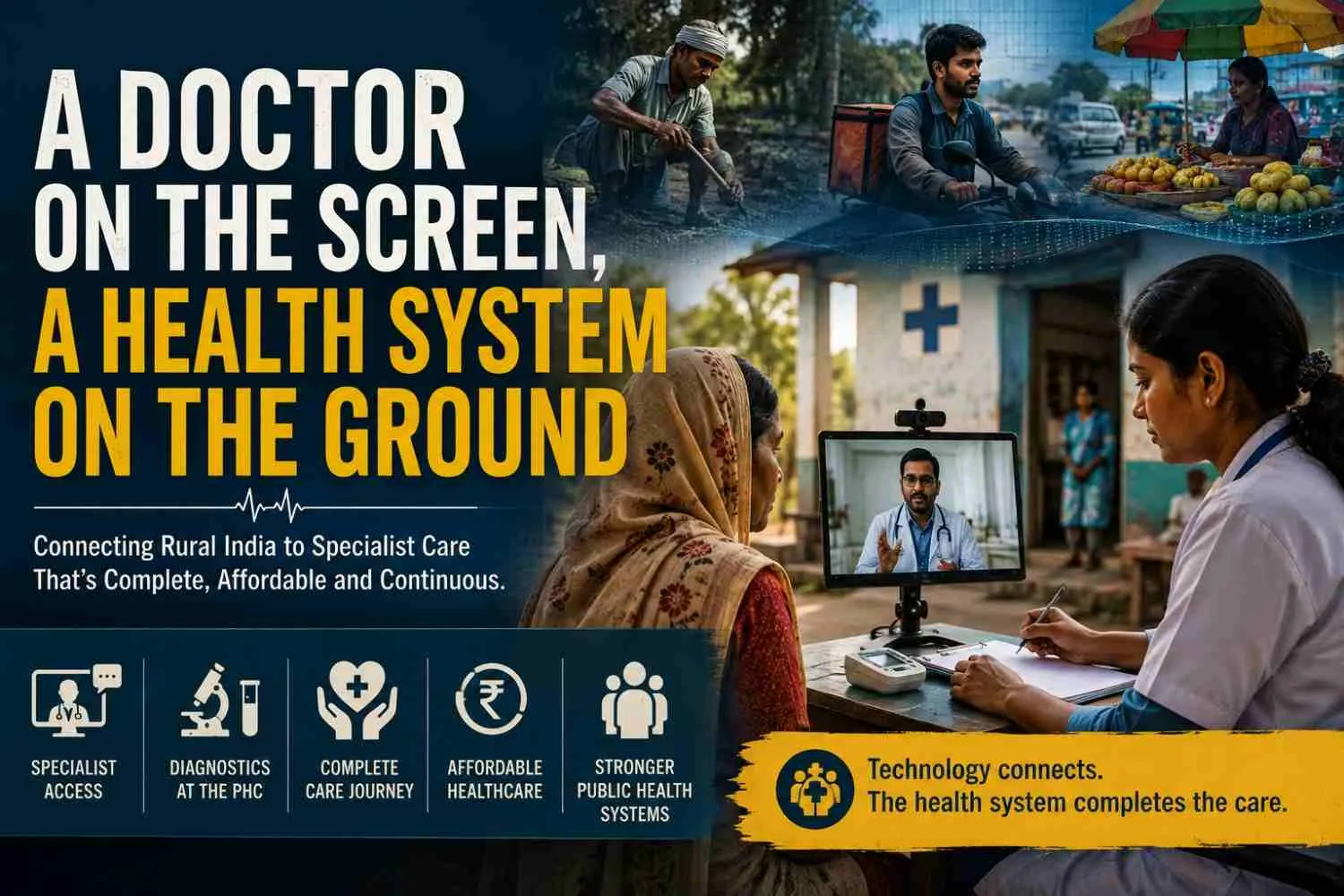
| India’s telemedicine network is bringing specialist care closer to rural patients, but the real challenge is ensuring that a consultation leads to care that is complete, affordable and continuous. |
Summary For rural patients, seeing a specialist can mean a long journey, lost wages and repeated visits to a distant hospital. India’s telemedicine network is changing that equation by bringing specialist expertise closer to rural communities, while corporate partnerships are adding diagnostics, technology, mobile healthcare and specialist access to the mix. But a teleconsultation is only one part of the care journey. The real test is whether patients are diagnosed, treated and followed up without having to bear the same travel and financial burden. For CSR programmes, success also depends on whether public health facilities are strengthened, outcomes are measured against a clear baseline, money is actually spent as reported and systems continue functioning after corporate funding ends. |
| Keywords Phygital Healthcare, Rural Telemedicine, Digital Health India, eSanjeevani, Healthcare Access, Rural Healthcare, Primary Health Centres, Ayushman Arogya Mandirs, Digital Health Infrastructure, Teleconsultation, Diagnostics, Continuity of Care |

Can a PHC become the gateway to a specialist hundreds of kilometres away?
For many rural patients, the challenge is not simply finding healthcare. But is reaching the right doctor without travelling hundreds of kilometres, losing a day’s wages or making repeated trips to a distant hospital.
India continues to face shortages and an uneven distribution of health professionals, particularly in rural and underserved areas, making specialist access a bigger challenge than simply counting the number of doctors available.
Telemedicine can help change this equation by bringing specialist expertise closer to patients instead of requiring them to travel long distances for every consultation.
India’s eSanjeevani platform has demonstrated the scale of this approach by connecting patients and health workers with doctors and specialists, including in rural and remote communities.
But phygital healthcare cannot depend on a screen alone.
The physical Primary Health Centre remains an important part of the care journey.
A nurse or community health worker can examine the patient, record vital signs, conduct basic diagnostic tests, explain the specialist’s advice and help ensure that medicines, referrals and follow-up care are available.
The technology can bring the specialist closer. But it is the local health system that turns a remote consultation into actual care.
PHYGITAL CARE JOURNEY
Village patient → Local PHC → Physical examination → Point-of-care diagnostics → Remote specialist → Treatment → Follow-up
The screen connects the specialist. The PHC completes the care journey.
What happens when telemedicine meets diagnostics?
A specialist cannot always make a reliable diagnosis through a conversation alone.
Basic diagnostic tests can provide the information needed to understand a patient’s condition and decide what treatment or referral is required.
A blood-sugar or blood-pressure reading, pregnancy test, haemoglobin level or another point-of-care test can significantly change what happens after a teleconsultation.
This makes diagnostics an important part of the phygital healthcare model, where digital specialist access is combined with physical healthcare services at the local level.
NITI Aayog’s work across Aspirational Districts and Blocks includes healthcare interventions that bring together community outreach, frontline health workers, diagnostics and digital monitoring.
The broader lesson is clear: technology works best when it is connected to the basic healthcare infrastructure patients can access locally.
That means a teleconsultation should not end with a video call. It should connect to examination, diagnosis, medicines, referrals and follow-up care.
Otherwise, a programme may be able to report thousands of consultations while leaving the more important question unanswered: Did those consultations actually lead to better care for patients?
THE SCREEN IS ONLY ONE PART
REMOTE SPECIALIST
↓
DIGITAL PLATFORM
↓
PHC / HEALTH WORKER
↓
DIAGNOSTICS + PHYSICAL EXAMINATION
↓
MEDICINES + REFERRAL
↓
FOLLOW-UP
Technology connects the patient to expertise. Infrastructure turns that expertise into care.
Can corporate partnerships strengthen the public health system?
This is where corporate participation can become more than a funding exercise. Companies can bring technology, specialist networks, diagnostics, equipment, training and logistics that may help extend healthcare to communities that public facilities struggle to reach on their own.
There are already examples of different approaches.
Tata Trusts has worked with state governments on telehealth and mobile healthcare initiatives aimed at connecting underserved communities with doctors and specialist services.
Apollo’s remote healthcare network offers another hybrid model. Its 2024–25 ESG report states that the network has delivered more than 16.5 million teleconsultations across 95 specialties, combining digital consultations with physical healthcare services.
Meanwhile, Smile Foundation’s Smile on Wheels takes doctors, nurses, laboratory services and medicines directly to villages and other hard-to-reach communities through mobile medical units.
These models also raise a bigger question for CSR: Should companies create separate healthcare systems of their own, or use their resources to strengthen the government facilities already serving these communities?
The second approach could offer greater long-term value. Instead of creating parallel systems that may struggle to continue once funding ends, corporate partners can support existing PHCs with digital infrastructure, diagnostic equipment, specialist access, staff training and logistics, while keeping the public health system at the centre of care.
The goal should not simply be to bring corporate healthcare to rural India. It should be to leave the rural healthcare system stronger than it was before the partnership began.
WHO DOES WHAT?
GOVERNMENT
• PHCs
• Health workers
• Public health infrastructure
• Referrals
CORPORATES
• Technology
• Equipment
• Diagnostics
• Funding
• Specialist networks
NGOs / COMMUNITY GROUPS
• Outreach
• Awareness
• Inclusion
• Local access
PATIENTS / COMMUNITIES
• Care-seeking
• Treatment
• Follow-up
• Feedback
Can preventive healthcare produce a measurable social return?
For CSR programmes, the focus needs to move beyond how many services were delivered to what actually changed for patients.
Screening 10,000 people is an activity. Identifying patients with hypertension or diabetes, ensuring they begin treatment and helping them complete follow-up is an outcome.
This distinction is particularly important when companies use technology to expand preventive healthcare.
J-PAL South Asia has evaluated preventive-health interventions in India, including research on demand for hypertension screening and the impact of health camps on preventive-care investment.
Its research also highlights an important limitation: technology and better monitoring systems do not automatically lead to better healthcare delivery.
In Karnataka, for example, a biometric system successfully tracked the attendance of doctors at Primary Health Centres, but it did not improve attendance because the government struggled to enforce the incentives and penalties linked to the system.
The lesson is relevant for corporate healthcare programmes too.
A better dashboard does not automatically mean better healthcare.
What matters is whether patients are being diagnosed earlier, starting treatment, completing follow-up and ultimately experiencing better health outcomes.
The real measure of CSR is not the number of beneficiaries on a report, but the difference the programme makes to their lives.
ACTIVITY VS OUTCOME
10,000 people reached
↓
7,500 screened
↓
2,100 diagnosed / referred
↓
1,600 started treatment
↓
1,200 completed follow-up
Measure the care journey, not just the first contact.
What do rural workers and migrant families need from these systems?
Rural healthcare cannot be separated from the realities of work and income. For many people, accessing specialist care can mean more than a long journey. It can mean lost wages, travel costs, childcare difficulties and time away from work.
A worker who has to travel to another town for a specialist consultation may lose a day’s earnings. Migrant workers may face additional barriers when their workplace and place of residence keep changing. Women may delay seeking medical care when travel, childcare responsibilities or the cost of treatment become difficult to manage.
The Aajeevika Bureau’s work with migrant workers highlights how informal workers can face gaps in healthcare and social-security access, particularly when migration, low incomes and hazardous working conditions overlap. SEWA Bharat has similarly worked to improve women’s access to healthcare and social-security entitlements through community-based approaches.
These experiences point to a simple principle:
Healthcare technology should fit into people’s lives, rather than expect people to reorganise their lives around technology.
That means rural healthcare systems also need to consider accessibility, language, affordability, mobility and physical access. These are particularly important for persons with disabilities, older people and workers who cannot easily travel.
What should companies actually measure?
This is where the evidence test becomes critical.
Companies should report the full number of people covered, rather than using a single “beneficiaries reached” figure.
If 10,000 people were enrolled, how many completed screening? How many were diagnosed? How many started treatments? And how many completed follow-ups?
The baseline should be equally clear. If a programme claims that it reduced patients’ travel costs, companies should show what patients were spending before the intervention.
If it claims to have improved access to specialist care, it should show how far patients previously had to travel and how that changed.
The same applies to consultations. Reporting one lakh consultations does not show how many patients actually received the treatment, medicines or referrals they needed.
Money also needs to be accounted for.
How much was budgeted? How much was actually spent? How much went towards equipment, technology, staffing, diagnostics, training and maintenance?
Companies should also report cost per outcome, rather than stopping at cost per consultation. For example, they could track the cost per completed treatment, cost per successfully screened patient or number of patients served per 1,000 people in the target population.
Both absolute and intensity measures can provide a clearer picture. Absolute numbers show the scale of a programme, while intensity measures help show how efficiently resources are being used.
Most importantly, the reporting boundary must remain clear.
A consultation is not automatically a treated patient. A screening is not automatically a diagnosis. And a person reached by a programme cannot automatically be counted as someone whose health improved.
The real evidence lies in what happened after the healthcare service was delivered.
THE CORPORATE HEALTHCARE EVIDENCE SCORECARD
| Measure | What to ask |
|---|---|
| Beneficiary denominator | How many people were actually covered? |
| Completion | How many completed screening, treatment or follow-up? |
| Outcome | What changed for patients? |
| Baseline | What was the situation before the programme? |
| Cost | How much was actually spent? |
| Cost per outcome | What did each successful outcome cost? |
| Intensity | What was achieved per 1,000 people or per ₹1 lakh? |
| Continuity | What continued after CSR funding ended? |
Measure outcomes, not just activities.
What happens when the CSR funding ends?
This may be the most important test of any corporate healthcare partnership.
A company can install telemedicine equipment, bring specialists into the system and fund diagnostics for three years. But rural healthcare needs to function long after a CSR funding cycle ends. If a programme cannot continue without corporate support, its long-term impact remains limited.
So, who maintains the equipment once the funding ends? Who pays for internet connectivity? Who trains new health workers when trained staff leave? Who ensures medicines and diagnostic supplies remain available? Who manages patient referrals and follow-up? And who is responsible for the infrastructure and patient data?
ESIC’s teleconsultation model offers a useful public-sector example. Its hub-and-spoke approach connects dispensaries with hospitals that act as specialist hubs, helping reduce patient travel while keeping local doctors involved in treatment and follow-up.
The broader lesson is clear:
Telemedicine creates lasting value when it becomes part of the regular healthcare system - not when it remains a temporary CSR project.
For companies, that means the success of a partnership should be judged not only by what it delivers during the funding period, but also by what the health system is still able to deliver after the funding ends.
WHAT SURVIVES AFTER CSR?
DURING CSR FUNDING
• Equipment purchased
• Specialists connected
• Staff trained
• Patients reached
↓ FUNDING ENDS
WHAT REMAINS?
• Equipment maintained?
• PHC staff still trained?
• Specialist network still available?
• Diagnostics still functioning?
• Connectivity still paid for?
• Patient follow-up still happening?
CONTINUITY = REAL SYSTEM STRENGTH
So, can corporate partnerships really bridge India’s rural specialist-care gap?
Yes - but only if corporate healthcare moves beyond delivering services and starts strengthening the system that delivers them.
India already has a network of Primary Health Centres, frontline health workers, digital platforms and an expanding telemedicine system. Corporate partnerships can add what many rural facilities struggle to access: specialists, diagnostics, technology, training, logistics and investment.
But the real value of these partnerships will not be measured by how many teleconsultations were delivered or how many devices were installed. Nor should success be defined by the size of a CSR announcement.
The stronger model is one in which corporate support makes the existing public health system more capable, more accessible and more sustainable.
That means the evidence test has to go much further:
Who was actually reached? Who completed care? How many patients received the treatment or referral they needed? What changed compared with the baseline? How much did patients save in travel, time or lost wages? What did the PHC gain? What did each successful outcome cost? And, most importantly, what continued after the corporate funding ended?
These questions determine whether phygital healthcare is creating a lasting healthcare solution or simply another successful CSR activity on paper.
For rural patients, however, the measure of success is much simpler.
It means not having to travel hundreds of kilometres just to see the right specialist. It means being able to get basic diagnostics close to home, receive treatment without unnecessary delays and know that follow-up care will still be available.
That is the real promise of phygital healthcare: bringing specialist expertise closer without leaving rural patients dependent on a screen - or on a company’s funding.
The real CSR test is not whether a company can bring a doctor to a village once. It is whether its partnership can help build a rural healthcare system that continues to deliver care long after the company steps away.
THE REAL TEST
ACCESS
Can patients reach specialist care?
→ OUTCOME
Did their health actually improve?
→ VALUE
Was the intervention worth the cost?
→ CONTINUITY
Did the system survive after CSR funding?
A consultation is an activity.
Completed, affordable and continuous care is the outcome.
The promise of phygital healthcare is not to replace the rural doctor with a screen. It is to bring specialist expertise, diagnostics and continuity of care closer to patients through the health system already in place.
And ultimately, the strongest corporate partnership will not be the one that creates the biggest programme.
It will be the one that leaves the rural health system more accessible, more capable and more sustainable - and less dependent on the corporate partner than it was before.
Sources:
- Ministry of Health & Family Welfare — eSanjeevani National Telemedicine Service Source
- Ministry of Health & Family Welfare — Telemedicine Services Guidelines Source
- National Health Authority — Ayushman Bharat Digital Mission (ABDM) Source
- National Health Authority — ABDM and Telemedicine FAQs Source
- Ministry of Health & Family Welfare — Ayushman Arogya Mandirs, diagnostics and teleconsultation Source
- Ministry of Health & Family Welfare — Annual Report 2024–25: eSanjeevani and digital health Source
- Ministry of Health & Family Welfare / ABDM — eSanjeevani’s scale and assisted teleconsultation model Source
Press Information Bureau — eSanjeevani integration with ABDM and continuity of care Source




Add a Comment