Editorial

Explore the latest sustainability news, innovations, insights, and industry stories from around the world.

Showing 10

27 Aug 2026

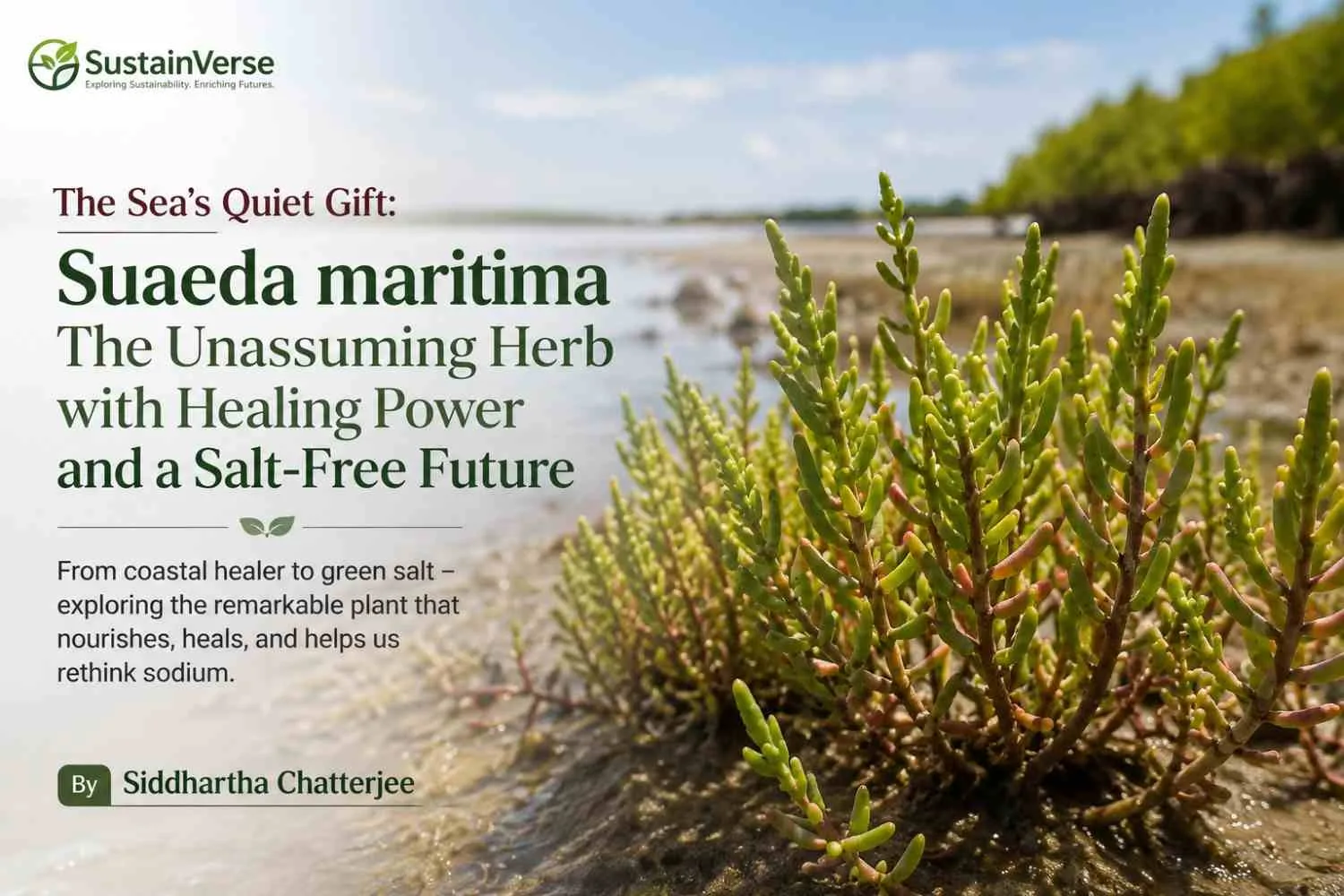
Introduction Along the muddy fringes of estuaries, salt pans, and mangrove edges across the world grows a modest, fleshy-leaved little plant that few passers-by would look at twice. Suaeda maritima, commonly called sea-blite, annual seablite or herbaceous seep weed, is exactly this kind of unassuming survivor. It thrives where almost nothing else can: in soils so saline that ordinary crops wilt and die within days. Yet this same salt-tolerance is what has made the plant valuable for thousands of years to coastal communities, who have eaten its tender shoots, used its ash and ground leaves as a savoury seasoning, and turned to its extracts for a surprising range of home remedies. In recent decades, modern phytochemical and pharmacological research has begun to catch up with this traditional wisdom, confirming that Suaeda maritima contains an unusually rich mixture of antioxidants, flavonoids, vitamins and minerals. At the same time, food scientists in several countries have started developing the plant into a commercial “green salt” or low-sodium seasoning powder, offering an alternative to ordinary table salt for people who need to watch their sodium intake. This article looks at the botany and characteristics of Suaeda maritima, reviews its herbal and medicinal benefits, explains how green salt is prepared from the plant and discusses why this preparation matters for human health. Salicornia sp.      Suaeda sp. Botanical Characteristics   Taxonomy and Names Suaeda maritima (L.) Dumort. belongs to the family Amaranthaceae, in the subfamily Suaedoideae, within the order Caryophyllales. It was formerly often classified in the older family Chenopodiaceae, which modern taxonomy now treats as part of Amaranthaceae. The plant carries a long list of regional common names, reflecting how widely it is recognised along coastlines: sea-blite, annual seablite, herbaceous seepweed and white sea-blite in English; and in parts of South Asia, names such as umari keerai in Tamil, referring to its use as a leafy pot-herb. Morphology Suaeda maritima is typically an annual herb, though some varieties behave as short-lived perennials in milder climates. It usually grows to a modest height of around 15 to 35 centimetres, occasionally reaching closer to a metre where conditions are especially favourable, forming low, spreading, much-branched clumps. Its most distinctive feature is its foliage: narrow, cylindrical to slightly flattened, fleshy leaves that store water and dilute the salt the plant absorbs from its surroundings. This succulence gives the leaves a glossy, almost waxy appearance, and the whole plant often takes on shades of yellow-green, blue-green, or, later in the season, reddish-purple as anthocyanin pigments build up under stress. The flowers are small, inconspicuous, and greenish, lacking showy petals; they are wind-pollinated and self-fertile, appearing from mid-summer into autumn depending on latitude. Seeds are tiny, dark, and glossy, and ripen a little after flowering. Because the plant completes its life cycle within a single growing season, it produces large numbers of seeds that can persist in the soil seed bank of salt marshes for later germination. Habitat and Distribution As a true halophyte, Suaeda maritima is specially adapted to grow in saline and even markedly alkaline soils, including tidal mudflats, salt marshes, the upper edges of mangrove stands, salt pans, and disturbed ground near salted roads. It prefers light, sandy, or loamy soils that stay consistently moist, and it cannot tolerate shade, so it is almost always found in open, sun-exposed coastal ground. The species has an extremely broad natural distribution, occurring along coastlines of Europe, Africa, Asia, and the Americas, which has made it a useful biological indicator of saline and alkaline soils in ecological surveys. Physiologically, the plant copes with high salinity through several linked strategies: succulence, which dilutes absorbed salts within enlarged leaf cells; selective ion transport, which channels excess sodium into vacuoles away from sensitive cell machinery; and the accumulation of compatible solutes such as glycine betaine, which help the plant maintain internal water balance under osmotic stress. Molecular studies on Suaeda species have identified numerous salt-responsive genes, reflecting just how finely tuned this plant is to its harsh environment. Phytochemical Composition Chemical analyses of Suaeda maritima have revealed a notably rich and varied composition. The plant contains dietary fibre, protein, carbohydrates, and a modest amount of fat, alongside a wide range of bioactive secondary metabolites, including alkaloids, glycosides, flavonoids, sterols, phenolic compounds, and tannins. Pigments such as beta-carotene contribute to its nutritional value, while its vitamin content is particularly striking: researchers have measured very high levels of vitamin E and appreciable vitamin C, both well above what is typically found in common leafy vegetables. The mineral profile is equally impressive. Suaeda leaves are reported to contain useful amounts of calcium, phosphorus, iron, copper, zinc, manganese, and selenium, in addition to the sodium and potassium one would expect from a salt-accumulating plant. Its amino acid profile includes all of the essential amino acids alongside a range of non-essential ones, and its lipid fraction is dominated by unsaturated fatty acids, with linoleic acid, an omega-6 polyunsaturated fat, making up the largest share. Studies using gas chromatography-mass spectrometry on seablite extracts have identified compounds such as phytol, myo-inositol, and several unsaturated fatty acid derivatives as major constituents, alongside substantial polysaccharide and flavonoid content in related Suaeda species. Herbal and Medicinal Benefits Suaeda maritima has a long history of use in traditional and folk medicine among coastal communities, and this has been progressively validated by laboratory research over the past two decades. The plant's pharmacological potential is generally attributed to its dense mixture of phenolics, flavonoids, tannins, and vitamins, which together give its extracts strong antioxidant capacity and a range of downstream biological effects. Pharmacological properties reported for Suaeda maritima extracts in published phytochemical and bioactivity studies.   Antioxidant Activity Extracts of Suaeda maritima consistently show the ability to neutralise free radicals, an effect closely tied to their high phenolic and flavonoid content. Root extracts in particular have shown strong radical-scavenging activity and the ability to inhibit lipid peroxidation, a process that damages cell membranes and is implicated in ageing and many chronic diseases. This antioxidant capacity underlies many of the plant's other reported benefits, since oxidative stress is a common thread linking inflammation, liver damage, and abnormal cell growth. Hepato-protective Effects Several studies describe hepato-protective activity in Suaeda sp. extracts, meaning they help defend liver tissue against damage from toxins or oxidative stress. This aligns with the traditional use of related seepweed species as a liver tonic in some folk medicine systems, and is thought to result from the combined antioxidant and anti-inflammatory action of the plant's phenolic compounds. Anticancer and Cytotoxic Properties Laboratory investigations into crude extracts of Suaeda sp., prepared at different polarities, have reported selective cytotoxic effects against cancer cell lines alongside antioxidant activity, suggesting the plant may hold promise as a source of natural anticancer leads. While such findings are encouraging, they come from cell-based and extract-level studies rather than human clinical trials, so they should be regarded as a foundation for further research rather than a proven treatment. Antidiabetic and Antibacterial Potential Suaeda maritima has also been investigated for antidiabetic properties, with some studies suggesting its extracts can help moderate blood sugar responses, complementing broader reports across the wider Suaeda genus of reduced blood cholesterol and lipid levels with regular consumption. Alongside this, antibacterial activity has been documented against a range of microorganisms, hinting at potential uses in natural preservation and topical antimicrobial applications. Skincare and Wound Healing A notable line of research from Thailand examined the root extract of Suaeda maritima specifically for skincare applications. That study found the extract to be rich in tannins and triterpenes, with substantial total phenolic and flavonoid content. In laboratory tests, the extract inhibited both free-radical activity and lipid peroxidation, and when applied to human skin fibroblast cultures, it increased cell proliferation and narrowed the gap in a simulated wound, indicating genuine wound-healing potential. This positions Suaeda maritima root extract as a promising ingredient for natural anti-ageing and skin-repair cosmetic formulations. Anti-inflammatory and Antiviral Reports Broader reviews of halophyte plants along the Black Sea coast, examining both Salicornia europaea and Suaeda maritima, describe additional biological activities including anti-inflammatory, antidepressant, antimicrobial, and antiviral effects, alongside the antioxidant, hepatoprotective, and anticancer properties already discussed. Together, these findings support the idea that halophytes such as Suaeda maritima are a promising, still under-explored source of bioactive compounds for functional foods, dietary supplements, and novel herbal preparations. Culinary Uses and Nutritional Role Long before scientists began analysing its phytochemistry, coastal communities were already eating Suaeda maritima as a leaf vegetable. Its young leaves and tender shoots have a naturally salty, slightly succulent flavour, and are traditionally eaten raw in small quantities within salads, or cooked and mixed with other vegetables to balance out the saltiness. In some regions, the young shoots are pickled in vinegar and served as a relish, while the seeds themselves are edible, raw or cooked, though less commonly used than the leaves and shoots. Because the plant absorbs and concentrates minerals from its saline habitat, it functions almost like a living seasoning: a small amount of chopped seablite can replace part of the added salt in a dish while also contributing fibre, vitamins and antioxidant compounds that ordinary refined salt cannot provide. This dual role, as both food and seasoning, is the traditional root from which the modern idea of “green salt” has grown. Green Salt: Preparation from Suaeda maritima “Green salt” is the name given to a low-sodium, mineral-rich seasoning powder made by drying and grinding the leaves (and sometimes the whole young shoots) of salt-accumulating plants. The best-known commercial green salt is made from Salicornia, a related succulent halophyte also known as glasswort or sea asparagus, but the same basic method applies to Suaeda and several food-science studies have specifically explored dried, powdered seablite as a partial substitute for ordinary salt in seasoning blends, marinades and even bread. One patented process describes producing a nutrient-rich herbal salt from halophytic plants of the Salicornia and Suaeda genera by growing them on saline soils, harvesting and solar-drying the biomass, and then charring and controlled incineration to concentrate the mineral content, though this industrial route is only one of several ways the plant can be processed. For household or small-scale artisanal preparation, the process is considerably simpler and closer to how other dried herbal seasonings are made. The steps below describe a typical leaf-powder method suited to home kitchens or small food enterprises. General workflow for preparing Suaeda maritima leaf-powder “green salt” at a household or small-batch scale. Step-by-Step Preparation Harvesting: Young, tender shoots and leaves are hand-picked from clean, unpolluted salt-marsh or coastal stands, ideally before flowering, when the leaves are most succulent and least fibrous. Washing: The harvested material is rinsed thoroughly in fresh water to remove mud, sand, loose surface salt crystals, and any debris picked up during harvesting. Drying: The washed leaves are spread thinly and dried, either under the sun, in a shaded, well-ventilated space, or in a low-temperature dehydrator or oven, until they become crisp and fully free of moisture. Careful drying preserves colour and nutrient content better than high-heat methods. Roasting or charring (optional): Some traditional preparations lightly roast or char the dried material in an open pan before grinding, which deepens the flavour, darkens the colour slightly, and can extend shelf life; this step is optional and varies by regional practice. Grinding: The fully dried leaves are ground, using a mill, blender, or traditional mortar and pestle, into a fine, even, deep-green powder. Sieving and packing: The ground powder is sieved to remove any coarse fibre or stem fragments, then packed into airtight, moisture-proof containers to protect it from humidity and preserve its colour and aroma. The resulting green salt is a fine, vividly coloured powder that carries a naturally salty, slightly earthy, umami-like flavour. Because it is made from the whole leaf rather than purified sodium chloride, it retains dietary fibre, plant pigments, vitamins, and the mineral spread naturally present in the plant, distinguishing it clearly from refined table salt both in composition and in taste. Health Significance and Benefits of Green Salt The growing interest in Suaeda-based and Salicornia-based green salts is closely tied to global concern about excessive dietary sodium. Ordinary table salt is almost entirely sodium chloride, and most guidance on healthy eating recommends keeping total sodium intake within a moderate daily limit, since habitually high intake is linked to elevated blood pressure and greater long-term cardiovascular risk. Green salt made from halophyte leaves offers a way to bring a genuinely salty taste to food while reducing the proportion of the seasoning that is pure sodium chloride, since a meaningful part of its weight is fibre, plant minerals, and other compounds rather than sodium alone. Beyond sodium reduction, several specific health-related points are worth highlighting. Lower relative sodium content: Because green salt is a whole-leaf powder rather than pure salt, gram for gram it typically delivers less sodium than table salt, helping people moderate intake without giving up a salty flavour entirely. Broader mineral profile: Alongside sodium and potassium, the powder carries calcium, magnesium, iron, zinc, and other trace minerals drawn from the plant's saline habitat, offering a more rounded mineral contribution than refined salt. Antioxidant and vitamin content: The retained flavonoids, phenolics, and vitamins C and E contribute antioxidant activity that ordinary salt cannot provide, aligning with the broader herbal benefits described earlier in this article. Dietary fibre: Because the whole leaf is dried and ground rather than extracted, green salt retains plant fibre, adding a nutritional dimension entirely absent from mineral salt. Reduced-sodium food product development: Food scientists have explored dried seablite powder as an ingredient in low-sodium fish marinades, seasoning blends, and even sodium-reduced bread, suggesting practical applications for people managing blood pressure or kidney-related dietary restrictions under medical guidance. It is worth noting that green salt is a seasoning and dietary supplement, not a medicine, and individuals with specific health conditions, particularly kidney disease or conditions requiring strict mineral or sodium control, should discuss any substantial dietary change, including switching seasoning types, with a qualified healthcare provider or dietitian before making adjustments. Ecological and Economic Significance Beyond its direct culinary and medicinal value, Suaeda maritima plays a meaningful ecological role. As a pioneer halophyte, it stabilises bare saline mudflats, helping other salt-marsh vegetation establish over time, and its dense stands provide shelter and forage habitat for invertebrates and shorebirds along many coastlines. Its reliable presence on saline and alkaline soils also makes it a useful bio-indicator, helping researchers and land managers assess soil salinity levels without needing extensive chemical testing. Economically, halophyte crops such as Suaeda and Salicornia are attracting growing interest as “saline agriculture” options: crops that can be cultivated using seawater or brackish water on coastal land unsuitable for conventional farming. This offers a route to generating income and food security in coastal and arid regions without competing for scarce fresh water, while simultaneously producing a genuinely novel, mineral-rich food and seasoning ingredient. Small-scale green salt production, in particular, has been highlighted as a way to create livelihoods for coastal communities, including women-led artisanal enterprises in some regions, while making productive use of land that would otherwise remain marginal. Conclusion Suaeda maritima is a striking example of how an unassuming coastal weed can turn out to be both botanically remarkable and practically valuable. Its succulent, salt-tolerant physiology allows it to thrive where few other plants can survive, and this same adaptation has given rise to a leaf chemistry unusually rich in antioxidants, vitamins, and minerals. Traditional use of the plant as a leafy vegetable and folk remedy is now supported by a growing body of research pointing to genuine antioxidant, hepatoprotective, antibacterial, antidiabetic, anticancer, and skin-healing properties. Its transformation into “green salt,” a dried, ground leaf powder used as a lower-sodium, mineral-rich seasoning, brings these benefits directly into the kitchen, offering a natural, plant-based alternative for people looking to season their food more mindfully. As interest in saline agriculture and functional, plant-derived foods continues to grow, Suaeda maritima seems likely to move further from the margins of the salt marsh into the modern pantry. Select References Sahu, B.B. & Shaw, B.P. (2009). Isolation, identification and expression analysis of salt-induced genes in Suaeda maritima. BMC Plant Biology. Peddi, P. et al. (2021). Green synthesis, characterization, antioxidant, antibacterial, and photocatalytic activity of Suaeda maritima aqueous extract-mediated copper oxide nanoparticles. Journal of Genetic Engineering and Biotechnology. Various authors (2022). Evaluation of cytotoxic and antioxidant activities of different polarities extracts of Suaeda maritima. Journal of King Saud University – Science. Various authors (2024/2025). Root of Seablite (Suaeda maritima), the Medicinal Halophyte for Skincare Application. PMC. Various authors (2024). Salicornia europaea L. and Suaeda maritima (L.) Dumort: bioactive compounds and future perspectives. Biotechnology & Biotechnological Equipment. Tongkam et al. GC-MS Analysis of Suaeda maritima and its Application as a Salt Substitute in Fish Marinade Powder. Indonesian Journal of Science and Technology. Preparation of Suaeda Tea Through Semi-Solid Fermentation. PMC. Preparation of nutrient rich salt of plant origin (patent document, halophytic Salicornia/Suaeda process). PFAF Plant Database and Wikipedia entries on Suaeda maritima (botanical characteristics and edible uses).  About Author  Siddhartha Chatterjee Dynamic professional with over 14 years of diverse experience spanning academic leadership, applied scientific research, government administration and rural development sector. Proven expertise in scientific research on observational oceanography and modelling, disaster risk management, coastal ecology, spearheading educational institutions, designing interdisciplinary course module, skill up-gradation of backward communities and organizing student-centric training programs in an unsupervised way. Adept in educational planning, handling time bound projects, effective utilization of human resource, need-based grooming/mentoring, overseeing administrative work and critical thinking. ...Read more
24 Aug 2026

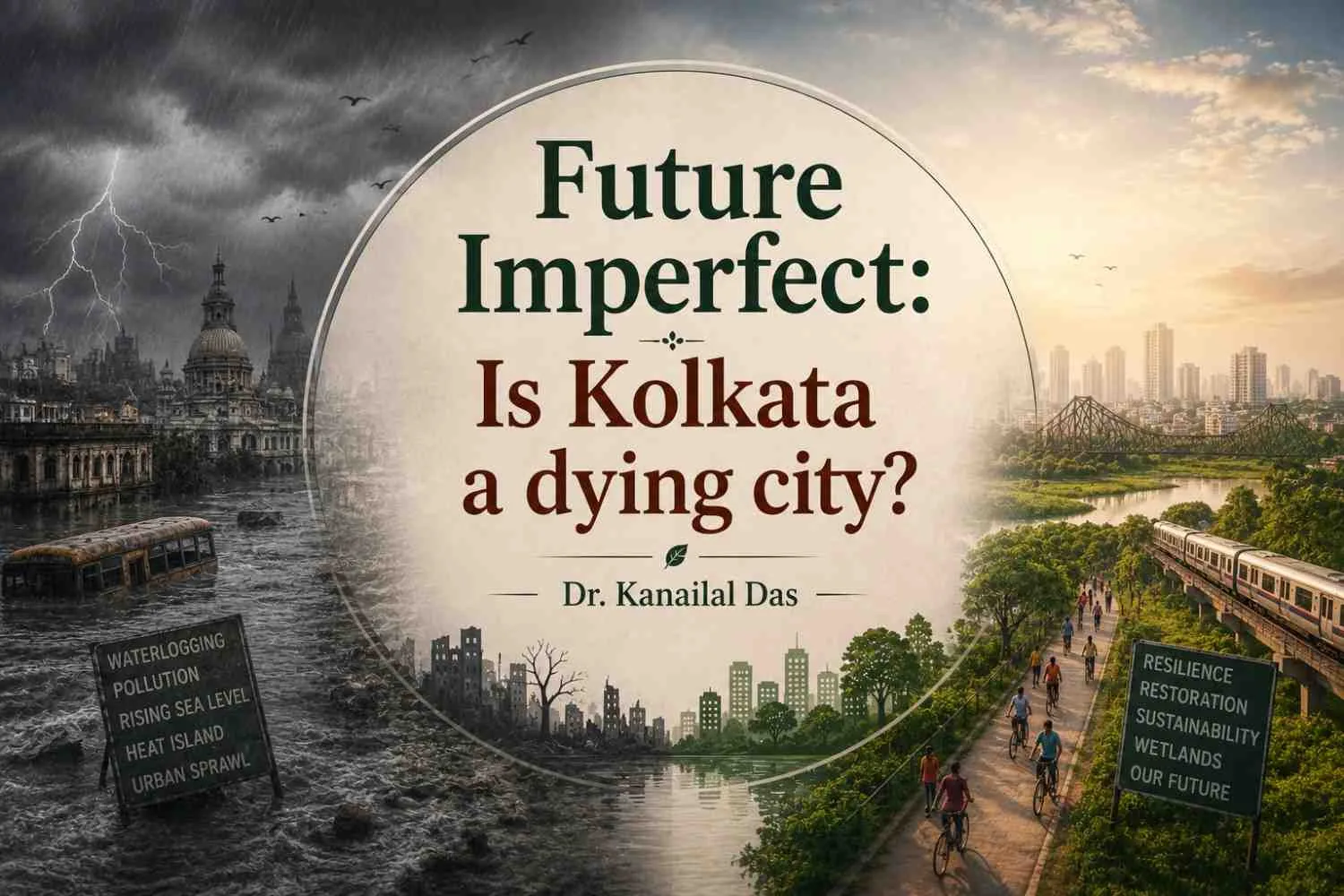
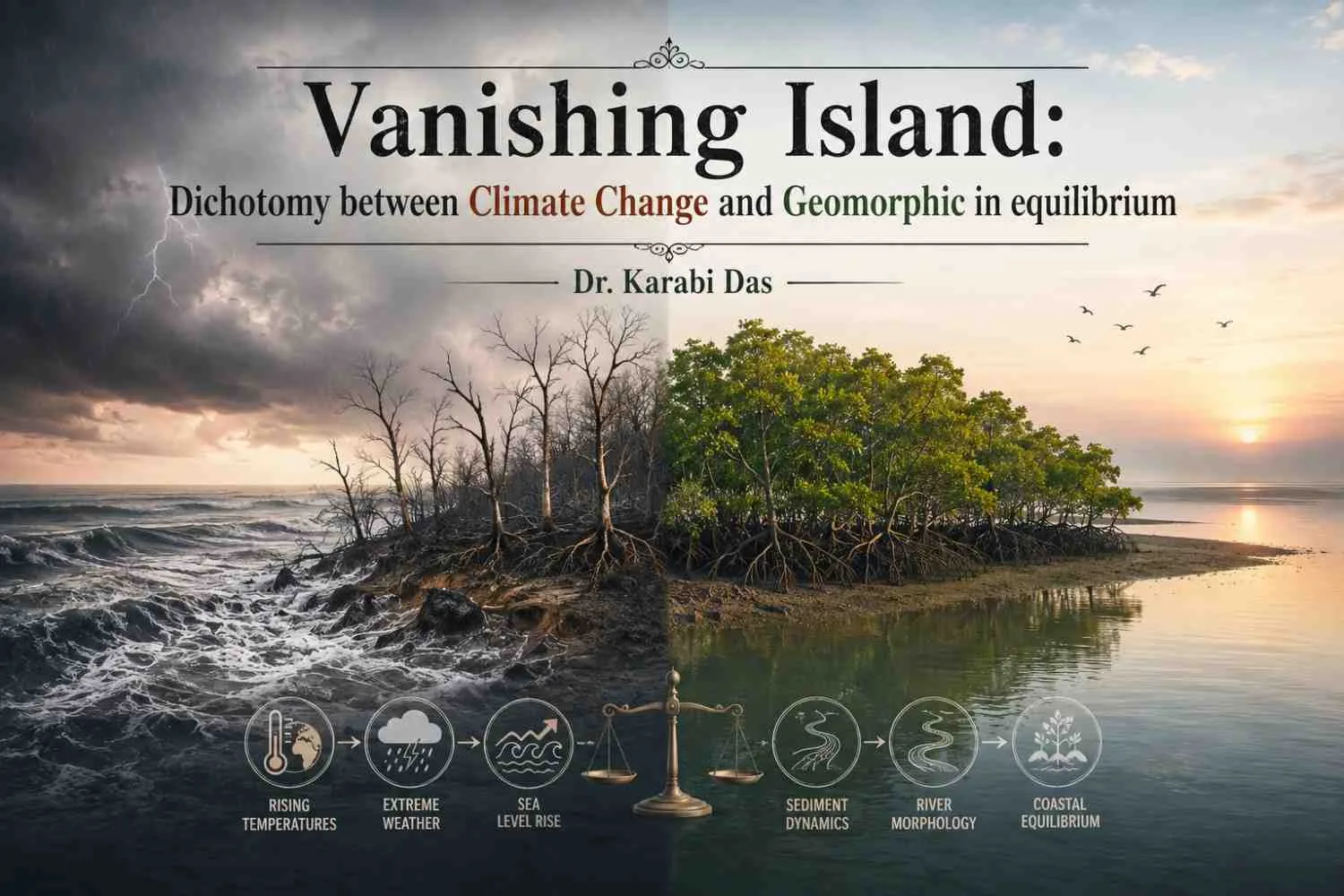
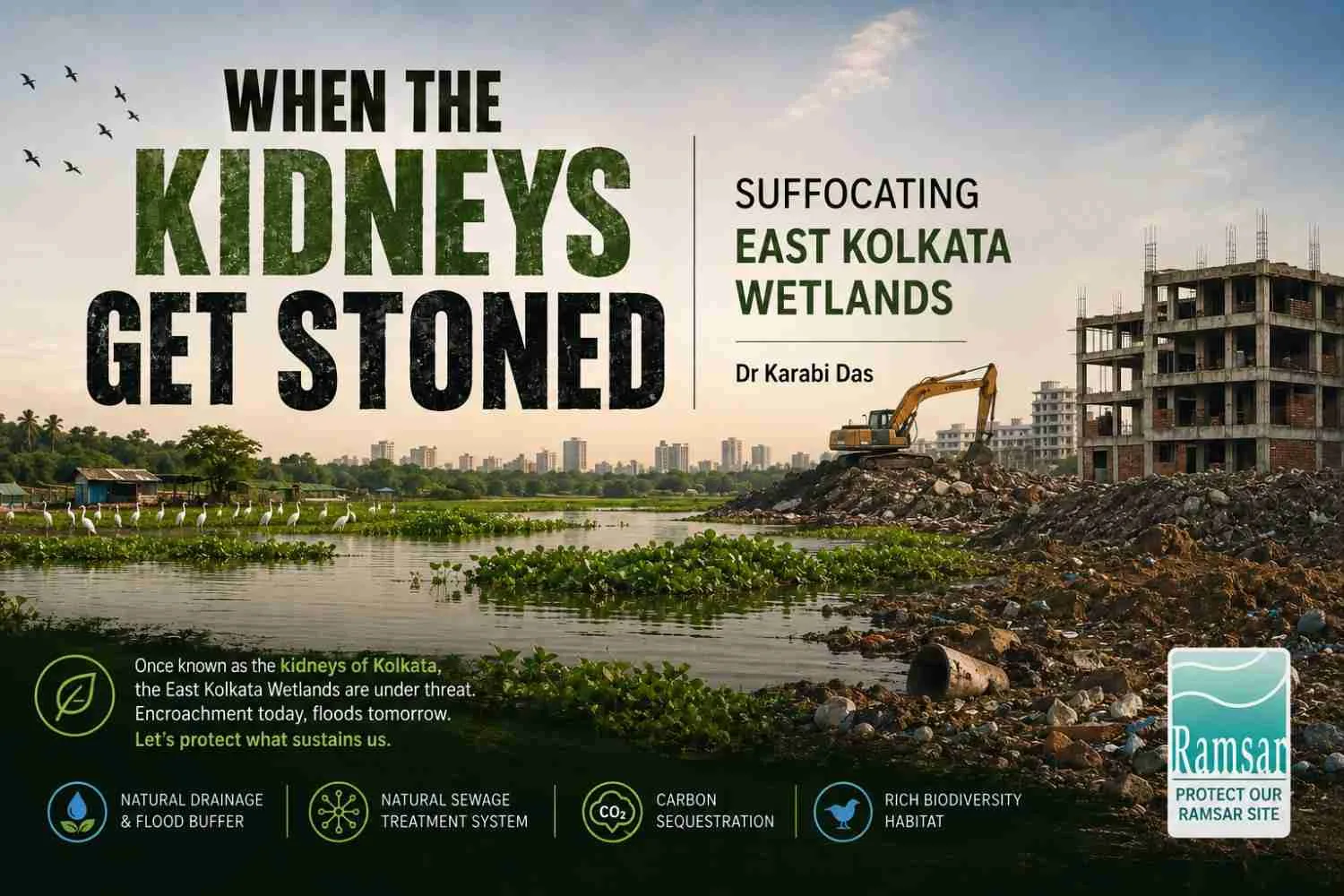
Summary: Originally acclaimed as the kidney of Kolkata, the East Kolkata Wetlands suffer instances of encroachment in the form of settlements, agriculture and other land use changes. A Ramsar site, the role of East Kolkata Wetlands in Kolkata’s natural drainage and sewage system, water filtering by means of phytoplanktons and algae, maintaining urban micro climate, carbon sequestration and being a rich source of biodiversity can never be left unnoticed. Its time that the East Kolkata Wetlands are preserved for the betterment of our larger society.  Keywords: Environment, East Kolkata Wetlands, Urban Heat Island, Carbon sequestration  Illegal encroachments have surfaced on the eastern fringes of Kolkata with residents accusing land sharks of once again targeting the East Kolkata wetlands (EKW), an internationally recognized Ramsar site by filling up a sprawling waterbody in Nayabad for suspected real estate development. A complaint has been lodged with urban development minister Agnimitra Paul, the Municipal Commissioner and the East Kolkata Wetland Management Authority, alleging that a large pond near Sadhubari on Nayabad Main Road, close to the Upohar Condominium off Eastern Metropolitan Bypass is being systematically filled up in broad daylight without any visible intervention from the authorities.   East Kolkata Wetlands has an area of 12,500 hectares with 254 sewage fed fisheries spread across 37 mouzas and is internationally considered to be a Ramsar site. Shrinking wetlands could increase urban flooding, destroy biodiversity, force huge spending on artificial drainage and contribute to urban heating as a result of change in weather.     Photo plate: East Kolkata Wetlands (Photo by Dr Kanailal Das, 2024)    Figure 1: Change of EKW through years (1922,1968,2026: prepared by author using Survey of India toposheets and Google Earth Imagery) As climate change brings more intense rainfall, these wetlands absorb these wetlands absorb enormous volumes of water. Losing these will worsen flooding, destroy livelihoods and force the city to spend hundreds of crores in preparing infrastructure for artificial drainage.  The latest allegations come six months after the January 26 blaze in Anandapur that killed 27 people inside a warehouse and an adjacent food manufacturing unit. Investigation later revealed that the gutted warehouses stood on land bordering or forming part of the East Kolkata Wetlands.   Locals and environmental activists alleged the operation follows a familiar pattern seen across the wetlands. Asbestos sheds are first erected; settlers are brought in and after a while the land is cleared for permanent residential or commercial structures.  The role of East Kolkata Wetlands as Kolkata’s natural wastewater treatment system, flood buffer and carbon sink cannot be looked down upon and the shrinking condition of this Ramsar site needs immediate and stringent action.  History of East Kolkata Wetlands: East Kolkata Wetlands owes its formation through the natural avulsions of river Bidyadhari. The evolution of East Kolkata Wetlands dates back to British colonial canal building into the world’s largest natural wastewater fed aquaculture and sewage treatment system and has gone a long way to become noted as Ramsar site.  Originally a marshy saline lake system of the 18th century, East Kolkata Wetlands abounded in fish and birds before tidal flows receded to leave freshwater environments. East Kolkata Wetlands treat about 60-80% of Kolkata’s sewage naturally as the world’s largest organic sewage management system, supporting almost 50,000 agro workers and supplying about 1/3rd of Kolkata’s fish requirement.  East Kolkata Wetlands got its name from late Dhrubajyoti Ghosh, Special Advisory (Agricultural Ecosystem) Commission on Ecosystem Management, who reached this incredible but neglected part of the city, while working as an engineer for the Water and Sanitation Department, Government of West Bengal on his quest for an answer to the question what exactly happens to the city sewage.  These natural waterbodies which were known just as fisheries provided the answer. Devised by the local fishermen and farmers, these wetlands served in effect as the natural sewage treatment plant for the city.  Despite protective legislation enacted since 2006, the East Kolkata Wetlands have experienced severe physical reduction. The total area declined approximately 65 sq km to 41 sq km within just 30 years. This is due to illegal land conversion. This continuous reduction in size has directly harmed the livelihoods of fishing communities and sewage farmers who depend on the ecosystem for their survival. In 1991 the West Bengal Government accepted an offer by a nonresident Indian to build a World Trade Centre and allotted 227 acres of wetlands for this purpose. As a result, the NGO “People United for Better Living in Calcutta (PUBLIC) filed a public interest litigation in the Calcutta High Court arguing for the importance of the wetlands and why they should be left unchanged. The order of Justice Umesh Chandra Bannerjee on this matter is considered a landmark judgement. As an outcome, the proposal for World Trade Centre was turned down in its original form and strict conditions were laid “I do not find any justiciable reason to disagree with the opinion expressed by the environmentalists that wetland should be preserved and no interference or reclamation should be permitted”.   Following the order of the Calcutta High Court in 1992 to its credit, the State Government did not appeal but accepted the ruling. In fact, the environment Secretary Kalyan Biswas applied for the East Calcutta Wetlands to be designed a “wetland of international importance” under the Ramsar Convention. This was observed in 2002.  Methods for Conservation:  To demarcate the boundaries of East Kolkata Wetlands. To take measures to stop, undo and prevent any unauthorized development project in EKW. To prevent, prohibit or restrict any mining, quarrying, blasting or other operations in EKW. To direct demolition or alteration of any hoarding frame, post, kiosk, structure, neon signed or sky sign erected, exhibited illegally for the purpose of advertisement on any land in EKW. To take measures to abate pollution in EKW and conserve the flora, fauna and biodiversity in general. To prepare action plans conforming to the resolutions taken and recommendations made from time to time underRamsar Convention and to update the land use maps of EKW. To promote research and disseminate findings of such research among the stakeholders. To raise awareness about the utility of the wetlands in general and the EKW in particular. To promote basic conservation principles like sewage fed pisciculture and ecotourism in the EKW. To enforce land use control in substantially waterbody-oriented areas of EKW. To detect changes of ecological characters and land use in EKW. To conduct enquiry or scientific study within the scope of the project.   About 100 species of flora have been recognized in and around EKW. Several kinds of water hyacinths across these wetlands. The area is also home to large numbers of coconut and betel nut trees. Varieties of vegetables like cauliflower, eggplant, pumpkin, sunflower are farmed.  Numerous species of fish are farmed in sewage fed ponds called bheries in EKW. These include silver carp, tilapia. The area is also home to the marsh mongoose and small Indian mongoose, Palm civet and small Indian Civet.  This sewage fed aquaculture is an example of potential carbon sink. East Kolkata Wetlands can sequester 1.9 MgC/ha/year, mitigating at least 118 Gg atmospheric CO2 per year. Also, carbon intake by harvested fish crop corresponds to 61 Gg CO2 per year rewarding US $ 3.6/kg blue carbon harvested. East Kolkata Wetlands act as vital natural thermal sink and sponge for Kolkata. They regulate the urban microclimate by moderating temperature gradients reducing the Urban Heat Island (UHI) effect maintaining ambient humidity through high evaporation rate and sequestering carbon. High rates of water surface evaporation sustainably regulate relative humidity in the eastern fringes of the urban sprawl. Abundant aquatic vegetation and phytoplankton generate large quantities of oxygen supporting cleaner local air circulation. The wetlands act as a natural retention basin that absorbs heavy monsoon downpours and slowly releases stored moisture during dry spell stabilizing local hydrological micro rhythms.    About Author Dr Karabi Das, Masters in Geography from University of Calcutta, former Senior Research Fellow, UGC, PhD on Physical and Socioeconomic changes in the Indian Sundarban is presently working as Assistant Professor of Geography, Dr Kanailal Bhattacharyya College, Howrah.She has participated in many national and international seminars and has 12 papers and 10 book chapters to her credit.Her areas of interest include Fluvial Geomorphology, river in equilibrium and human environment relationship.   ...Read more

17 Aug 2026

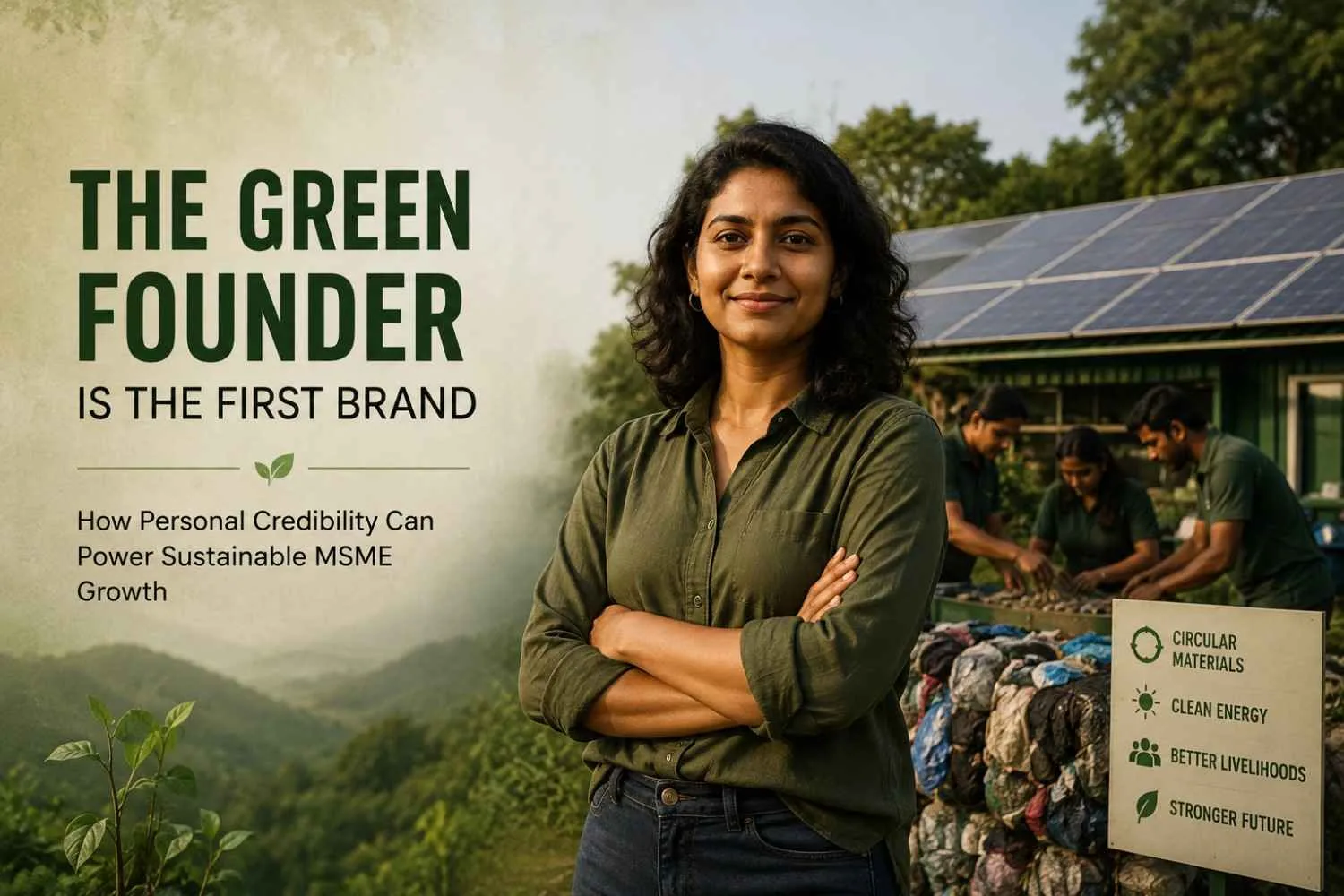
How Personal Credibility Can Power Sustainable MSME Growth By Professor Ujjwal K Chowdhury Communication Specialist A sustainability startup may begin with a cleaner technology, circular product, climate solution or social mission. But before the market believes the solution, it often has to believe the human being building it. For India’s green MSMEs, founder credibility can become the low-cost capital that wins the first customer, attracts the first investor, opens the first institutional door and turns a worthy idea into a trusted movement. The challenge is not to become famous. It is to become trusted for something that matters. SummaryFor sustainability-driven MSMEs, personal branding is not vanity marketing. It is strategic trust infrastructure. Early-stage founders can rarely outspend large corporations, but they can out-explain, out-teach, out-listen, out-network and out-humanise them. A credible founder can make complex green technologies understandable, impact propositions investable and behavioural change desirable. But green businesses carry an additional burden: purpose must be supported by economics, claims by evidence, and storytelling by integrity. The founder’s journey must therefore progress from Founder Brand → Startup Brand → Category Brand → Institutional Brand. KeywordsGreen MSMEs, Sustainable Startups, Founder Branding, Personal Brand, Climate Entrepreneurship, Circular Economy, Social Enterprise, Impact Investment, Green Business, Sustainability Communication, Founder Credibility, ESG, ClimateTech, Clean Energy, Bengal Startups, Purpose-driven Entrepreneurship Hashtags#GreenEntrepreneurship #MSME #SustainableStartups #FounderBrand #PersonalBranding #GreenBusiness #ClimateTech #CircularEconomy #SocialEnterprise #ImpactInvesting #Sustainability #StartupIndia #BengalStartups #BuildInIndia #PurposeToProfit Before They Buy Your Product, They Buy the Possibility Imagine a small entrepreneur entering the market with a solar-powered solution for rural enterprises. The technology may work. The economics may make sense. The environmental case may be compelling. Yet a customer encountering the company for the first time does not possess ten years of audited performance with which to judge it. Neither does an impact investor, distributor, corporate partner, employee or journalist. They are being asked to believe in an unfinished future. And therefore, before they completely understand the company, they inevitably examine the people behind it. Who is this founder? Does she understand the problem? Has he spent enough time in the field? Can this team execute? Are the sustainability claims real? Will they still be accountable when something goes wrong? This is why, particularly during the first thousand days of a sustainability-led MSME, credibility is not decoration. It is operating capital. The company may still be unknown. The founder need not be. A logo identifies a company. A credible founder gives people a reason to examine it. That distinction can determine whether the first email gets answered, whether an incubator offers a meeting, whether an employee leaves a safer job to join, whether a CSR head takes the pilot seriously, or whether an investor agrees to hear the story. Large companies can purchase enormous attention. Green MSMEs usually cannot. But the smaller enterprise can sometimes out-explain, out-teach, out-listen, out-network and out-humanise the corporation several hundred times its size. That is the green founder's asymmetric advantage. Do Not Ask: “How Do I Become Famous?” Ask: “What Must I Become Trusted For?” This is perhaps the most important shift a startup founder can make. “Green entrepreneur” is not positioning. “Sustainability professional” is not positioning. “Visionary founder” tells the market almost nothing. Consider the difference: Generic: Sustainable fashion entrepreneur. Memorable: Building commercially desirable products from post-consumer textile waste while creating decentralised livelihoods. Or: Generic: Climate entrepreneur. Memorable: Building climate-resilient livelihood enterprises for vulnerable coastal communities. Or: Generic: Renewable-energy founder. Memorable: Developing decentralised clean-energy systems that help rural micro-enterprises become more productive. Suddenly the founder has a territory. A useful personal brand builds a mental chain: Name → Problem → Expertise → Evidence → Trust. The goal is not maximum visibility. The goal is maximum relevance among the people who can change the trajectory of the enterprise. A green MSME does not initially need one million followers. It may need 20 serious customers, ten knowledgeable mentors, ten aligned investors, ten journalists or sector communicators, ten institutional partners and a handful of people capable of opening the right doors. The founder-brand playbook therefore emphasises disciplined relationship-building over algorithmic popularity. Green Businesses Sell More Than Products. They Sell Transition. Selling an ordinary product is difficult. Selling behavioural change is harder. The sustainable entrepreneur may be asking customers to: change a familiar material; segregate waste; switch an energy source; accept an unfamiliar technology; pay differently; reuse rather than discard; alter transportation habits; trust decentralised production; change farming practices; or believe that environmental responsibility and commercial success can coexist. You are therefore not simply selling solar panels, EV technology, an upcycled handbag, bio-packaging, regenerative agricultural inputs or a waste-management service. You are selling the credibility of the transition. The stronger the behavioural change required, the greater the need for explanation. And that turns the founder into something larger than a salesperson. The founder becomes an educator of the market. Teach Before You Sell One of the greatest mistakes green startups make is turning every communication channel into an advertisement. “Buy our sustainable product.” “We are transforming the planet.” “We are disrupting the industry.” “We are revolutionising sustainability.” The language becomes bigger while the evidence remains small. A stronger founder takes the opposite route. Explain why the existing system wastes resources. Explain why recycling economics is difficult. Explain lifecycle costs. Explain why rural clean-energy adoption sometimes fails. Explain financing barriers. Explain consumer behaviour. Explain why apparently sustainable materials contain hidden trade-offs. Explain policy changes. Explain what you discovered from customers. Explain where your first prototype failed. A circular-fashion founder can teach textile waste and reuse economics. A clean-energy founder can explain financing and last-mile distribution. A ClimateTech entrepreneur can interpret climate risk and adaptation for MSMEs. A sustainable-food founder can intelligently discuss soil, sourcing, packaging, logistics and consumption. The documents recommend five particularly powerful forms of impact-founder content: problem explanation, field learning, business-model explanation, impact reporting and informed commentary on the larger system. The principle is simple: Own the problem conversation before trying to own the market. When the ecosystem repeatedly learns something useful from you, you stop appearing as another vendor. You begin becoming an authority. Purpose Is Not a Business Model Sustainability entrepreneurs often possess something extraordinarily powerful: conviction. But conviction can create a dangerous blind spot. A noble intention does not repair weak unit economics. A powerful story does not compensate for poor distribution. An SDG logo does not prove impact. A successful pilot does not automatically mean scalability. Serious impact investors eventually ask two questions: Can this enterprise become financially viable? and Can it genuinely produce the social or environmental outcomes it claims? A strong green-founder brand must therefore communicate four things simultaneously: Connection: Why do you care about the problem? Understanding: What have you learned about it? Business Model: Who pays, why, how much, how repeatedly and at what cost? Impact: What verifiably changes because your intervention exists? This is where green entrepreneurs must learn perhaps the most important vocabulary of impact: Outputs are not outcomes. Distributing 5,000 solar lamps is an output. Households consistently using those lamps, reducing kerosene expenditure or obtaining better evening study conditions are outcomes. Demonstrating durable health, educational or household-economic improvement to which the intervention plausibly contributed takes the argument further towards long-term impact. Do not make your impact claim larger than your evidence. Make your evidence stronger. An entrepreneur who tells an investor, “We have reached 10,000 households, but verified outcome data currently covers 3,200,” may appear less spectacular. The founder may actually appear more investable. Because transparency signals maturity. Heart. Head. Hands. The Green Founder's Three Tests Social and environmental entrepreneurs face an ethical burden ordinary consumer businesses may not. Their stories may involve poverty, farmers, women, climate disasters, vulnerable communities, water scarcity, waste pickers, energy poverty or public health. People cannot become scenery for the founder's hero story. A credible sustainability entrepreneur therefore requires three dimensions: Heart Empathy. Respect. Listening. Consent. Human connection. Head Economics. Systems understanding. Policy awareness. Evidence. Behaviour. Structural causes. Hands Execution. Team-building. Finance. Operations. Measurement. Course correction. Too much heart without evidence becomes sentimentalism. Too much data without humanity becomes bureaucracy. Too much founder glorification converts communities into marketing props. The discipline is beautifully simple: Tell the story. Do not steal the story. Credit local partners. Let communities possess agency. Obtain consent. Acknowledge weak numbers. Share what did not work. In green business, transparency is not a communications weakness. Transparency is a trust technology. Harish Hande: Speak About the System Around the Product SELCO offers a powerful lesson. The important founder-brand insight is not merely that Harish Hande spoke about solar energy. His public identity became connected to the ecosystem around decentralised energy: affordability, financing, livelihoods, infrastructure and underserved communities. That produces a much larger leadership territory. He is not merely explaining a solar device. He is discussing the conditions under which energy access becomes economically and socially useful. The founder-brand lesson distilled by the source is crucial: Speak about the system around your product. Finance. Behaviour. Livelihoods. Infrastructure. Policy. Distribution. Because category advocacy creates institutional relevance.  ONergy: Sometimes Friction Is the Better Story Green entrepreneurship loves success stories. Markets contain friction. And talking intelligently about friction can make founders more believable. The Bengal-linked ONergy example underscores that decentralised clean-energy adoption is not merely a technology challenge. Affordability and distribution substantially affect market creation. Hence an unusually useful communications insight emerges: “Why adoption is difficult” can be more persuasive than “why our technology is exciting.” Founders should stop pretending every sustainability transition is effortless. Show that you know why it is difficult. Then demonstrate how your business systematically attacks each barrier. That is not negative communication. That is competence. Twirl.store: Turn the Abstraction of Circularity Into a Living Story “Circular economy” can sound like language from a conference brochure. Consumers need to see it. The example of Twirl.store and founder Sujata Chatterjee connects fabric waste, upcycling and women's livelihoods. The abstraction becomes tangible. For a founder communicating circularity: show the material before; show the material after; show who collects it; show who transforms it; explain what the consumer pays for; explain the waste avoided; explain the livelihood supported; and publish only the numbers you can verify. Then “circularity” stops being jargon. It becomes an economic and human story. This approach can apply equally to recycling, construction waste, bio-materials, food waste, repair businesses and sustainable packaging. Make sustainability visible. Goonj: Sometimes the Founder Changes the Language of the Category Anshu Gupta and Goonj present another important lesson. The public framing of discarded clothing moved beyond the conventional vocabulary of leftover charity towards dignity, development and community action. That illustrates the extraordinary potential of founder communication. A founder can sometimes change not only a product category, but the language through which society understands a problem. That is category leadership. Tomorrow's great green businesses may similarly redefine: what society calls waste; what society considers mobility; what constitutes responsible fashion; what “affordable” energy really means; what sustainable food should cost; what resilient housing looks like; and what responsible consumption actually requires. The greatest entrepreneurs do not merely occupy categories. They help rewrite them. The Bengal Advantage: Build Here. Speak to the World. Bengal gives sustainability entrepreneurship an unusual intellectual and social base: design, culture, academic institutions, rural-development experience, social innovation, creative communities and a global diaspora. Yet good ventures can suffer from small communication ambition. The better positioning is not: “We are a Kolkata startup.” It is: “We are an Indian startup built from Kolkata.” And for green ventures, the opportunity becomes even larger. A Sundarbans entrepreneur developing climate-resilient livelihoods is not addressing a merely “local” problem. Lessons from coastal Bengal can be relevant to Bangladesh, Indonesia, island economies, parts of Africa and climate-vulnerable coastal communities around the world. A Bengal circular-fashion venture can participate in global textile-waste conversations. A Kolkata clean-energy company can enter international energy-transition networks. The source captures the progression powerfully: Bengal → Bharat → World Build credibility locally.Build markets nationally.Build knowledge globally. Geography need no longer determine intellectual reach. A founder can work in Sundarbans and contribute to a global climate-adaptation conversation. Turn Visibility Into Business Infrastructure There is an uncomfortable truth founders must remember: Followers do not pay salaries. Likes do not automatically produce customers. A viral reel is not necessarily an investment strategy. Applause is not cash flow. Therefore every significant founder-brand asset should possess a plausible conversion path. A LinkedIn article can lead to a technical note, case study or demonstration. A conference speech can lead through a QR code to a partnership page. A webinar can generate qualified enquiries. A newsletter can build recurring relationships. Media coverage can become sales collateral, recruitment credibility or investor validation. Networking must enter a founder CRM containing who was met, where, why the relationship matters, what value can be offered and what the next action should be. The source makes the principle explicit: Personal branding without relationship management becomes wasted visibility. Measure accordingly. Not followers alone. Track: qualified customer enquiries; demo requests; referrals; investor conversations; institutional introductions; CSR conversations; partnership meetings; speaking invitations; strong job applications; media citations; content-assisted sales; repeat stakeholder engagement; and verified impact outcomes. That is founder-brand ROI. Your 90-Day Green Founder Brand Sprint For a sustainability MSME ready to start immediately, the documents suggest a practical progression. Days 1–15: Own a Territory Choose the exact sustainability problem you want your name associated with. Interview customers. Talk to communities. Listen to sector specialists. Do not begin by proclaiming your solution. Begin by understanding the problem better than most people discussing it. Days 16–30: Build the Proof Stack Collect your genuine credentials: domain experience; prototype evidence; research; pilot learnings; testimonials; partnerships; customer evidence; and at least three impact metrics you can genuinely substantiate. Days 31–45: Build an Intellectual Identity Publish useful explanations. Share one serious field-learning story. Explain your business model plainly. Develop one distinctive but defensible point of view. Do not merely repeat the industry's fashionable language. Have something useful to say. Days 46–60: Enter the Ecosystem Connect intelligently with customers, incubators, researchers, investors, CSR leaders, journalists, policymakers and entrepreneurs. Enter with a better networking question than: “What can you do for me?” Ask: “How can I become useful here?” Days 61–75: Demonstrate, Don't Announce Publish evidence. A pilot learning. An impact dashboard. A material journey. A customer case. A before-and-after process. An insight showing what changed because customers or communities challenged your assumptions. Days 76–90: Convert Credibility Connect articles, webinars, media appearances, speeches and professional networking to: sales; partnerships; investment; talent; distribution; and customer acquisition. Then ask one ruthless question: Which activities produced serious conversations—and which produced merely engagement? Greenwashing Can Destroy in Days What Branding Built in Years Sustainability founders face one final danger. The temptation to exaggerate goodness. Do not call yourself revolutionary without evidence. Do not present a pilot as national scale. Do not inflate beneficiary numbers. Do not claim carbon reduction you cannot measure. Do not imply institutional endorsement that does not exist. Do not convert vulnerable people into marketing props. Do not confuse an award with evidence of impact. Do not decorate an ordinary business with SDG language and assume that constitutes sustainability. Impact investors specifically distrust inflated claims, unverified carbon assertions, sentimental storytelling unsupported by outcomes and generic SDG alignment disconnected from the actual business model. This is not merely about ethics. It is risk management. Employees talk. Customers compare. Communities remember. Investors investigate. Journalists verify. Digital records survive. The truth scales better than hype. AI can certainly help entrepreneurs research, organise, translate, edit and repurpose their communication. But technology should amplify the founder's mind—not manufacture one. As generic machine-produced “thought leadership” proliferates, original judgement, genuine field experience and demonstrable knowledge become more valuable, not less. And Finally, Become Smaller Than the Institution Here lies the paradox of successful personal branding. At the beginning: Founder = Company The enterprise borrows reputation from the person. Customers trust the founder. Employees follow the founder. Investors evaluate the founder. Journalists quote the founder. But if the company succeeds, the equation must change: Company > Founder Credibility must migrate. Into the product. Into processes. Into measurable outcomes. Into intellectual property. Into customer experience. Into other leaders. Into research. Into communities. Into institutional reputation. Otherwise the powerful founder becomes the company's greatest key-person risk. The destination prescribed in the founder-brand framework is therefore: Founder Brand → Startup Brand → Category Brand → Institutional Brand That is the real ambition. Not becoming an influencer. Becoming an institution builder. Not accumulating followers. Accumulating trust. Not appearing green. Building something whose sustainability can be seen, measured, experienced and believed. India does not merely need thousands of entrepreneurs selling eco-friendly products. It needs a new generation of founders capable of making sustainable choices attractive, sustainable technologies understandable, sustainable enterprises profitable and sustainable transformation scalable. So build the cleaner technology. Perfect the circular product. Solve the water problem. Create the renewable-energy model. Reimagine agriculture. Reduce the waste. Protect the ecosystem. Strengthen the community. But while doing all of this, remember that markets do not encounter ideas in isolation. They encounter people who carry those ideas. Build the solution. Prove the impact.Teach the market.Own the problem conversation.Earn the trust. Then allow your reputation to open the door through which the enterprise can grow. And never build a personal brand bigger than the truth of your business. Build a reputation powerful enough to help that truth travel farther. Because the planet does not need more entrepreneurs who merely look green. It needs founders who can make better ideas understandable, better businesses investable, better practices desirable—and sustainable change unstoppable.   ...Read more

13 Aug 2026

Summary: Crippled with financial stagnation and vagaries of monsoonal rainfall, Indian farmers are always on the subdued part of the see-saw ride. Enhancing this burden, here comes the most controversial pact of this year – the India-US Agricultural deal. Opening up like a free market to the corporate giants, this deal is sure to feed the corporate sharks let alone the hapless farmers of India. Exemption of import duties shall open the floodgates of American crops and food items flocking the Indian market, forcing the teeming millions to spend a lumsome on the imported items while the production at home is sure to lose it’s share in the market. Disastrous to the common people of India, this deal has opened many questions which are yet to be answered. Keywords: Monsoon, Indian agriculture, India-US Agricultural deal by Dr. Kanailal Das Farmers have small landholdings, so the mechanisation in agricultural sector is not a dominant feature. Moreover Indian agriculture is largely determined by the rainfall pattern of monsoon. As arrival, duration and departure of monsoon winds is uncertain, the production of crops is also uncertain, production varies from year to year. During weak or delayed monsoon production of crops is hampered. Indian agriculture is also highly labour intensive. Large share of the population is engaged in agricultural activities. Low productivity is also another major feature of Indian Agricultural System. Crop yields are lower than in many developed countries because of small farms,limited scope of irrigation and traditional farming practices . But the agriculture has the central role in Indian economy. Large numbers of population select their livelihood from agriculture. Indian agriculture produces essential food grains, vegetables, fruits, pulses and dairy products for India's large population. Many industries depend on agriculture produce. Agriculture supplies raw materials for jute and cotton textile industries. Sugar industry and food processing industries largely depend on the raw materials like sugarcane, fruits and food crops etc. Photo: Glimpse of agriculture in India (photo by author) The income of farmers is mostly uncertain and meagre. Crop prices fluctuate sharply, while the cost of seeds, fertilisers, diesel, pesticides and labour costs are increasing rapidly. Farmers with small and fragmented landholdings cannot use modern technology hence the production cost remain high, production remains low and the market prices are ever fluctuating. Droughts, floods, irregular rainfall and the seasonal and spatial variation of rainfall affect the production and the farmers get into trouble every now and then. 6th February 2026 saw the official announcement of India - US trade agreement by US president Donald Trump. The United States of America and India agreed on a framework under which India would reduce or eliminate tariffs on selected agricultural products, while the US would reduce its reciprocal tariff on Indian goods to 18%. The major features as stated are , 1. The Government of India will completely eliminate or significantly reduce import duties on all US industrial goods. 2. American food grains and agricultural products will be completely waived or drastically reduced in Indian markets . The major products include animal feed, sorghum, almonds, fruits, soybean and soybean oil, various types of pulses, dairy products, eggs and poultry meat. 3. India agrees to purchase increasingly more industrial goods in future, amounting to 45 to 50 lakh crore rupees over the next 5 years  4.  The US Government had imposed a 25% tariff on Indian goods exported to US markets. This amount of tariff will now be reduced to 18%. A 25% tariff had also been imposed on India as a penalty for importing oil from Russia ( effective from August 2025). Now it has been proposed to lift the tariff on the condition that India will no longer import oil from Russia and India will import oil from USA and Venezuela. American farmers comprise only 2% of the total population of the country and they get huge amount of subsidy, where as in India nearly 68% of the total population are engaged in agriculture with the traditional methods on the small and fragmented landholdings unsuitable for mechanised and commercial production . In India 84% of the landholdings are unprofitable . US agriculture is highly mechanised and modern in nature . The farmers are rich with large landholdings. The agriculture of America is highly commercial in nature . So Indian farmers are facing great problems as the farmers are not getting remunerative price for their crops . The price of fertilizer, seeds, pesticides and the cost of irrigation is rising heavily in India. So there is massive gap between income and expenditure in India . Under these circumstances Indian will definitely be in disaster after the India US trade deal . The import duty shield in India has long been a practice in the field of agriculture to protect the farmer's interest in international competition. Previously, this import duty averaged around 150%, after 1990,with the introduction of new economic and industrial policies it gradually dropped to 37%. And now import duties on US agricultural products will be eliminated. As a result, Indiast poor farmers will be thrown right in front of American rich farmers . Some examples can be provided , 1.  At present an import duty of 55% to 81% is to be paid to import foreign dairy products in india. After the agreement , American dairy products will enter without any import duty and it will destroy the country's dairy industry. 2. Until now the import duty on soybean was 55%, with the removal of the import duty nearly 5 crore farmers of India will be affected. 3. In India almost 4 crore farmers are engaged in poultry sector . Apart from chicken farmers produce 14,200 eggs annually. If the import duty on poultry sector is eliminated American cheap poultry products will capture the Indian market and this sector will be ruined. 4. According to the agreement US apples will enter the Indian markets without any import duty. At present apples from Britain are coming to the markets of India on the basis of an agreement signed few months ago . As a result already the apple farmers of Kashmir and Himachal Pradesh are facing problem. Again American apples, grapes, banana, orange will flood the Indian markets creating crisis . Huge production of fruits of India may be decomposed . 5. Cotton is the most important commercial fiber crops of India. India earns huge amount of revenue from cotton and cotton textile goods. According to the agreement if Bangladesh import cotton from America, the industrial finished products , the textile goods can be sold in American markets without any duty. Till date a major portion of cotton is exported to Bangladesh . After the agreement India will lose the cotton market in Bangladesh. Bangladesh will not import cotton from India and Indian farmers engaged in cotton cultivation will face great loss . 6. Disaster will also strike pulse production. Around 3 crore of farmers are engaged in the production of pulses . There is currently an import duty of around 30% on pulse imports . Once that is lifted the importers will bring pulses from America . Domestic pulse production will face devastating picture . Now the question is important , who will buy and bring the massive volume of US agricultural goods. Definitely giant import export agricultural business corporates will do this . Mainly Adani Group will play vital role in this sector . They will buy US agricultural products without import duty and sell in the markets by higher prices .. They will get huge amount of profit. But the producers of India , the Indian farmers will be in great dangers . They will not be able to lead an uneven fight with the corporates like Adani Groups. And what about Ambani? The India-us Trade agreement is highly profitable for Reliance Industries Limited. The recent agreement signed by the Reliance Industries with America involving a capital expenditure of 27 lakh crore rupees to set up a massive oil refinery in Texas will be immensely aided by the agreement. But what is the future of the common people? What is the future of the farmers and workers of the country? The farmers of India are protesting now against the agreement. The lowering of import tariffs of US products will flood the domestic markets with cheaper, heavily subsidized American agricultural products. Farmers groups under alliances like the Desh Bachao Morcha launched nationwide demonstration including a major Kishan Mahapanchayat in Delhi citing direct threats to their livelihoods . Indian Agricultural Policies  Bonfire for Corporate Companies Pyre for Peasants .AIKKMS Publication. Kheye pore banchar golpo , Moitrish Ghatak, Anandabazar Patrika , 22/4/2026 Biswajit Dhar , India -US Trade agreement,13/2/2026.   ABOUT AUTHOR   Dr Kanailal Das Masters in Geography from University of Calcutta, former senior research fellow, CSIR, PhD on Vulnerability of Gosaba, Basanti, Sundarban from Vidyasagar University. He has participated in many national and international seminars and has papers and book chapters to his credit.  ...Read more

13 Aug 2026

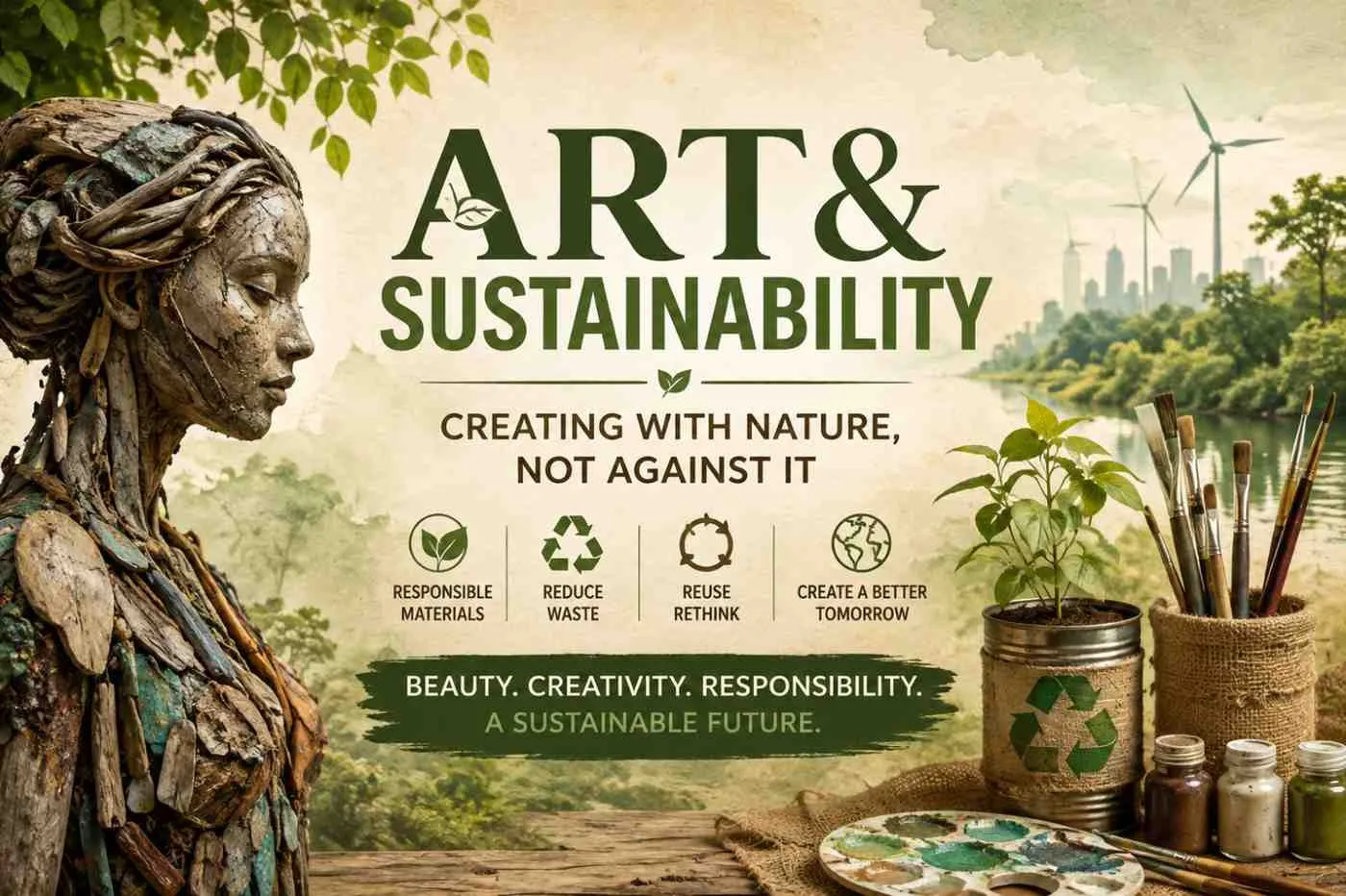
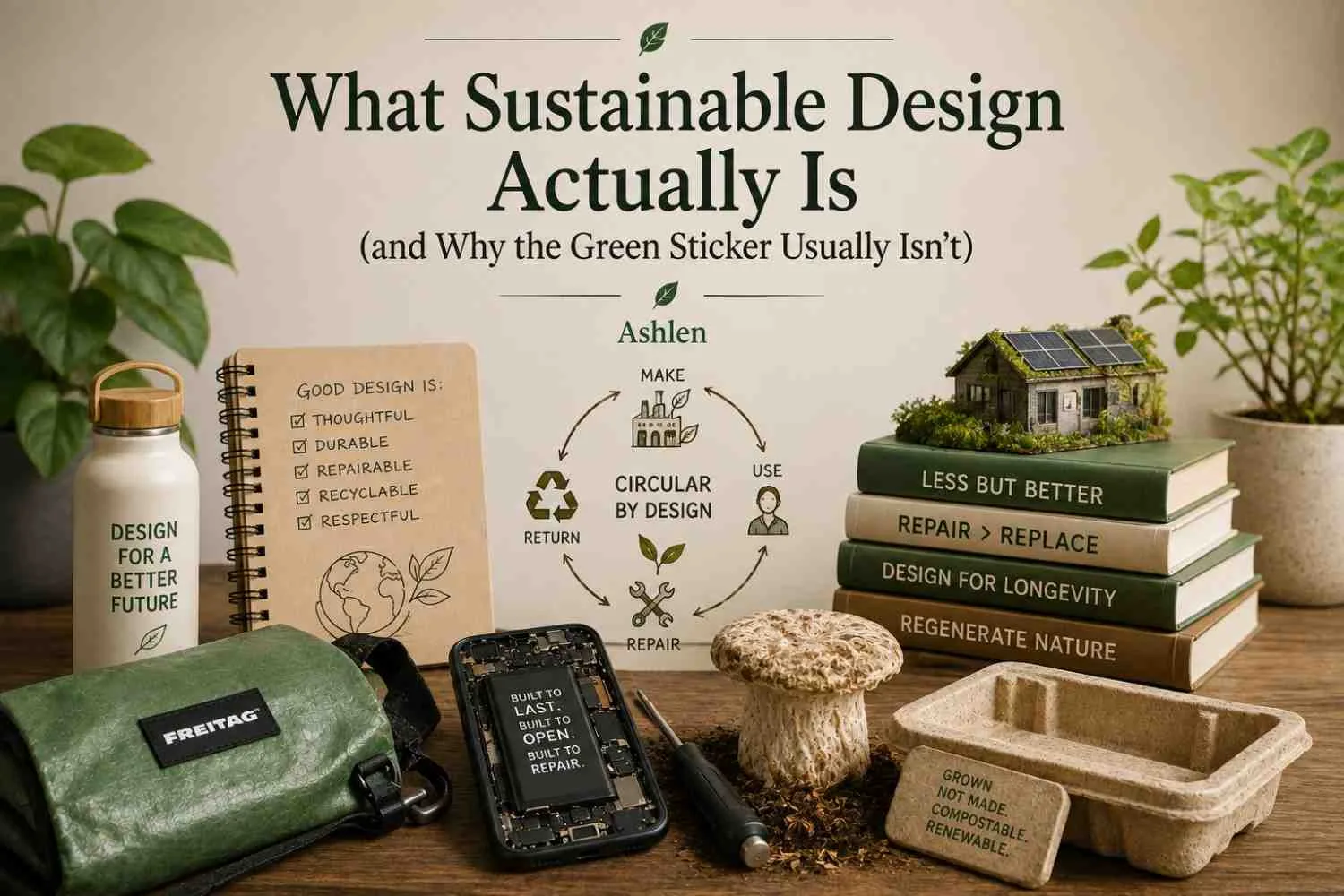
Sustainability is not only about saving the planet; it is also about changing the way we create, consume and live. Art and design can help us imagine a world where beauty and responsibility go hand in hand.    By Ankan Bandyopadhyay   At one point in human history, artists mainly created paintings around religion, mythology and stories of the divine. Art gradually changed as society changed. The Renaissance brought a greater interest in the individual and the human experience. Later, artists began to question traditional ideas about what art could be and where it could exist. This eventually led to movements such as Land Art, where nature itself became the subject, material and sometimes even the space of the artwork.    This relationship between art and nature has continued to evolve. Today, sustainability has become an important subject not only in art but also in design, architecture, fashion and everyday life.    Artists, writers, poets and designers are increasingly using their work to make people aware of environmental problems. Art has the power to make people stop, look and think. A painting about a polluted river may communicate something that a page full of statistics cannot. A sculpture made from discarded plastic can make us realise how much waste we produce every day.    This is where art and sustainability meet.   What does sustainability really mean?  In simple words, sustainability means using what we have responsibly so that future generations can also use it.    It does not mean that we have to stop making things or stop enjoying beautiful objects. It means we need to think about how things are made, what they are made from, how long they will last and what happens to them after we stop using them.    Take a simple example: a plastic bottle may be used for a few minutes, but the material can remain in the environment for hundreds of years. If millions of people use and throw away such products every day, the problem becomes enormous.    This is why sustainability has to become part of the way we think about design.   Design begins with a material  A designer makes choices every day. What material should be used? How much of it is required? Can it be repaired? Can it be reused? What happens when the product is no longer useful?    For example, many companies are replacing unnecessary plastic packaging with paper, cardboard or cloth. A cloth bag can be used repeatedly instead of receiving a new plastic bag every time we go shopping.    Even advertising materials can be reconsidered. Posters and hoardings often use materials that are difficult to reuse or recycle. Could some of these be made from cloth or other reusable materials? Such changes may seem small, but when adopted on a large scale, they can make a significant difference.    Businesses have an important role to play here. Sustainability cannot be the responsibility of individuals alone. Manufacturers, brands, designers and policymakers must also take responsibility for the materials they introduce into society.    What happens to our waste?  Look around us.    Garbage is often found along roadsides. Plastic bottles and wrappers collect in drains. Plastic waste enters rivers and eventually reaches the sea. Animals can mistake plastic for food or become trapped in it. What looks like a small piece of waste to one person can become part of a much larger environmental problem.    We often think of waste as something that disappears once it leaves our hands. But it does not disappear. It simply goes somewhere else.    This is why our everyday habits matter.   The practice of automatically giving a plastic bag with every purchase needs to change. We can carry reusable bags instead. We can use refillable bottles instead of buying disposable ones. We can repair things instead of immediately replacing them.    Even something as simple as having properly maintained waste bins at important public places can encourage better waste disposal. But infrastructure alone is not enough. People also need to be aware of why responsible waste disposal matters.    Sustainability begins with both systems and behaviour.    Can art change the way we think? Artists have a unique role in this conversation.    An artist does not always have to create a work that directly says, "Save the environment." Sometimes the material itself can communicate the message.    Imagine a large sculpture made entirely from discarded plastic bottles. The viewer does not need a long explanation to understand that the amount of plastic waste around us has become enormous.    This idea of transforming discarded objects into art is not new. Assemblage, for example, brings together everyday or discarded objects to create an artwork. Pablo Picasso's Bull's Head is a famous example. Picasso created the work by combining a bicycle seat and handlebars to suggest the head and horns of a bull. The work demonstrates how an ordinary object can be given a completely different meaning through creative thinking.    Artists such as Louise Nevelson also became known for constructing large sculptural compositions from found wooden objects. Her work shows how discarded or ordinary materials can be reorganised into something visually powerful.    The important lesson is that an object does not necessarily become useless simply because it has completed its original purpose.    From waste to creativity This idea became personal to me during the COVID-19 pandemic.    During the lockdown, it was difficult to purchase art materials, including paper, from stationery shops. Instead of stopping my practice, I began looking around me for materials that were already available.    I started painting on discarded milk cartons and sweet boxes.    Something that was originally considered waste became my canvas.    What began as a practical solution gradually became a creative process that I genuinely enjoyed. It made me look at everyday objects differently. A box was no longer simply a box. It could become a surface, a material and eventually a piece of art.    This experience made me realise that sustainability does not always require expensive technology or complicated solutions. Sometimes, it begins with looking at an ordinary object differently.    Learning sustainability through art  Education can play a major role in developing this way of thinking.    In schools, children often make crafts and objects as part of their work education. These activities may seem simple, but they teach children something important: objects can be transformed.    A torn piece of cloth can become a doormat or a bag. Old newspapers can become envelopes or decorative objects. Plastic bottles can become flower pots or vases. Waste cardboard can become models and sculptures.    Children can also learn about natural materials through traditional art practices.    In Bengal and other parts of India, traditional practices such as alpana, wall painting and various forms of folk art connect creativity with local materials, culture and surroundings. Pattachitra artists, for example, traditionally work with natural and locally available materials, including handmade surfaces and natural pigments.    These practices remind us that sustainable thinking is not necessarily a new invention. Many traditional communities have historically worked with local materials because they had limited resources and understood the value of not wasting them.    Modern design can learn from this knowledge.    Designing less: Dematerialisation  One important idea in sustainable design is dematerialisation.    The word may sound complicated, but the idea is quite simple: use less material to provide the same function.    For example, if a product can be made lighter without becoming weaker, less material may be required to manufacture it.    Think about packaging. Does a product really need three layers of packaging? Does a large box need to be used for a small object? Can the packaging itself be reused?    These are design questions.    A sustainable designer does not simply ask, "How can I make this product beautiful?"    They also ask:    How much material do I need?    Where does this material come from?    How long will the product last?    Can it be repaired?    What will happen to it after it is discarded?    This is where design becomes more responsible.    Designing for a circular economy  Another important concept is the circular economy    The traditional model is often:    Take → Make → Use → Throw Away    The circular economy tries to change this into:    Make → Use → Repair → Reuse → Remanufacture → Recycle.    For example, imagine a chair.    In a traditional system, a broken chair might simply be thrown away and replaced with a new one. In a circular system, the chair could be designed so that individual parts can be repaired or replaced. The wood or metal could potentially be reused when the chair is no longer needed.    The goal is to keep materials in use for as long as possible.    This is why durability, repair and reuse are important parts of sustainable design.    If a product lasts ten years instead of one year, fewer products need to be manufactured and discarded. If a product can be repaired instead of thrown away, its useful life increases.    Sometimes, the most sustainable product is simply the one that we do not need to replace.    Choosing better materials  Material selection is another important part of sustainability.    Designers can look for materials that are less harmful to the environment and consider their entire life cycle — from where the material comes from to how it is manufactured, transported, used and finally disposed of.   This applies to fashion as well.    The textile industry produces enormous amounts of waste. Designers and consumers can therefore explore natural fibres, recycled materials, longer-lasting garments and better ways of repairing and reusing clothes.    Traditional textile and craft practices can also provide inspiration. Many Indian craft traditions have developed around local materials, local skills and techniques passed down through generations.    Instead of always searching for something new, perhaps we should also learn to value what already exists.    Architecture and sustainability  Sustainable thinking does not stop at products and artworks. It is also changing architecture.    Today, architects are increasingly thinking about sustainability before designing a building. Instead of depending entirely on air conditioning, buildings can be designed to make better use of natural ventilation and shading. Local materials can be considered to reduce transportation requirements. Natural light can reduce the need for artificial lighting during the day.    The basic question is simple:    How can a building provide comfort while consuming fewer resources?  A sustainable house does not necessarily have to look unusual or futuristic. Sometimes it can simply use traditional knowledge more intelligently.    In hot climates, for example, architectural features such as courtyards, shaded windows, thick walls and natural ventilation have historically helped buildings remain comfortable without depending entirely on mechanical cooling.    Modern technology can work together with such traditional knowledge rather than replacing it completely.    Sustainability is everyone's responsibility  Artists and designers can create new possibilities, but they cannot solve the environmental crisis alone.    Businesses need to rethink production. Governments need to create better waste-management systems. Schools need to educate children. Communities need to support responsible practices. And ordinary people need to change their everyday habits.    A person carrying a reusable bag may seem insignificant. A designer reducing the amount of material in a product may seem insignificant. A student turning waste cardboard into an artwork may seem insignificant.    But sustainability is made up of these small decisions.    When millions of people make better choices, the impact becomes much larger.    Creating a different future  Art has always reflected the world around us. It has recorded our beliefs, our struggles, our cultures and our dreams. Today, environmental concerns are becoming an important part of that story.    Perhaps the role of the artist and designer today is not only to create something beautiful, useful or interesting. It is also to ask whether what we create is necessary, responsible and respectful of the world around us.    My own experience of painting on discarded cartons taught me something very simple: sometimes, sustainability begins when we stop seeing something as waste.   A discarded box can become a canvas.    An old piece of cloth can become a bag.    A plastic bottle can become a planter.    Scrap can become a sculpture.    A damaged product can become something repairable.    And an ordinary idea can become a movement when many people begin to believe in it.    We do not necessarily need to stop creating.    We need to learn how to create better.    The future of sustainable design may not be about choosing between creativity and the environment. It may be about understanding that the two can exist together.    Because when art learns from nature, and design learns to respect resources, creativity does not become smaller.    It becomes more meaningful.    ABOUT AUTHOR Ankan Bandyopadhyay (born 1986, in Kolkata, West Bengal) is an Indian painter. He obtained a BFA and MFA  in Painting from Rabindra Bharati University, Kolkata. His paintings intricately depict the evolving perspectives of individuals and society, reflecting changes in both psychology and societal dynamics over time.His works have been displayed at the CIMA Gallery (Kolkata), Emami Art (Kolkata),19th Asian Art Biennale (Bangladesh) , 62nd National Exhibition Lalit Kala Akademi (New Delhi) and many more.Presently he is a professor of Ecole Intuit Lab,  Techno India University he lives and works at his studio in Kolkata. ...Read more

07 Aug 2026

From Swadeshi to Sustainability, Why India Must Wear Its Handlooms Into the Future Prof Ujjwal K Chowdhury A century ago, Indian cloth became an instrument of freedom. Today, the handloom faces a different battle—against invisibility, imitation, industrial speed, uncertain incomes and disposable fashion. Yet the same loom offers India something remarkably contemporary: millions of livelihoods, women-led grassroots enterprise, cultural identity, low-energy production and the possibility of a more conscious wardrobe. On National Handloom Day, the question is no longer whether handloom deserves preservation. It is whether India can turn its extraordinary textile inheritance into an aspirational economy of the future. Summary:India celebrates its 12th National Handloom Day on 7 August 2026, linking the occasion to the Swadeshi Movement formally proclaimed on this date in 1905. The sector continues to support more than 35 lakh weavers and allied workers, with women accounting for over 72% of the workforce. But handloom faces formidable pressures: mechanised production, misleading imitations, price competition, unstable artisan earnings, raw-material challenges and changing consumer behaviour. At the same time, new research is strengthening handloom’s environmental case, while design, digital commerce, traceability, branding and technology are opening new markets. The next handloom movement must therefore go beyond nostalgia. India needs to make authentic handloom desirable, verifiable, contemporary and economically rewarding to those who create it. Keywords: Indian Handloom, National Handloom Day, Swadeshi, Indian Weavers, Sustainable Fashion, Slow Fashion, Bengal Handloom, Jamdani, Tant, Banarasi, Ikat, Kanchipuram, Artisa\n Livelihoods, Women Weavers, Handloom Mark, India Handloom Brand, Vocal for Local, Conscious Consumption Hashtags: #NationalHandloomDay #HandloomDay2026 #IndianHandloom #ChooseHandloom #WearIndia #WeaveTheFuture #SustainableFashion #SlowFashion #IndianWeavers #BengalHandloom #SupportArtisans #VocalForLocal #MadeInIndia #ConsciousFashion #SustainableIndia A Freedom Movement You Could Wear There are moments in history when an ordinary object stops being ordinary. For India, cloth became one such object. On 7 August 1905, amid the growing resistance to the partition of Bengal, the Swadeshi Movement was formally proclaimed at a massive meeting in Calcutta Town Hall. Indians were urged to reject imported goods and revive indigenous production. Textiles were central to that political imagination. What one wore could become a declaration of economic independence. More than a century later, India commemorates that moment every 7 August as National Handloom Day. The first observance was inaugurated in Chennai in 2015. This year marks the 12th National Handloom Day.  That history makes handloom different from almost every other consumer product. Handloom is cloth. But it is also memory. Work. Geography. Culture. Enterprise. And, once again, choice. The great question of 2026 is whether India will merely admire that inheritance—or build an economy around it. 35 Lakh People Behind the Fabric The handloom conversation often starts with beautiful saris. It should start with people. India's Fourth All India Handloom Census done in 2019-20 recorded 35.22 lakh handloom weavers and allied workers—about 26.74 lakh weavers and another 8.48 lakh allied workers. Of the total workforce, roughly 25.46 lakh are women, more than 72%. The country had approximately 28.20 lakh handlooms when the census was conducted.  That makes handloom one of India's most important decentralised livelihood systems. Behind a finished piece can stand an entire economic chain: cotton and silk producers, yarn suppliers, reelers, spinners, dyers, warp makers, designers, weavers, finishers, traders and sellers. Unlike a giant garment factory, much of this economy is dispersed through homes and small workshops. A loom may stand beside a kitchen. A grandmother may understand a motif without ever having studied design. A daughter may prepare yarn while another member of the family works the loom. Knowledge passes not through manuals, but through observation, rhythm and repetition. That is why when a weaving household abandons its loom, India does not merely lose a unit of production. It can lose a library that was never written down. India Is Not One Handloom Story. It Is Hundreds Try reducing Indian handloom to one aesthetic and the idea collapses immediately. Banarasi brocades carry one vocabulary. Kanchipuram another. Sambalpuri and Pochampally Ikat make mathematics out of resist-dyed yarn. Chanderi finds elegance in translucence. Paithani speaks through colour and peacocks. Kani weaving turns shawls into painstaking compositions. Assam's textiles carry extraordinary traditions of their own. And then there is Bengal. Tant. Jamdani. Baluchari. Garad. Dhaniakhali. Begampuri. Each belongs not merely to a product category but to a landscape and social history. The scale of India's diversity was visible again in the Ministry of Textiles' Weaves of India Festival, which ran up to National Handloom Day this year and brought together 116 heritage weaves.  One nation has somehow accumulated hundreds of ways of crossing warp and weft. That is cultural capital few countries can replicate. Bengal: Where the Loom Carries Memory The Bengal story deserves particular attention because the Swadeshi story itself is inseparable from Bengal. The latest national census data listed more than 6.3 lakh handloom workers in West Bengal, making the state one of India's largest handloom livelihood centres.  Travel through weaving belts such as Nadia and other traditional clusters and the paradox becomes visible. On one side is extraordinary skill. On the other is economic vulnerability. A Jamdani motif can require extraordinary patience. A Baluchari can carry narrative complexity that turns fabric almost into illustration. A fine Tant derives beauty precisely from an apparent simplicity that machinery can imitate visually without replicating the making. And therein lies the problem. The shopper sees two saris. The weaver knows that they represent two completely different economic systems. If the customer cannot tell the difference, the cheaper system usually wins. When Price Wins, Craft Can Lose Handloom should not wage war on machinery. India needs powerlooms. It needs efficient textile factories. It needs an internationally competitive garment industry employing millions. The problem begins when mass-produced cloth and authentic handloom are placed in the marketplace as though they were identical products—or when machine-made imitations are sold using the cultural prestige of handwoven traditions. A handloom artisan simply cannot compete with the speed of mechanised production on price per metre. Nor should that be the competition. The value of handloom lies precisely in human labour, small-batch production, variations, complex craft, provenance and cultural character. India has long recognised this structural vulnerability. The Handlooms (Reservation of Articles for Production) Act, 1985 protects specified products from being manufactured on powerlooms, and enforcement inspections continue. Parliamentary data released in 2026 showed lakhs of powerloom inspections under the Act in recent years.  Authenticity is therefore not merely a marketing issue. It is an economic justice issue. The China Question Needs More Precision There is understandable concern about cheap synthetic fibres, polyester, imported yarn and low-cost textiles entering Indian markets. An anti-dumping investigation is currently underway into Polyester Textured Yarn imported from China, demonstrating that synthetic-yarn competition is a live issue in India's wider textile economy.  But the handloom debate should resist simplistic slogans. Government data presented to Parliament this year says imports classified specifically as handloom products have remained nominal, averaging around ₹14.1 crore annually over the preceding three years.  So the greater threat to the Indian weaver is not simply "foreign handloom". It is a much wider ecosystem of cheap synthetic substitutes, industrial scale, imitation, weak differentiation and a consumer culture trained to compare everything primarily by price. A patriotic case for Indian handloom therefore does not require hostility towards another country. It requires something more constructive: make Indian craftsmanship economically competitive on value rather than impossibly competitive on speed.     The Poverty Hidden Behind the Beautiful Sari This is where the romance of craft must confront economics. Customers may admire a ₹10,000, ₹20,000 or ₹50,000 handwoven sari without knowing how much of that value finally reaches the people who produced it. The artisan often occupies one of the weakest negotiating positions in the value chain. Production takes time. Cash flow does not wait. Yarn must be purchased. Families must be fed. Unsold inventory ties up scarce working capital. The Government acknowledged in a 2025 parliamentary reply that it had not conducted a specific study assessing the income levels and working conditions of women in the handloom sector, although third-party evaluations of schemes indicated improvements in earnings, working days and working conditions among beneficiaries.  This itself points to the next reform requirement. India needs better real-time livelihood data. How much does the primary weaver receive? How much time does a product require? Who captures the retail margin? Are younger family members staying in the profession? Preserving a craft without ensuring a respectable income for the craftsperson is not preservation. It is museumisation. Sustainability: Move From Poetry to Proof Handloom is frequently called sustainable. That claim needs to be both celebrated and qualified. At the weaving stage, a manually operated loom requires little of the industrial energy demanded by mechanised weaving. That is an enormous inherent advantage. And the environmental argument is becoming measurable. In 2025, the Ministry of Textiles and IIT Delhi released Carbon Footprint Assessment in the Indian Handloom Sector: Methods and Case Studies, examining products including cotton bedsheets, floor mats, Ikat and Banarasi saris.  Subsequent research presented by the IIT Delhi team reported that a studied handloom cotton bedsheet had a carbon footprint of about 1.30 kg CO₂-equivalent—nearly four times lower than the comparable powerloom product assessed. The work also showed why one cannot lazily label every handloom item "green": energy and fuel used elsewhere in production, chemicals, dyeing and other processes still matter.  That distinction is crucial. A handwoven polyester product dyed through a highly polluting process and transported repeatedly across continents does not become environmentally perfect simply because the final weaving was manual. True sustainability must examine: fibre → farming → yarn → dye → water → energy → weaving → transport → durability → reuse → end-of-life. Handloom begins with an enormous advantage. Now India needs to improve the rest of the chain. Slow Fashion Before We Invented the Term The global fashion industry is searching for ideas such as slow fashion, traceability, artisanal production, durability, circularity, local supply chains and storytelling. India has practised many of these ideas for generations. The grandmother's sari becoming the granddaughter's sari is circular fashion. Repairing a border rather than discarding an entire garment is circular fashion. A locally woven textile produced in small quantities is slow fashion. A motif carrying the identity of a particular weaving community is traceability through culture. Handloom therefore should not be positioned merely as something ancient that environmentally conscious consumers must rescue out of sympathy. That is terrible branding. Handloom should be sold as premium intelligence: beautiful, tactile, breathable, distinctive, culturally rich and—when responsibly produced—environmentally compelling. Heritage Must Enter the Wardrobe of the 25-Year-Old If handloom remains associated only with ceremonial saris, government emporia and nostalgia, its market will remain unnecessarily narrow. Handloom belongs in shirts. Jackets. Dresses. Trousers. Sneakers and accessories. Curtains. Cushions. Throws. Bed linen. Tableware. Boutique hospitality. Corporate gifting. Contemporary interiors. The government's own recent outreach acknowledges the need for reinvention. In April 2026, Vishwa Sutra – Weaves of India for the World paired 30 Indian handloom traditions with design inspirations from 30 countries, explicitly placing traditional textiles within a contemporary global design narrative.  The ecosystem has also expanded beyond traditional Khadi institutions, cooperatives and state emporia. Retailers, designer labels and platforms such as Fabindia, Taneira, Jaypore, GoCoop, Raw Mango and Anavila have, in different ways, helped introduce craft-based textiles to contemporary consumers. The lesson is simple. Do not ask the young to dress like the past. Give them the past with which to design the future. The Weaver Needs Technology—Just Not a Replacement Technology need not be the enemy of handloom. Technology can make weaving less physically punishing. It can improve jacquards. Map designs. Predict demand. Verify provenance. Translate an artisan's story. Photograph products professionally. Connect rural clusters directly to urban and international customers. Digitise inventories. Improve payments. Reduce middlemen. The Government's current architecture includes the National Handloom Development Programme and Raw Material Supply Scheme, along with support for upgraded looms, design, skills, marketing, branding, e-commerce, credit and social security.  The government-backed Indiahandmade digital marketplace is another attempt to connect artisans and weavers more directly to online consumers.  The question is not whether technology will enter handloom. It already has. The question is whether technology will replace the artisan—or increase the artisan's power. Choose the second. Ask One Question: Who Wove My Cloth? Consumers finally constitute the last—and perhaps most powerful—policy instrument. You do not need to become a textile historian. Just become slightly more curious. Look for credible authentication such as the Handloom Mark and, where applicable, the India Handloom Brand, which was introduced to combine handloom identity with quality and compliance parameters.  Ask the retailer what the weave is. Ask where it came from. Ask whether it is genuinely handwoven. Ask what fibre was used. Ask how to care for it so that it lasts. And then do something even more important: Use it. Do not turn handloom into precious fabric permanently imprisoned in cupboards. Wear the sari. Wear the shirt. Use the runner. Put the handwoven cushion on the sofa. Gift the stole. Take handloom into offices, campuses, hotels, homes, festivals and international conferences. Traditions survive through use, not reverence alone. A New Swadeshi for a New Century The original Swadeshi asked Indians to understand that consumption had political consequences. The same insight is relevant today, but the vocabulary can evolve. Buying handloom can be pro-jobs without being anti-machine. Pro-India without being anti-world. Pro-artisan without romanticising poverty. Pro-sustainability without greenwashing. Pro-tradition without resisting modern design. And pro-market—provided the market learns to recognise genuine value. India's handloom exports themselves show that opportunity exists: provisional government data puts exports of handloom products at about ₹1,359 crore in 2025–26, up from ₹1,201 crore the previous year.  The ambition should be far greater. India does not merely possess handlooms. India possesses one of the world's greatest distributed design laboratories. Millions of hands. Hundreds of textile languages. Generations of tacit knowledge. An extraordinary archive of colour, geometry, fibre and technique. The real tragedy would not be that machines become faster. They will. The tragedy would be if India became wealthier while the people who carry this knowledge became too poor to continue carrying it. Wear India. Weave the Future. Perhaps somewhere tonight, as National Handloom Day celebrations conclude, a shuttle is still moving. Left. Right. Left. Right. Thread crossing thread. The sound is remarkably similar to the sound it made when Swadeshi entered India's political vocabulary 121 years ago. But the loom is no longer asking us to boycott. It is asking us to choose. Choose authenticity over imitation when we can. Choose durability over disposability. Choose craftsmanship over anonymous sameness. Choose a product whose purchase can travel backwards—from our wardrobe to a retailer, from the retailer to a producer, from the producer to a weaving household. And choose an India where modernity does not require the destruction of memory. Because every genuine handloom contains two stories. One is the story woven into the fabric. The other is the story of the person who wove it. This National Handloom Day, preserve both. Choose Handloom. Wear India. Support the Weaver. Protect the Craft. Weave the Future.   ...Read more

01 Aug 2026

By Dr Kanailal Das Summary: Kolkata is a city shaped by water, wetlands and rivers, yet it faces mounting environmental challenges from both natural processes and human intervention. This article examines the interconnected risks of sea-level rise, tropical cyclones, urban heat islands, earthquakes, air pollution, waterlogging and the degradation of the East Kolkata Wetlands. It also explores how altered drainage systems, disappearing canals, rapid urbanisation and the loss of natural floodplains have increased the city's vulnerability. By linking Kolkata's historical geography with present-day environmental pressures, the article highlights the urgent need for resilient urban planning, wetland conservation and sustainable infrastructure to secure the city's future. Key Topics #Kolkata #ClimateChange #SeaLevelRise #Cyclones #UrbanFlooding #Waterlogging #AirPollution #UrbanHeatIsland #EastKolkataWetlands #WetlandConservation #UrbanResilience #DisasterPreparedness #SustainableCities #EnvironmentalPlanning #SustainVerse Once a premier capital of British India, Kolkata is at present proclaimed to be a dying city. Researches done by Climate Central and Intergovernmental Panel on Climate Change do proclaim that according to the latest projections of sea level rise and climate change certain low-lying areas of Kolkata shall submerge by 2030. Dating back in history, Kolkata in 1690 was under dense forested stretches. In 1622 Kolkata was protected from Portuguese atrocities by Shah Jahan and Nawab Shaista Khan (probably the Bengali word for teaching a lesson, “shayesta” ows its birth from here, well, a wild guess offcourse!). However, the imperial Kolkata faces various kinds of natural and anthropogenic hazards.   Sea Level Rise: According to projections by IPCC, the average rate of global sea level rise was 3.6 mm within 2006-2015 and that of Bay of Bengal was 4.04 mm (Rudra, 2022). This coupled with subsidence shall lead to a relative sea level rise of 7 mm/yr.   Tropical Cyclones: Kolkata is in the vicinity of Bay of Bengal, which is vulnerable to tropical cyclones and 3 out of 10 turn out to be severe cyclones. Sea surface temperature is rising at a rate of 1.6°C per decade which is much higher than the global rate of increase (1.006°C). As a result, sea level is increasing at the rate of 4 mm, while the relative sea level rise of adjacent areas of Kolkata is as high as 9 mm.   The Calcutta cyclone of 1737, also known as the Hooghly River cyclone, is regarded as Kolkata's first recorded super cyclone. This cyclone in the northern Indian Ocean has been described as the worst natural disaster in India. The flooding caused by this cyclone and the accompanying tsunami destroyed the famous Navaratna Temple at Chitpur. On 11 October 1737, a powerful earthquake occurred along with the Great Calcutta Cyclone, causing the water level of the Hooghly River to surge by 13 meters and crash into Kolkata. Later, on 5 October 1864, Kolkata was struck by another cyclone that claimed around 60,000 lives. Mud houses collapsed, boats sank, and even the ports of Khejuri and Hijli were damaged.  Climate change and Urban Heat Island: Heat waves, high intensity rainfall and increasing temperature since the month of March are alarming. Kolkata has turned into an urban heat island because of the urban sprawl, change in landuse and use of building materials which increase heat trapping. The maximum temperature in Kolkata crossed the 30 degrees Celsius mark on 19/2/26, wednesday after close to three months. The last time it was 30 degrees was on November 20. Since November 21, it has stayed below 30 degrees constantly. The minimum temperatures on Wednesday at 17.4 degrees Celsius was below normal. On January 6 it was as low as 18 degrees Celsius.  Earthquakes: Kolkata holds the 4th position among the locations prone to earthquakes. Even tremors were felt at Kolkata on 10th August 2023, with a magnitude of more than 5 on Richter scale. Kolkata was jeopardized due to cyclone, flooding and earthquake even on 30th September 1737.  A report by Gentleman’s magazine stated casualty of 30,000 people, damage of more than 20,000 boats and ships, leading a capsize of 5 tonnes of English ship near present Creek Row. Earthquake along with cyclone was experienced on 11th October 1737.  The western side of Kolkata is higher in elevation. It gradually rises and merges with the Rajmahal Hills to the west. That was once the ancient coastline. Later, sediment carried by Himalayan rivers gradually filled the bowl-shaped Ganges delta region. At one time, the area from the Rajmahal Hills to the Garo Hills of Meghalaya was an elevated, undulating plateau.  About thirty million years ago, during the uplift of the Himalayas, the area between the Rajmahal and Garo Hills subsided into a bowl-like depression. This is the Bengal Basin.  In terms of earthquake vulnerability, Kolkata falls close to Zone 4. The plateau region west of Kolkata was once the continental shelf of the sea. That shelf still exists beneath the ground. To the east of the shelf, deep deposits of sediment from the Ganges and its tributaries have accumulated. Therefore, a deep flexure or fault zone exists along the boundary between the shelf and the sediment deposits. That fault zone is a source of earthquakes. In addition, active tectonic movements in the Darjeeling and Chattogram regions will certainly affect Kolkata. In the past, severe earthquakes caused extensive loss of life and property in Kolkata and surrounding areas. While Kolkata and several parts of south Bengal felt the tremors on Friday, 27 February afternoon, the worst damage was reported from the Villages along the India Bangladesh border, particularly near Taki in Basirhat Subdivision, which is 26 km from the epicentre in Nayabazar.  According to The National Centre for Seismology, NCS, the earthquake measured 5.5 on the Rchter scale and struck at a depth of 10 km in Nayabazar. In Villages bordering Bangladesh, between 19 km and 30 km from Satkhira, atleast five houses suffered structural damage. Portions of concrete ceilings collapsed in some homes, while wall tiles fell off in others.  Small tremors may be signs of bigger quake in Bengal seismic zone, warn experts.    Air Pollution: Pollution in Kolkata – SPM was 511 (Scientific and Environmental Research Institute, 2009). 70% of the residents of Kolkata suffer from loss of breath with 18.4 people in each 1 lakh population experiencing lung cancer (Chittaranjan National Cancer Institute, Kolkata). About 12% of the cancer patients of India hail from Kolkata (Centre for Science and Environment). According to the Scientific and Environmental Research Institute (2009 report), Kolkata's SPM level was 511. According to the institute, Kolkata is India's most polluted metropolitan city, followed by Mumbai, Delhi, and Chennai. A six-year study by the Chittaranjan National Cancer Institute (CNCI) reports that 70% of Kolkata's residents suffer from respiratory illnesses, asthma, and lung cancer. There are 18.4 lung cancer patients per 100,000 people. Recently, Kolkata's air pollution has reached levels comparable to Delhi's. During Kali Puja and Diwali, Kolkata's Air Quality Index now approaches 300. Air pollution in Delhi has recently created "pollution refugees"—residents are being forced to leave the city because of poor air quality. Even in Kolkata, high-rise development is expanding south beyond the Kolkata Metropolitan Area, and more people are moving from the city centre to the suburbs.  Although Air Quality Index (AQI) levels fluctuated marginally throughout the day, pollution levels remained well above safe limits in several areas.  AQI on 21/1/26  Sites 6am 6pm Ballygunge 311 268 Fort William 266 236 Jadavpur University 313 283 Rabindra Bharati University 355 287 Victoria Memorial 281 253    Waterlogging: Just a few days ago, a single night's rainfall left almost all of Kolkata underwater, severely disrupting daily life. Questions were raised about cloudbursts, extreme rainfall, and the poor state of the drainage system. Ignoring Kolkata's natural slope, which was well suited to carrying away rainwater and accumulated drainage water, we built high-rises and a modern city. As a result, waterlogging in Kolkata has increased. From an administrative perspective, Kolkata can be divided into two parts: the core Kolkata and the added areas. The core area had been identified since the British period. It included Wards 1 to 100. Wards 101 to 144 are the added areas. During the British era, a drainage system was introduced according to the design of the British engineer William Clark, in which the drainage channels were located deep underground and built with large bricks. Above these drains ran the drinking water pipelines. As a result, drainage water could not mix with the drinking water.  Kolkata's establishment was completed by amalgamating three villages which had many canals where tides were experienced. Bidyadhari river used to flow through the present day Bidhannagar. Various navigable channels were found passing through Panihati, Kamarhati, Barahanagar, Cossipore and Dumdum. Even 100 years back, Salt Lake and the adjacent wetlands could be seen from Ultadanga railway station, filled with boats. This area was replete with fishing communities, fish godowns from where fish used to be marketed to Shyambazar, Beleghata even Jessore and Khulna in Bangladesh. As river Bidyadhari dried up it lost its connection with river Hugli turning it into a confined waterbody. In the year 1962, the region was reclaimed into Salt Lake City.  Krishnapur Canal was cut during British rule and it moves across Bidyadhari basin and Rajarhat area. VIP road and EM Bypass were constructed over Krishnapur canal. This road construction has created a barrier in the drainage system of Kolkata. East Kolkata Wetlands was used as storage of flood water but it got transformed to reclaimed town. All the garbage of the city gets dumped in Krishnapur Canal and Bagjola khal reducing their capacity.  At present, the situation is different. Biman Bandyopadhyay, an experienced town planner of the Kolkata Improvement Trust (KIT), says that the drainage channels and drinking water pipelines are now located very close to each other. This is extremely dangerous. This arrangement exists not only in the added areas but also in some parts of the core area. In some places, the drinking water pipelines even pass through manholes. In addition, telephone, electricity, and broadband lines run underground at various places beneath the roads. Quite often, when roads are dug up to install these lines, water pipes burst. As a result, toxic substances mix with the drinking water. According to municipal engineers, there are so many different kinds of pipes beneath the roads that the drinking water pipelines laid over the past 30–40 years have had to be placed close to the drainage channels. As a result, contaminated water enters the drinking water pipelines, especially when the water supply through those pipes is shut off.  It has been found that water flowing into Tolly Nullah exceeds its water holding capacity. Also the slope of the area surrounding Tolly Nullah is to the east but that of the canal is to the west. Keorapukur basin stores the accumulated flow from Regent Park, Bansdroni, Tollygunge, Alipur, Khidderpore. The discharge of Keorapukur basin takes place through Keorapukur main and and Keorapukur western channel. One pump of capacity 200 cusecs has been established at Keorapukur western channel. Another pump of capacity of 750 cusecs was installed at Tolly Nullah by Kolkata Environment Improvement Project Authority. 'Invert level' of the outfall drain doesn't match with outfall channel. Also, a fresh assessment regarding the actual water holding capacity of Tolly Nullah is required.  Flow from Keorapukur khal amounts to 1422 cusecs, that from Boat canal, Chetla, Mominpur amounts to 699cusecs and that from Kalighat is 566.9 cusecs. Pump and regulating structure need to be installed at Hugli outfall near Watganj in order to regulate flow of the high tide.  Starting from the airport, the airport channel crossing VIP road to join Cantonment khal and Bagjola khal. This channel is not traceable near Cantonment Khal. Another canal (Donagar khal) joins Noai khal but all these are heavily sedimented and needs dredging.  Paralysis of the Calcutta Canals:  Detachment of main channels (eg Belgachia, Bagjola and Tolly's Nullah) from Hugli River. Increasing human settlements and effluents. Conversion of salt marsh to Salt Lake City; development of Rajarhat New Town without considering the preexisting drainage constraints. Upland flows of Bidyadhari and Ichhamati are almost choked. Semi diurnal tides without any upland discharge have worsened the siltation scenario. Gradual shifting of Saptagram and Tamralipta port to the present position of Calcutta port at Khiderpore; proposals for subsidiary ports at Palta/Sagar Island indicate the gradual lowering of upland discharge level of Bhagirathi Hugli River through time.  The Role of East Kolkata Wetlands: According to NATMO, the Land Revenue Department, and the Fisheries Department, 8,000 wetlands have disappeared over the past thirty years. Kolkata and the areas on three sides of it have undergone rapid urbanization. The East Kolkata Wetlands have shrunk to half their former extent. Bare soil has nearly vanished, so rainwater can no longer infiltrate the ground, and groundwater is therefore not being recharged. Behala, Garden Reach, Tollygunge, Jadavpur, Garia, and surrounding areas are suffering from water scarcity. Nearly thirty million gallons of water are extracted from underground every day.  At one time, the water in these wetlands was saline, which is why the area was known as Salt Lake. At that time, these wetlands were part of the Bidyadhari River, and the tides flowed through them. Fish farming was mainly carried out by creating ponds with small embankments. Later, toward the end of the nineteenth century, when wastewater from the Kolkata metropolitan area began to be discharged into these wetlands, the flow of the Bidyadhari River was blocked. The inflow of saline water into the wetlands stopped. In response to the changed conditions, the fishing communities began farming freshwater fish. Based on local knowledge and experience, fish farming using the city's wastewater continued. The wetlands to the east of Kolkata once covered 20,000 acres. During the 1970s and 1980s, 10,000 acres of wetlands were filled in for the construction of Bidhannagar and the EM Bypass. In 1992, a nongovernmental organization called PUBLIC approached the Calcutta High Court to protect the East Kolkata Wetlands. Following the judgment in that case, an officially recognized map of the wetlands was prepared, and all development and construction activities within the wetlands were prohibited. In 2002, these wetlands were recognized as wetlands of international importance. Covering Kolkata as well as North and South 24 Parganas, they are now included in the Ramsar List. At present, 47 percent of the total area consists of wetlands, 46 percent is agricultural land, and the remainder is residential area. Every year, these wetlands produce 11,000 metric tons of fish, 15,000 metric tons of rice, and 150 metric tons of vegetables every day.    (Kalikata Pukur Katha, Environment, History, Society, Mohit Ray, Ananda, 2019)    About Author   Dr Kanailal DasMasters in Geography from University of Calcutta, former senior research fellow, CSIR, PhD on Vulnerability of Gosaba, Basanti, Sundarban from Vidyasagar University.He has participated in many national and international seminars and has papers and book chapters to his credit. ...Read more

01 Aug 2026

By Dr Karabi Das Rivers are generally considered as open systems within the purview of Geomorphology. The cause behind being them operating in broadly three zones of input, process and output while interacting beyond their boundaries. Thus, there is ample scope of transformations within rivers – both by natural and anthropogenic manners. They are driven by water and sediments so whenever this balance gets modified there occurs a change in the equilibrium of rivers. Well, this can be done both naturally and by controlled environment driven by humans.  Modifications in the catchment area of any drainage basin can effectively alter the natural system, thus jeopardizing the entire hydrologic regime. Alteration by humans can happen in the form of damming the river course, by dredging the channel, by straightening the river pattern, by linking rivers and by constructing other engineering structures. Flood control and control of bank erosion demand widening or deepening of channels, artificial cutoffs from meanders and straightening of channels. Artificial channelization also modifies the fluvial dynamics of a drainage system.   In Indian Sundarbans, the single largest mangrove tigerland, rivers are the arteries. Enmeshed in an intricate network of interlinked rivers and creeks (also duanis), this region is a part of the retrograding Western Ganga Brahmaputra delta. Progradation (advance) and retrogradation (decay) of a delta is largely dependent on occupancy and abandonment of the delta by deltaic distributaries. Also, following the Gallway triangle it can be said that delta building fluvial force and delta modifying wave and tidal action get to decide the fate of deltas. Neotectonic movements leading to subsidence towards Bangladesh Sundarbans have decided the movement of the main flow of river Ganga towards Padma building the eastern Ganga Brahmaputra delta. This is evident from the younging of the eastward deltaic lobes as shown by Allison. Also, the rivers of Indian Sundarbans are severed from their upstream sources. Up country diversion of water, clogging of offtakes have resulted in reduction in discharge degenerating the distributaries of Ganga in the last 225 years. The switching of the distributary channels over time was one of the causes of delta abandonment which was aggravated by loss of sediment supply which bypass through the “Swatch of No Ground” into the deep sea “Bengal fan” . The creeks of Sundarban are tidally fed, governed by bi directional flow. The funnel shaped macrotidal (tidal range>4 m) Hugli estuary is characterised by time velocity asymmetry whereby flood tide takes only 3 hours to get complete while ebb tide takes 9 hours to complete. Therefore, before the ebb tide gets completed, another flood tide sets in resulting in sedimentation. The premature reclamation of Indian Sundarbans has left the landscape polderized as the tidal spill areas are reduced. This results in inchannel sedimentation and further clogging of rivers. Thus the settled portions are at a lesser height than the rivers and this landscape is termed polderized. The river Ichhamati is dry near it’s off take point at Majdia. The gradual decrease of upstream discharge from Ganga to river Mathabhanga is another reason for the decay of river Ichhamati. River Jamuna can be demarcated up to some few km downstream from itsoff take. River Jamuna got decayed as it lost its connection with  Bhagirathi-Hugli River. The angular orientation of the channel at its off-take point has changed to obtuse angle restricting the flow of river Hugli into Jamuna. River Bidyadhari has been encroached by fisheries while the downstream stretch (40 km) up toits outfall has dried up. Excavation of Keshtopur canal in 1910 disconnected a portion of salt lake spill area and this led to disequilibrium in the natural drainage from north and led to the decay of Bidyadhari river. River Matla started decaying as the discharge from West Bidyadhari and the Karatia into the river Matla stopped. A number of lateral connections of the Matla River on and from inland side (like Belladona river, Kultala gang, Piyali-Nabipukur river, Chulkati gang etc) are presently in a decaying state, cutting off freshwater discharge to river Matla. River Piyali can’t be traced properly upstream of Piyali station and it has got disconnected from its parent river Bidyadhari. The outfall of Piyali has been closed contributing to its decay and deterioration of tidal environment there. River Thakuran debouches near Jaynagar and Mathurapur. To its north the river connects Matla and has link with river Saptamukhi. Beyond the junction with river Jagaddal, the river Thakuran gradually thins out in its upper course. Both the reclaimed and non-reclaimed portions of Indian Sundarban have witnessed river discontinuity and decay. Some rivers connecting large rivers have become completely obliterated. Some rivers have become clogged with mud and hyacinths, while some rivers have decreased in width becoming narrower (Das, 2025). Anthropic activities like construction of embankments, aquaculture farms by severing the rivers have also resulted in river discontinuity and decay.    Figure 1: Change in River Matla and landuse of Canning (1920,1968,1993)  In order to cope up with river discontinuity and decay, estuarine reshaping in the form of reviving the lost paths of the channels and creating additional channelization is required. The polderized landscape has got so much altered and juxtaposed with agricultural landscape and settlements that it is quite impossible to return to it’s virginity. However, reviving the lost paths is necessary and can be still done if all the previous interlinking routes are resuscitated.  Five probable routes in and out of Adi Ganga can be traced in all probability. Outfalls can be traced to river Hugli via Diamond Harbour and Kulpi, to Saptamukhi estuary, Thakuran estuary and river Matla.  Diamond Harbour route: Kaorapukur khal (29.005 km) can be used as it emanates from Adi Ganga near Kudghat. Then as it connects with Usthi Nainan outfall channel (10.435 km), the accumulated water is directed towards Diamond Harbour creek (14.531 km) which empties into Hugli River. Also, the same route can be accessed from Surjyapur using Hotor khal (12.305 km).  Kulpi route: Water of Adi Ganga can be directed from Surjyapur along settlements Multi, Magrahat and Lakshmikantapur using the canals Surjyapur khal (10.215 km), Magra Jaynagar khal (14.647 km) and Kulpi kata khal (19.039 km) towards Kulpi. Alternatively, water can be directed towards Kulpi kata khal using Nazra khal and Sangrampur Outfall channel.  Route towards Saptamukhi estuary: From Surjyapur, a westward route along Multi using Surjyapur khal (10.215 km) can be followed, upto Magra Jaynagar Khal (14.647 km), flowing past Jaynagar Majilpur. From there, using Burar khal (2.035 km) and Chitraganja khal (5.324 km), the palaeochannel of Adi Ganga can be accessed upto Sudhirghat. From the settlement of Chandbhasa, Banstala khal (16.658 km) can be accessed. Chora Gangadora khal (5.463 km) can be accessed from the settlement of Bakultala. The rivers Kaloa, Gobadia (18.102 km), Barchara and Walsh creek can then be used to direct the water towards Saptamukhi estuary, though Kaloa river has got decayed at present. Alternatively, Curzon creek also can be used to direct the water towards Saptamukhi estuary.  Route towards Thakuran estuary: The same route can be followed upto Burar khal, then the water can be directed to Moni nadi. Alternatively, Khari khal can be used past Chandbhasa and the water can be directed towards Thakuran via Moni nadi.  Route towards Matla: Water from Adi Ganga can be directed towards Matla River using Surjyapur khal and Piali river.    Figure 2: Scope of reviving Adi Ganga via routes shown    References:  Bandyopadhyay S. (2000): Coastal changes in the perspective of long term evolution of an estuary: Hugli, West Bengal, India, Proc. Int. Quat. Seminar on INQUA shoreline, Indian Ocean Sub Commission: 103-115.   Bandyopadhyay S. and Bandyopadhyay M. K. (1996): Retrogradation of the western Ganga-delta, India and Bangladesh, Possible reasons. In. Tiwary, R.C. (ed.), Proceedings of 6th conference of Indian Institute of Geomorphologists, National Geographer, 31(1&2): 105-128.   Bandyopadhyay S., Kar N.S., Dasgupta S., Mukherjee D. and Das A. (2023): Island area changes in the sundarban region of the abandoned western ganga–brahmaputra– meghna delta, India and Bangladesh, Geomorphology https://doi.org/10.1016/j.geomorph.2022.108482. Das K (2025): Physical and Socioeconomic changes of Indian Sundarban: An Evaluation PhD thesis, University of Calcutta. Das K and Das K (2026): Reviving Decaying Rivers: Case Studies from Indian Sundarbans Natural Sciences and Applied Technology Eissn: 3049-4206 3(1) Majumdar S.C. (1941): Rivers of the Bengal Delta In Biswas K.R. (ed.), Rivers of Bengal, volume 1 West Bengal District Gazetteers, Kolkata. Paul A. K. (2002): Coastal Geomorphology and Environment. Sundarban coastal plain, Kanthi coastal plain, Subarnarekha delta plain. ACB publication, Kolkata.    About Author Dr Karabi Das, Masters in Geography from University of Calcutta, former Senior Research Fellow, UGC, PhD on Physical and Socioeconomic changes in the Indian Sundarban is presently working as Assistant Professor of Geography, Dr Kanailal Bhattacharyya College, Howrah.She has participated in many national and international seminars and has 12 papers and 10 book chapters to her credit.Her areas of interest include Fluvial Geomorphology, river in equilibrium and human environment relationship.   ...Read more

01 Aug 2026

 By Ashlen Summary: Sustainable design is more than eco-friendly labels or recycled materials—it is about creating products, buildings and systems that use fewer resources, last longer and minimise environmental impact throughout their entire life cycle. From repairable smartphones and circular manufacturing to passive architecture and low-energy digital design, this article explores how thoughtful design decisions can reduce waste, challenge planned obsolescence and replace today's linear "take-make-dispose" economy with a truly regenerative future. Key Topics#SustainableDesign #CircularEconomy #CradleToCradle #PlannedObsolescence #RightToRepair  #Greenwashing #CircularDesign #RepairEconomy #EcoInnovation #SustainableArchitecture #Biomimicry #PassiveDesign #ProductLifecycle #LowCarbonDesign #SustainVerse Here’s a small con you’ve probably paid for. You buy a cheap printer, and within a year the replacement ink costs more than the printer did. Or you buy a phone, and around year three the battery swells, and because it’s glued in, there’s nothing to do but buy a new one. Feels like bad luck. It isn’t. Somebody designed those things to work exactly that way, because a product that quietly dies on schedule sells more of itself. That decision, made in a room long before the thing hit a shelf, is where sustainable design either happens or doesn’t. None of this is new. Back in the 1920s, the biggest lightbulb companies in the world got in a room together and agreed to make their bulbs worse. They capped the lifespan at around 1,000 hours, on purpose, so you’d keep buying. They could already build one that lasted far longer, and the proof is still burning: a fire station in Livermore, California, has a hand-blown bulb lit since 1901. Making something die early so people rebuy it has a name, planned obsolescence, and it’s the exact thing good sustainable design sets out to kill. So what is it, really? Stripped of the marketing, sustainable design is the practice of making things (products, buildings, packaging, even websites) so they use less, last longer, and do less damage across their whole life, from raw material to the day you’re done with them. The green leaf on the shampoo bottle isn’t it. Neither are the recycling arrows stamped on plastic that no facility near you will actually take. The real work is invisible, because it happens at the sketch stage, in choices you never see. And here’s the part the brochures skip: the honest choice almost always costs something. A phone you can open is a little thicker than one sealed shut. Recycled paper has faint flecks in it instead of a perfect white. A building designed to cool itself can’t always sit where the best view is. Sustainable design is mostly the discipline of picking the slightly less convenient, slightly less pretty option because it’s the right one, then living with that. Which is why most products don’t bother, and just paint a leaf on the box instead. From a straight line to a loop Most of what we own runs in a straight line. Dig up materials, build a thing, use it, bin it. Take, make, waste. Your morning coffee cup is a perfect example: alive for twenty minutes, then landfill for decades, because that thin plastic lining leaves it neither recyclable nor compostable in most places. Sustainable design tries to bend the line into a circle, so the end of one thing feeds the start of the next. Two designers, William McDonough and Michael Braungart, called this “cradle to cradle,” as opposed to cradle to grave. It clicks the moment you picture a forest. A leaf falls, rots, and feeds the tree that dropped it. Nothing gets loaded onto a truck and driven to a dump. Every output is somebody’s input. That’s the target: make things that either go safely back to the soil or get pulled apart and rebuilt into something new, with no poisonous dead end. [Illustration 1: the closed loop]   Stuff you can actually buy Watch how this plays out in things you can hold. Fairphone makes a smartphone you open with a tiny screwdriver. Battery, screen, camera, all of it comes apart, so when one bit fails you replace that one bit for cheap instead of junking the whole phone. Framework does it with laptops: swap the ports, upgrade the memory, follow a repair guide for every part. Yes, the Fairphone is a touch chunkier than the sealed slab in the shop window. That extra couple of millimetres is the price of a battery you can reach, and somebody decided it was worth paying. Set it against a laptop with the memory soldered down and the battery glued under the case, where one dead component turns the whole machine into e-waste, and you can see the choice for what it is. The best version of this story is a carpet company, of all things. In 1994 the founder of Interface, Ray Anderson, read a book about the environment and had what he later called a spear-in-thechest moment. He looked at his own hugely successful business, which turned oil into carpet tiles and sold them by the millions, and decided he’d been running, in his own words, a plunderer of the earth. Most people would have felt bad and moved on. He turned the company inside out. Interface stopped selling one glued-down carpet you rip up and throw away, and started selling tiles, so a stain in one spot means you swap that single tile, not the whole floor. They kept pulling oil and waste out of how the tiles get made until some of their products now trap more carbon than they release. One man reading one book redirected a global manufacturer. That’s what a decision looks like when someone actually means it. Materials matter as much as lifespan. A Swiss outfit called Freitag makes bags out of used truck tarpaulins, dead seatbelts, and old bike inner tubes, each one unique because it’s cut from a tarp that already did years of hard road time. The rubbish is the material. Packaging is having its own moment: a company called Ecovative grows a styrofoam replacement out of mushroom roots, packed into a mould with farm scraps, that protects the product just fine and then composts in your garden in weeks. Dell and IKEA have both shipped in it. Another, Notpla, makes packaging from seaweed, down to little edible blobs of water handed to London Marathon runners so the race didn’t leave a plastic graveyard behind. Then there’s the quietest move of all: designing things people just keep. Patagonia runs repair workshops, sells the patches, and once ran a full-page ad telling people not to buy its jacket unless they actually needed it. Sounds like a death wish, until you do the maths. One jacket worn fifteen years replaces the four cheap ones you’d have bought and binned in the same span. They lose one sale and keep a customer for life. The repair economy you already live in You don’t need a Swiss brand or a mission statement to see this working. Walk down almost any street in an Indian city and the whole philosophy is already running, for free. The phonerepair stall that swaps a cracked screen while you wait. The cobbler resoling shoes people in richer countries would have thrown out. The tailor taking in a shirt instead of letting you buy another. It’s a repair economy that never stopped existing, keeping millions of objects alive for years past the point a throwaway culture would have dumped them. The fashionable word is “circular.” The older word is just not being wasteful, and a lot of the world has been doing it the whole time, without a hashtag. What we ship Moving things around is its own hidden cost, and design can cut it before a truck even starts. Flat-pack furniture, the kind you build yourself on the floor swearing at an Allen key, does more than save you money. A chair shipped fully built is mostly air; the box is huge and half empty.  Flatten it into a slim carton and one truck carries a crowd of them, burning less fuel per chair. Small design call, enormous saving once you multiply it by every delivery. Mumbai has a better example, and it’s a hundred-odd years old. Every working day, a network of dabbawalas collects thousands of home-cooked lunches from thousands of houses, delivers each to the right office across a sprawling city, and carries the empty tins home the same afternoon. Reusable steel tins, no packaging waste, barely any fuel, run on trains and bicycles and a colour code you can read without being able to read. Silicon Valley would call it a logistics platform. It’s mostly an old idea done extremely well. One rule worth carrying around: refilling beats recycling, and recycling beats the bin. More shops now let you bring your own container for rice or detergent or shampoo, so the packaging never gets made. And when packaging can’t be avoided, aluminium can be melted and reborn again and again with almost no loss in quality, which makes a can a smarter container than most plastics, which degrade a little each time and usually become waste within a cycle or two. Buildings that breathe Buildings are the giants here, gulping huge amounts of energy to stay warm, cool, and lit. But long before air conditioning, builders in hot places beat the heat with the shape of the building itself. In India, the jaali (that carved stone lattice) lets a breeze through while blocking the hard sun, cooling a room on zero electricity. Courtyard homes pull hot air up and out through the open middle. Thick lime walls soak up the night’s cool and release it slowly through the day. Stepwells went further, sinking whole flights of stone stairs down to the water table so a village had cool water and a cool place to sit through the worst of summer. None of it needed a power grid. Some of the smartest sustainable design ever done is centuries old, and it ran on nothing. One architect built a career out of remembering this. Laurie Baker worked across Kerala with local brick and local labour, and got obsessed with waste, right down to a brickwork method full of small gaps that used fewer bricks, cost less, and let air through at once. His houses came out cheaper and cooler than the concrete boxes going up around them, because he refused to waste anything. Today’s architects are relearning all of it under names like passive design: keeping a building comfortable through where it faces, how it’s insulated, and where the shade falls, instead of a wall of humming machines. Some go further and swap concrete and steel, which both belch carbon when they’re made, for engineered timber that stores carbon instead. A few designers skip the theory and copy nature outright, which has a name, biomimicry. An office block in Harare called the Eastgate Centre stays far cooler than a normal glass tower on a fraction of the air conditioning, using a ventilation trick lifted from termite mounds: cool air drawn in low, warm air pushed out high. Copying a few billion years of nature’s trial and error tends to work, because nature is merciless about waste. Anything wasteful died out long ago. The footprint you can’t see Here’s the one almost everybody forgets, and it’s closest to a designer’s actual desk. The website you’re reading this on has a footprint too. Every site, app, and streaming video runs on data centres, warehouses full of computers pulling real electricity every second of the day, and added up, the internet burns roughly as much as the entire airline industry. A heavy, bloated page (autoplay video, a dozen trackers, a pile of fonts) draws more power every time someone loads it, times millions of loads. This is where design choices most people never think about start to bite. Load a page with four custom fonts and every visitor downloads all four before reading a word, which is prettier and heavier. Stick to the fonts already on their device and it loads lighter and faster on less energy, and almost nobody notices. Same with the tricks built to make you consume more: the one-tap reorder, the “buy it again” nudge, the feed with no bottom that keeps you scrolling and buying. Those are design decisions too, aimed the opposite way, and a designer who cares about any of this has to notice when their own craft is pointed at the wrong target. One site takes the idea to its logical, slightly mad end: Low-tech Magazine runs off a small solar panel, and when the sky stays grey for days and the battery drains, it simply goes offline until the sun returns. A stubborn reminder that “always available” has a bill attached, and somebody pays it in energy. [Illustration 4: the weight of the web] How to spot the fakes Because “green” sells, loads of companies fake it, and the fakery has a name, greenwashing. A bottle bragging “made with 30% recycled plastic” is still a single-use plastic bottle. A brand dropping a tiny “conscious collection” while cranking out millions of throwaway clothes the rest of the year is buying applause, not changing anything. A few tells that rarely fail: fuzzy words like “eco” and “natural” with no numbers behind them, a green colour scheme doing all the persuading, and a big song and dance about one small feature while the core product stays exactly as wasteful. Real sustainable design shows its working. It tells you what the thing is made of, how to fix it, and what to do with it when you’re done. If a company won’t tell you those three things, the leaf on the label is decoration. What you can do with any of this None of this needs you to design a thing. You buy stuff and you use stuff, and that alone hands you more power than the marketing wants you to feel. A few habits that genuinely count: Buy less, and pick the one built to last. The cheap option is almost never the cheap option five years out.Fix before you replace. A shocking number of “dead” things need a new battery, a cable, or a ten-minute video and a bit of nerve.Go second-hand first, especially furniture, clothes, and electronics. The greenest product on earth is the one that already exists.Read past the front of the label. Find out what it’s made of and whether the maker tells you how to repair or recycle it.Back the right to repair. Get behind the brands and laws that let you mend what you own instead of forcing you to throw it out and buy again. Strip away the leaves and the labels, and sustainable design comes down to one plain question asked in a quiet room before anything gets built: where does this end up, and who pays for it?  Ask it honestly and you tend to end up with something a little chunkier, a little plainer, a little less convenient, and far better for everyone downstream. Once you start seeing objects that way, the throwaway ones stop looking like convenience. They start looking like a bill somebody quietly forgot to mention.   About Author   Ashlen is a Product Designer and an educator specializing in Deep tech, enterprise and front-end user experiences. ...Read more

01 Aug 2026

By Dr Karabi Das Summary: Ghoramara Island in the Indian Sundarbans has lost more than half of its area over the last five decades. While climate change and sea-level rise are often blamed for this erosion, the island's disappearance is also driven by complex geomorphic processes, altered river dynamics, tidal asymmetry, and human interventions. This article explores why understanding both climate and geomorphology is essential for protecting one of the world's most vulnerable delta landscapes. Key Topics#IndianSundarbans #GhoramaraIsland #ClimateChange #CoastalErosion #Geomorphology #SeaLevelRise #DeltaDynamics #MangroveEcosystem #RiverMorphology #Sedimentation #TidalProcesses #HugliEstuary #CoastalResilience #NatureBasedSolutions   The Indian Sundarban is vulnerable to riverine and coastal erosion. Though many harbour on climate change and sea level rise as the major causative factors behind the erosion of Indian Sundarban but geomorphic uniqueness of this tide country cannot be outdone. Within 1930-2000, about 283.58 sq km was lost due to erosion, while accretion of about 83.97 sq km was observed. Whether a coastline will prograde or retrograde, this will depend on whether the distributary channels are occupying or abandoning the delta. Also if there is any temporary pause in the replenishment of sediments in a portion of the delta causes erosive tidal and wave processes to take over causing erosion (Woodroffe, 2003; Bird, 2010).  Sundarban forms a part of retrograding tidal section interspersed with decaying distributaries (Das, 2025). The sector to the south west between Hugli and Baleswar Haringhata estuaries is macro to mesotidal in nature, growing about 7-1.8 kyr ago with three overlapping deltaic lobes progressing eastwards (Allison et al., 2003; Sarkar et al., 2009).     Ghoramara, popularly known as the sinking island can be cited as a significant instance of geomorphic in equilibrium perturbed by ongoing climate change and relative sea level rise. The Hugli estuary is widely known to be a victim of climate change, the Bay of Bengal being a breeding ground of tropical cyclones. However what remains largely unattended is the geomorphic uniqueness of the Hugli estuary.     The Hugli estuary is a funnel shaped (protruding towards Bay of Bengal and shrinking as we move north) macrotidal estuary, where the tidal range is greater than 4 m. Another notable feature is that the Hugli estuary is a part of the western side of Ganga Brahmaputra delta which is retrograding in nature (no new sedimentation here retards delta progradation towards the sea). Various factors such as neotectonic movements, subsidence of the eastern Ganga Brahmaputra delta, diversion of the flow towards Padma and anthropogenic activities have brought about retrogradation of the western Ganga Brahmaputra delta. In addition to this the Hugli estuary is dominated by tides and due to time velocity asymmetry (flood tides taking 3 hours to complete, ebb tides taking 9 hours to complete), result in in channel sedimentation.     This geomorphic uniqueness leads to an ephemeral character of the islands on Hugli estuary and Ghoramara is one such island. It was attached to Gangasagar island previously, but since 1968, the area of the island is observed to be decreasing.   Nayachar, another island to the west of Ghoramara is increasing in area on the contrary. This was brought about by the initiative of Kolkata port whereby a guide wall was constructed on the north western side of Nayachar island to keep the Hugli estuary navigable and aid the survival of Kolkata port. This in turn brought about a diversion of flow, causing massive erosion of  Ghoramara and Gangasagar island. The areal change of Ghoramara and Nayachar islands are notable -     Areal change of Ghoramara and Nayachar islands (sq km)  Years Area (sq km) Ghoramara Nayachar 1968 8.3845 17.327 1978  7.514 32.280 1991 6.235 48.279 2003  4.430 50.738 2009  4.860 48.847 2013  4.348 46.204 2019  3.999 51.988 2021  3.703 55.117 2025  3.305 50.155     Figure 1: Change of Ghoramara and its surrounding islands : 1991-2019 (prepared by author)    It is clearly evident that only climate change and sea level rise cannot be cited as the causative factors behind the erosion of Ghoramara. Instead a complex geomorphic characteristic and geomorphic inequilibrium are at play. In order to combat erosion the south western part of the island has been fortified with enmeshed boulders and this has arrested erosion to some extent.     Photo plate 1: Erosion of Ghoramara   Photo plate 2: Enmeshed boulder on the south western side has protected this part of the island  (Photograph by author)  The people of Ghoramara opine that the river water should be diverted to Shiber Char to protect Ghoramara and help dredging near Sagar Island. They demand boulder protection on eastern side. A flood shelter should be built on central location near the market with all facilities. A bio-engineering technique, involving the planting or sowing of local plant species can be helpful to reduce erosion. Climate resilient embankment with bioengineered structure needs to be considered. Wherever erosion is constant, tidal basin management should be considered as an option and the rivers should be allowed their spill areas so that the height of the islands gets increased by sedimentation.  References:  Allison M.A., Khan S.R., Goodbred S.L. and Kuehl S.A. (2003): Stratigraphic evolution of the late Holocene Ganges – Brahmaputra lower delta plain, Sedimentary Geology 155(2003): 317 – 342.  Bandyopadhyay S (1997a): Natural environmental hazards and their management: A case study of Sagar Island, India, Singapore J. Tropical Geogr, 18(1997), pp 20-45. •  Bandyopadhyay S (1997b): Coastal Erosion and it's management in Sagar Island,  South 24 Parganas,West Bengal. Indian Journal of Earth Science, 24 (3-4): 51-69.   Bandyopadhyay S (2000): Coastal changes in the perspective of long term evolution of an estuary Hughli, West Bengal, India published in Quaternary Sea Level Variation, Shoreline Displacement and Coastal Environments, edited by Rajamanickam V and Tooley M.J. (New Academic Publishers, New Delhi) pp 103115.   Bandyopadhyay S (2007) Evolution of the Ganga Brahmaputra delta:a review. Geogr Rev India 69(3):235–268 • Bandyopadhyay S, Nandy S (2011) Trends of sea level rise in Hugli estuary, India. Indian J Geomarine Sci 40:802–812  Bandyopadhyay S, Mukherjee D, Bag S, Pal DK, Rudra K (2004): 20th Century Evolution of Banks and Islands of the Hugli estuary. In: Singh S, Sharma HS, De SK (eds) West Bengal, India: Evidence from Maps, Images and GPS Survey, Geomorphology and environment. ACB Publications, Kolkata, pp 235–263   Bird E.C.F. (Ed) (2010): Encyclopedia of the World’s Coastal Landforms Vol.1 Springer Science Business Media B.V. (1493 pp). Das K (2025): Physical and Socioeconomic Changes in the Indian Sundarban: An Evaluation, University of Calcutta  Das K. (2022): Vanishing Islands and Vulnerabilities: Case Studies from selected sites of Indian Sundarban. In Purkait S.K. (ed.), Sundarbans Society, Environment & Development, ISBN 978-8-19-511040-7  Woodroffe C.D. (2003): Coasts, Forms Process and Evolution Cambridge University Press, Cambridge 623 pp.    About Author   Dr Karabi Das, Masters in Geography from University of Calcutta, former Senior Research Fellow, UGC, PhD on Physical and Socioeconomic changes in the Indian Sundarban is presently working as Assistant Professor of Geography, Dr Kanailal Bhattacharyya College, Howrah.She has participated in many national and international seminars and has 12 papers and 10 book chapters to her credit.Her areas of interest include Fluvial Geomorphology, river in equilibrium and human environment relationship.   ...Read more