
Kolkata | August 7, 2026
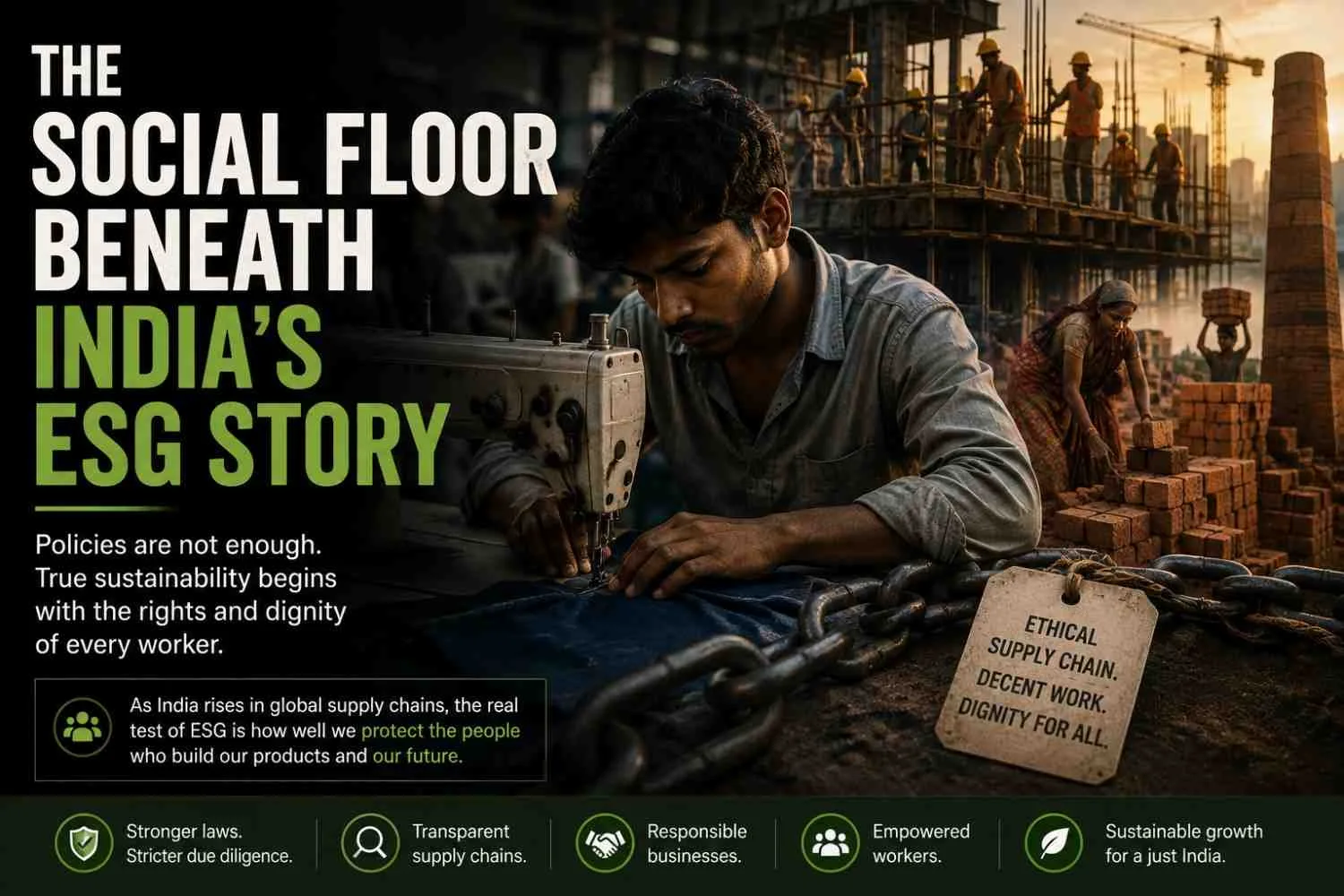
| As India strengthens its position in global supply chains, responsible sourcing has become just as important as sustainable production. While companies increasingly promote ESG commitments and ethical procurement, concerns over bonded labour, migrant-worker exploitation and weak rehabilitation continue to challenge the credibility of these claims. The real question is no longer whether businesses have policies- but whether those policies protect workers on the ground. |
Quick Summary India's ambition to become a global manufacturing and sourcing hub is placing greater attention on labour rights across supply chains. International buyers, particularly in Europe, now expect companies to prove that products are made without forced or bonded labour, making human-rights due diligence a critical part of ESG reporting. While governments have intensified anti-bonded labour campaigns and many large companies have strengthened supplier monitoring, challenges remain in sectors such as brick kilns, quarrying, textiles and construction, where migrant workers often face debt, poor working conditions and limited access to legal protections. Experts argue that rescue operations alone are insufficient unless rehabilitation, fair wages and long-term livelihood support are ensured. As global regulations become stricter, India's competitiveness will increasingly depend not only on environmental sustainability but also on how effectively it safeguards the rights and dignity of workers throughout its supply chains. |
Keywords Bonded Labour, Forced Labour, Human Rights, ESG, Supply Chains, Human Rights Due Diligence, Responsible Sourcing, Migrant Workers, Labour Rights, Ethical Supply Chains, Corporate ESG, India ESG, Worker Welfare, Sustainable Business, Social Sustainability, Global Trade, EU Due Diligence, ESG Compliance, Responsible Procurement, India Labour |
Can India Build Global Supply Chains Without Leaving Workers Behind?
India's ESG journey is no longer judged only by carbon emissions, renewable energy targets or environmental commitments.
Gradually, investors, regulators and consumers around the world are asking a more fundamental question: Who made the product, and under what conditions?
As global supply chains become more transparent, labour rights have emerged as one of the strongest indicators of corporate sustainability.
This shift comes at a critical moment for India.
As the country strengthens its position as a global manufacturing hub through initiatives such as Make in India and the Production-Linked Incentive (PLI) schemes, it is attracting companies looking to diversify their supply chains.
But with this opportunity comes greater scrutiny.
International buyers now expect more than quality products and competitive prices- they also want assurance that goods are produced without forced labour, child labour or exploitative working conditions.
At the heart of this challenge is bonded labour, one of India's oldest and most persistent labour-rights issues.
Although the practice was abolished under the Bonded Labour System (Abolition) Act, 1976, cases continue to emerge across several industries.
Workers caught in cycles of debt, informal employment and labour contracting arrangements often remain trapped in exploitative conditions despite legal protections.
The issue goes far beyond legal compliance. Labour rights have become a key part of ESG performance.
A company may reduce emissions, invest in clean energy and publish detailed sustainability reports, but if exploitation exists anywhere within its supply chain, those achievements are seen as incomplete.
For global investors and responsible businesses, environmental responsibility and human rights are now inseparable.
This changing landscape is also reshaping corporate practices. Large listed companies, exporters and multinational buyers are strengthening supplier checks, conducting labour audits and integrating human-rights due diligence into their procurement processes.
These measures are aimed not only at meeting international expectations but also at reducing the legal, financial and reputational risks associated with unethical supply chains.
However, experts caution that stronger corporate policies alone will not eliminate the problem.
A large share of India's workforce remains employed in the informal sector, where monitoring is limited and many workers have little awareness of their rights or access to effective grievance mechanisms.
As India seeks to expand its role in global manufacturing and trade, ensuring that economic growth is matched by stronger labour protections has become one of the country's most pressing sustainability priorities.
The Hidden Reality of Bonded Labour
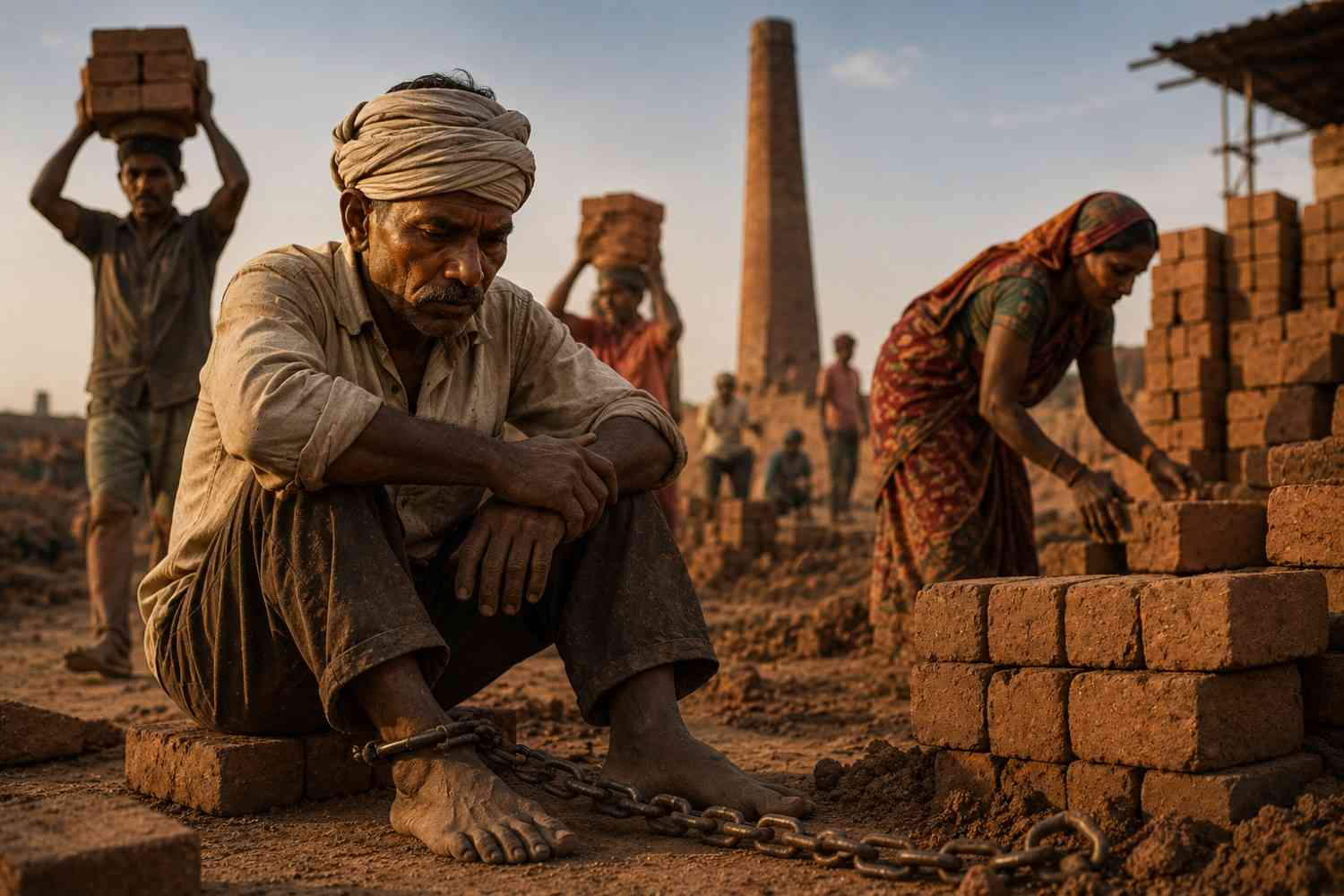
Despite stronger laws and growing corporate commitments, bonded labour continues to exist across parts of India.
Rather than disappearing, it has become less visible, often hidden within informal employment, labour contracting systems and migrant-worker networks that receive limited oversight.
Some of the highest risks of bonded labour continue to be reported in sectors such as brick kilns, stone quarries, textiles, construction and small manufacturing units.
In many cases, workers are recruited through middlemen who offer advance payments or small loans.
What begins as financial support can soon turn into a cycle of debt, leaving workers unable to leave their jobs until the amount is repaid- a practice widely recognised as debt bondage.
Migrant workers are particularly at risk. Many travel long distances in search of work without formal contracts, proper documentation or access to social security.
Language barriers, dependence on labour contractors and limited awareness of their legal rights often make it difficult for them to report exploitation or seek help. According to labour experts, these conditions can lead to unpaid wages, excessive working hours and restrictions on workers' freedom, especially in labour-intensive sectors.
In response, government agencies have stepped up efforts to identify and rescue bonded labourers through district administrations and Bonded Labour Vigilance Committees.
States such as Telangana have expanded inspections and rescue operations, while the National Human Rights Commission (NHRC) and organisations such as International Justice Mission India (IJM India) continue to support rescue, legal action and rehabilitation.
However, experts stress that rescue is only the beginning of the process.
The bigger challenge is helping survivors rebuild their lives.
Under the Central Sector Scheme for Rehabilitation of Bonded Labourers, rescued workers are entitled to financial assistance, skill development and livelihood support.
However, implementation remains uneven across states. Delays in issuing Release Certificates, slow disbursal of rehabilitation funds and limited follow-up support often leave survivors vulnerable to returning to the same exploitative conditions.
Organisations such as Aajeevika Bureau and SEWA Bharat have repeatedly pointed out that financial insecurity remains one of the biggest reasons many rescued workers return to informal employment. Without stable livelihoods, social protection and long-term support, breaking the cycle of bonded labour becomes extremely difficult.
Businesses, too, are facing growing pressure to strengthen labour oversight throughout their supply chains.
Companies are now expected to look beyond their immediate suppliers by scrutinising labour contractors, monitoring subcontractors and ensuring that temporary and migrant workers receive the same protections and rights as permanent employees.
For many organisations, protecting labour rights is no longer just about regulatory compliance, it has become a key part of responsible business practices and long-term ESG performance.
Where Labour-Risk Vulnerabilities Are Highest
Brick kilns Quarrying Textiles Construction Small Manufacturing
When Human Rights Become a Trade Requirement
The discussion around bonded labour is no longer confined to human rights- it has become a business priority.
As global markets place greater emphasis on responsible sourcing, Indian companies are finding that labour practices now influence market access, investor confidence and brand reputation as much as product quality or pricing.
A major reason for this shift is the European Union's Corporate Sustainability Due Diligence Directive (CSDDD) and other emerging international regulations.
These require companies to identify, prevent and address human-rights risks across their supply chains.
Global buyers are no longer satisfied with just supplier declarations. They expect evidence that workers are recruited fairly, paid properly and employed under safe and ethical conditions, particularly in sectors that have historically been linked to labour exploitation.
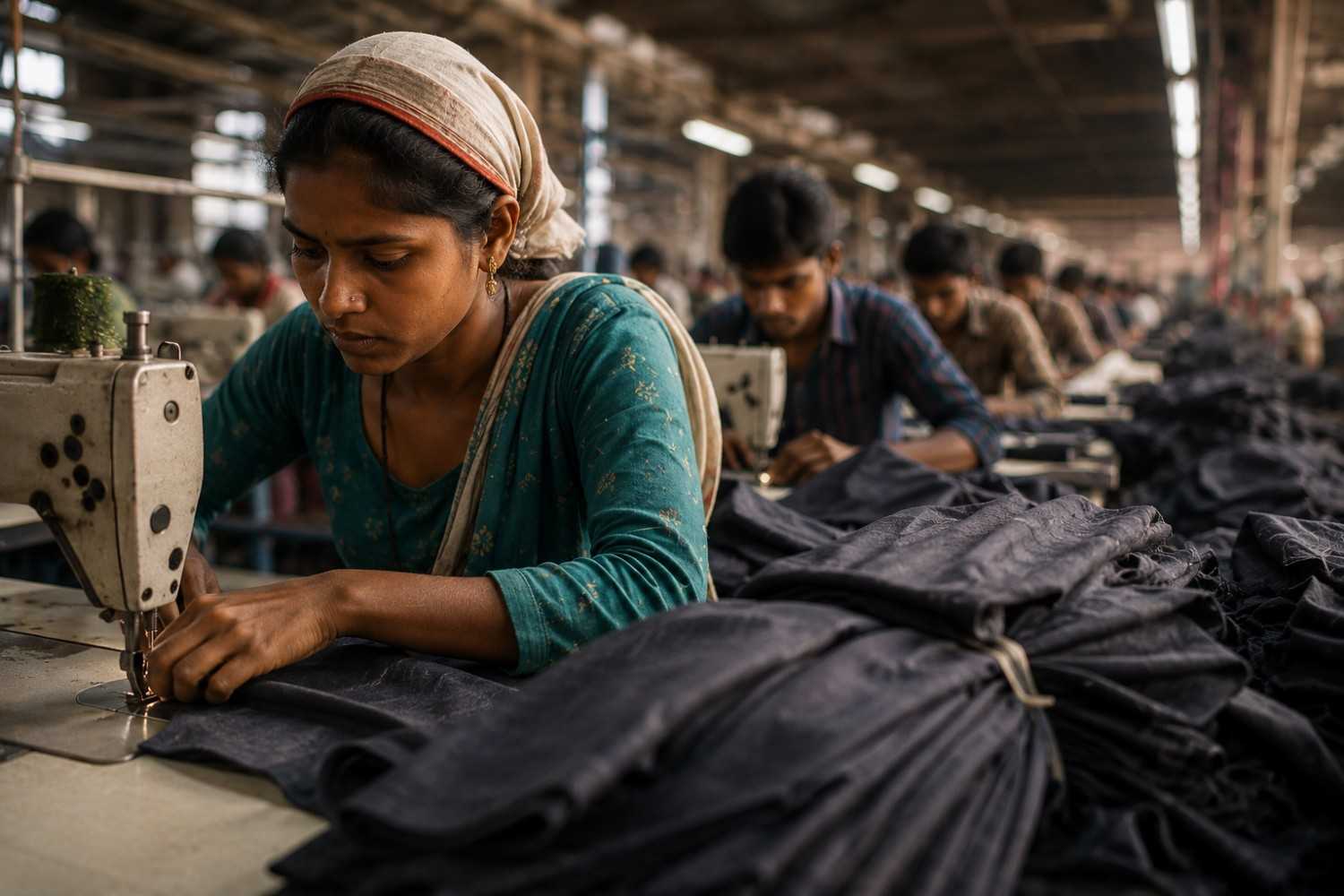
In response, many Indian exporters and large listed companies are strengthening their human-rights due diligence processes.
Supplier agreements are gradually incorporating labour-rights clauses, mandatory compliance requirements and independent audits.
Businesses are also looking beyond their direct suppliers to examine labour contractors and subcontractors, where informal employment practices are often more difficult to monitor.
Many companies in sectors such as manufacturing, construction, logistics and platform-based services are investing in digital worker registration, attendance systems and grievance mechanisms to improve transparency.
Others are working with independent auditors and civil society organisations to assess labour conditions instead of relying solely on internal reports.
These efforts are aimed not only at meeting international regulations but also at reducing legal, operational and reputational risks in an ESG-focused business environment.
However, experts caution that due diligence should go beyond paperwork. Audits conducted in the presence of management, pre-announced inspections or supplier self-declarations often fail to reflect the actual conditions faced by workers.
Labour-rights organisations argue that meaningful due diligence requires confidential worker interviews, regular field visits and independent grievance mechanisms that allow workers to raise concerns without fear of retaliation.
The situation is particularly challenging for migrant workers employed through third-party contractors. While many companies have adopted strong ESG policies, they often have limited visibility into the working conditions of people employed beyond their direct workforce.
Bridging this gap between corporate commitments and on-ground realities remains one of the biggest challenges in building truly responsible supply chains.
As India strengthens its position as a global manufacturing hub, businesses are realising that long-term competitiveness will depend not only on production capacity and product quality but also on their ability to uphold human rights throughout the supply chain.
For global buyers, a sustainable product begins with fair treatment of the worker long before it reaches the consumer.
Progress Is Visible, But Challenges Persist
Government agencies say India has made significant progress in tackling bonded labour over the past decade.
Several states have stepped up rescue operations; labour inspections have become more focused and rehabilitation programmes continue to receive policy support.
Authorities also point to stronger coordination between government departments, district-level vigilance committees and awareness campaigns as important steps towards identifying and protecting vulnerable workers.
Businesses also highlight improvements in their labour practices. Many large listed companies now require suppliers to follow human-rights standards, conduct regular labour audits and provide grievance mechanisms for workers.
ESG reporting has also broadened the focus from workplace safety to issues such as ethical recruitment, fair wages and responsible sourcing.
For companies serving international markets, these measures have become essential for maintaining investor confidence and meeting global buyer expectations.
However, organisations working closely with affected communities present a more cautious assessment.
Groups such as Aajeevika Bureau, SEWA Bharat and International Justice Mission India (IJM India) argue that while rescue operations have improved, long-term rehabilitation remains a major challenge.
Many rescued workers continue to face financial hardship, while delays in rehabilitation support, limited livelihood opportunities and difficulties in accessing government benefits often leave them vulnerable to exploitation again.
Labour-rights organisations also point out that migrant workers frequently remain outside formal monitoring systems, making it difficult to identify abuse until it becomes severe.
Experts also caution that corporate compliance reports do not always reflect the realities of the entire supply chain.
Most audits focus on direct suppliers, while smaller subcontractors and labour contractors- where the risk of exploitation is often highest receive much less attention. Without independent worker interviews, confidential grievance mechanisms and regular field verification, important labour issues can remain hidden despite positive ESG disclosures.
For this reason, many experts believe that the next stage of India's ESG journey should focus less on expanding policies and more on measuring real outcomes.
The true test of progress is not the number of audits conducted or policies announced, but whether workers receive fair wages, safe working conditions, access to benefits and effective protection when their rights are violated.
Closing this gap between policy and implementation will be crucial if India has to build supply chains that meet both national labour standards and rising global expectations.
From Compliance to Competitiveness
Worker Rights → Responsible Supply Chains → Stronger ESG → Investor Confidence → Export Competitiveness
Why Protecting Workers Is Good for Business
Labour rights are no longer seen as just a legal requirement. They have become an important measure of how companies are judged by investors, regulators and global buyers.
Today, a strong ESG profile is not defined only by lower emissions or renewable energy investments- it is also shaped by how businesses treat the people working across their supply chains.
This shift is changing the way companies operate. Investors are paying greater attention to labour-related risks, while international buyers expect businesses to prove that their products are made under fair and ethical working conditions.
Companies that cannot demonstrate responsible recruitment, safe workplaces and effective grievance mechanisms risk damaging their reputation, losing investor confidence and facing challenges in global markets.
At the same time, organisations that invest in better labour practices are discovering clear business benefits. Fair wages, transparent supply chains and safe working conditions can improve employee morale, reduce operational disruptions and build stronger relationships with customers and investors.
Protecting workers is no longer just about meeting regulations- but becoming a competitive advantage.
For India, this shift carries particular significance.
As the country strengthen its position as a global manufacturing hub, the credibility of its supply chains will depend not only on production capacity but also on the confidence that goods are produced under fair and lawful conditions.
Sustainable economic growth cannot be achieved without protecting the people who drives it.
Ultimately, India's ESG journey will be judged not only by how successfully it cuts emissions or expands clean industries, but also by how effectively it safeguards the rights and dignity of its workforce.
Ending bonded labour requires much more than rescue operations or compliance reports.
It demands fair wages, timely rehabilitation, secure livelihoods and supply chains where every worker is visible, protected and treated with dignity.
As global markets continue to demand greater transparency, businesses that place human rights at the centre of their ESG strategies will be better positioned to earn trust, attract investment and compete internationally.
In the end, India's success as a global manufacturing and sourcing destination will depend not only on what it produces, but on how well it protects the people who produce it.
Sources:
- Ministry of Labour & Employment, Government of India – Bonded Labour System (Abolition) Act, labour welfare schemes and rehabilitation policies.
https://labour.gov.in/ - National Human Rights Commission (NHRC) – Reports and advisories on bonded labour, migrant workers and human-rights protection.
https://nhrc.nic.in/ - International Justice Mission (IJM) India – Bonded labour rescue, rehabilitation and survivor case studies.
https://www.ijm.org/india - Aajeevika Bureau – Research and policy work on migrant labour, safe migration and labour rights.
https://www.aajeevika.org/ - SEWA Bharat – Informal workers, women's livelihoods and labour rights.
https://www.sewabharat.org/ - J-PAL South Asia – Evidence-based research on labour markets, migration and public policy.
https://www.povertyactionlab.org/south-asia - Telangana Labour Department – State-level bonded labour rescue initiatives, inspections and rehabilitation measures.
https://labour.telangana.gov.in/ - Central Consumer Protection Authority (CCPA) (for broader ethical business and consumer accountability where relevant)
https://consumeraffairs.nic.in/ - ESIC (Employees' State Insurance Corporation) – Worker welfare, social security and benefit access.
https://www.esic.gov.in/ - International Labour Organization (ILO) – Global standards on forced labour, decent work and supply-chain due diligence.
https://www.ilo.org/



Add a Comment