3R Resource Efficiency

Promotes reducing, reusing, and recycling resources to minimize waste and improve overall efficiency.

Showing 6

25 Aug 2026

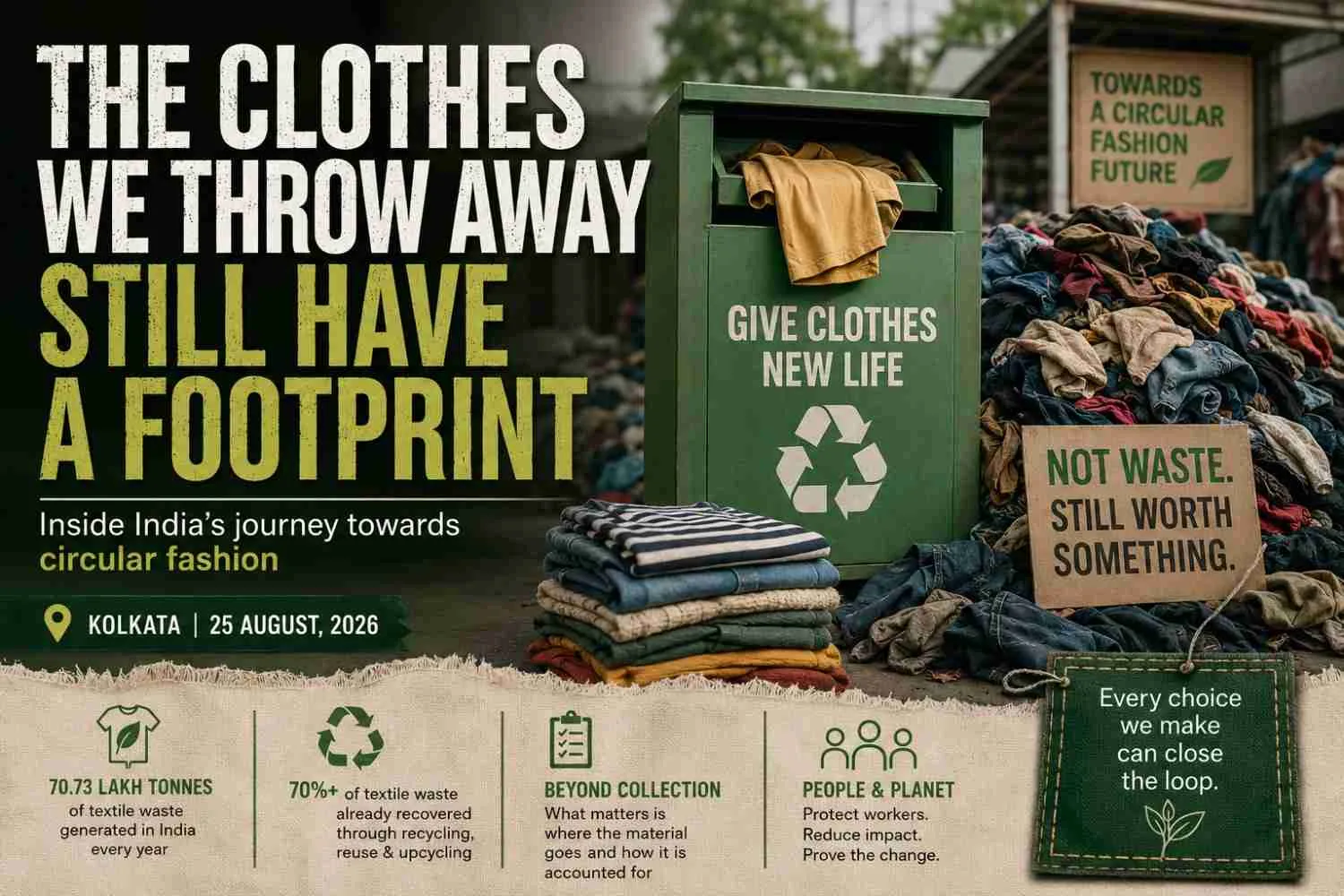
Kolkata | 25 August, 2026 India’s fashion industry is experimenting with textile recycling, cleaner production and circular retail models, but the real test is whether discarded clothes actually stay in the material loop - and whether companies can prove where they go. SummaryIndia generates about 70.73 lakh tonnes of textile waste every year, with around 58% coming from post-consumer disposal. At the same time, more than 70% of total textile waste is already being recovered through recycling, reuse, upcycling and downcycling, showing that India has an established recovery ecosystem rather than a complete absence of recycling. The bigger challenge is what happens to clothes after consumers stop wearing them. Garments can be reused, repaired, resold, downcycled or recycled, but blended and damaged textiles can be difficult to recover at their original value. Companies are responding through take-back programmes, recycled fibres, organic cotton sourcing, cleaner dyeing technologies and retail trade-ins. Yet a collection box or sustainability label does not automatically make fashion circular. The stronger test is whether companies can account for the material collected, show an audit trail for its destination, protect the workers handling discarded textiles and demonstrate measurable environmental gains against a clear baseline. Keywordstextile waste in India, circular fashion, textile recycling, sustainable fashion, textile waste management, fashion circular economy, textile circularity, post-consumer textile waste, textile waste recovery, textile recycling India, sustainable textiles, clothing waste, garment waste, textile upcycling, textile downcycling, recycled fibres, textile traceability, circular fashion supply chain, sustainable textile production, textile waste workers, informal waste workers, fashion sustainability, textile sustainability, circular textile economy, sustainable fashion India   What really happens to a T-shirt after we stop wearing it?For most of the consumers, a garment’s journey seems to end when it is placed in a donation bag, dropped into a collection box or thrown away. For the textile itself, however, that may be only the beginning.A discarded T-shirt can take several different paths. It may be worn again, repaired and resold, converted into wiping cloths or other products, or mechanically recycled into new fibres. But textiles that are heavily damaged, contaminated or made from difficult-to-separate blends can be much harder to recover and may ultimately end up as waste.This is where the idea of a circular fashion economy becomes more complex than simply collecting old clothes. India’s latest government mapping of the textile-waste value chain estimates that the country generates around 70.73 lakh tonnes of textile waste every year. About 42% is pre-consumer waste, generated during manufacturing, while the remaining 58% comes from post-consumer disposal. The study also estimates that more than 70% of total textile waste is already recovered through recycling, upcycling, downcycling or reuse. That changes the way the problem needs to be viewed. India is not starting from zero. A large share of textile waste is already finding its way back into the economy. The bigger challenge is what happens to the remaining material and whether textiles can be collected, sorted and recovered efficiently once they leave the formal manufacturing system. Collecting an old T-shirt does not, by itself, make fashion circular. True circularity begins when the garment has a clear path to its next use. FOLLOW THE FABRICConsumer discards garment↓Collection↓Sorting↓Reuse / Repair → Resale↓Recycling → New Fibre / Product↓Residual Waste → Documented Final Destination  The question: Does every kilogram collected have a documented destination? Can textile collection really make fashion circular?Post-consumer collection is becoming an increasingly visible part of sustainable-fashion efforts. Brands and retailers are encouraging consumers to return unwanted clothes through store collection points, take-back programmes and trade-in schemes. But collection numbers alone can give a misleading picture of circularity. Collecting 10 tonnes of used clothing may sound impressive, but the more important question is what happened to that material after collection.How much was reused? How much was recycled? How much was downcycled? How much was rejected? And where did the rejected material go? This is the difference between collection and actual material recovery.A credible circular-fashion programme therefore needs to maintain a clear mass balance - showing what entered the system, what was recovered, what was converted into another product and what ultimately remained as waste.India’s 2026 government assessment provides an important counterpoint. The country already has a substantial textile-recovery ecosystem, particularly for pre-consumer waste generated during manufacturing. High recovery rates in this segment show that parts of the domestic textile industry already have established systems for collecting and recovering material. The bigger challenge is what happens after a garment leaves the formal manufacturing system and enters the hands of consumers. That is where collection, sorting, logistics and end-market demand become critical to making post-consumer textiles genuinely circular. Is recycling always better than making new clothes?  Not necessarily. The environmental benefit of textile recycling depends on what material is being recycled, which technology is used and what the recovered fibre can replace. Cotton, polyester, nylon and blended fabrics behave differently during recycling. Mechanical recycling, for example, can shorten textile fibres and reduce the quality of the resulting material. More advanced recycling technologies may recover higher-quality fibres from difficult textiles, but they can also require greater investment, energy and specialised infrastructure. This creates an important competing view: Recycling is necessary, but recycling alone cannot solve the problem of overproduction and overconsumption. If brands continue producing large volumes of inexpensive clothing designed for short use, recycling systems may simply end up managing the waste created by a high-consumption model. That is why repair, reuse, resale and longer garment life need to be treated as equally important parts of the circular-fashion system. A garment that is worn for longer, repaired instead of replaced or resold to another consumer can delay the point at which recycling becomes necessary. The goal of circular fashion is therefore not simply to recycle more clothes. It is to keep garments and their materials in productive use for as long as possible. THE CIRCULARITY HIERARCHYLONGER USE↓REPAIR↓REUSE / RESALE↓RECYCLING↓DOWNCYCLING↓DISPOSALKeep the garment in use before breaking it back into material. Can fashion cut its water footprint before a garment even becomes waste?The environmental impact of clothing begins long before a garment reaches the end of its life. Processes such as dyeing and finishing during manufacturing can require significant amounts of water.This has led brands and technology companies to explore waterless and low-water dyeing technologies. Some emerging systems use alternatives such as supercritical carbon dioxide, while others use digital, foam-based or other processes designed to reduce conventional water consumption.The potential benefit is straightforward: using less water for the same production output can reduce pressure on freshwater resources while also lowering the volume of wastewater generated. But the technology still needs to pass an evidence test. A company should not simply state how many litres of water it saves per garment. It should explain what the saving is measured against and what the calculation includes.What exactly does the reported reduction cover? Is it limited to dyeing, or does it include finishing as well? Does the alternative process save water but consume more energy? Has it been proven at commercial scale? And how much has the company actually invested compared with what it originally announced? These questions matter because a technology can look highly efficient in a pilot project but deliver very different results when used across a large manufacturing operation. A water-saving technology becomes meaningful only when its environmental benefits can be demonstrated at commercial scale.Does organic cotton automatically make a garment sustainable?Organic cotton can be part of a lower-impact sourcing strategy, but the label alone cannot tell the complete sustainability story. What matters is how the cotton was produced, verified and traced through the supply chain. Companies need credible certification and traceability systems to establish whether suppliers are meeting the required environmental and production standards. There is also a crucial social question: Who is able to participate in this transition? Who are the farmers producing the cotton? What prices are they receiving? Can small producers afford certification? Who pays for compliance and verification? If sustainable sourcing requirements become too expensive or complicated, smaller farmers may find it harder to participate.Responsible sourcing therefore needs to look at both environmental performance and farmer inclusion. Certification can provide an important layer of verification, but it should be treated as a starting point for scrutiny rather than the final proof that a supply chain is sustainable.Can retail trade-ins actually make fashion more circular?Trade-in programmes are becoming another visible part of the circular-fashion model. Consumers return unwanted clothing to a retailer and receive a discount, store credit or another incentive towards a future purchase. The model can help solve one problem by giving retailers a way to bring used garments back into the system instead of allowing them to disappear into the waste stream. But there is also a potential contradiction. If a trade-in reward simply encourages consumers to buy another garment immediately, the programme could increase consumption rather than reduce it. A truly circular model would prioritise repair, resale and reuse for returned clothing, with recycling serving as the last option.The priority should be to keep the garment in use for as long as possible before breaking it down into fibre or treating it as waste.Who handles India’s discarded textiles?  India’s textile-recovery system cannot be understood without looking at the workers who already operate within it. Waste pickers, sorters, aggregators and small recycling units play an important role in collecting and recovering materials that formal systems may not reach. Yet much of this work remains invisible in corporate sustainability reporting. That raises an important CSR question: If companies want to build a circular fashion economy, what happens to the workers who are already recovering its materials? A responsible transition should consider fair wages, workplace safety, protective equipment, social-security access and stable incomes. Formalisation should not simply push informal workers out of the value chain. It should improve their working conditions, recognise their contribution and give them a more secure role in the circular economy. Organisations working with waste pickers and vulnerable communities, including Chintan and Goonj, can offer an important perspective on this issue. The worker’s voice matters because circularity cannot be considered fully sustainable if material recovery improves while the conditions of the people doing that work deteriorate.How can companies prove that their circularity claims are real?This is where the evidence test becomes the centre of the story. Saying that a company collected textiles, saved water, used organic cotton or launched a trade-in programme tells us what it did. The more important question is what difference those actions actually made.The more important question is what happened because of that activity.Companies should therefore disclose how much material was collected, how much was actually reused or recycled, what happened to rejected material, how much water was saved against a clear baseline, how much was invested and spent, who benefited and whether the programme continued after the initial funding or pilot period.The reporting boundary should also be clear. A garment collected is not necessarily a garment recycled. A garment recycled is not necessarily a garment returned to an equivalent use. And a sustainability claim is not meaningful unless the company can explain how the claimed benefit was calculated and what happened to the material afterwards. Circular fashion is ultimately not about making better claims about old clothes. It is about building a system in which materials, resources and livelihoods can be tracked from the beginning of the supply chain to what happens after the garment is no longer wanted. THE CIRCULAR FASHION EVIDENCE TEST  ClaimWhat should be proved?“We collected textiles”Total material collected and consumer/beneficiary denominator“We recycled them”Mass balance and material destination“We use recycled fibre”Fibre content and chain-of-custody evidence“We reduced water”Baseline, methodology and actual reduction“We use organic cotton”Certification and sourcing audit trail“We support waste workers”Wages, safety, income and benefit access“We invested in circularity”Budget versus actual expenditure“We reduced our footprint”Absolute and intensity results“Our programme is sustainable”Performance that continues over time This is the difference between a sustainability claim and a sustainability result. A percentage on its own does not tell the full story. Companies should clearly disclose what they measured, where they measured it, the period covered and how the improvement was calculated. A reported 30% reduction may sound significant, but the real questions are: 30% compared with what baseline? Across which facilities? Over what period? Did production increase or decrease? Was the saving measured in absolute terms or per garment? Without this context, sustainability figures can be difficult to verify or compare. Clear reporting boundaries and methodologies are therefore essential to show whether an environmental improvement represents a genuine change in performance. Can India turn textile waste into a resource without leaving its workers behind? India’s policy direction is also moving towards greater textile circularity. The Tex-Eco Initiative, announced in the Union Budget 2026–27, aims to promote globally competitive and environmentally sustainable textile and apparel manufacturing while helping the sector align with international sustainability standards and emerging green markets. Government efforts are also gradually focusing on textile-waste management, recycling technologies and value addition from discarded textiles.This creates an opportunity to move beyond isolated brand-led campaigns and build a wider circular textile system. But recycling cannot carry the entire burden. A genuinely circular apparel model would begin much earlier with durable products designed to last longer, followed by repair, reuse and resale before recycling becomes the final recovery option. That requires action across the entire value chain. Brands need to design garments that are easier to repair and recycle. Retailers need transparent take-back systems. Recyclers need reliable and traceable material flows. Governments need effective standards and enforcement. Consumers need clear information about garment durability, care and disposal. And there is one group that cannot be left out of this transition: the informal workers already collecting, sorting and recovering textile waste. They are not outside the circular economy. In many cases, they are already helping make it work. A truly sustainable textile system must therefore account not only for where the waste goes, but also who handles it, who earns from it and whether those livelihoods become safer and more secure as the system evolves.   THE REAL CIRCULAR-FASHION TESTDESIGN FOR LONGER USE↓REPAIR↓REUSE / RESALE↓COLLECT↓SORT↓RECYCLE↓TRACE THE MATERIAL↓MEASURE THE IMPACT   What should companies actually report?For CSR and corporate sustainability programmes, the most important question is not how many clothes were collected. It is what happened to those clothes afterwards, who handled them, who benefited and what environmental impact was actually avoided. A credible programme should report the total quantity of material collected, where it went and how much genuinely re-entered a productive material or product cycle. It should clearly distinguish between pre-consumer and post-consumer waste, disclose relevant certifications and audit trails, and explain how claims based on those certifications were verified. The people behind the system also need to be visible. When informal workers are involved in collecting, sorting or recycling textiles, companies should report their wages, working conditions, safety measures, access to social protection and how they are being brought into the formal circular economy. Financial reporting should be equally transparent: How much was budgeted? How much was actually spent? How much went towards collection, sorting, recycling, technology, worker protection and infrastructure? The reporting boundary must remain clear throughout. A kilogram collected is not automatically a kilogram recycled.A donated garment is not automatically a garment reused.A certified fibre is not automatically proof that the entire garment has a low environmental footprint.And a percentage reduction means little without a credible baseline and clearly defined methodology. Can fashion become circular without simply moving the waste problem somewhere else? That is the real test of India’s sustainable-fashion transition. India already has a significant textile-recovery ecosystem, with the latest government assessment indicating that more than 70% of textile waste is recovered through different pathways. But recovery alone does not equal circularity. The material still needs to be traced. Workers still need to be protected. Recycling processes still have their own environmental costs. Consumers still need to be encouraged to wear, repair, reuse and resell clothes for longer. And companies still need to demonstrate that their sustainability claims reflect what is actually happening on the ground. This is where the next phase of sustainable fashion will be decided. It will not be defined by how many collection bins a brand installs, how many take-back campaigns it runs or how many recycled garments appear in a catalogue. It will be defined by whether companies can follow a garment from the consumer’s wardrobe to its next useful life - and provide evidence for every major step along the way. Because a fashion system is not circular simply because it collects its waste. It becomes circular when materials stay in productive use, value reaches the people who make the system work, and environmental benefits can be measured and proven. That is the real standard India’s circular-fashion economy now needs to meet. Primary sources:  Ministry of Textiles — Mapping of Textile Waste Value Chain in India (2026)Covers the 70.73 lakh tonnes annual textile-waste estimate, 58% post-consumer / 42% pre-consumer split, recovery pathways, recycling technologies and post-consumer infrastructure gaps.Ministry of Textiles — Mapping of Textile Waste Value Chain in IndiaPress Information Bureau — Ministry of Textiles: Mapping of Textile Waste Value Chain in IndiaOfficial government release covering the report's headline findings, including 70.73 lakh tonnes of annual textile waste and more than 95% recovery of pre-consumer textile waste.PIB — Mapping of Textile Waste Value Chain in IndiaPress Information Bureau — Ministry of Textiles: Textile Recycling and Circular EconomyCovers the government's current textile-recycling and circular-economy initiatives, including the Tex-Eco Initiative.PIB — Textile Recycling and Circular EconomyPress Information Bureau — Ministry of Textiles: Innovative Textile Recycling TechnologiesCovers government support for textile-waste management, recycling, recycled fibres, new materials and value addition from discarded textiles under Tex-Eco.PIB — Innovative Textile Recycling TechnologiesPress Information Bureau — Environmentally Sustainable Production PracticesUseful for the article's cleaner-production, water/energy efficiency, hazardous-chemical reduction, organic textiles, natural dyeing and textile-waste management sections.PIB — Environmentally Sustainable Production PracticesCentral Pollution Control Board — Charter for Water Recycling and Pollution Prevention in Textile IndustriesPrimary regulatory material for the water-consumption, wastewater, chemical use and pollution-prevention angle.CPCB — Charter for Water Recycling and Pollution Prevention in Textile IndustriesPress Information Bureau — Textile Waste Innovation ChallengeDocuments the government's “What Is It Made Of?” Textile Waste Innovation Challenge and its focus on circularity, sustainable production and practical textile-waste solutions.PIB — Textile Waste Innovation ChallengePress Information Bureau — Union Budget 2026–27: Strengthening India's Textile Value ChainUseful for the wider policy context around Tex-Eco, sustainable manufacturing, textile modernisation and circularity.PIB — Union Budget 2026–27: Strengthening India's Textile Value ChainPress Information Bureau — Integrated Programme for the Textile SectorCovers the Budget's broader textile programme, including the Tex-Eco Initiative and sustainable textile manufacturing.PIB — Integrated Programme for the Textile SectorMinistry of Textiles — Textile Recovery Facility, Navi MumbaiParticularly useful for the newer collection, traceability and impact-measurement angle. In August 2026, the Ministry documented a proposed digital circular-textile infrastructure platform for collection, traceability and impact measurement.PIB — Textile Recovery Facility, Navi Mumbai ...Read more

20 Aug 2026

Kolkata | 20 August, 2026  Every day, millions of flowers are offered at India’s temples. Once the prayer is over, however, those flowers become part of a growing waste-management challenge. Across pilgrimage towns, municipalities, temple trusts, women’s self-help groups and private enterprises are trying to give them a second life - as incense, natural colours, compost, flower powder and other products. The bigger opportunity is not simply to prevent flowers from reaching rivers. It is to build a system where ritual waste creates reliable rural livelihoods, supports women and waste workers, and can prove every environmental claim it makes. SummaryTemple flowers can become more than biodegradable waste. They can become products, income and a reason to strengthen local circular economies. But a credible model must answer difficult questions. How much waste was actually collected? Where would it have ended up without the intervention? How much was successfully converted into usable products? Where did the remaining material go? How much did the workers earn? What did the project cost? And, most importantly, can the claimed reduction in river pollution be supported with clear evidence? The future of India’s temple economy may depend less on how many flowers are collected and more on whether the entire chain can be measured and trusted. KeywordsTemple Flower Waste, Floral Waste Management, Circular Economy India, Temple Waste Recycling, Women Self-Help Groups, Sustainable Livelihoods, Circular Economy, Waste to Wealth, River Pollution, Environmental Impact, CSR, Sustainable Communities When Devotion Becomes a Waste-Management ChallengeFor a devotee, flowers are an offering made with faith and devotion. But for temples that receive thousands of visitors every day, those offerings eventually become a large and regular source of organic waste. The problem arises when floral waste is mixed with other garbage or dumped in drains, open spaces and water bodies. Although flowers are biodegradable, that does not make them harmless when large quantities are disposed of, without proper treatment. When floral waste enters water bodies in large amounts, it can increase organic pollution, reduce dissolved oxygen and put additional stress on aquatic ecosystems. The scale of the waste can be significant. At Ujjain’s Mahakaleshwar Temple, which receives an estimated 75,000–100,000 visitors a day, around 5-6 tonnes of floral and other waste are generated daily. A processing plant with a reported capacity of three tonnes per day is part of the temple’s waste-management system, while women’s self-help groups also help turn collected floral waste into useful products. Tirupati offers another example. More than six tonnes of floral waste are reportedly handled every day, with around 150 women from self-help groups involved in recycling the material. These examples highlight an important reality: a major temple is not only a place of worship. It is also a large local ecosystem involving visitors, livelihoods, waste management and the environment. Temple floral-waste scale  Ujjain: 75,000–100,000 visitors/day | 5–6 tonnes floral + other waste/day | 3-tonne/day processing capacityTirupati: 6+ tonnes floral waste/day | 150 women involved in recyclingGulf of Mannar: 849 kg garland waste collected → 155 kg usable flower powder | 60 women involved Can Temple Flowers Become a Source of Livelihood?Floral waste is often discussed as an environmental problem, but it can also become an economic opportunity when it is collected, processed and reused properly. A model in the Gulf of Mannar Biosphere Reserve shows how this can work. Temples were used as collection points, with 15 collection drums installed across five temples, according to UNESCO. Between May and August 2025, around 849 kg of garland waste was collected and processed. After segregation and drying, 155 kg was converted into usable flower powder, while 60 women received training in processing, quality control, packaging, pricing and managing micro-enterprises. The numbers also show why waste processing cannot be measured simply by comparing what is collected with what is sold. 849 kg went into the process, while 155 kg became usable flower powder. That difference is expected. Flowers contain significant moisture, while temple offerings can also contain threads, plastic, synthetic decorations and other unwanted material. Some of the material is removed during sorting, while further losses can occur during drying and processing. Not all collected waste will necessarily be suitable for the final product. This is why credible circular-economy projects need a clear mass balance - tracking how much material enters the system, how much is recovered, how much is converted into products and how much ultimately remains as waste. Collected → segregated → processed → converted into product → sold/used → residual material → final destination. Without that chain, “X tonnes recycled” can hide what happened between collection and the final product.  Who Benefits When Temple Flowers Get a Second Life? The strongest potential of floral-waste circularity may lie in its ability to address waste while creating local livelihoods. Women’s self-help groups can take part in collection, segregation, drying, processing, packaging and sales. This can keep more of the economic value within pilgrimage centres and nearby communities, instead of sending the waste to a distant processing facility.But formalising the waste stream can also affect people who already depend on it for their livelihoods. Before a new floral-waste system is introduced, it is important to ask: Who was collecting, sorting or recovering value from this waste before the project began?Informal waste workers may already be earning an income from these activities. If a formal system replaces their work without including them, it could solve a waste-management problem while creating a new livelihood problem.A responsible circular-economy model should therefore examine whether informal workers are:included in the new system or offered alternative livelihoods;provided formal contracts or predictable payments; given appropriate protective equipment and training;included in decisions that affect their work;given opportunities to participate in higher-value stages of processing and sales; andactually, earning more or receiving a more stable income as a result.The same principle applies to women-led self-help groups. Saying that a project has “created 100 jobs” does not narrate the full story. It is important to know whether these are full-time or occasional jobs, how much workers are paid, who pays them and whether the income will continue after the pilot or CSR funding ends.A circular-economy project should create value not only from discarded flowers, but also for the people whose work keeps that system running.  VALUE-CHAIN FLOW   FLOWER OFFERED → TEMPLE COLLECTION → SEGREGATION → WOMEN/WASTE-WORKER NETWORK → PROCESSING → PRODUCT → MARKET → INCOMEWaste residue → documented destination  Can Temple Trusts Turn Faith-Based Giving into Environmental Action?India’s religious institutions already play a major role in supporting education, healthcare, food distribution, welfare and other community programmes. This gives temple trusts and endowment bodies an opportunity to extend that work into environmental management and circular-economy initiatives.Instead of leaving floral waste entirely to municipal systems, temple administrations could invest in the infrastructure needed to manage it properly, including: separate collection points;storage and transportation systems;processing equipment and facilities;training and protective equipment for workers;support for women-led enterprises;market development for products made from floral waste; andregular monitoring and independent audits. Tirumala Tirupati Devasthanams, for instance, already operates several social-service and charitable programmes through dedicated trusts and institutional structures. This established model of organised giving could be expanded to support environmental stewardship, responsible waste management and sustainable livelihood opportunities for local communities. But funding a circular-economy project is only the beginning. Temple trusts should also be able to demonstrate how that money is being used and what it is achieving. Capital expenditure, operating costs, worker payments, equipment purchases and actual programme spending should be clearly documented. A large budget announcement does not necessarily mean the money has been spent. A large processing facility does not automatically mean the system is functioning. And a finished product on a shelf does not prove that the wider floral-waste stream is being managed responsibly. The real measure of a temple’s circular-economy investment is not how much it announces or builds, but how effectively it turns waste into environmental and social value. Can Private Companies Help Take Temple-Waste Circularity to Scale?Taking temple floral-waste circularity to a larger scale will likely require more than temple trusts and municipal bodies. Private companies can bring the technology, logistics, packaging, market access, training and investment needed to build a more efficient system. Different industries can contribute in different ways. FMCG companies could support product development and distribution, while packaging companies could help create lower-impact packaging for products made from floral waste. Recyclers and producer-responsibility organisations could bring expertise in collection, traceability and material management. Companies in sectors such as automobiles, electronics and batteries could also support floral-waste initiatives through CSR funding, livelihood programmes and wider circular-economy partnerships. Businesses involved in repair and reuse can bring another useful lesson: materials retain greater value when they are kept in productive use instead of being discarded. But corporate participation should not turn floral-waste management into another branding exercise.If a company supports such a project through CSR, there should be clear answers to basic questions: How much money was committed? How much was actually spent? What was built? Who benefited? What results were achieved? And what continued after the funding ended? That transparency is what separates a CSR announcement from a functioning programme that delivers lasting environmental and social impact. Who Is Responsible for Making Temple-Waste Management Work?Temple floral waste does not exist separately from the wider urban waste-management system. In pilgrimage towns, municipal corporations are responsible for local waste collection, sanitation and supporting infrastructure. That makes coordination with temple administrations essential. Running two separate waste systems in the same town can create gaps, duplication and confusion over responsibility. The regulatory framework is equally important. The Central Pollution Control Board (CPCB) and State Pollution Control Boards play a role in pollution monitoring and environmental compliance, while the Ministry of Environment, Forest and Climate Change (MoEFCC) provides the broader policy framework. BIS may be relevant where standards apply to particular products or processes, while the Central Consumer Protection Authority (CCPA) has a role in addressing misleading environmental claims. This becomes especially important as circular-economy projects use environmental benefits as part of their public messaging. India’s 2024 Guidelines for Prevention and Regulation of Greenwashing and Misleading Environmental Claims require environmental claims to be truthful, clear and supported by evidence. Floral-waste projects should meet the same standard. If a project claims to have “saved a river,” the crucial question is whether that claim can be supported by clear, verifiable evidence. Can a Floral-Waste Project Prove Its Environmental Impact?Collecting waste does not automatically tell us how much pollution has been prevented. Suppose a project collects 1,000 kg of flowers. It cannot simply claim that 1,000 kg of waste was diverted from a river. To make that claim, the project needs to establish where that waste would have gone without the intervention. Was it entering a river or other water body? Was it being sent to a landfill? Was it already being composted? Was it being collected separately?The environmental benefit depends on the answer. A credible project should therefore report at least four things: Waste collected: How much floral waste entered the programme?Waste diverted: How much was demonstrably prevented from its documented previous disposal route?Product output: How much was converted into a usable product?Residual waste: Where did the remaining material go? The scale of the project should also be taken into account. Reporting both absolute and intensity-based results can provide a clearer picture.For example: Absolute: 10 tonnes of floral waste diverted in one year. Intensity: 10 kg of floral waste diverted per 10,000 visitors. The second measure can make comparisons between temples of very different sizes more meaningful. Is the Final Product Really the Measure of Circularity?Not necessarily.It is easy to focus on the visible end products - incense sticks, soaps, colours, compost, paper or decorative items made from flowers. But these products represent only one part of the circular-economy process.The system begins with segregation and collection and ends only when the material, money and people involved can be accounted for.That means asking: Material: Where did the collected flowers go?Money: How much was spent and how much revenue was generated?People: Who did the work, who benefited and was anyone’s existing livelihood affected?Environment: What pollution or waste was actually avoided?Market: Were the products actually sold and used, or simply produced?Longevity: Did the model continue after the initial grant, CSR funding or pilot ended?Organisations working on waste management, informal labour and environmental justice - including groups such as Chintan, Toxics Link, Waste Ventures India and Goonj - can bring an important perspective here: a circular system should not only change where waste goes; it should also improve the conditions and opportunities of the people handling it. What Would a Truly Circular Temple-Waste System Look Like?A genuinely circular temple economy would begin before the flower becomes waste.Temples would have dedicated collection systems and ensure that plastic, thread and other contaminants do not enter the floral-waste stream. Municipalities would integrate these systems into local waste-management plans. Temple trusts could support infrastructure, worker training and livelihood development. Women’s self-help groups and existing waste workers could participate across the value chain, rather than being restricted to the lowest-paid collection work. Private companies could contribute technology, logistics, packaging and market access. NGOs and waste-sector organisations could help monitor worker safety, inclusion and environmental outcomes. Regulators could ensure that environmental claims are backed by evidence. The final test is straightforward: Can the project trace the flower from the moment it is offered to its final destination? If it can, that flower becomes more than waste. It can become a product, a source of income, an opportunity for local enterprise and a measurable part of pollution prevention.But if a project cannot show where the waste went, how much became a usable product, how much workers earned, what the system actually cost or how its environmental claims were calculated, then “circularity” risks becoming little more than a label.India does not have to choose between faith and sustainability. It can build systems where faith supports environmental stewardship, environmental action creates local livelihoods and every claimed impact is supported by credible evidence. A flower offered at a shrine should not have to end its journey in a polluted river.But making that journey truly circular requires more than collecting the flowers - it requires tracking their journey and proving what happens to them at every stage.   THE CIRCULARITY TEST” SCORECARD  What a project claimWhat readers should ask“X tonnes recycled”How much was actually collected, processed and converted?“River pollution avoided”Where would the waste have gone without the project?“Women employed”How many women, doing what work, for how much income?“Waste diverted”What was the baseline disposal route?“Circular product”Where did processing residues go?“₹X crore invested”How much was actually spent and on what?“Sustainable”What evidence supports the environmental claim? Before You Call It Circular, Follow the Flower.  “849 KG → 155 KG”Use the Gulf of Mannar case as a simple mass-balance graphic:849 KG GARLAND WASTE↓SEGREGATION + DRYING + PROCESSING↓155 KG USABLE FLOWER POWDER Side panel: 60 women involved15 collection drums5 templesMay - August 2025 “Collected material ≠ final product.”   EDITORIAL EVIDENCE BOX:  For every floral-waste project studied, the reporting checklist should be:  Collection recordsWeighing/mass-balance recordsProcessing capacity vs actual throughputFinal-product quantityResidual-material destinationBaseline disposal routePollution or environmental baselineWorker numbers and actual incomeWorker safety provisionsCSR/temple/municipal budget and actual expenditureSales/market evidenceAudit or certification trailClear reporting boundaryAbsolute and intensity results  Primary sources:  PIB / Ministry of Housing & Urban Affairs — Floral Waste is boosting circularity in economy — Ujjain, Tirupati, temple trusts, SHGs, processing capacity and employment. PIB sourceUNESCO — Advancing Circular Economy and Inclusive Waste Management in the temples of Gulf of Mannar Biosphere Reserve — 5 temples, 15 collection drums, 849 kg collected/processed, 155 kg flower powder, 60 women and processing workflow. UNESCO sourcePIB — Flower Power: India’s Temple Waste Transformation — Ujjain, Siddhivinayak, Phool, HolyWaste and Aaruhi case studies. PIB featureSwachh Bharat Mission Urban — Petals to Profit — official government resource on temple floral-waste recycling and circular-economy models. Swachh Bharat Mission sourceCCPA — Guidelines/Guidance on Prevention and Regulation of Greenwashing, 2024 — substantiation, verifiable evidence and accuracy of environmental claims. CCPA sourceTirumala Tirupati Devasthanams / Andhra Pradesh Endowments material — TTD funds, donations, offerings and permitted social/institutional uses of funds. TTD Endowment Act sourceUNESCO — Phool: A Story of Change — floral waste, river-pollution context, recycling into incense and employment of marginalised women. UNESCO / Phool sourceKolkata Municipal Corporation project — 2026 — temple flowers being collected for incense and herbal aabir, with an initial employment target for 15 women. The available report quotes a senior state municipal-affairs official, so I would treat this as reported municipal information, rather than an independently audited source. Kolkata floral-waste project report ...Read more

01 Aug 2026

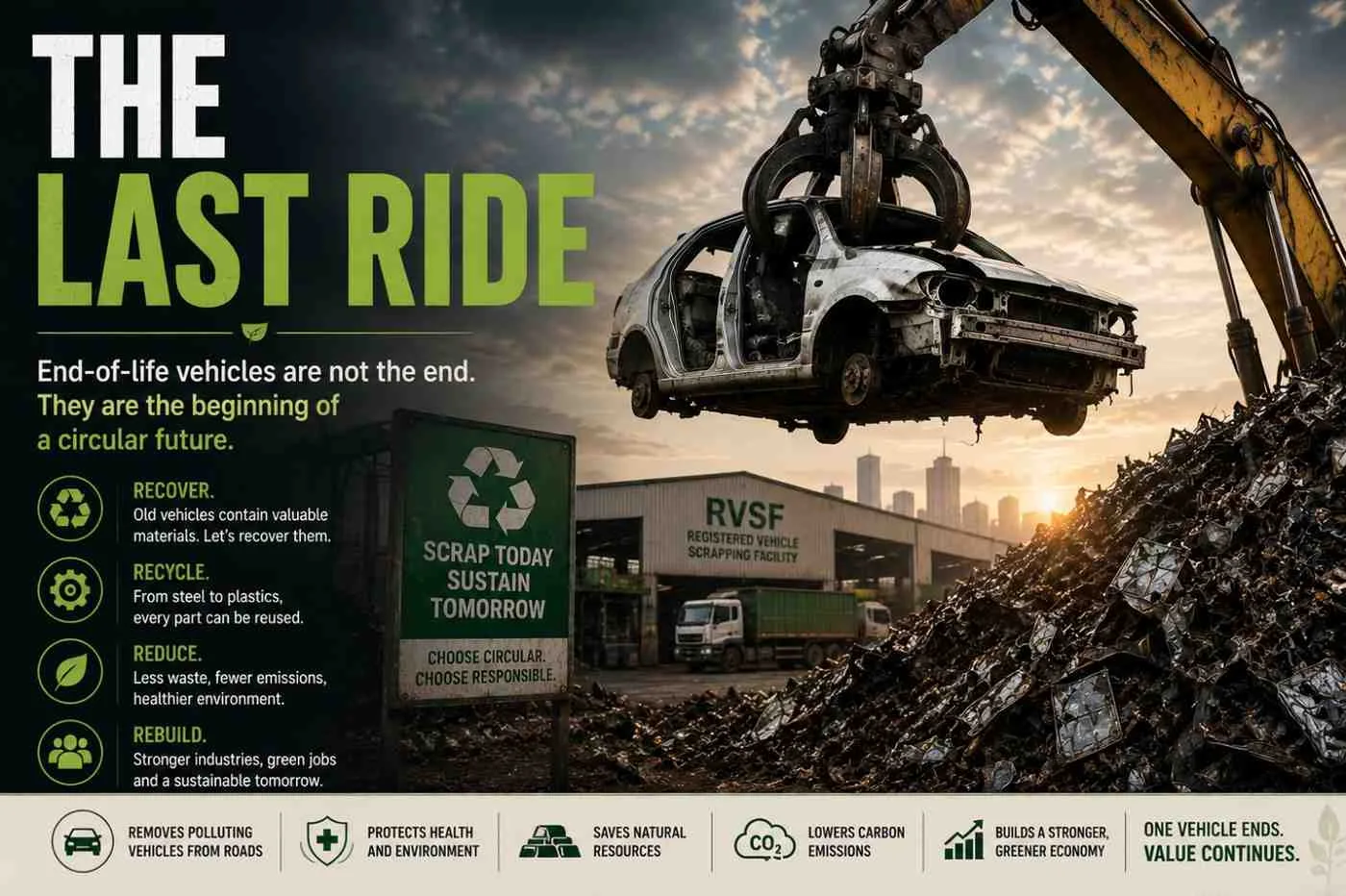
India's growing vehicle scrappage ecosystem is transforming end-of-life vehicles into valuable resources, but the success of a circular material economy will depend on formal recycling, stronger infrastructure and public participation  Kolkata | August 1, 2026:Every vehicle eventually reaches the end of its useful life. The real question is what happens next. For years, old and damaged vehicles in India were largely dismantled in informal scrapyards, where valuable materials were recovered with little environmental oversight or scientific waste management.  Today, that approach is gradually giving way to a more organised system. As India expands its vehicle scrappage programme and establishes authorised recycling facilities, end-of-life vehicles (ELVs) are beginning to play a much larger role in the country's transition towards a circular economy. The shift comes at an important moment. India is one of the world's largest automobile markets, and millions of vehicles are expected to retire from the roads over the next decade. Managing this growing volume is no longer just about disposing of ageing vehicles. It is becoming an opportunity to recover valuable resources, reduce industrial waste and strengthen sustainable manufacturing. Under the government's Vehicle Scrappage Policy, ageing and unfit vehicles are encouraged and in certain cases required- to undergo fitness assessments before being transferred to Registered Vehicle Scrapping Facilities (RVSFs). These authorised centres are designed to dismantle vehicles scientifically, safely handle hazardous components and recover reusable materials such as steel, aluminium, copper, plastics, and rubber. Experts believe this approach could significantly improve India's resource efficiency. Recovering metals from scrapped vehicles requires far less energy than extracting and processing newly mined raw materials, helping reduce both production costs and carbon emissions.Recycled steel and aluminium are also expected to become increasingly valuable as demand continues to grow across the automotive, construction and infrastructure sectors.Yet building an efficient circular material chain remains a complex task. A substantial portion of vehicle dismantling is still carried out by the informal sector, which has supported recycling activities for decades through well-established local networks. While these businesses recover a significant amount of recyclable material, environmental safeguards, worker safety standards and material traceability often remain inadequate. Integrating informal operators into a regulated recycling ecosystem is therefore seen as one of the biggest challenges facing the sector. Infrastructure presents another hurdle. Expanding the number of authorised scrapping facilities is only part of the solution. Experts say the wider ecosystem-including testing centres, dismantling capacity and supporting infrastructure- still falls short in many parts of the country.The transition also faces another obstacle: participation. Public awareness of the scrappage policy remains limited, while logistical constraints and uneven implementation across states continue to slow the growth of formal recycling systems. Experts believe that without meaningful economic incentives, encouraging wider participation from vehicle owners will remain a significant challenge. Vehicle owners are more likely to participate when scrapping offers tangible financial benefits through tax concessions, incentives or discounts on new vehicle purchases. At the same time, manufacturers stand to benefit from a more dependable supply of recycled materials, strengthening supply-chain resilience while reducing dependence on newly extracted resources. The advantages extend well beyond the automobile industry. A well-developed vehicle recycling ecosystem can reduce landfill waste, improve air quality by replacing highly polluting vehicles and create new employment opportunities across dismantling, material recovery, recycling, and secondary manufacturing. It also supports India's wider objectives of improving resource efficiency, lowering industrial emissions and promoting circular economy practices within domestic manufacturing. Environmental experts believe that transition cannot end with vehicle recycling alone.A truly circular automotive sector will require vehicles to be designed for easier recycling, valuable materials to be recovered more efficiently, battery recycling systems to expand and manufacturers to take greater responsibility for the entire life cycle of their products. As India's vehicle population continues to grow, the country's next sustainability milestone may not be measured by how many new vehicles are manufactured, but by how responsibly older ones are managed at the end of their life. The programme's success will not be measured by the number of vehicles it dismantles, but by the value it creates from them. It will be measured by how effectively yesterday's vehicles are transformed into tomorrow's resources, reducing waste, conserving raw materials and strengthening India's circular economy. The journey of a vehicle should not end at the scrapyard. In a truly sustainable economy, it should continue through the materials it leaves behind - fueling new industries, conserving natural resources and reinforcing the idea that the most valuable resources are often those already in our hands. Sources: Ministry of Road Transport and Highways (MoRTH) – Vehicle Scrapping Policy: Notifications and Ruleshttps://www.morth.gov.in/en/Circulars-Notifications-related-to-Vehicle-Scrapping-PolicyPress Information Bureau (PIB) – Vehicle Scrapping Policy: Progress of Registered Vehicle Scrapping Facilities (RVSFs)https://www.pib.gov.in/PressReleasePage.aspx?PRID=2099130&lang=2&reg=48National Government Services Portal – Registered Vehicle Scrapping Facility (RVSF) Portalhttps://services.india.gov.in/service/detail/apply-for-registered-vehicle-scrapping-facilityMinistry of Road Transport and Highways – State-wise Registered Vehicle Scrapping Facility (RVSF) Notificationshttps://www.morth.gov.in/en/rvsf-notificationsCentral Pollution Control Board (CPCB) – Environmentally Sound Management of End-of-Life Vehicleshttps://cpcb.nic.in/NITI Aayog – Reports on Circular Economy and Resource Efficiencyhttps://www.niti.gov.in/Down To Earth – Coverage on vehicle scrappage, recycling and the circular economy in Indiahttps://www.downtoearth.org.in/The Energy and Resources Institute (TERI) – Research on resource efficiency, recycling and circular economyhttps://www.teriin.org/Ministry of Steel, Government of India – Steel recycling and secondary raw materials initiativeshttps://steel.gov.in/Press Information Bureau (PIB) – Voluntary Vehicle Fleet Modernization Programme (Vehicle Scrapping Policy)https://www.pib.gov.in/newsite/erelcontent.aspx?lang=2&reg=48&relid=265928 ...Read more

12 May 2026

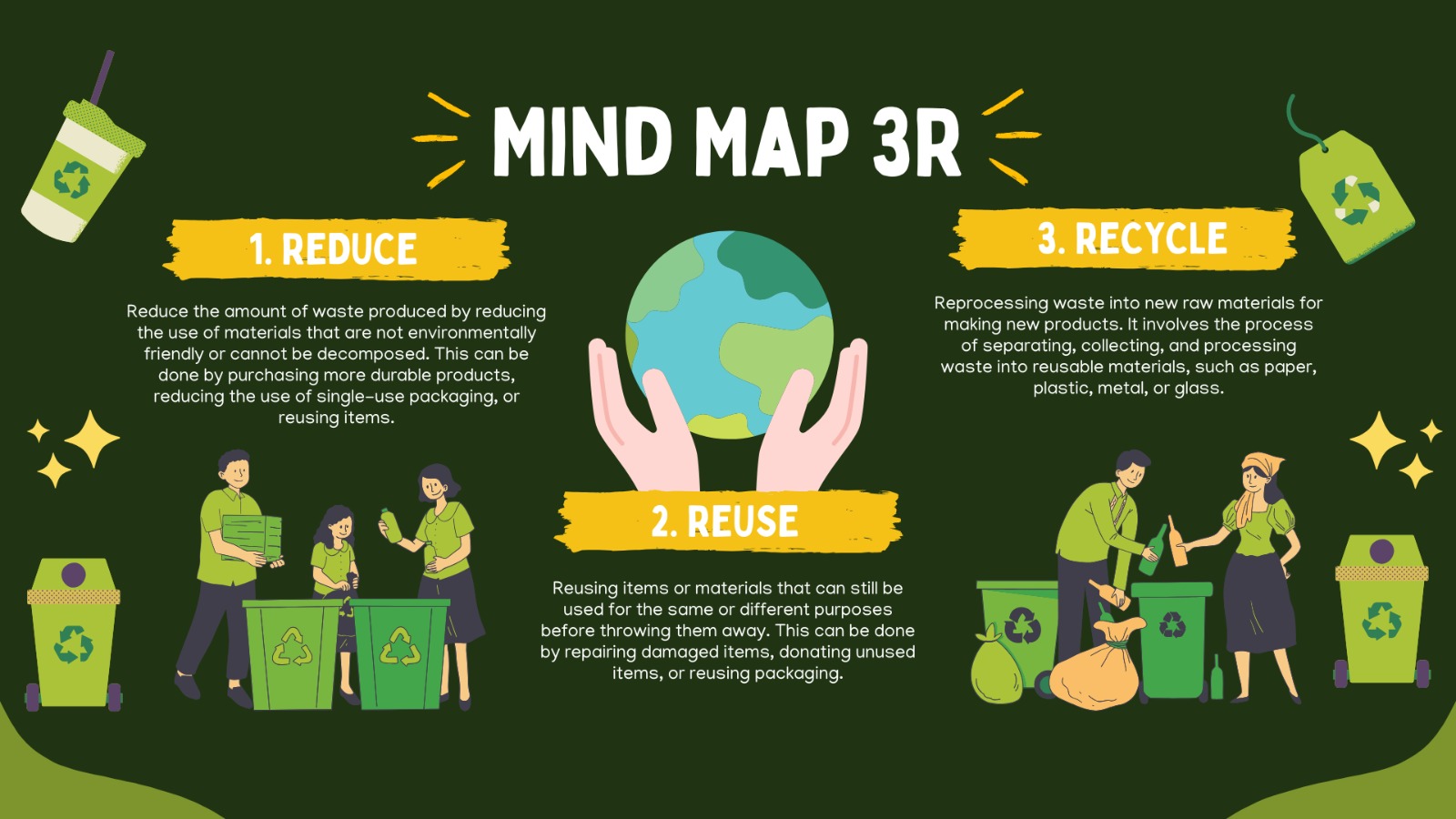
India’s rapid economic growth has transformed the country over the last few decades. Expanding cities, rising industrial production, growing digital access, and increased consumer spending have improved the quality of life for millions. However, this development has also created a serious challenge that cannot be ignored anymore: the growing pressure on natural resources and waste management systems. Every day, Indian households, industries, markets, offices, and institutions generate enormous quantities of waste. Landfills are reaching capacity, plastic pollution is affecting ecosystems, water resources are under stress, and valuable materials are often discarded after a single use. In many urban areas, waste management infrastructure struggles to keep up with the increasing volume of garbage generated daily. This is where the concept of 3R Resource Efficiency becomes critically important. The principles of Reduce, Reuse, and Recycle are designed to minimise waste, conserve resources, and create a more sustainable system of production and consumption. While the idea itself is simple, implementing it effectively across a large and diverse country like India comes with several challenges. Understanding these obstacles and identifying practical solutions is essential for building a cleaner, more efficient, and environmentally responsible future. Understanding the Importance of the 3RsBefore discussing the challenges, it is important to understand why the 3R framework matters so much in the Indian context. The traditional economic model followed by most societies is linear: Extract → Produce → Use → DisposeThis model consumes large quantities of raw materials and generates equally large amounts of waste. In contrast, the 3R approach promotes a circular system where resources are conserved and reused for as long as possible. Reduce: Reduction focuses on lowering the consumption of resources and preventing waste generation at the source. Reuse: Reuse extends the lifespan of products and materials through repair, refurbishment, and repeated use. Recycle: Recycling converts waste into usable materials, reducing the need for fresh raw resource extraction. Together, these practices help conserve natural resources, reduce pollution, improve efficiency, and support sustainable development. The Current Waste Scenario in IndiaIndia generates massive quantities of waste every year. Urban centres such as Delhi, Mumbai, Chennai, Kolkata, and Bengaluru face mounting pressure on waste collection and disposal systems. The situation becomes more complicated due to:✅️ Increasing population density✅️ Rapid urbanisation✅️ Growth in packaged consumer goods✅️ Rising plastic consumption✅️ Electronic waste generation✅️ Limited landfill space✅️ Inadequate waste segregation Although awareness regarding sustainability has increased significantly, implementation gaps still remain across sectors. Major Challenges in Implementing 3R Resource Efficiency 1. Lack of Waste Segregation at SourceOne of the biggest obstacles in India’s waste management system is the absence of proper segregation at the household and commercial level. Many people still dispose of wet waste, dry waste, sanitary waste, and hazardous materials together. Once waste becomes mixed, recycling becomes much more difficult and expensive. Organic waste contaminates recyclable materials such as paper and plastic, reducing their recovery value. How to Overcome ItPublic participation is the key solution. Awareness campaigns must move beyond slogans and focus on practical education. Municipal corporations can encourage segregation by:✅️ Providing colour coded bins✅️ Conducting community workshops✅️ Offering incentives for proper segregation✅️ Imposing penalties for repeated non compliance✅️ Collaborating with schools and resident associations Educational institutions can also help build long term behavioural change among younger generations. 2. Limited Recycling InfrastructureWhile major metropolitan cities have developed some recycling capacity, many smaller towns and semi urban regions still lack organised recycling systems. Inadequate collection networks, poor transportation systems, and insufficient processing facilities limit the effectiveness of recycling programs. As a result, recyclable materials often end up in landfills or open dumping sites. How to Overcome ItIndia needs greater investment in decentralised recycling infrastructure. This can include: ✅️ Local material recovery facilities✅️ Community recycling centres✅️ Public private partnerships✅️ Improved waste transportation systems✅️ Regional recycling hubs for smaller cities Technology based waste tracking systems can also improve collection efficiency and transparency. Government support through subsidies and policy incentives can encourage private investment in recycling infrastructure. 3. Dependence on Single Use PlasticsSingle use plastics remain one of the largest environmental challenges in India. Disposable packaging, plastic bags, cutlery, and low cost plastic products contribute heavily to pollution. Plastic waste often clogs drainage systems, contaminates water bodies, and harms wildlife. Despite regulatory efforts, enforcement remains inconsistent in many areas. How to Overcome ItReducing plastic dependence requires both policy action and consumer participation. Possible solutions include:✅️ Promoting biodegradable alternatives✅️ Encouraging reusable packaging systems✅️ Strengthening plastic ban enforcement✅️ Supporting sustainable packaging startups✅️ Expanding Extended Producer Responsibility programs Consumers also play a major role by choosing reusable products over disposable alternatives whenever possible. 4. Informal Waste Sector ChallengesIndia’s informal waste workers contribute enormously to recycling activities. Waste pickers, scrap collectors, and local recyclers recover valuable materials from waste streams every day. However, they often work under unsafe conditions with little social protection, healthcare access, or financial stability. Despite their contribution, informal workers are frequently excluded from formal waste management planning. How to Overcome ItIntegrating informal workers into formal systems can improve both social welfare and recycling efficiency. This can be achieved through: ✅️ Worker registration programs✅️ Safety equipment distribution✅️ Health insurance support✅️ Skill development training✅️ Formal employment opportunities✅️ Partnerships between municipalities and waste worker cooperatives Recognising the informal sector as an important stakeholder is essential for creating inclusive sustainability systems. 5. Low Public Awareness and Behavioural ResistanceOne of the most difficult barriers to overcome is behavioural resistance. Many people understand environmental issues in theory but struggle to adopt sustainable habits consistently. Convenience often takes priority over responsible consumption. Practices such as carrying reusable bags, segregating waste daily, repairing products, or reducing excessive consumption require long term mindset shifts. How to Overcome ItAwareness campaigns must become more practical, relatable, and community focused. Effective approaches include:✅️ Social media awareness initiatives✅️ Local sustainability campaigns✅️ School environmental programs✅️ Influencer driven awareness✅️ Community recycling drives✅️ Gamified sustainability programs When sustainability becomes socially normal and convenient, adoption increases significantly. 6. Electronic Waste ManagementIndia is one of the world’s largest producers of electronic waste. Old smartphones, laptops, batteries, televisions, and household electronics generate hazardous waste containing toxic substances. Improper disposal of electronic waste can contaminate soil and water while creating health risks for workers handling materials without protection. How to Overcome ItStrengthening formal e waste recycling systems is critical. Solutions include:✅️ Expanding authorised collection centres✅️ Increasing consumer awareness regarding safe disposal✅️ Encouraging manufacturer take back programs✅️ Supporting certified recycling companies✅️ Implementing stronger compliance monitoring Consumers also need easy and accessible ways to dispose of electronics responsibly. 7. Industrial Resource InefficiencyIndustries consume large quantities of raw materials, water, and energy. Inefficient production processes increase waste generation and environmental impact. In some sectors, outdated technologies still contribute to excessive resource consumption. How to Overcome ItIndustries can improve efficiency through:✅️ Cleaner production technologies✅️ Energy efficient machinery✅️ Water recycling systems✅️ Waste heat recovery✅️ Sustainable supply chain management✅️ Circular manufacturing practices Many companies are already realising that resource efficiency improves profitability in the long run by reducing operational costs. 8. Food Waste and Organic Waste ManagementIndia wastes significant amounts of food across households, restaurants, weddings, hotels, and supply chains. At the same time, organic waste forms a major portion of municipal solid waste. When dumped into landfills, it generates methane emissions and contributes to pollution. How to Overcome ItBetter organic waste management can include✅️ Household composting✅️ Community composting units✅️ Food redistribution programs✅️ Improved cold chain logistics✅️ Awareness regarding responsible consumption Restaurants and event organisers can also collaborate with food donation networks to reduce unnecessary food wastage. The Role of Technology in Solving Resource ChallengesTechnology can become a powerful enabler of resource efficiency in India. - Smart Waste Collection: GPS enabled waste collection systems help improve route planning and operational efficiency. - Recycling InnovationIndian startups are creating solutions for:✅️ Plastic to fuel conversion✅️ Construction waste recycling✅️ Textile waste recovery✅️ Agricultural waste packaging✅️ AI based waste sorting Digital Awareness PlatformsMobile applications and digital platforms can educate citizens, connect recyclers, and simplify waste disposal processes. Technology alone is not enough, but when combined with policy and public participation, it can significantly improve sustainability outcomes. - Government Initiatives Supporting the 3Rs: The Indian government has introduced several initiatives focused on sustainability and resource management. - Swachh Bharat Mission: The Swachh Bharat Mission has improved awareness regarding sanitation and cleanliness while encouraging better waste management practices. - Plastic Waste Management Rules: These regulations aim to reduce plastic pollution and improve producer responsibility. - Smart Cities Mission: Several smart city projects now include sustainable waste management systems and circular economy practices. E Waste Management RulesThese policies promote safer collection and recycling of electronic waste.While progress has been made, consistent implementation remains essential. - Building a Culture of Sustainability: India’s traditional culture already contains many principles aligned with resource efficiency. Previous generations commonly practiced:✅️ Repairing instead of replacing✅️ Reusing containers and packaging✅️ Minimising food wastage✅️ Sharing household resources✅️ Using refill systems✅️ Repurposing old materials Modern consumer culture shifted many habits toward convenience and disposability. However, there is now a growing movement toward rediscovering sustainable practices. Young consumers, startups, educational institutions, and environmentally conscious businesses are helping reshape attitudes toward waste and consumption. ConclusionThe journey toward effective 3R resource efficiency in India is complex, but it is also full of opportunity. The challenges are real and deeply interconnected, ranging from infrastructure gaps and policy limitations to behavioural resistance and economic constraints. However, these obstacles are not impossible to overcome. With stronger public awareness, better infrastructure, inclusive policies, technological innovation, and responsible consumption habits, India can significantly improve its resource efficiency systems. The principles of Reduce, Reuse, and Recycle are not merely environmental concepts. They represent a smarter way of living, producing, and consuming in a world where resources are becoming increasingly limited. Creating a sustainable future requires collective participation from governments, industries, communities, and individuals alike. Every small action matters. Every responsible choice contributes to a cleaner and more resource efficient India. The transition may take time, but the direction is clear. Sustainability is no longer a future ideal. It is a present necessity. ...Read more

12 May 2026

The Issue: Resource efficiency through the 3R framework of Reduce, Reuse, and Recycle is no longer an environmental add on for Indian businesses. It is a financial and operational necessity. Rising raw material costs, stricter waste management rules, landfill scarcity, and growing consumer awareness are pushing companies to rethink how they handle resources. The 3R approach is not simply about being "less wasteful." It is a systematic method to cut costs, improve productivity, build regulatory compliance, and strengthen brand reputation. India's industrial landscape presents two very different faces of waste. In the sprawling textile hubs of Tirupur, water is the burning issue. In the dense electronics clusters of Chennai and Noida, plastic and metal scrap dominate the waste stream. Both regions show why the 3R is increasingly framed as business intelligence plus environmental responsibility, not just a green badge. At daybreak in Tiruppur, the air smells of wet cotton and dye. The textile capital of India wakes up to the sound of looms and the steady hum of water pumps. Here, every litre counts. A medium sized garment factory processes thousands of garments daily, and the wastewater pools in treatment tanks like a mirror reflecting the industry's biggest challenge. Water is never free in Tirupur. It is bought, moved, treated, and often paid for twice. Once when it arrives. Again when it leaves as effluent. At daybreak in a Chennai electronics unit, the air smells different. Solder and solvent. Plastic and precision. Here, the factory floor is tidy, but the bins behind the assembly line tell a different story. Wires cut to length. Component strips peeled away. Packaging film crumpled and tossed. The waste is dry, technical, and surprisingly valuable. Copper. Polycarbonate. High grade paperboard. The problem is not that this waste exists. The problem is that it leaves the factory as a cost instead of staying as a resource. Two mornings. Two Indias. And one question that no business can afford to ignore anymore. What if everything we throw away was actually something we never should have bought in the first place? This is the quiet revolution of the 3R. Not a grand gesture. Not a sustainability report filled with vague promises. It is a daily discipline. A way of running operations that treats waste as a design flaw rather than an inevitability. The 3R is not a slogan. It is a sequence.In everyday conversation, the 3R gets reduced to one line. "Reduce, reuse, recycle." But the sequence is the secret. You cannot recycle your way out of a problem that should have been reduced at the start. The 3R is a hierarchy. Reduce comes first because preventing waste is always cheaper and cleaner than managing it. Reuse comes second because extending the life of a material or product saves the energy and water that would be needed to break it down and remake it. Recycle comes last because it is better than landfilling but still consumes resources. Think of it like a medical triage for your business. Reduce is prevention. Eat better, exercise, stay healthy. Reuse is managing a minor condition with lifestyle changes. Recycle is treatment. Necessary and valuable, but you would rather not need it so often. Indian businesses often jump straight to recycling because it feels visible and satisfying. But the real savings live in reduction and reuse. And that is where the most exciting stories are being written.Why the 3R is considered smart business, and why the numbers finally make sense For years, Indian companies treated waste management as a compliance cost. Something you paid a contractor to handle so you could focus on production. That old thinking is collapsing for three reasons. First, raw material prices are volatile and generally rising. Every kilogram of material that ends up as waste is money that left the business with nothing to show for it. When you reduce waste, you are not saving the planet. You are saving your purchase budget. Second, waste disposal is getting more expensive and more regulated. Landfills are filling up. State pollution control boards are getting stricter. The days of cheap, unscrutinised dumping are ending. A company that ignores the 3R today will face higher compliance costs tomorrow. Third, customers and investors are starting to ask. A large garment brand in Bengaluru recently lost a European buyer because their audit revealed poor waste segregation. A mid sized auto parts supplier won a new contract partly because their 3R practices impressed a sustainability focused client. The market is not silent on this anymore. But the numbers tell the clearest story. A well implemented 3R programme typically pays for itself within twelve to eighteen months. After that, it becomes a source of ongoing savings and sometimes even new revenue from selling recyclables. That is not charity. That is arithmetic. The hardest part of the 3R. Behaviour, not technology.If the 3R were only about buying better machines or installing compactors, every factory would already be efficient. The hardest part is human. Old habits. Convenience. The unconscious way a worker tosses a used glove into the general bin because the recycling bin is three steps further away. This is where many Indian businesses struggle. They invest in segregation bins. They put up posters. They run a training session. And then nothing changes. The solution is not more posters. It is better design. Make the right behaviour easy and the wrong behaviour annoying. Place the recycling bin closer than the general waste bin. Colour code everything. Name a champion on each shift whose job is not to police but to remind. Celebrate small wins publicly. A team that reduces its waste by ten percent gets a small recognition, not a bonus that distorts behaviour, but a genuine thank you. We once visited a packaging unit in Pune where the floor manager had a simple rule. Every Friday, he walked the line with a notebook and wrote down three things he saw being wasted that should not have been. He read them out at the Monday meeting. Not to shame anyone. To ask a question. How do we fix this together? Within six months, that unit reduced its plastic waste by forty percent without spending a rupee on new equipment. That is the power of behaviour led 3R. Technology helps, but people drive it. The contemporary crisis. Single use plastic and the Indian responseNo conversation about the 3R in India is complete without talking about plastic. Specifically, single use plastic. The stuff that wraps our products, lines our cups, and chokes our drains. India has banned certain single use plastic items, but enforcement varies. More importantly, the ban only covers specific categories. A vast amount of plastic packaging still flows through the economy. Much of it is technically recyclable. Very little of it is actually recycled because collection is fragmented and contamination is high. What does this mean for the 3R conscious business? It means plastic needs a smarter strategy. 💡 Reduce first. Can you switch to paper based or fabric based packaging for certain products? Can you eliminate an inner wrapper that serves no real purpose? Can you ask your suppliers to take back their packaging instead of leaving it for you to manage? 💡 Reuse second. Can you collect clean plastic packaging from your incoming shipments and send it back to suppliers for another trip? Can you use shredded plastic waste as a component in non structural building materials or as an additive in road construction? Some Indian companies are already doing this with impressive results. 💡 Recycle third. For the plastic that cannot be reduced or reused, find a registered recycler and keep your plastic clean and sorted. A bale of uncontaminated PET or HDPE has real value. A mixed, dirty pile of plastic is just landfill. The plastic problem will not be solved by government bans alone. It will be solved by thousands of businesses treating plastic as a resource to be managed, not a nuisance to be discarded. The economics of patience. Why quick fixes fail and steady progress winsThe 3R is not a one time project. It is a continuous improvement cycle. And that is hard for businesses that are used to installing a solution and moving on. A common mistake is to start with the biggest, most visible waste stream, implement a solution, and then declare victory. Six months later, waste creeps back up because no one is monitoring. Habits slip. New processes get ignored. The better approach is slower and steadier. Pick one waste stream. Paper, for example. Measure how much paper you use this month. Set a target to reduce it by fifteen percent over three months. Implement three simple changes. Print double sided by default. Collect single sided sheets for reuse as notepads. Switch to digital approvals where possible. Measure again. Celebrate the reduction. Then move to the next stream. This is the economics of patience. Small, consistent improvements that compound over time. A factory that reduces its waste by five percent every quarter will cut its waste in half within three years. That is not dramatic. It is just disciplined.Technology and the 3R. Data as the new waste managerWe cannot talk about the modern 3R without talking about data. The traditional approach to waste management was reactive. Stuff fills a bin, someone empties it, end of story. The new approach is predictive. Smart bins with sensors can tell you when they are full, optimising collection routes and reducing fuel waste. Data analytics can show you exactly which shift, which line, or which product is generating the most waste. Radio frequency identification can track reusable containers across a supply chain so they come back instead of getting lost. None of this requires an artificial intelligence revolution. It requires basic measurement. Weigh your waste. Categorise it. Track it weekly. What gets measured gets managed. That is the oldest rule in business, and it applies perfectly to the 3R. A small pharmaceutical plant in Vadodara started weighing their plastic waste three years ago. They found that thirty percent of it was clean, uncontaminated, and immediately sellable to a recycler. They had been paying a contractor to haul it away. Now they get paid for it. That change came from one simple habit. Weighing before throwing. What the next decade should build. A 3R ready IndiaIf Indian business is serious about resource efficiency, the next decade will be about systems, not slogans. The first system is better waste segregation infrastructure inside industrial parks. Shared compactors, baling machines, and material recovery facilities can make recycling viable for small and medium enterprises that cannot afford their own equipment. The second system is a liquid market for recyclables. Many recyclable materials have volatile prices because information is poor. A digital platform that connects waste generators with verified recyclers could stabilise prices and increase recovery rates. The third system is smarter procurement. Companies should negotiate take back clauses with suppliers. You sold me this component in this packaging. You take the packaging back. That simple clause creates a closed loop and shifts responsibility up the supply chain. The fourth system is workforce training that goes beyond a one hour session. Embed 3R thinking into job descriptions, performance reviews, and daily stand up meetings. Make it part of how work is done, not an extra thing to remember. The fifth system is honest accounting. Most companies still treat waste disposal as a single line item. Split it out. Show the cost of each waste stream. Show the revenue from recyclables. Show the avoided cost from reduction. When the numbers are visible, the motivation is real. Closing thought:In Tiruppur, the factory manager now checks the recycling bin before the general waste bin. It is a small habit. But it changes everything. Because every time he sees something valuable in the general bin, he asks a question. Why did this happen? And that question leads to another question. How do we stop it? In Chennai, the electronics unit now has a scrap sale every quarter. The money is small relative to their turnover, but the signal is large. Waste is not a cost anymore. It is an oversight that got corrected. The bin was never the end of the story. It was just the place where businesses stopped paying attention. The 3R is simply paying attention again. To what comes in. To what goes out. And to the quiet truth that in a country of a billion people and finite resources, efficiency is not a choice. It is the only way forward. ...Read more

12 May 2026

Why the 3R Matters More Than Ever -Let us pause for a moment and think about the sheer volume of what we throw away every single day. In our homes, in our offices, and on our factory floors, waste has become such a familiar sight that we barely notice it anymore. A broken plastic chair here. A pile of discarded packaging there. Used water bottles. Old office stationery. The list is endless. But here is the truth, we at Sustainverse have come to understand after years of working with businesses across India. Waste is not really waste until we decide to call it that. Before that moment, it is just a resource waiting to be seen differently. And that shift in seeing is exactly what the 3R principle of resource efficiency is all about. The 3R stands for Reduce, Reuse, and Recycle. It sounds simple because it is simple. But do not let that simplicity fool you. When applied thoughtfully, these three small words have the power to transform how an organisation functions. They can cut costs, reduce environmental harm, improve operational efficiency, and build a brand that people genuinely trust. For Indian businesses in particular, the 3R approach is not just an environmental choice. It is an economic necessity. We live in a country where resources are precious. Water, energy, raw materials, and even landfill space are becoming harder to come by. The companies that learn to do more with less are the ones that will survive and thrive in the coming decade. So let us walk through each of the three Rs slowly, as a conversation between people who care about running responsible, efficient, and future ready organisations. The First R. Reduce. Doing More With Less, On PurposeLet us start at the very beginning of the waste chain. Before a material enters your office or factory, you already have a chance to decide whether it needs to be there at all. That is the heart of reduction. Reducing means using fewer resources in the first place. It means designing processes that generate less waste. It means asking uncomfortable questions like, do we really need this much packaging? Or, could we achieve the same result with half the paper, half the water, or half the energy? In an Indian context, reduction is often the most overlooked R. We are a culture that loves abundance. More is better. Extra is safe. But abundance comes at a cost. Every extra kilogram of raw material, every unnecessary printout, every light left on in an empty room adds up to a significant financial and environmental burden. Take the example of a small manufacturing unit in Pune that we worked with a couple of years ago. They were using a particular solvent to clean their machinery at the end of each shift. The process was standard. No one questioned it. But when we sat down with the plant manager and actually measured the usage, we discovered that they were using nearly forty percent more solvent than they technically needed. The excess was simply evaporating or being washed away. By adjusting the cleaning nozzles and training the staff pecisely, they reduced their solvent purchase by thirty five percent in just three months. Less waste. Less cost. Less environmental harm. That is reduction in action. Here are some practical ways Indian businesses can start reducing right away:➤ First, conduct a simple waste audit. For one week, collect and categorise everything that leaves your facility as waste. You will be surprised at what you find. Often, a large portion of that waste never needed to exist in the first place. ➤ Second, look at your procurement policies. Are you buying in bulk when smaller, more frequent orders would reduce spoilage and storage waste? Are your suppliers using excessive packaging that you then have to dispose of? ➤ Third, go digital wherever possible. Indian offices still use far too much paper. Meeting agendas, reports, invoices, and internal communications can almost always move to a digital format. The reduction in paper waste is immediate and measurable. ➤ Fourth, rethink your product design. If you manufacture something, can you make it with fewer materials without compromising quality? Can you design it to be lighter, smaller, or more efficient? Some of India's most innovative startups are already doing this with remarkable results. Reduction is not about deprivation. It is about precision. It is about using exactly what you need and not one bit more. When you embrace that mindset, waste stops being a problem and starts being a signal that something in your process can be improved. The Second R. Reuse. Giving Materials a Second Life Before RecyclingNow let us talk about the second R, which is reuse. If reduction is about preventing waste from being created in the first place, reuse is about extending the life of materials that have already been used. Though not very famous, it is absolutely essential. Reuse means taking an item that would otherwise be discarded and finding a new purpose for it. This can happen in the same process, in a different part of your organisation, or even in a different industry altogether. The key is that you are not breaking the material down. You are simply using it again, either for the same purpose or for a different one. India has a long and beautiful history of reuse. Many of us grew up watching our grandparents reuse newspaper as packaging, glass bottles as water containers, and old clothes as cleaning rags. That instinct for frugality and creativity is still alive. We just need to bring it into our professional lives with the same love and attention. Consider the example of a large corporate office in Bangalore. They used to throw away hundreds of single sided printouts every single day. Someone in the admin team had the simple idea of placing a tray next to the printer labelled "reusable paper." Any paper that had only been printed on one side went into the tray. It was then used for internal drafts, notepads, and informal communications. In one year, that single practice saved over fifty thousand sheets of paper. No complex technology. No big investment. Just a conscious choice to reuse. In the industrial context, reuse can take many forms. Cardboard boxes and wooden pallets from incoming shipments can be sent back to suppliers or used for outgoing products. Metal shavings from machining processes can be collected and sold to foundries for remelting. Used oil from machinery can be filtered and reused in less demanding applications. Even wastewater, after basic treatment, can be reused for cooling, washing, or landscaping. Here is a beautiful example from the textile industry in Tiruppur. A garment factory there realised that the water used for washing fabrics was still relatively clean. Instead of sending it down the drain, they installed a simple filtration system and redirected that water to their landscaping and toilet flushing needs. They reduced their freshwater consumption by nearly twenty five percent. That is reuse with real impact. For Indian small and medium enterprises, reuse is often the most immediately profitable of the three Rs. It requires minimal capital investment. It builds on existing habits of frugality. And it delivers results that can be seen on next month's utility bill. Here are some practical reuse ideas.💡 Set up a central exchange area where different departments can offer items they no longer need. One department's obsolete stationery could be another department's perfectly usable supplies. 💡 Invest in durable, reusable containers for internal transport of materials. Single use cardboard and plastic should be the exception, not the rule. 💡 Partner with other local businesses to create a reuse network. One company's waste product could be another company's raw material. For instance, a bakery's spent grain can be used by a farm as animal feed. 💡 Train your employees to see reuse opportunities. Often, the person working on the shop floor has the best ideas about how a material could be used a second time. Listen to them. Reward them. Reuse is not just good for the planet. It is good for the bottom line. Every time you use a material twice instead of once, you have effectively cut its cost in half. That is simple arithmetic that any business owner can appreciate. The Third R. Recycle. Closing the Loop ResponsiblyFinally, we come to the third R. Recycle. This is the one that most people think of first when they hear the word sustainability. But in the 3R hierarchy, recycling is actually the last resort. You reduce first. Then you reuse. And only after those two options have been exhausted do you consider recycling. Why does order matter? Because recycling takes energy. It takes water. It takes transport. It takes industrial processes that have their own environmental footprint. So while recycling is far better than landfilling or incineration, it is not as good as reduction or reuse. That said, recycling is absolutely essential for the materials that cannot be reduced or reused. And in India, the recycling sector is both vibrant and under recognised. From the kabadiwalas who collect scrap from our homes to the large recycling plants that process plastic, metal, paper, and glass, there is an entire economy built around giving waste a second life as a raw material. The key to good recycling is contamination. Clean, separated, well sorted materials are easy to recycle. Mixed, dirty, contaminated materials are not. A single greasy pizza box can ruin an entire batch of paper recycling. A plastic bottle with liquid still inside can contaminate a whole bale of PET. So the most important thing any organisation can do to enable recycling is to separate waste at the source. Have different bins for different materials. Train your staff on what goes where. Work with a reliable recycling partner who can verify that the materials are actually being recycled and not just dumped somewhere else. We once visited a large hotel in Jaipur that had achieved a recycling rate of over eighty percent. Their secret was nothing more than disciplined separation. Kitchen waste went to composting. Glass bottles went to a local recycler. Paper and cardboard went to another. Metals and electronics went to specialised vendors. Every single waste stream had a destination. Nothing was mixed. Nothing was contaminated. It took effort to set up, but within six months it became second nature for the staff. For businesses, there are some practical steps to improve recycling. 💡 First, map your waste streams. What materials are you throwing away in significant quantities? Paper, plastic, metal, glass, electronics, textiles, and organic waste all have different recycling pathways. 💡Second, find local recyclers. India has a strong decentralised recycling network. Chances are there is a recycler within a few kilometres of your facility. Build a relationship with them. Understand what they can and cannot accept. 💡 Third, set up clear, colour coded bins for different types of waste. Red for hazardous. Blue for recyclables. Green for organic. And make sure the bins are placed conveniently. If the recycling bin is far away, people will use the general waste bin instead. 💡 Fourth, measure and report your recycling rate. What gets measured gets managed. Track how many kilograms of each material you recycle every month. Share that information with your team. Celebrate improvements. And finally, be honest about what cannot be recycled. Some materials, like multi layer plastic packaging or certain types of composite materials, have no practical recycling solution yet. For those, reduction and reuse become even more important. Bringing the 3R Together. A Holistic Approach for Indian BusinessesNow that we have looked at each R individually, let us talk about how they work together. The 3R is not a menu where you pick one option. It is a system where all three support each other. Reduction makes reuse and recycling easier because there is less material to manage. Reuse extends the life of materials before they ever reach the recycling stage. Recycling captures value from materials that can no longer be reused. Together, they create a closed loop where waste is minimised and resources are respected. Let me share the story of a medium sized electronics assembly unit in Noida to show how this works in practice. First, they reduced. They redesigned their packaging to use forty percent less plastic. They switched to digital work instructions instead of paper. They optimised their component cutting to reduce scrap. Second, they reused. The cardboard boxes from incoming components were sent to the packaging section for outgoing products. The protective foam inserts were collected and sold to a local packaging company. The wooden pallets were repaired and reused multiple times. Third, they recycled. The small amount of plastic waste that remained was sent to a registered recycler. The metal scrap from component leads was sold to a smelter. Even the electronic waste from defective components was handled by an authorised e waste recycler. As a result, this unit reduced its waste disposal costs by sixty five percent in eighteen months. They generated a new revenue stream from selling scrap materials. Their employees took pride in working for a responsible organisation. And their customers, especially the larger international buyers, valued their sustainability credentials. That is the power of the 3R approach when it is implemented thoughtfully and completely.Overcoming Common Challenges in the Indian ContextOf course, nothing is ever perfectly smooth. Indian businesses face real challenges when trying to implement the 3R. Let us acknowledge them honestly and talk about practical solutions. 1.The first challenge is awareness. Many business owners and managers simply do not know what is possible with the 3R. They have never seen it done. They assume it is expensive or complicated. The solution is education and exposure. Visit facilities that are already doing this well. Attend workshops. Read case studies from similar businesses. At Sustainverse, we have seen time and again that seeing is believing. 2. The second challenge is infrastructure. In some parts of India, reliable recycling services are not easily available. There may be no local recycler for certain materials. The solution is to start with what is possible. Focus on reduction and reuse first. For recycling, build partnerships with aggregators who can transport materials to recyclers in other cities. Over time, as demand grows, local infrastructure will develop. 3. The third challenge is cost. Recycling can sometimes cost more than landfilling, especially if you are in a city with cheap landfill fees. But this calculation often misses the bigger picture. Landfill costs are not just financial. They are environmental and social. And increasingly, regulations are making landfilling more expensive. The solution is to take a long term view. The businesses that invest in 3R today will be far ahead when stricter regulations inevitably arrive. 4. The fourth challenge is employee behaviour. Changing how people sort waste or use materials requires effort. Old habits are hard to break. The solution is to make the right behaviour easy and the wrong behaviour annoying. Clear signage. Convenient bins. Regular training. And most importantly, leadership by example. When employees see their manager carefully separating waste, they will follow. 5. The fifth challenge is measurement. Many businesses do not track their waste at all. They pay a contractor to take it away and never think about it again. The solution is to start small. Weigh your waste for one week. Categorise it. That baseline data is invaluable for identifying the biggest opportunities. A Call to Action for Business LeadersSo where do you start? Right where you are. With what you have. The 3R journey does not require a massive budget or a dedicated sustainability department. It requires attention, curiosity, and a willingness to do things a little differently. Start with a walk through your facility. Look at your waste bins. What is in them? Notice the patterns. Are there materials that should not be there? Are there opportunities to reduce, reuse, or recycle that are being missed? Pick one material stream that seems promising. Maybe it is paper. Maybe it is plastic packaging. Maybe it is metal scrap. Focus on that one stream. Set a simple goal. Reduce it by twenty percent. Or find a reuse application. Or establish a recycling channel. Measure your progress. Share it with your team. Celebrate the small wins. Then pick another stream. Over time, these small improvements compound into something truly remarkable. At Sustainverse, we have seen Indian businesses of every size and sector make real progress on the 3R. A tiny bakery in Kerala that switched from plastic to banana leaf packaging. A mid sized logistics company in Gujarat that reduced its wooden pallet waste by training drivers to handle them more carefully. A large pharmaceutical plant in Hyderabad that recycled ninety percent of its solvent waste. These stories are not exceptions. They are proof that the 3R works everywhere, for everyone.  A Final Thought. The 3R as a MindsetThe 3R is not really about waste. It is about respect. Respect for the materials that came from the earth. Respect for the labour and energy that went into producing them. Respect for the communities that live downstream of your facility. And respect for the future generations who will inherit the planet we leave behind. When you reduce, you are saying that you value resources enough not to waste them. When you reuse, you are saying that an item has more than one story to tell. When you recycle, you are saying that nothing truly disappears and that everything can begin again. That is the deeper meaning of the 3R. And that is why we at Sustainverse believe so strongly in this simple, profound framework. So go ahead. Look at your waste bins with fresh eyes. Ask the questions. Try the small experiments. Talk to your team. Build the partnerships. And watch as your organisation becomes not just more efficient, but more human. Because at the end of the day, resource efficiency is not a technical problem. It is a human choice. And that choice is yours to make, starting right now. Let us build a more sustainable India together, one reduction, one reuse, one recycle at a time. ...Read more