
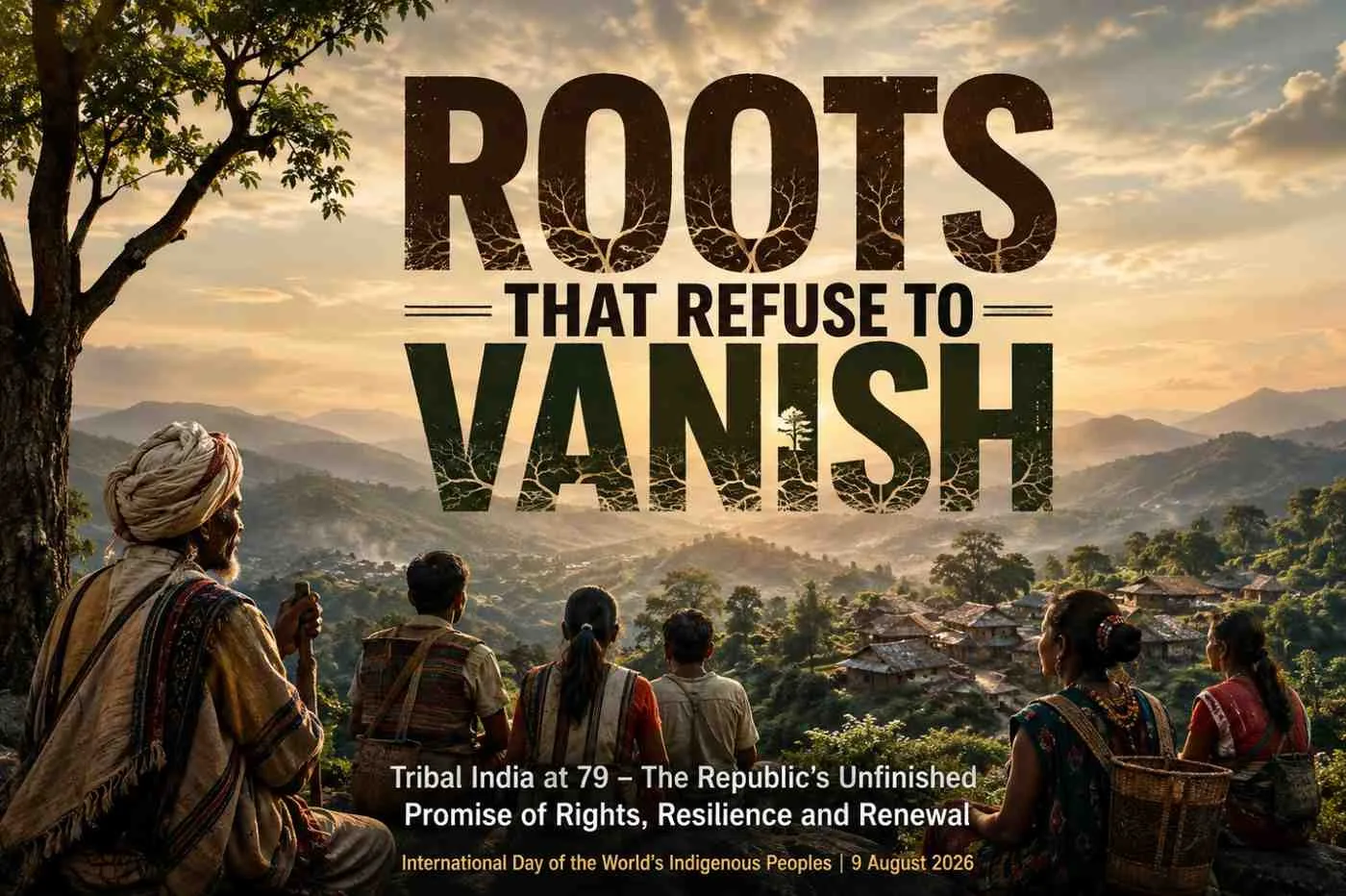
Tribal India at 79 - The Republic's Unfinished Promise of Rights, Resilience and Renewal
International Day of the World's Indigenous Peoples | 9 August 2026
They protected forests before biodiversity became policy language, practised circularity before ESG became a boardroom metric, and built community institutions long before participatory development entered textbooks. Yet tribal India has also carried a disproportionate burden of displacement, poor health, educational exclusion and loss of control over land. On the International Day of the World's Indigenous Peoples, the real question is not how to bring Adivasis into a supposedly superior mainstream, but how India can guarantee mobility without uprooting, prosperity without dispossession and modernity without cultural disappearance. |
Quick Summary India's Scheduled Tribe population was 10.45 crore, or 8.6% of the population, in Census 2011 - still the latest completed Census benchmark used in official reporting. Globally, the ILO estimates about 476.6 million Indigenous Peoples, 6.2% of humanity. Seventy-nine years after Independence, India has an unusually extensive architecture of reservations, Scheduled Area protections, self-government, forest rights, schools, health missions and livelihood programmes. Progress is visible: ST literacy has risen, EMRS coverage has expanded and major mission-mode investments now target tribal-majority villages and Particularly Vulnerable Tribal Groups. But nutrition, health, land security, community forest rights, local decision-making and enterprise ownership remain unfinished. Ladakh shows the contemporary edge of the debate: job and domicile safeguards were strengthened in 2025, while 2026 negotiations over constitutional protection and democratic representation remain unresolved. The next tribal compact must therefore move from welfare for communities to rights, ownership and governance with them. |
| Keywords: Scheduled Tribes, Adivasi, Indigenous Peoples, Fifth Schedule, Sixth Schedule, PESA, Forest Rights Act, Ladakh, EMRS, tribal health, tribal entrepreneurship, PM-JANMAN, Dharti Aaba, sustainability, Indigenous knowledge, Gen Z |
| Hashtags: #WorldIndigenousPeoplesDay #TribalIndia #Adivasi #IndigenousPeoples #TribalRights #ForestRights #PESA #SixthSchedule #Ladakh #Sustainability #IndigenousKnowledge #TribalEntrepreneurship |
FACTS AT A GLANCE
India | 10.45 crore ST citizens | 8.6% of population | Census 2011 |
World | 476.6 million Indigenous Peoples | 6.2% of humanity | ILO estimate |
Literacy | ST 73.4% vs overall 80.9% | PLFS 2023-24 |
Health | ST infant mortality 41.6 vs overall 35.2 per 1,000 | NFHS-5 |
EMRS | 511 functional schools | 167,045 students | 728 sanctioned locations |
Forest Rights | 23.88 lakh individual + 1.21 lakh community titles by March 2025 |
Political representation | 47 of 543 Lok Sabha seats reserved for STs in 2024 |
Mission mode | PM-JANMAN ₹24,104 crore | Dharti Aaba/PM-JUGA about ₹79,156 crore |
The real test is not whether development reaches tribal India, but whether it reaches without requiring people to surrender land, language, memory or the right to decide their own future. |
A DAY OF PRIDE - AND A DAY OF RECKONING
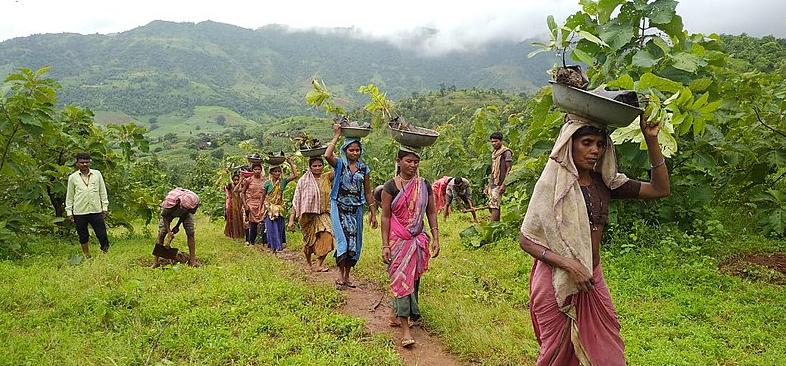
August 9 is the United Nations' International Day of the World's Indigenous Peoples, widely marked in India as Adivasi Divas or Tribal Day. The 2026 observance carries the theme 'Honouring Indigenous Midwives: Safeguarding Life and Well-being' - a useful reminder that Indigenous knowledge is not decorative heritage. It can be a living system of care, ecology, language and social trust.
The statistics need precision. India's constitutional category is Scheduled Tribes, notified under Article 342; 'Adivasi' has deep social and political resonance, while 'Indigenous Peoples' is the international rights vocabulary. These categories overlap substantially but are not perfect synonyms. India has more than 700 notified ST groups, ranging from Gonds, Bhils, Santhals and Mundas to Khasi, Garo, Naga, Mizo, Toda, Dongria Kondh, Nicobarese and Ladakhi communities. There is no single tribal language, economy, religion or ecological practice.
Officially, Census 2011 counted 10.45 crore Scheduled Tribe citizens - 8.6% of India. The global ILO estimate is about 476.6 million Indigenous Peoples, or 6.2% of the world's population. The frequently quoted 11% for India and 9% globally are therefore useful reminders of demographic scale, but they are higher than the principal official baselines.
The deeper story is a paradox. Tribal cultures are celebrated in festivals, museums, handicraft fairs and tourism campaigns; tribal lands have simultaneously supplied minerals, timber, hydropower, infrastructure corridors and conservation landscapes. The citizen can be protected by the Republic and displaced in the name of the Republic. That contradiction is one of India's longest-running democratic tests.
79 YEARS LATER: PROGRESS, BUT NOT YET PARITY
The most defensible assessment is neither despair nor triumph. It is progress with a persistent structural gap. PLFS 2023-24 data cited by the Government put ST literacy at 73.4%, compared with 80.9% for the overall population. This is a major advance over Census 2011, when ST literacy was about 59%, though the two surveys are methodologically different and should not be treated as a single uninterrupted series.
Health has improved in access and institutional delivery, but the gap remains visible. NFHS-5 reported infant mortality among STs at 41.6 per 1,000 live births, compared with 35.2 for the general population. Among ST children under five, 40.9% were stunted, 23.2% wasted and 39.5% underweight, all above national levels. Geography is part of the inequality: a health centre that exists on paper is not accessible if a pregnant woman must cross a river, forest track or mountain road to reach it.
Education illustrates the same two-sided reality. The National Education Society for Tribal Students currently lists 511 functional Eklavya Model Residential Schools serving 167,045 students, with 728 locations approved. Scholarships, hostels and digital access have expanded opportunity. Yet a school can still alienate if the child's first language is absent, local history appears nowhere in the curriculum, teachers rotate rapidly and achievement is defined as distance from one's own culture.
Reservation remains an indispensable ladder. In all-India Central Government direct recruitment through open competition, the ST benchmark is 7.5%; seats are also reserved in legislatures and education under the constitutional and statutory framework. In the 2024 Lok Sabha, 47 of 543 seats are reserved for ST candidates. These measures have helped create generations of tribal teachers, administrators, doctors, engineers, academics, police officers, elected representatives and professionals. But reservation becomes meaningful only when a child reaches the starting line. A reserved seat cannot repair a failed primary school, and a vacancy cannot help a young person pushed out of education at 14.
LAND IS HOME, MEMORY, MARKET - AND POWER
For many tribal communities, land is not merely a transferable asset. A hill may be sacred; a grove can be temple, pharmacy, watershed and community archive; a pasture may embody seasonal rights; a forest can carry food, fuel, medicine, ritual and ancestry. When such a landscape is lost, compensation per acre cannot recreate the social ecosystem that disappears with it.
This is why displacement is more than moving a house. It can mean loss of common grazing, burial grounds, fishing access, sacred sites, minor forest produce, customary institutions and intergenerational ecological knowledge. It can also shift a household from subsistence security into precarious wage labour. 'Ease of doing business' in tribal territory must therefore be tested against an equally fundamental question: whose ease, whose consent and whose long-term costs?
The Forest Rights Act, 2006 attempted a historic correction by recognising individual and community rights that colonial and post-colonial forest administration often failed to record. Government data up to March 2025 reported 23.88 lakh individual titles and 1.21 lakh community titles, covering about 232.66 lakh acres. That is significant. But the next frontier is community forest-resource governance, not merely individual pattas. A forest governed as a commons is institutionally different from a forest fragmented into private plots.
The principle should now be rights before irreversible projects. Forest-right claims, community-resource boundaries, Gram Sabha processes, cultural impacts and rehabilitation obligations should be settled before mining, infrastructure, mass tourism or conservation restrictions lock in a new reality. Consultation cannot become a ritual held after the decision has effectively been made.
THE CONSTITUTIONAL SHIELD: STRONG ON PAPER, UNEVEN ON THE GROUND
India did not leave tribal citizens constitutionally unprotected. The Fifth Schedule under Article 244(1) creates a special administrative framework for Scheduled Areas in ten states, including protections around tribal land and Tribes Advisory Councils. The Sixth Schedule under Article 244(2) goes further in specified tribal areas of Assam, Meghalaya, Tripura and Mizoram by creating Autonomous District and Regional Councils with legislative, executive, financial and certain judicial powers.
PESA - the Provisions of the Panchayats (Extension to the Scheduled Areas) Act, 1996 - carried a radical democratic idea: the Gram Sabha should not be a spectator where community resources, traditions and local development are concerned. Three decades later, implementation still depends on state rules and whether mining, forest, excise, land, water and police procedures genuinely respect that authority.
There has been recent movement. By 2026, nine of the ten PESA states had framed rules; the Ministry of Panchayati Raj added Jharkhand's PESA Rules 2025 to its official repository on July 27, 2026, while Odisha's rules were still being finalised. This is progress - and also evidence of how slowly a transformative law can travel from Parliament to the village meeting.
The lesson is institutional: constitutional protection is not self-executing. A Gram Sabha needs legal literacy, records, funds, technical support and officials willing to treat it as a democratic authority rather than an inconvenience. The Fifth Schedule, PESA and FRA work best as a connected architecture, not as isolated files in separate departments.
LADAKH: THE NEW FRONTIER OF THE AUTONOMY DEBATE
Ladakh has become the clearest contemporary illustration of the difference between welfare protection and political autonomy. When it became a Union Territory without a legislature in 2019, the National Commission for Scheduled Tribes recommended bringing Ladakh under the Sixth Schedule. The Commission noted the region's overwhelmingly tribal character and argued that constitutional devolution could protect culture, agrarian rights and local development.
The Centre and Union Territory administration have since strengthened employment and domicile protections. The 2025 recruitment framework reserves 80% of direct-recruitment posts for Scheduled Tribes, 4% for residents of areas adjoining the Line of Control, 1% for Scheduled Castes and 10% for Economically Weaker Sections, leaving 5% unreserved. Domicile rules were also formalised. These measures address an important fear: that local youth could be crowded out of public employment.
But Ladakh's movement has never been only about jobs. Its core demands have included statehood, stronger democratic representation, constitutional safeguards for land and culture, a public-service architecture and greater local control over an ecologically fragile high-altitude region. Violent clashes and police firing in Leh in September 2025 left four people dead, deepening mistrust.
The 2026 dialogue has therefore evolved. In May and July, representatives of the Leh Apex Body and Kargil Democratic Alliance reported discussions with the Union Home Ministry around an elected territory-level democratic structure and constitutional safeguards modelled partly on Article 371-type provisions. By July 31 they were still awaiting a formal draft, and on August 7 leaders warned of renewed agitation over cases and compensation arising from the 2025 violence. The original statehood and Sixth Schedule demands have not vanished. Ladakh is now a live constitutional negotiation over how land, identity, ecology and democratic power can be secured together.
HEALTH: RESPECT KNOWLEDGE, BUT BUILD A REFERRAL CHAIN
The UN's 2026 focus on Indigenous midwives makes a central point: cultural trust can determine whether modern healthcare is reached in time. Tribal communities possess extensive empirical knowledge of medicinal plants, food diversity, childbirth, seasonal disease and local ecology. The correct response is neither to romanticise every traditional remedy nor to dismiss knowledge simply because it did not originate in a laboratory.
India's tribal health architecture is increasingly moving toward targeted missions. PM-JANMAN, with an outlay of ₹24,104 crore, focuses on 75 Particularly Vulnerable Tribal Group communities across 18 states and one Union Territory through housing, water, education, nutrition, health, roads, telecom and livelihoods. The National Sickle Cell Anaemia Elimination Mission targets elimination by 2047 and has prioritised screening and management in tribal and high-prevalence regions.
The next step should be continuity, not camps: locally recruited health workers, mobile units linked to real referral hospitals, telemedicine where it works, reliable transport, nutrition surveillance, mental-health services and evidence-based engagement with tribal healers and midwives. A trusted community practitioner can become the first node in a safe referral chain rather than the last alternative before a crisis.
EDUCATION: GIVE THE CHILD THE WORLD WITHOUT TAKING AWAY HER WORLD
The objective of tribal education should not be assimilation disguised as opportunity. A Santhal child should be able to learn artificial intelligence without being taught that Santhali is a lesser language. A Gond student should encounter global science without finding Gondi knowledge absent from every page. A Khasi or Mizo student should not have to become culturally invisible to become professionally mobile.
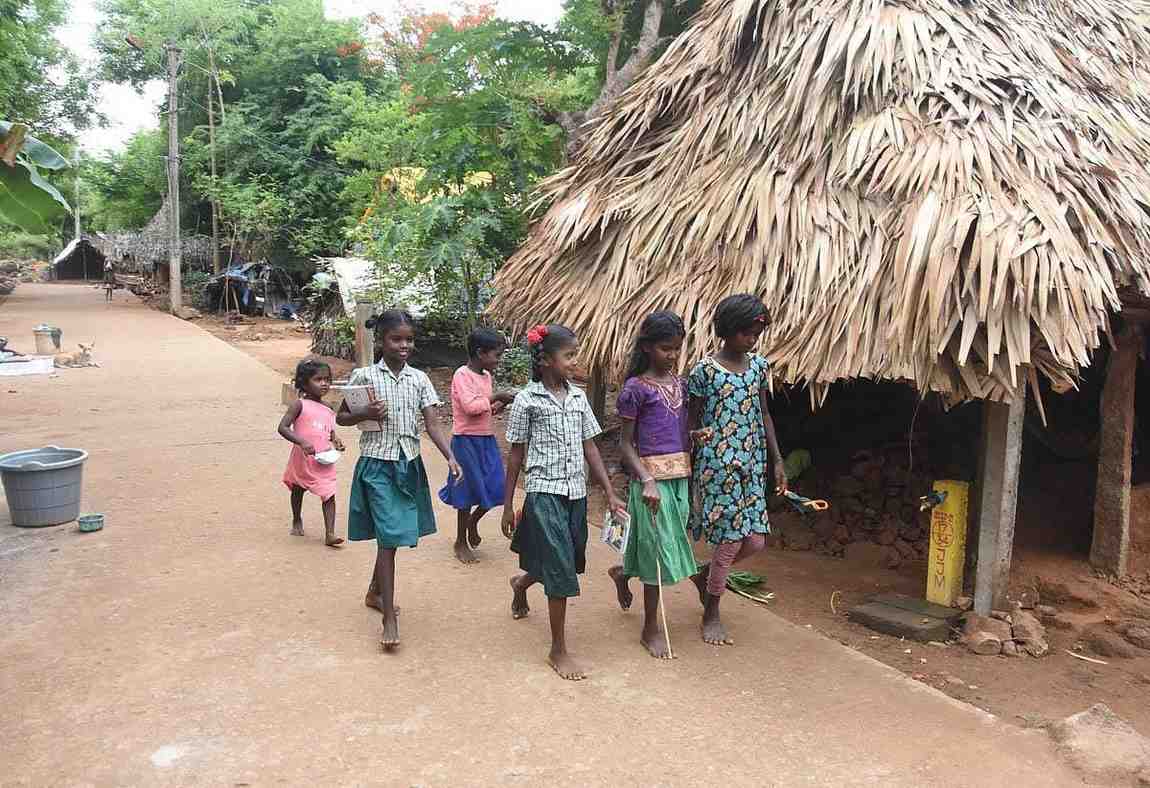
The strongest model is multilingual in the early years, locally staffed where possible, academically ambitious and technologically enabled without becoming technology-dependent. It should place tribal history, literature, ecology, art, law and contemporary role models beside STEM, English, communication, entrepreneurship and digital skills. Elders, artisans, healers, farmers and storytellers can be knowledge partners, not museum exhibits.
This is also a Gen Z question. Young tribal Indians now move between village and university, forest and city, hostel and home, local market and digital platform. The policy challenge is not to force a choice between roots and routers. It is to give young people the capability to carry both.
FROM LIVELIHOOD TO OWNERSHIP: THE ENTERPRISE QUESTION
Tribal India is economically active, but too much value still leaves the producer before the product reaches the consumer. Forest-produce gatherers, farmers, pastoralists and artisans often sell raw mahua, lac, bamboo, tamarind, honey, millet, textiles or medicinal products while intermediaries capture the margin through processing, certification, packaging, finance and distribution.
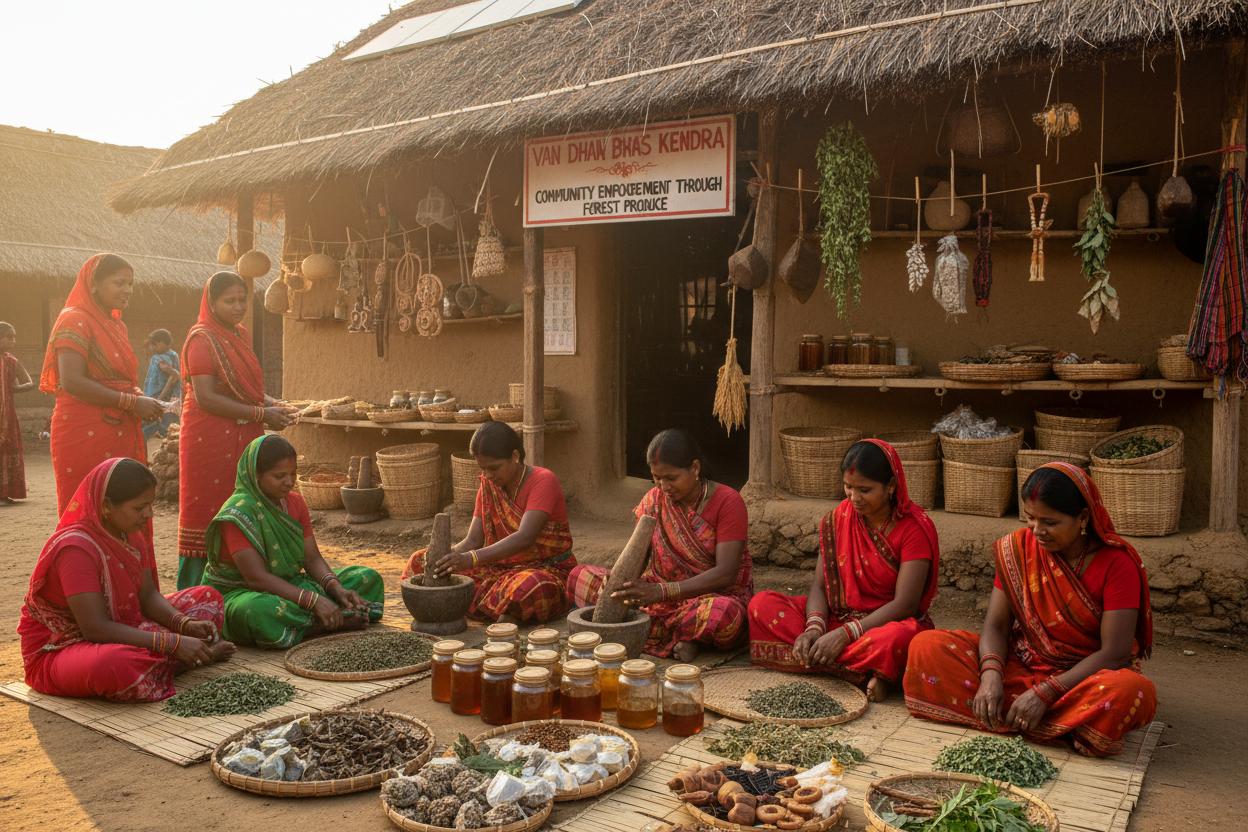
Van Dhan, TRIFED, minimum-support-price mechanisms, cooperatives, self-help groups and concessional finance have helped create market access and local value addition. A newer policy signal is equally important: at Dharti Aaba TribePreneurs 2025, more than 45 ST-founded startups were showcased and a ₹50-crore Venture Capital Fund for Scheduled Tribes was highlighted. That begins to expand the image of the tribal entrepreneur beyond souvenirs.
The next generation should be able to found food companies, community-owned tourism platforms, design labels, media studios, logistics businesses, drone services, climate-tech ventures and AI enterprises. Ease of enterprise should mean working capital, simpler compliance, broadband, warehousing, laboratories, logistics, procurement preference, design support, intellectual-property protection and patient capital. A Gond artist should not remain the anonymous supplier while a distant company owns the brand built around Gond art.
The Dharti Aaba Janjatiya Gram Utkarsh Abhiyan adds a system-level opportunity: about ₹79,156 crore, 17 ministries and 25 interventions aimed at critical gaps in tribal-majority villages. Its promise lies in convergence, because deprivation does not arrive department-wise. A malnourished girl in a village without secondary school, secure forest tenure or transport does not have four separate problems. She has one systems problem.
THE PEOPLE WHO PRACTISED SUSTAINABILITY BEFORE IT HAD A NAME
Tribal communities should not be frozen into the romantic stereotype of the 'noble ecological savage'. Poverty, market pressure, population change and shortened fallow cycles can make once-resilient practices unsustainable. But many Indigenous institutions contain principles that modern climate and sustainability policy is urgently rediscovering: collective management of commons, seasonal harvesting, mixed cropping, seed diversity, repair and reuse, climate-responsive architecture, sacred groves, locally adapted food systems and knowledge of ecological indicators.
The Apatani landscape of Ziro Valley is an Indian illustration. UNESCO's tentative-list documentation describes meticulous irrigation channels, wet-rice cultivation and forest conservation around the valley's watersheds, reinforced by customary rules. Sacred groves across tribal and Indigenous landscapes similarly show how culture can create de facto conservation zones long before a statutory protected-area notification.
Globally, FAO notes that Indigenous Peoples manage roughly 28% of the world's land surface, including some of the most ecologically intact forest areas. Evidence from forest regions also shows a powerful relationship between secure collective tenure and lower deforestation. The lesson is not that tradition is automatically green. It is that people protect landscapes more effectively when they possess long-term rights, local knowledge and a reason to care what the ecosystem will look like two generations later.
Modern science and Indigenous knowledge therefore need not behave like rivals. Satellite imagery can meet the herder's route memory. Weather forecasts can meet a farmer's reading of insects and flowering. GIS can map a watershed while villagers identify the spring that fails first in drought. Biotechnology can analyse a medicinal plant while community knowledge identifies where inquiry should begin - with benefit-sharing and consent built in.
GEN Z ADIVASI: ROOTS WITH ROUTERS
The most visible transformation may be generational. A young musician can sing in a tribal language and distribute the song globally. An artisan can photograph work on a phone and sell beyond the local haat. A student can learn Python while recording oral folklore. A designer can transform inherited motifs into contemporary fashion while asking the modern legal question: who owns the design? A filmmaker can tell a community's story without waiting for an outsider to arrive with a camera.
Digital life can therefore preserve as well as erode culture. It creates archives, audiences, markets and political visibility; it also accelerates language loss, algorithmic homogenisation and commercial appropriation. In the twenty-first century a community can lose something without losing an acre of land: it can lose control over its songs, motifs, medicinal knowledge, biological data or oral history.
Cultural copyright, biodiversity benefit-sharing, community-controlled archives and data sovereignty should consequently become part of tribal-rights policy. The smartphone need not silence the drum. It can broadcast it - if the community retains agency over what is recorded, circulated and monetised.
WHAT THE REST OF INDIA CAN LEARN
The question cannot remain only, 'What can India do for tribal communities?' It must also ask, 'What can India learn from them?' The answer is not imitation but institutional humility.
Tribal and Indigenous experience can remind a hyper-individualised economy that communities are infrastructure; remind cities drowning in waste that repair and reuse were normal before disposability became a business model; remind industrial agriculture that seed diversity and seasonal foods are forms of risk management; remind climate policy that a forest is more than stored carbon; remind democracy that participation is more than voting every five years; remind architecture that climate-responsive design existed before green-building labels; and remind economics that commons can carry immense value even when they have no market price.
Most importantly, many tribal worldviews refuse to separate economy, ecology, culture and social responsibility as completely as industrial modernity has done. Prosperity and possession are not identical concepts. The world does not need to 'become tribal'; it needs the humility to recognise that modern industrial systems did not invent every form of intelligence.
WHAT THE STATE MUST DO NEXT: AN EIGHT-POINT COMPACT
1. Rights before projects. Complete and transparently audit FRA claims and community forest-resource rights before irreversible mining, infrastructure, tourism or conservation decisions. Measure cultural and livelihood loss, not only land value.
2. Make PESA real. Align state land, mining, forest, water, excise and minor-forest-produce laws with PESA; give Gram Sabhas legal literacy, records, funds and technical support; complete Odisha's rules and audit implementation in every PESA state.
3. Build multilingual excellence. Recruit local-language teachers, co-create textbooks with communities, digitise languages, bring elders and artisans into classrooms, and pair cultural grounding with first-rate STEM, AI, communication and entrepreneurship.
4. Create a tribal public-health architecture. Strengthen nutrition, maternal and child health, sickle-cell screening, mental health, mobile medicine and referral networks. Engage Indigenous midwives and healers through evidence-based training and referral, not token celebration.
5. Move from livelihood to ownership. Use Van Dhan, TRIFED, concessional credit and startup funds to build producer-owned brands, processing companies, tourism enterprises and technology businesses. Add procurement, certification, logistics and patient capital.
6. Protect land, culture and digital sovereignty. Enforce safeguards against alienation and coercive transfer. Let communities determine how songs, designs, stories, medicinal knowledge, biological resources and digital data are documented and commercialised, with benefit-sharing.
7. Pay for stewardship. Route a greater share of climate finance, watershed restoration, biodiversity and community-forest budgets to Gram Sabhas and accountable local institutions. Conservation should create an economic stake for the people doing it.
8. Govern with tribal citizens. Put tribal youth, women, entrepreneurs, scholars, traditional institutions and Gram Sabhas inside programme design and evaluation. Measure success by health, learning, income, ecological security, mobility and control over the future - not merely allocations and inaugurations.
DEVELOPMENT WITHOUT DISAPPEARANCE
For generations, development quietly assumed that the future would make tribal cultures less tribal: forests would give way to markets, customary institutions to formal administration, local languages to dominant ones, and young people would prove their progress by leaving inherited worlds behind.
That assumption should end. A young Adivasi woman becoming a surgeon is progress; she should not have to stop speaking her language to prove it. A tribal entrepreneur building a large company is progress; the community's forest should not have to disappear for the company to exist. A highway reaching a remote settlement is progress; it should not become the road through which the settlement loses control of its land. A child learning artificial intelligence is progress; it is richer if that child also knows the songs, plant names and ecological memory of a grandmother.
The goal is mobility without uprooting, prosperity without dispossession, education without cultural erasure, conservation without exclusion and modernisation without disappearance.
The forest was never empty. The mountain was never empty. The island and grassland were never empty. They held knowledge systems that conventional economics often failed to count because much of their wealth was shared rather than sold. At the precise moment when humanity is searching for resilient food systems, biodiversity protection, low-carbon lifestyles and stronger communities, India's tribal worlds contain knowledge that should be engaged with - not extracted from.
The Republic's task is therefore neither to freeze Adivasi citizens in a romantic past nor absorb them into a homogenised future. It is to protect the power to choose: the right to remain, the freedom to move, the opportunity to prosper, the authority to govern, the confidence to modernise and the dignity to remain themselves. That would be a far greater tribute than one commemorative day each year.
SOURCES & VERIFICATION NOTE
This feature integrates the substantive themes and arguments of the uploaded 73-page working document, while reconciling duplicated drafts and updating time-sensitive claims to 10 August 2026. Census, PLFS, NFHS and programme dashboards measure different things in different years; figures are therefore labelled by source/year rather than blended into a false single timeline. Ladakh is described as an evolving negotiation, not as a settled constitutional outcome.
• United Nations DESA: International Day of the World's Indigenous Peoples 2026 - theme and observance. Source
• ILO: Implementing ILO Convention No. 169: estimate of 476.6 million Indigenous Peoples, 6.2% of world population. Source
• Press Information Bureau / Ministry of Tribal Affairs: ST population 10.45 crore (8.6%); policy and TRIFED context. Source
• Press Information Bureau: PLFS 2023-24 literacy and NFHS-5 health/nutrition comparisons for STs. Source
• NESTS: Current EMRS dashboard: functional schools, students and sanctioned locations. Source
• Ministry of Panchayati Raj: PESA Rules framed by states; Jharkhand Rules 2025 added July 27, 2026. Source
• Press Information Bureau / NCST: 2019 NCST recommendation to include Ladakh under the Sixth Schedule. Source
• Ladakh Administration: 2025 domicile and reservation framework / recruitment protections. Source
• The New Indian Express: July 31, 2026 status of Ladakh negotiations on elected body and Article 371-type safeguards. Source
• Press Information Bureau: PM-JANMAN scope and ₹24,104-crore outlay. Source
• Press Information Bureau: Dharti Aaba Janjatiya Gram Utkarsh Abhiyan: convergence across 17 ministries and tribal-majority villages. Source
• Press Information Bureau: Dharti Aaba TribePreneurs 2025 and ₹50-crore Venture Capital Fund for ST entrepreneurs. Source
• Press Information Bureau: FRA progress to March 2025: individual/community titles and area vested. Source
• FAO: Indigenous Peoples manage about 28% of the world's land surface and are key forest/biodiversity stakeholders. Source
• UNESCO World Heritage Centre: Apatani Cultural Landscape: customary watershed conservation and irrigation in Ziro Valley. Source
• Election Commission of India: 2024 Lok Sabha Atlas: 47 seats reserved for Scheduled Tribes. Source
Editorial note: The phrase 'tribal' is used because it remains common in Indian law and public discourse; 'Scheduled Tribes' is the precise constitutional category, while 'Adivasi' and 'Indigenous Peoples' carry wider cultural and international meanings.





Add a Comment