All Posts

Explore the latest sustainability news, innovations, insights, and industry stories from around the world.

Showing 12/165

08 Jul 2026

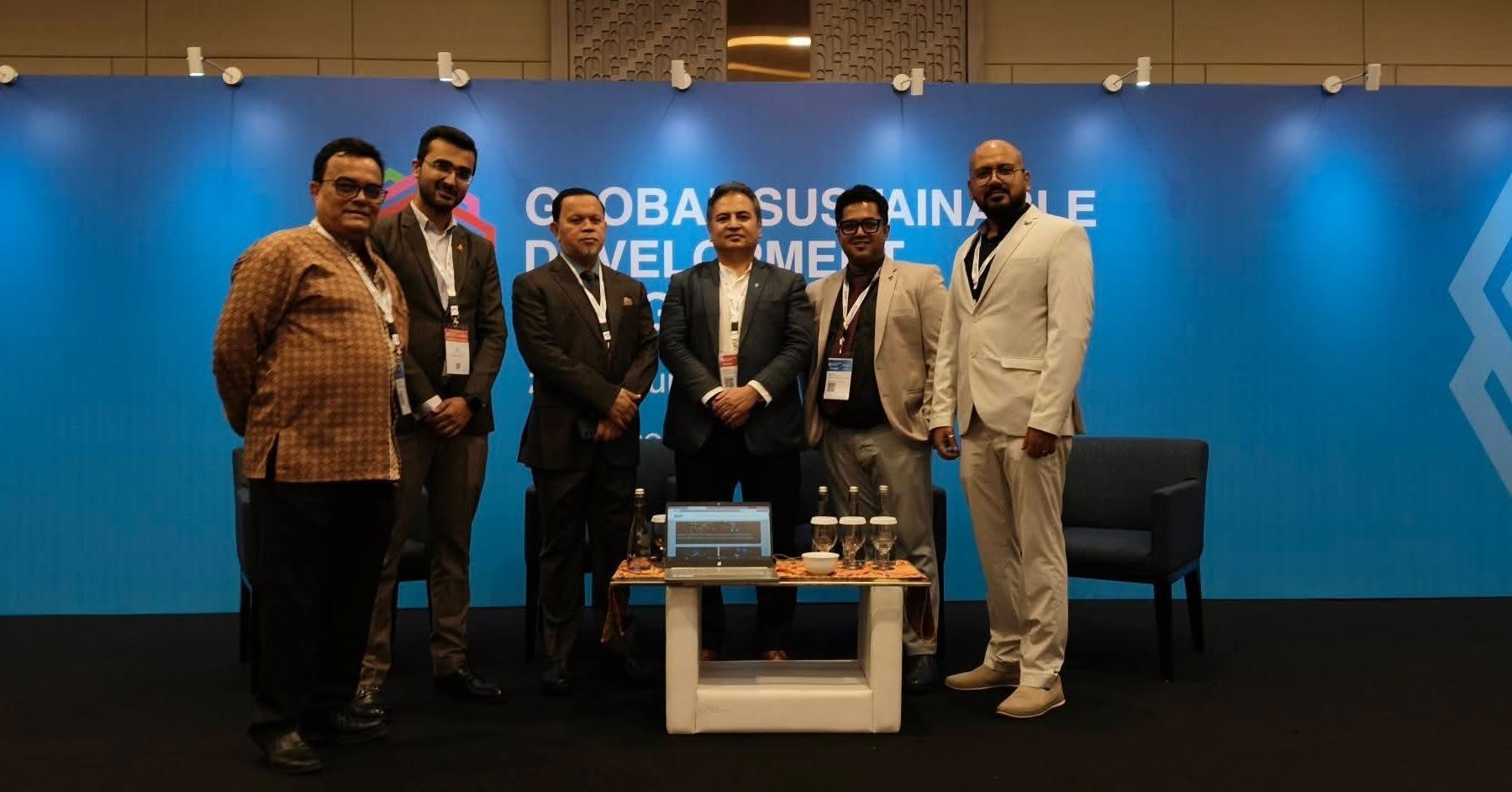
Jakarta Became the World's Sustainability Classroom For four June days in 2026, Jakarta did more than host a congress. It became a live classroom for the world's sustainability conscience. The fifth Global Sustainable Development Congress, convened by Times Higher Education at the Indonesia Convention Exhibition from 22 to 25 June, brought together more than 5,000 people from higher education, government, industry and civil society. Its official post-event description spoke of "thought-provoking discussions, new partnerships and collaborative action" [1]. But the larger story was not merely the scale of attendance. It was the way the congress treated the Sustainable Development Goals as a practical architecture for institutions, rather than as ceremonial vocabulary for banners, annual reports and polite speeches. The attached pre-event report had anticipated exactly this shift. It described Jakarta as a crossroads of culture, commerce, policy and innovation, and argued that the world no longer needed sustainability as a slogan but as a system of action. The subsequent public conversation around #GSDCongress confirmed that this was not an empty line. The congress became a meeting ground where university presidents, ministers, impact-rating experts, ESG professionals, digital entrepreneurs, development practitioners, city planners, investors and students discussed how to move from climate concern to measurable institutional behaviour. That is why the phrase 'from sustainability talk to sustainability architecture' captures the spirit of Jakarta. The congress was not designed as an isolated education conference, a business forum or a climate seminar. It worked as a cross-sector operating table. Universities brought research and legitimacy. Governments brought planning authority. Companies brought capital, technology and value chains. Civil society brought moral pressure and ground truth. Media and digital platforms brought the possibility of public translation. Together, they formed the beginnings of an SDG delivery ecosystem. Why Jakarta Mattered Indonesia was not a neutral venue. It was part of the message. Southeast Asia is one of the most consequential regions for sustainability in the twenty-first century: fast urbanisation, vulnerable coasts, forest and biodiversity tensions, energy-transition dilemmas, youth-heavy demography, emerging middle classes and rapidly expanding higher education systems. Holding the congress in Jakarta placed the SDG conversation inside the development realities of the Global South. It reminded participants that sustainability cannot be shaped only in Western capitals, donor agencies or ranking offices. It has to be negotiated in cities that are growing, in economies that are industrialising, and in communities that live daily with climate risk and opportunity. The official GSDC 2026 agenda covered cities and communities; education, gender and inequality; environment; circular economy and materials; decarbonisation and energy; and supply chain and resources [2]. Those pillars gave the congress its intellectual spine. Cities were treated not only as places of consumption but as laboratories of resilience. Education was presented not only as a human-rights issue but as the platform for green skills and social mobility. Environment was not separated from livelihoods. Circularity was not reduced to recycling. Decarbonisation was not discussed only as technology but as finance, jobs, policy and justice. Supply chains were treated as systems of transparency, responsibility and competitiveness. This framing matters for Asia, South Asia and the Middle East. These regions are exposed to heat, floods, water stress, air pollution and livelihood vulnerability, but they also carry enormous demographic energy, digital capacity, entrepreneurial ambition and institutional expansion. Jakarta therefore allowed a different story to be told: the Global South is not merely a geography of risk. It is a geography of solutions. Phil Baty and the Global Pulse of #GSDCongress Public posts after the congress captured the emotional and institutional charge of the event. Phil Baty, Chief Global Affairs Officer and COO of Times Higher Education and one of the key global figures behind the congress, called it "a truly awe-inspiring event" and pointed to the commitment to "real societal impact" from changemakers across the world [3]. The official GSDC community message, which he amplified, described the week as a demonstration of global collaboration's power to "turn ambition into action" [3].   This was not only celebratory language. It pointed to the real transition that GSDC is trying to force across higher education. In another publicly indexed post connected to the congress, Baty shared the message that educational institutions must equip young people with "skills, knowledge and values" so that they can "create and seize the opportunities" before them [4]. That line matters because it moves sustainability from institutional reputation to student formation. If universities are serious about the SDGs, the proof will not be in brochures; it will be in graduates who can redesign systems, build ethical enterprises, read climate data, communicate risk, fight misinformation, understand ESG evidence, and work with communities. Another pre-congress discussion amplified by Baty carried a harder message for universities: "Excellence in itself is not enough anymore" [5]. The point was clear. Teaching excellence and research excellence remain necessary, but they are no longer sufficient markers of institutional greatness. Universities are now being asked to demonstrate how they address local and global challenges. That is a major reputational shift. It changes the definition of prestige from exclusivity to usefulness, from citation alone to contribution, from institutional image to public good. The Ratings Moment: Accountability Enters the Room The live release of Times Higher Education's Sustainability Impact Ratings 2026 gave the Jakarta congress a powerful accountability dimension. THE states that the 2026 rankings evaluated 1,646 universities from 116 countries and territories across 17 individual SDG tables and one overall ranking [6]. The ranking page also notes that the University of Manchester was number one overall, with Griffith University second [6]. A Times Higher Education LinkedIn post added that Asia had the greatest representation, with more than half of the universities in the global ranking, and that India was the second best represented country with 110 institutions [7]. These figures matter because they show that sustainability performance is no longer peripheral to higher education. It is becoming part of global institutional measurement. The old university brand was built on admissions selectivity, research citations, faculty reputation, industry salaries and alumni power. The new university brand increasingly asks additional questions. Does the campus reduce its footprint? Does the curriculum prepare students for a just transition? Does research solve public problems? Do partnerships help communities? Is equality measurable? Are water, energy, waste and health systems audited? Are students treated as co-creators of sustainable change? For Indian, Bangladeshi, Nepali, Sri Lankan, Gulf and Southeast Asian institutions, the implication is decisive. Sustainability reporting cannot remain a year-end documentation exercise. It has to become strategic planning. Every university should now think in terms of an SDG evidence office, green campus dashboard, community impact registry, sustainability curriculum map, industry partnership pipeline and annual public accountability statement. In this sense, the GSDC ratings moment converted the SDGs from moral aspiration into institutional evidence. South Asia Speaks: From Quality Education to Global Education Services The congress also made space for South Asian voices that linked sustainability with education, innovation and regional development. Dr Md Sabur Khan, representing Bangladesh's Daffodil ecosystem, wrote that he looked forward to sharing South Asia's experiences in sustainable impact through higher education, innovation and cross-sector collaboration, with special focus on "SDG 4" and "SDG 17" [8]. That framing is important. Quality education and partnerships are not two separate goals in the Global South. They are mutually reinforcing. Without partnerships, education reform lacks scale. Without education, partnerships lack human capital. Asish Thakur's publicly indexed reflections from Nepal extended this argument. He asked whether Nepal could become a global destination for education rather than simply a source of students, and pushed the conversation from "Study Abroad" to "Study in Nepal" [9]. He also described Nepal's greatest untapped resource as the "talent, ambition, and potential" of its people [9]. This is one of the most important educational-development insights emerging from Jakarta: sustainability is not only about conserving natural resources. It is also about transforming human capacity into regional value. The South Asian outcome beyond SustainVerse is therefore much larger than a media launch. It includes the possibility of a knowledge-services corridor across India, Bangladesh, Nepal, Sri Lanka and the Gulf; new transnational education models; SDG-led university partnerships; joint degrees in sustainability, development management and green entrepreneurship; and regional youth programmes that turn climate anxiety into employability. Jakarta gave South Asian institutions a global stage to say that they are not waiting to be invited into the future of higher education. They are ready to help design it. SustainVerse: The Launch as a Signal, Not the Whole Story Within this larger congress narrative, the launch of SustainVerse.org became a timely South Asian digital intervention. A public LinkedIn post by Victor Bhattacharya said SustainVerse was launched at the #GSDcongress Summit 2026 in Jakarta and described it as a comprehensive ecosystem for global sustainability, including a global media portal, an education portal and a marketplace [10]. Another post from him framed technology as having to play a deeper role in real-world challenges and called SustainVerse "not just a platform" but a commitment to digital solutions for a "greener, smarter, and more responsible future" [11]. This gives SustainVerse a clear mandate. It should not become merely another sustainability website carrying event reports and generic climate commentary. Its opportunity is to translate complex sustainability knowledge into public learning, professional skills, investment intelligence, CSR opportunities, product discovery, policy explainers, campus action models and short-form media. The SustainVerse marketplace describes the platform's purpose as making sustainability practical, accessible and actionable, exploring climate innovation "not as abstract ideas but as real-world possibilities" [12]. The portal's own blog similarly says the deeper purpose is to convert stories into models that can be studied, adopted, replicated and scaled [13]. The public posts also credited Prof Ujjwal Anu Chowdhury's role in shaping and bringing the SustainVerse vision to the global stage [10]. A publicly indexed Facebook result from his profile showed the journey beginning with the line, "On to Jakarta to attend" GSDC 2026 organised by Times Higher Education [14]. That small travel note now reads as more than a departure post. It became the beginning of a bridge between a global congress and a new South Asian sustainability communication platform. Outcomes Beyond SustainVerse: What Jakarta Actually Set in Motion The first major outcome beyond SustainVerse is the normalisation of sustainability as institutional strategy. GSDC Jakarta made it difficult for universities to treat the SDGs as optional outreach language. Institutions now have to connect sustainability to admissions, research, faculty work, campus operations, community partnerships, rankings and reputation. The second outcome is the rise of the university-industry-city triangle. The congress showed that the future of sustainability will be implemented where campuses, companies and cities work together. Universities can generate research and talent; companies can finance and execute; cities can provide the lived problem field of water, waste, transport, housing, energy, air, health and resilience. The practical next step is to build city sustainability labs anchored by universities and funded by industry. The third outcome is green skills as the new employability grammar. GSDC's audience included HR and people-development leaders, and the official page linked skills, talent and workforce transformation to progress toward a sustainable economy [1]. This is a curriculum revolution waiting to happen. Sustainability must enter engineering, business, media, law, design, architecture, health sciences, education and public administration. The green economy will need carbon accountants, climate communicators, ESG data analysts, circular designers, biodiversity auditors, renewable-energy managers, sustainable procurement professionals and community transition facilitators. The fourth outcome is the mainstreaming of sustainability finance. The attached context emphasised that capital is the missing bridge between vision and delivery. Jakarta reinforced that point by bringing chief financial officers, investors and responsible-investment leaders into the conversation. If universities and civil society want sustainability to move beyond advocacy, they must learn the language of bankable projects, blended finance, green bonds, transition finance, climate-risk disclosure and credible impact measurement. The fifth outcome is evidence-based SDG governance. The Sustainability Impact Ratings made visible the need for verifiable documentation. The danger is that institutions will chase ranking points. The opportunity is that they will build evidence systems that actually improve practice. The best universities will use the ratings not as trophies but as mirrors. The sixth outcome is regional confidence in the Global South. Jakarta affirmed that Asia, South Asia and ASEAN are not peripheral to the SDG future. The THE release showed Asia's numerical strength in sustainability rankings [7]. The congress's setting, speaker diversity and public posts by South Asian leaders created a psychological shift: emerging economies can contribute models, not merely receive advice. The seventh outcome is a new public-media task. Sustainability is still too often trapped in jargon: net zero, ESG, Scope 3, nature-positive, climate resilience, just transition, circularity, blended finance. Media platforms must translate this into everyday meaning. SustainVerse can do that, but so can university media labs, journalism schools, regional broadcasters and independent digital creators. The congress created content; the next challenge is pedagogy. The eighth outcome is youth leadership. The SDGs belong most directly to young people because they will inherit the consequences of today's decisions. GSDC's strongest legacy will emerge if students are not treated as photo-op participants but as researchers, communicators, entrepreneurs, community fellows, data collectors and policy challengers. The ninth outcome is a new model for CSR and ESG in South Asia. Instead of donation-led charity or report-led compliance, Jakarta points toward measurable partnerships: school climate literacy, community adaptation, green skilling, rural clean-energy entrepreneurship, biodiversity restoration, waste-to-value enterprises, sustainable tourism, responsible fashion and campus-community innovation. The tenth outcome is the repositioning of sustainability from fear to agency. The world is fatigued by climate panic without pathways. Jakarta's message was that the future must be built through alliances, metrics, finance, education, technology and courage. The Business and Policy Dividend For business, Jakarta's message was equally demanding. Sustainability can no longer be placed at the edge of the enterprise as CSR storytelling. It has to enter procurement, design, energy use, logistics, employee learning, investor communication and board-level risk management. The Asia-Pacific Sustainable Business Summit element in the attached context was therefore crucial because it joined the language of SDGs with the practical language of value chains. Companies that ignore climate risk, social inclusion, waste, water stress and community trust will increasingly face regulatory, reputational and market penalties. Companies that understand sustainability as innovation will find new products, new financing opportunities, new talent pipelines and new legitimacy. For governments, the policy outcome is a reminder that sustainable development cannot be delivered by ministries working in isolation. Education policy has to speak to industrial policy. Urban planning has to speak to water and health. Climate policy has to speak to employment. Digital policy has to speak to inclusion and data ethics. The Jakarta congress placed ministers, universities, business leaders and civil society in the same institutional room, which is exactly the model that national and state governments should replicate through regional SDG implementation councils. Such councils should not be ceremonial. They should publish indicators, budgets, responsibilities, timelines and citizen-facing dashboards. For philanthropic foundations and CSR leaders, the lesson is to move from activity counts to outcome architecture. Funding a seminar, distributing saplings or sponsoring a report is not enough. The new benchmark should ask: What changed in the community? What skill was acquired? What emission was reduced? What livelihood became more resilient? What policy was influenced? What student group continued the work? What data proves it? This outcome culture is where GSDC's emphasis on ratings, partnerships and evidence can reshape practice beyond higher education. The Communication Dividend: Making Sustainability Understandable One of the quiet but powerful outcomes of GSDC Jakarta is the recognition that sustainability will fail if it remains trapped in expert language. The public cannot act on acronyms alone. ESG, Scope 3, circularity, carbon markets, green taxonomy, nature-positive transition and climate adaptation all need translation into everyday choices, institutional checklists and local stories. This is where journalists, educators, creators and platforms become as important as scientists and financiers. They do not replace technical expertise; they convert expertise into public agency. The interview of Phil Baty by SustainVerse, visible through publicly indexed social posts though not fully fetchable during verification, should be seen in this light. Its value is not only that a senior THE leader spoke to a new platform. Its value is that a global higher education conversation can be carried into a South Asian digital public sphere. Every such interview should now be converted into multiple formats: a full article, a short explainer, reels for students, quote cards for universities, a policy brief for regulators and a checklist for campuses. That is how a congress conversation becomes a knowledge product. From Congress to Consequence The success of GSDC Jakarta should not be measured only by 5,000 attendees, speaker lists, social-media impressions or photo galleries. Those are important, but they are event metrics. The real measurement will come later. How many universities redesign curricula? How many cities create living labs? How many companies decarbonise supply chains? How many CSR projects become measurable? How many students gain green skills? How many impact dashboards are built? How many partnerships survive beyond the exchange of business cards? This is where the post-Jakarta responsibility begins. The official GSDC page says the congress is where strategies are set, partnerships are forged and real progress is made [1]. The challenge now is to turn that statement into a follow-up discipline. Every delegate should return home with a ninety-day action plan: one curriculum change, one partnership, one public communication product, one data dashboard, one student initiative and one measurable community outcome. For SustainVerse, the immediate mandate is to become the memory and explainer of the moment. It should track GSDC outcomes, profile change-makers, publish action toolkits, host interviews, decode sustainability finance, map green careers, build student-facing explainers and expose greenwashing with evidence. But the broader lesson of Jakarta goes far beyond SustainVerse. It is a message to universities, governments, companies, civil society and media: sustainable development has entered the age of execution. The world has spent decades speaking about the SDGs. Jakarta asked a sharper question: who will build them, fund them, teach them, measure them, communicate them and live them? If the congress succeeds in answering that question through partnerships and behaviour change, GSDC 2026 will not be remembered merely as a large event in Indonesia. It will be remembered as a moment when sustainability matured from advocacy into architecture. Research and Quote Source Notes Note: Direct quotations have been kept brief and are drawn only from publicly accessible or search-indexed source text. Public Facebook/Instagram pages connected to the SustainVerse interview with Phil Baty were visible in search results but some could not be fully fetched during verification; no unsupported interview quote has been invented or attributed. [1] Global Sustainable Development Congress 2026 official post-event page: https://www.gsdcongress.com/2026 [2] GSDC 2026 official agenda tracks on the event page: https://www.gsdcongress.com/2026 [3] Phil Baty LinkedIn post amplifying the GSDC wrap-up: https://www.linkedin.com/posts/philbaty_gsdcongress-activity-7475870230251188225-9q71 [4] Phil Baty LinkedIn post/transcript excerpt from GSDC 2026 welcome material: https://www.linkedin.com/posts/philbaty_gsdcongress-activity-7474842140850716673-WaRl [5] Phil Baty LinkedIn post quoting Andy Simmons on sustainability and reputation: https://www.linkedin.com/posts/philbaty_theimpact26-gsdcongress-activity-7469734753139785728-sfPM [6] Times Higher Education Sustainability Impact Ratings 2026: https://www.timeshighereducation.com/impactrankings [7] Times Higher Education LinkedIn post announcing Sustainability Impact Ratings 2026: https://www.linkedin.com/posts/times-higher-education_theimpact-theunirankings-timeshighereducation-activity-7475336764245852161-2Qxq [8] Dr Md Sabur Khan LinkedIn post on speaking at GSDC 2026: https://www.linkedin.com/posts/sabur-khan-2b9a364_gsdc2026-sdg4-sdg17-activity-7474406376815898624-Px86 [9] Asish Thakur LinkedIn post on Nepal as a global education services hub: https://www.linkedin.com/posts/asishthakur_can-nepal-become-a-global-destination-for-activity-7475116019494113280-0DcE [10] Victor Bhattacharya LinkedIn post on the SustainVerse launch at GSDC: https://www.linkedin.com/posts/victor-bhattacharya-682536b8_gsdcongress-sustainverse-sustainverse-activity-7476841930958626816-KSy- [11] Victor Bhattacharya LinkedIn post on technology for sustainable development at GSDC: https://www.linkedin.com/posts/victor-bhattacharya-682536b8_gsdcongress-sustainverse-gsdcongress2026-activity-7477262420068089857-7Uz0 [12] SustainVerse Marketplace About Us page: https://marketplace.sustainverse.org/about-us [13] SustainVerse blog: Where stories become solutions: https://sustainverse.org/home/blog/sustainverse-where-stories-become-solutions-and-sustainability-becomes-a-movement [14] Publicly indexed Facebook search result for Prof Ujjwal Anu Chowdhury's Jakarta/GSDC post: https://www.facebook.com/ujjwalkchowdhury/   ...Read more

17 Jun 2026

A Four-Day Global Call to Turn the SDGs into Lived Reality Jakarta, one of Asia’s most energetic crossroads of culture, commerce, policy and innovation, is preparing to become the global capital of sustainable transformation. From 22 to 25 June 2026, the Indonesia Convention Exhibition in Jakarta will host the fifth annual Global Sustainable Development Congress, a major international gathering designed around one urgent conviction: the world no longer needs sustainability as a slogan; it needs sustainability as a system of action. Convened by Times Higher Education, the Global Sustainable Development Congress 2026 arrives at a critical hour. The 2030 deadline for the United Nations Sustainable Development Goals is no longer distant. It is near enough to demand accountability, yet far enough to permit courage, course correction and collaboration. Against this backdrop, the congress has framed its message around “collective action for a sustainable future,” bringing together the people and institutions capable of translating aspiration into measurable change: university leaders, researchers, government representatives, business executives, investors, NGOs, foundations, civil society actors, HR and people-development leaders, sustainability professionals, students and emerging young leaders. This is not designed as a routine conference of speeches and ceremonial networking. It is being positioned as a working platform where knowledge, capital, policy, entrepreneurship, education and social purpose meet. Over four days, the congress will seek to do what many sustainability forums promise but few achieve: connect the evidence of universities, the authority of governments, the resources of business, the creativity of innovators and the conscience of civil society. Why Jakarta, Why Now? The choice of Indonesia is not incidental. Southeast Asia sits at the centre of several of the twenty-first century’s defining sustainability challenges: rapid urbanisation, coastal vulnerability, biodiversity protection, clean energy transition, food security, sustainable finance, equitable education, responsible industrialisation and the future of work. Indonesia, as one of the region’s largest economies and most strategically important democracies, gives the congress a powerful geopolitical and developmental setting. The Government of Indonesia, through the Ministry of National Development Planning, Bappenas, has joined as co-host, giving the event a sharper policy significance. This is important because sustainability conversations often fail when they remain either academic or corporate GSDC 2026 is attempting to bridge that divide by placing national planning, higher education, business transformation and civil society engagement in the same arena. The participation of Indonesian ministers and regional education leadership also signals that Southeast Asia is not merely hosting the global conversation; it is helping shape it. For the Global South, and particularly for Asia, the congress has the potential to reposition sustainability from a compliance burden to a development opportunity. It asks a decisive question: can emerging economies design a growth model that is cleaner, fairer, more resilient and still ambitious? From Universities to the Real World At the heart of the congress is a strong belief in the transformative role of higher education. Universities are no longer being asked simply to teach sustainability or publish research on the SDGs. They are being asked to become living laboratories of climate action, social inclusion, public health, gender equity, innovation, entrepreneurship and community resilience. Times Higher Education’s involvement gives the congress a distinctive academic spine. THE has built a global reputation through its university rankings and its Impact Ratings framework, which measures how universities contribute to the UN SDGs. At GSDC 2026, the live global reveal of the THE Sustainability Impact Ratings 2026 is expected to be a major moment, bringing visibility to institutions that are not only producing graduates but shaping measurable public good. This is particularly significant for universities in Asia, Africa, the Middle East and Latin America, where institutions often operate close to the lived realities of inequality, climate vulnerability, public health gaps and employment transition. The congress can become a stage where universities from developing and emerging economies showcase not just academic excellence but social relevance. In this sense, GSDC 2026 may help redefine the prestige of a university. The future-facing institution will not be judged only by citations, patents and graduate salaries, but also by how deeply it contributes to clean energy systems, inclusive cities, gender justice, local livelihoods, responsible innovation and ecological restoration. Six Pillars for a Planet Under Pressure The programme brings together research, policy and industry leaders across six broad agenda pillars: cities and communities; education, gender and inequality; environment; circular economy and materials; decarbonisation and energy; and supply chains and resources. Each of these tracks addresses a crisis that is no longer theoretical. Cities and communities will look at the future of urban life, resilience and inclusion. This is crucial in a world where cities are both engines of opportunity and epicentres of climate risk. From heat stress and flooding to affordable housing, transport and waste systems, the urban question is now inseparable from the sustainability question. Education, gender and inequality will examine how social justice must sit at the centre of any credible sustainability agenda. The SDGs cannot be achieved if millions remain excluded from quality education, digital access, health systems, secure livelihoods and leadership pathways. Gender equality, in particular, is not an isolated goal; it is a multiplier across every other goal. The environment pillar speaks to biodiversity, ecosystems, climate adaptation and the delicate balance between development and ecological survival. In a region like Southeast Asia, where forests, seas, agriculture and livelihoods are tightly interconnected, environmental policy is also economic policy and social policy. Circular economy and materials will focus on one of the most important shifts of our time: moving from extract-use-discard models to systems that design out waste, reuse materials, extend product life and create new industrial value chains. For manufacturers, cities and consumers alike, circularity is fast becoming a practical necessity. Decarbonisation and energy will take on the complex challenge of powering economic development while reducing emissions. This is not merely a technology question. It involves finance, policy, grid systems, industrial transitions, skills, political will and just transition frameworks for workers and communities. Supply chains and resources will examine transparency, resilience and responsibility in global production networks. Recent years have shown that fragile supply chains can disrupt economies and deepen inequality. Sustainable supply chains are now central to corporate credibility, investor confidence and national economic security. The Business of Doing Better A defining feature of the 2026 edition is the Asia-Pacific Sustainable Business Summit, co-located with the main congress and running across the four days. Its theme is direct and practical: connecting the value chain for sustainable growth. This summit acknowledges a basic truth: sustainability will not scale unless business models change. Corporate leaders, financiers, innovators, procurement specialists, manufacturers, digital infrastructure players and policymakers will gather to examine how sustainability can drive competitiveness, long-term value and market creation. The business summit’s tracks include AI, digital and finance; decarbonisation, energy and the built environment; natural resources, commodities and agriculture; nature, climate and the environment; social impact, equity and health; and supply chain, manufacturing and circular economy. This is a strong indication that the congress recognises sustainability as an operating system for the economy, not a CSR appendix. Speakers and participants from companies and institutions such as Olam Agri, Bosch Power Tools, Coca-Cola Europacific Partners, Nickel Industries, UltraTech Cement, DBS Bank, Singtel Digital Infraco, the European Investment Bank and others suggest a programme designed to move from good intentions to implementable strategies. The business presence matters because governments can regulate and universities can innovate, but corporations control large parts of production, consumption, logistics, capital flow and employment. The test of the summit will be whether it can push business leaders beyond brand positioning and into measurable commitments: cleaner operations, transparent sourcing, decarbonised supply chains, nature-positive investments, workforce reskilling and credible ESG governance. Finance: The Missing Bridge Between Vision and Delivery One of the most important additions to the GSDC ecosystem is the “Unlocking Capital for Sustainability” initiative, hosted with Eco-Business on 24 June. It focuses on a persistent barrier in sustainability: the gap between ambition and finance. Across Asia, the ideas are present. The technologies are emerging. The policy frameworks are evolving. But the capital needed for renewable energy, resilient infrastructure, low-carbon industry, sustainable agriculture, inclusive health and climate adaptation often remains inadequate, expensive or misaligned. The summit’s theme, “Strengthening governance, securing resilience,” recognises that money follows trust. Investors need credible governance, transparent regulation, bankable projects and long-term policy stability. This finance conversation is especially important for Indonesia and the wider Asia-Pacific region. The just transition cannot be achieved by moral appeal alone. It needs blended finance, carbon market integrity, public-private partnerships, development finance, green bonds, transition finance, climate-risk disclosure and new models of local investment. By bringing financiers, regulators, carbon-market experts and sustainability leaders into the congress, GSDC 2026 gives the SDG agenda a crucial economic engine. Skills for the Green Economy Another major component is the Sustainability Skills Summit, scheduled for 23–24 June. Its central concern is the workforce transformation required for a sustainable economy. This is one of the most practical questions of the decade. The green transition will create new jobs, but it will also disrupt old ones. It will require engineers who understand renewable systems, managers who understand ESG metrics, designers who understand circularity, teachers who can embed sustainability into curricula, financiers who can evaluate climate risk, communicators who can fight misinformation, and public officials who can design integrated policy. The summit’s focus on future-proof workforces, closing skills gaps, strengthening business resilience and driving inclusive growth is therefore essential. Sustainability cannot remain the language of experts. It must become a competence across sectors. For universities, this means redesigning curricula. For companies, it means investing in reskilling rather than treating sustainability as a specialised compliance department. For governments, it means aligning education, industry and employment policy. For young people, it means preparing for a labour market in which green literacy, digital fluency and ethical leadership will be central to employability. Policy, Prosperity and the New Social Contract The Policy Summit, taking place on 22–23 June, adds another decisive layer. It convenes senior decision-makers from government, multilateral institutions, industry and finance to examine sustainable economic growth, trade frameworks, industrial strategy and cross-border cooperation. This matters because the SDGs cannot be achieved through isolated projects. They require national plans, fiscal frameworks, international cooperation, regulatory coherence and institutional capacity. The policy summit appears designed to address the difficult terrain where sustainability meets competitiveness. How can economies remain globally competitive while becoming cleaner and fairer? How can trade systems support climate goals? How can regulation protect people and planet without strangling innovation? How can industrial strategy support both growth and inclusion? These are not abstract questions. They are the core governance questions of the next decade. A Stage of Global Voices The confirmed speaker list reflects the congress’s multi-sector character. It includes Rachmat Pambudy, Indonesia’s Minister of National Development Planning; Brian Yuliarto, Indonesia’s Minister for Higher Education, Science and Technology; Sir Dr Jeffrey Cheah, Founder and Chairman of Sunway Group and Founder and Chancellor of Sunway University; Gita Sabharwal, United Nations Resident Coordinator in Indonesia; Habibah binti Abdul Rahim of the Southeast Asian Ministers of Education Organization; Dominic Jermey, the UK Ambassador to Indonesia and Timor-Leste; and sustainability leaders from major global and regional organisations. The corporate and finance voice is also visible through leaders such as Nikita Asthana of Olam Agri, Elena Kapreeva of Bosch Power Tools, Lucia Karina of Coca-Cola Europacific Partners, Sunita Lukkhoo of the European Investment Bank, Muchtazar Muchtazar of Nickel Industries and others. The wider speaker list brings in experts from universities, technology, urban policy, public health, sustainable finance, ESG, procurement, agriculture, biodiversity and climate innovation. This diversity is one of the strengths of the congress. Sustainability is not one profession. It is an interdisciplinary public mission. What Outcomes Should Matter? The success of GSDC 2026 should not be measured only by attendance, applause or media visibility. Its real test will lie in outcomes. First, it should generate partnerships: university-to-university research collaborations, university-industry innovation projects, government-academia policy frameworks, NGO-business community programmes and cross-border sustainability networks. Second, it should accelerate curriculum reform. Every university represented in Jakarta should return with a clearer commitment to embedding sustainability across disciplines, not confining it to environmental studies. Third, it should push sustainability finance forward. If the congress can help connect bankable projects with credible capital, especially in Asia, it will have moved from conversation to transformation. Fourth, it should strengthen measurement. The THE Sustainability Impact Ratings reveal will matter only if institutions use rankings not as a trophy but as a mirror: a way to examine gaps, improve practices and align strategy with public good. Fifth, it should elevate youth and emerging leaders. The SDGs will ultimately be inherited by today’s students. Their presence must not be symbolic. They must be treated as co-creators of the sustainability agenda. South Asia, the Middle East and the Wider Global South For South Asia and the Middle East, GSDC 2026 has special relevance. These regions face extreme climate exposure, fast urban growth, water stress, youth employment challenges, energy transition pressures and the need for inclusive education. They also possess vast entrepreneurial talent, expanding higher education systems, growing digital economies and increasing capital flows into sustainability. Universities from India, Bangladesh, Nepal, Sri Lanka, Pakistan, the Gulf and the wider Middle East can use the congress as a bridge to global partnerships. Incubators, sustainability portals, green business networks, social enterprises and policy schools can find collaborators in Jakarta. The congress can help shift the Global South from being seen merely as a site of vulnerability to being recognised as a source of solutions. From Declaration to Delivery The Global Sustainable Development Congress 2026 is arriving at a moment when the world is fatigued by promises. Climate pledges, ESG statements and SDG banners are everywhere, but implementation remains uneven. The power of the Jakarta congress will lie in its ability to insist that sustainability must now become institutional behaviour. Its promise is not simply that leaders will gather. Its promise is that leaders from different worlds will be forced to listen to one another: ministers to scientists, CEOs to community actors, investors to educators, universities to young people, and policymakers to those living the consequences of unsustainable development. If GSDC 2026 succeeds, it will not be remembered only as a large congress in Jakarta. It will be remembered as a moment when the sustainability movement matured—from advocacy to architecture, from concern to collaboration, from fragmented good work to connected global action. The world has spoken about sustainable development for decades. In Jakarta, the challenge will be sharper: to build it.   ...Read more

17 Jun 2026

A Portal Born at a Planetary Turning Point There are moments when a new platform is not merely launched; it arrives because the time demands it. SustainVerse, emerging through SustainVerse.org, is one such arrival. At a time when climate anxiety, corporate responsibility, green innovation, ESG accountability and sustainable livelihoods are converging into one global imperative, SustainVerse enters the public domain as a media, knowledge and business ecosystem dedicated to sustainability in action. Its promise is captured in three words: “Stories. Solutions. Sustainability.” These are not decorative words. They are the architecture of a new mission. Stories give sustainability a human face. Solutions convert concern into action. Sustainability gives that action a moral, ecological and economic purpose. SustainVerse is not designed to be another green news website. It is envisioned as a universe of knowledge, credibility, community, commerce, education and impact. It seeks to become a trusted platform where corporates, policymakers, students, startups, NGOs, educators, investors, innovators and conscious citizens can meet around one shared question: how do we build a future that is profitable without being predatory, ambitious without being destructive, and modern without being blind to the planet? Why SustainVerse Is Needed Now The world has crossed the stage where sustainability could remain a slogan. For too long, environmental responsibility was treated as a public-relations gesture, a CSR footnote, a conference theme, or an annual-day speech. That era is ending. A new era has begun—one where sustainability is becoming a matter of law, finance, reputation, survival and leadership. Companies are being asked to report more transparently. Consumers are questioning greenwashing. Investors are asking for measurable ESG performance. Governments are tightening climate and CSR regulations. Universities are preparing students for green careers. Startups are building solutions for energy, waste, water, food, mobility and materials. Communities are demanding resilience against heat, floods, pollution and water stress. Yet the ecosystem remains fragmented. Information is scattered. Claims are often unverifiable. NGOs struggle for visibility. Green businesses struggle for market access. Students struggle to understand career pathways. Corporates struggle to identify credible partners. Citizens struggle to separate authentic sustainability from branding theatre. SustainVerse is needed because the sustainability transition requires a trusted knowledge bridge. It must connect information with action, policy with practice, capital with innovation, and aspiration with evidence. From Green Talk to Green Transformation The central strength of SustainVerse lies in its refusal to stop at awareness. Awareness matters, but awareness alone does not change systems. The world does not need more climate panic without pathways. It needs platforms that can identify solutions, explain them clearly, verify their credibility, connect them to users and scale their impact. SustainVerse aims to do precisely that. Its content will tell the stories of renewable energy transitions, circular economy pioneers, green architecture, water security, clean mobility, responsible fashion, climate technology, rural sustainability, ocean conservation, sustainable finance and ESG leadership. But the platform’s purpose is deeper than storytelling. It seeks to convert those stories into models that can be studied, adopted, replicated and scaled. In this sense, SustainVerse becomes a movement from “what is wrong” to “what can be done.” It is a portal of possibility. The Many Doors of the SustainVerse Ecosystem The SustainVerse blueprint imagines an integrated ecosystem with several interconnected segments. Each segment serves a distinct audience, yet all are designed to strengthen one another. The first door is the Digital Knowledge Portal, the public-facing hub for news, analysis, interviews, explainers, data, opinion and sector insights. This is where sustainability becomes readable, searchable and understandable. The second is the YouTube and Podcast Network, designed to make sustainability visual, conversational and emotionally engaging. Through films, interviews, explainers and leadership conversations, it can bring the voices of scientists, entrepreneurs, policymakers, community leaders and young changemakers to a wider audience. The third is Social Media Amplification, where the platform can reach professionals on LinkedIn, young audiences on Instagram, fast-moving policy communities on X, and larger citizen groups through shareable stories and campaigns. The fourth is Events and Community, including flagship summits in India and the UAE. These are not just events; they are marketplaces of ideas, partnerships and commitments. They can bring together capital, talent, policy and enterprise. The fifth is Awards for Excellence, a recognition platform that can celebrate institutions, businesses, NGOs, campuses, startups and individuals who are creating measurable sustainability impact. The sixth is the Sustainability Impact Excellence Rating, or SIER, envisioned as a credibility and verification framework. In a world crowded with ESG claims, a transparent and credible rating system can become one of SustainVerse’s most powerful contributions. The seventh is Online Radio, a low-cost, high-reach thought-leadership stream that can carry conversations in multiple languages and keep sustainability alive as a daily public dialogue. The eighth is Coffee-Table Books, designed to document and showcase outstanding sustainability journeys, corporate leadership and institutional transformation. The ninth is Green E-Commerce, a curated marketplace for verified sustainable products and services. This is where trust can become transaction and responsible consumption can become easier for citizens. The tenth is the Academic and Certification Division, which can build green skills through masterclasses, diplomas, short courses and corporate training. The eleventh is the Green Impact Fund, the long-term capstone of the ecosystem, intended to support and invest in promising green ventures emerging from this network. Together, these segments create a flywheel: content builds audience; audience builds community; community builds credibility; credibility powers ratings, education and commerce; and revenue from these activities strengthens content and impact. The Trust Engine for CSR, ESG and Green Business The deepest crisis in sustainability today is not only climate change. It is trust. Companies claim impact. Products claim to be green. Projects claim transformation. But who verifies? Who explains? Who connects evidence with public confidence? SustainVerse seeks to become a trust engine for this new economy. Its role will be especially valuable in CSR and ESG, where the stakes are rising. CSR can no longer remain charity without accountability. ESG can no longer remain disclosure without depth. Sustainability can no longer remain a glossy report without measurable change.   Through its journalism, awards, ratings, advisory pathways, compliance resources and knowledge products, SustainVerse can help create a culture where responsible institutions are recognised, weak claims are questioned, and genuine impact receives the visibility it deserves. This is crucial for corporates, but equally crucial for NGOs and social enterprises. Many grassroots organisations do meaningful work but lack the language, documentation and visibility needed to reach funders. SustainVerse can help bring such work from the margins to the mainstream. South Asia: Turning Vulnerability into Leadership For South Asia, SustainVerse can become especially important. This is one of the world’s most climate-vulnerable regions, facing heat waves, floods, cyclones, water stress, air pollution, agrarian uncertainty and rapid urban pressures. Yet South Asia is also one of the world’s most energetic regions, full of youth, entrepreneurship, social innovation and development ambition. The central question for South Asia is not whether it should grow. It must grow. The question is whether it can grow differently. Can cities expand without choking? Can villages modernise without losing ecological balance? Can industries create jobs without poisoning rivers and air? Can agriculture become productive while using less water and fewer chemicals? Can education prepare young people for the green economy? SustainVerse can help South Asia answer these questions by becoming a knowledge commons for practical sustainability. It can highlight water security in Bangladesh and India, clean energy in Nepal and Bhutan, climate-resilient agriculture in Sri Lanka, urban circularity in Indian metros, coastal resilience in the Sundarbans and Maldives, and grassroots innovations across the region. Most importantly, it can give South Asia a voice in the global sustainability conversation. Too often, sustainability narratives are written from the perspective of the Global North. SustainVerse can help tell the story of the Global South not as a victim alone, but as a source of solutions. India: Scale, CSR, Startups and the Green Economy India stands at the centre of the SustainVerse opportunity. It is a country of vast CSR spending, expanding ESG expectations, rising green entrepreneurship, world-class digital capability and urgent environmental challenges. The Indian sustainability landscape has scale, but it also has complexity. There are thousands of NGOs, but not all are visible or verified. There are thousands of companies, but not all know how to build responsible supply chains. There are countless students interested in sustainability, but many do not know how to turn that interest into a career. There are startups working on waste, clean energy, water, mobility and climate technology, but many need platforms, investors and markets. SustainVerse can become the connector India needs. It can help corporates discover credible partners. It can help NGOs communicate impact. It can help green startups tell their stories. It can help students enter the sustainability workforce. It can help policymakers and citizens see which solutions deserve scaling. In India, SustainVerse can become not only a portal but a public institution of sustainable transformation. The Middle East and UAE: Capital, Climate Ambition and Global Reach If India offers scale, the Middle East—especially the UAE—offers capital, global connectivity and strategic climate ambition. The UAE has positioned itself as a hub for clean energy, sustainable finance, climate diplomacy, green buildings, water innovation and net-zero transition. Businesses operating in the region increasingly need guidance on ESG integration, emissions reporting, sustainability strategy and responsible growth. SustainVerse can serve this market by offering knowledge, training, visibility, advisory pathways and cross-border partnerships. Its India-UAE focus is strategically powerful. India brings talent, implementation depth, frugal innovation and a vast development landscape. The UAE brings investment, commercial platforms, global networks and policy momentum. Together, they can create one of the most important sustainability corridors of the coming decade. Through SustainVerse, an Indian clean-tech startup can find UAE investors. A UAE sustainability model can find Indian scale. A CSR project in India can attract global attention. A green business in Dubai can reach South Asian consumers. A student in Kolkata, Dhaka, Dubai or Mumbai can find a career pathway into the sustainability economy. A Platform for Youth, Careers and Green Skills The future of sustainability will not be built only by governments and corporations. It will be built by young professionals who choose careers in climate, clean energy, ESG, sustainability communication, impact assessment, green finance, responsible design, sustainable tourism, circular economy and social entrepreneurship. SustainVerse’s education and careers vertical can become a launchpad for this generation. Through masterclasses, diplomas, internships, jobs, case studies and leadership conversations, it can prepare youth for the emerging green economy. This is not merely an educational opportunity. It is a civilisational responsibility. The young must not inherit only the consequences of ecological damage. They must inherit tools, training, networks and hope.   From Portal to Movement The power of SustainVerse lies in its possibility of becoming larger than a website. If executed with integrity, it can become a movement of informed action. It can bring the credibility of journalism, the discipline of data, the energy of entrepreneurship, the reach of digital media, the seriousness of education and the catalytic power of capital into one ecosystem. It can turn sustainability from an elite conversation into a public resource. It can turn green business from a niche market into a mainstream economy. It can turn CSR from compliance into compassion with evidence. It can turn ESG from jargon into responsible leadership. It can turn climate fear into climate action.   The Future Needs a New Language of Hope The launch of SustainVerse comes at a time when the world is searching for a new language of hope. Not blind optimism. Not denial. Not empty celebration. But disciplined, evidence-based hope—the kind that studies problems honestly and builds solutions courageously.   That is the promise of SustainVerse. It is a platform for those who believe that the future is not something to be feared, but something to be designed. It is for companies that want to lead responsibly, for communities that want resilience, for innovators who want markets, for students who want purpose, for investors who want impact, and for citizens who want to live with dignity on a healthier planet. SustainVerse begins with stories. It moves towards solutions. Its destination is sustainability. And in that journey, it invites South Asia, the Middle East and the wider world to imagine a future where growth heals, business serves, knowledge empowers and the planet breathes again.   ...Read more

13 May 2026

Compliance is a fact of business life in India. Companies must file returns, maintain registers, submit reports, and meet deadlines across multiple regulatory domains. Companies Act, 2013. Goods and Services Tax. Labour laws. Environmental regulations. Data protection. Industry specific requirements. The list is long and growing. For decades, compliance meant manual tracking. Spreadsheets, paper calendars, physical files, and the memory of a dedicated company secretary or compliance officer. But that era is ending. Technology has entered the compliance function. Software tools now automate deadline tracking, manage documentation, generate reports, and provide real time dashboards of compliance status. These tools reduce human error, save countless hours, and give management confidence that nothing has been missed. This article explores how Indian companies are using technology to transform compliance from a source of anxiety into a well managed, predictable process. It covers the types of tools available, the benefits they offer, and practical guidance for selecting and implementing the right solution for your organisation. Consider the compliance landscape for a typical mid sized Indian company. Annual general meeting within six months of the financial year end. Board meetings at least four times a year with specific notice periods and agenda requirements. Annual returns to be filed with the Registrar of Companies. Financial statements to be filed within thirty days of the annual general meeting. Income tax returns by the due date. Goods and Services Tax returns monthly and annually. TDS returns quarterly. Professional tax returns depending on the state. Labour welfare fund returns. Environmental compliance reports if applicable. And that is just a partial list. Each of these obligations has a specific deadline. Each requires specific information. Each demands specific forms and formats. Many carry penalties for late filing, ranging from modest late fees to significant fines and even potential imprisonment for persistent default. Managing this calendar manually is exhausting. A company secretary or compliance officer must maintain a master list of deadlines, track progress against each, ensure documentation is ready, coordinate with internal teams, and actually file the returns. One missed deadline can trigger penalties. One forgotten form can lead to a notice from the regulator. The pressure is constant. This is where technology enters the picture. What compliance technology actually doesCompliance technology, sometimes called regtech for regulatory technology, refers to software tools designed to help companies meet their regulatory obligations. These tools vary in scope and sophistication, but most share a common set of capabilities. ➣ Deadline tracking. The software maintains a master calendar of all compliance deadlines relevant to your company. It knows when annual returns are due, when board meetings must be held, when tax filings are required. It sends reminders days or weeks in advance. It tracks which tasks are complete and which are pending. It provides a single source of truth for the entire compliance function. ➣ Document management. Compliance generates paperwork. Board minutes, resolutions, registers, policies, filings, acknowledgements. A compliance tool stores all these documents in a central, searchable repository. No more hunting through physical files or scattered email attachments. Everything is organised, tagged, and accessible instantly. ➣ Workflow automation. Many compliance tasks follow a predictable sequence. Draft a resolution. Get it approved. Hold the meeting. Prepare the minutes. File the form. A compliance tool can guide users through these workflows, ensuring that no step is skipped and that the right people are involved at the right time. ➣ Report generation. Many compliance filings require similar information year after year. A good compliance tool pre populates repeated information, generates draft reports, and flags missing data. It reduces the manual effort of report preparation and minimises the risk of transcription errors. ➣ Dashboard visibility. A compliance dashboard shows at a glance the status of all obligations. Green for completed or on track. Yellow for approaching deadlines. Red for overdue or at risk. This dashboard gives management and board members confidence that compliance is being managed effectively. The benefits that Indian companies are experiencingCompanies that have adopted compliance technology report several consistent benefits. ✓ Reduced anxiety. When deadlines are tracked manually, there is always a nagging fear that something has been forgotten. A compliance tool with automated reminders replaces that fear with certainty. The system will not forget. The system will remind. The human can focus on completing the work, not on remembering the due date. ✓ Fewer penalties. Late filings are expensive. The late fees for missing a Companies Act filing can run into thousands or even lakhs of rupees. Compliance technology dramatically reduces the risk of missed deadlines. Companies that adopt these tools often find that the software pays for itself in avoided penalties within the first year. ✓ Time savings. A company secretary might spend hours each week manually tracking deadlines, organising documents, and preparing reports. A compliance tool automates much of this work. The time saved can be redirected to higher value activities. Strategic planning. Advisory work. Process improvement. ✓ Audit readiness. When a regulator or auditor requests documentation, a compliance tool provides instant access. No last minute scrambling. No missing files. No embarrassed explanations. The company appears professional, prepared, and credible. ✓ Scalability. A manual compliance process that works for a small company becomes unmanageable as the company grows. More regulations apply. More filings are required. More people are involved. Compliance technology scales with the business. The same tool that works for a private limited company with a few directors also works for a listed company with subsidiaries. Types of compliance tools available in IndiaThe Indian market offers several categories of compliance technology. » Integrated enterprise resource planning solutions. Large companies often use comprehensive enterprise resource planning systems like SAP, Oracle, or Microsoft Dynamics. These systems include compliance modules that track deadlines, manage documentation, and generate reports. They are powerful but expensive, typically suited for large organisations with significant budgets. » Standalone compliance management software. Several Indian and international vendors offer dedicated compliance management platforms. These tools focus specifically on regulatory compliance. They include pre configured calendars for Indian regulations, templates for common filings, and workflows for board processes. Examples include VComply, LegitDoc, and other platforms designed for the Indian market. » Secretarial software for company secretaries. Professional company secretaries often use specialised software like Secretarial Software by Masters India or similar tools. These platforms are designed for practitioners who manage compliance for multiple client companies. They include features for board management, minutes drafting, and ROC filing. » Tax and GST specific tools. For tax compliance, dedicated tools like ClearTax, H&R Block, and GST Suvidha providers offer focused solutions. These tools specialise in return preparation, filing, and reconciliation. They may not cover the full range of corporate compliance, but they excel in their specific domain. » Custom built solutions. Some large companies build their own compliance tracking systems. They may use project management software like Asana or Trello with custom fields, or they may develop proprietary databases. This approach offers flexibility but requires internal expertise to maintain and update. The right choice depends on company size, budget, complexity of compliance obligations, and internal technical capabilities. Features to look for when choosing a compliance toolFor a company evaluating compliance technology, here are the features that matter most. » Comprehensive regulatory coverage. Does the tool cover all the regulations that apply to your company? Companies Act filings? Tax deadlines? Labour law returns? Environmental compliance? Industry specific requirements? A tool that misses key obligations is worse than no tool at all, because it creates false confidence. » Automated deadline reminders. The tool should send reminders through multiple channels. Email. SMS. Dashboard notifications. Ideally, it should allow different reminder schedules for different obligations. Seven days before. Three days before. The day of. » Document repository with version control. The tool should store documents securely, allow searching, and track versions. You should be able to see when a document was uploaded, who uploaded it, and what changes were made. » Role based access. Different people need different levels of access. The board needs dashboard visibility. The company secretary needs editing rights. The finance team needs access to tax filings. An auditor might need read only access for a limited period. The tool should support these distinctions. » Integration with other systems. Does the tool integrate with your existing accounting software, enterprise resource planning system, or document management platform? Integration reduces duplicate data entry and improves accuracy. » Mobile access. Compliance does not only happen at a desk. A mobile app or mobile friendly website allows busy professionals to check deadlines, approve documents, or receive alerts from anywhere. » Audit trail. Every action in the system should be logged. Who viewed a document? Who approved a filing? Who changed a deadline? An audit trail is essential for internal controls and regulatory inspections. » Vendor reputation and support. Who makes the software? How long have they been in business? Do they understand Indian regulations? What do other customers say? What kind of training and support do they offer? These questions matter as much as the features. Implementation challenges and how to overcome themAdopting compliance technology is not always smooth. Companies face several common challenges. 1. Data migration. Existing compliance data may be scattered across spreadsheets, physical files, and email. Moving this data into a new system is time consuming. The solution is to start fresh where possible. Enter only current and forward looking data. Archive old records separately. Do not let perfect data migration delay implementation. 2. User adoption. People resist new systems. The company secretary may be comfortable with their spreadsheet. The board may not want to learn a new portal. The solution is training, communication, and leadership support. Show users how the tool makes their lives easier. Celebrate quick wins. Be patient. 3. Customisation. Every company is slightly different. A standard compliance tool may not match your exact processes. The solution is to choose a tool that allows reasonable customisation without requiring software development skills. Look for tools with configurable workflows and custom fields. 4. Cost. Compliance software ranges from a few thousand rupees per month for basic tools to lakhs per year for enterprise solutions. The solution is to calculate return on investment. Estimate the time savings and penalty avoidance. Most companies find that the software pays for itself quickly. 5. Keeping current. Regulations change. New forms are introduced. Deadlines shift. The tool must stay current. The solution is to choose a vendor that actively maintains its regulatory content. Ask about update frequency and whether updates are included in the subscription price. The human element. Technology supports, not replacesA critical point deserves emphasis. Compliance technology does not replace human judgment. It supports it. A tool can remind you of a deadline, but it cannot draft a board resolution that properly addresses the specific circumstances of your company. It can store documents, but it cannot decide whether a particular transaction requires board approval. It can generate reports, but it cannot interpret a complex regulatory provision. The best compliance technology works in partnership with knowledgeable professionals. A skilled company secretary or compliance officer uses the tool as a force multiplier. They focus their expertise on the substantive work. The tool handles the administrative burden. This partnership is the true promise of compliance technology. Not automation for its own sake. Not replacing people. Freeing people to do the work that only humans can do. The future of compliance technology in IndiaThe compliance technology market in India is evolving rapidly. Several trends are worth watching. Artificial intelligence and machine learning. Emerging tools use artificial intelligence to read regulatory updates, identify which changes affect a specific company, and suggest necessary actions. This capability will reduce the burden of regulatory monitoring. Integration with government portals. The Ministry of Corporate Affairs and the Goods and Services Tax Network already offer digital filing portals. Future compliance tools will integrate more deeply with these government systems, allowing one click filing directly from the compliance platform. Predictive analytics. By analysing patterns of compliance failures, future tools may predict where a company is most at risk and recommend preventive actions. This moves compliance from reactive to proactive. Blockchain for audit trails. Some vendors are exploring blockchain based audit trails that provide tamper proof evidence of compliance activities. This could be valuable for companies facing intense regulatory scrutiny. Affordable solutions for small companies. The market for low cost, simplified compliance tools is growing. Small companies will increasingly have access to technology that was once only affordable for large corporations. A practical path forwardFor a company ready to explore compliance technology, here is a practical path. 1. Document your current compliance obligations. Make a complete list of every regulation that applies to your company, every filing required, and every deadline. This inventory is useful regardless of whether you adopt technology. 2. Identify your pain points. Where are you currently struggling? Missed deadlines? Disorganised documents? Time consuming report preparation? Slow audit responses? Your pain points will guide your technology selection. 3. Research the market. Look at three to five compliance tools that serve Indian companies. Request demonstrations. Ask about pricing. Talk to references if possible. 4. Start with a pilot. Implement the tool for a subset of your compliance obligations, perhaps for one regulatory domain like Companies Act filings or Goods and Services Tax returns. Learn how the tool works in practice. Identify gaps and training needs. 5. Expand gradually. Once the pilot is successful, roll out the tool to additional domains. Add users. Integrate with other systems. Continuously improve your processes. 6. Measure the results. Track metrics before and after implementation. Time spent on compliance. Number of missed deadlines. Penalties paid. Audit preparation time. Use these metrics to justify the investment and identify further improvements. The closing thought. From anxiety to assuranceCompliance should not be a source of constant anxiety. It should be a predictable, manageable business function. Technology makes that possible. The right compliance tool does not eliminate the need for professional judgment. It does not replace the company secretary or the compliance team. But it does remove the burden of manual tracking, the risk of forgotten deadlines, and the chaos of disorganised documents. It transforms compliance from a reactive scramble into a proactive, well managed process. It gives management confidence that nothing has been missed. It provides auditors and regulators with clear, accessible documentation. And it frees talented professionals to focus on the strategic work that truly adds value. For Indian companies navigating an increasingly complex regulatory environment, compliance technology is not a luxury. It is becoming a necessity. The question is not whether to adopt it, but when and how. The tools are available. The benefits are proven. The path forward is clear. It is time to let technology carry the weight of the compliance calendar. ...Read more

12 May 2026

As reporting requirements become more granular and frequent, the reliance on manual spreadsheets has become a major compliance risk. In 2026, Compliance Reporting Automation is the standard for organizations aiming for high data accuracy and reduced reporting cycles. The primary goal of digital readiness is the creation of a "Single Source of Truth"—a centralized data warehouse where all compliance-related information (from carbon emissions to payroll data) is stored, tagged, and verified. By utilizing XBRL (eXtensible Business Reporting Language) and other standardized data formats, organizations can ensure their reports are machine-readable and easily digestible by regulatory bodies. The innovation driving this shift is the RegTech (Regulatory Technology) ecosystem. RegTech tools utilize AI to scan thousands of pages of new regulations daily, highlighting specific changes that apply to the company’s industry and geographic footprint. This "Horizon Scanning" allows compliance teams to adjust their systems in real-time, ensuring that they are never caught off-guard by a new law. Once the data is collected, AI algorithms perform Data Validation and Reconciliation, identifying outliers or missing information that would otherwise lead to an "Incomplete" or "Inaccurate" filing. Furthermore, the integration of Blockchain for Auditability is transforming how reports are shared with stakeholders. By recording compliance milestones on a private blockchain, companies can provide regulators with an immutable, time-stamped log of their activities. This "Permanent Audit Trail" eliminates the need for lengthy manual reviews, as the regulator can verify the integrity of the data instantly. This digital-first approach to reporting doesn't just save time; it builds radical trust with investors and stakeholders by proving that the reported figures are not just estimates, but accurate reflections of the company’s operational reality. ...Read more

12 May 2026

Compliance readiness begins long before a regulatory deadline; it is rooted in the architecture of the organization’s Governance, Risk, and Compliance (GRC) framework. True readiness is the state of being "audit-ready" at any given moment. This requires a shift from a "check-the-box" mentality to a systemic approach where compliance is integrated into every business process. The first pillar of this infrastructure is Policy Lifecycle Management. Policies must not be static documents; they must be living guidelines that are regularly updated to reflect new laws, such as the Digital Operational Resilience Act (DORA) or evolving ESG mandates. A critical component of readiness is the Internal Control Environment. This involves setting up "defense-in-depth" layers—where operational managers (first line), compliance and risk officers (second line), and internal auditors (third line) work in concert to identify and mitigate risks. Organizations must move toward Continuous Monitoring, where internal controls are tested automatically and frequently, rather than through a once-a-year manual audit. This ensures that if a control fails—such as a security patch not being applied or a mandatory safety training being missed—the organization knows immediately and can remediate before a regulatory breach occurs. Furthermore, readiness is fundamentally a human challenge. No amount of policy can protect an organization if its employees are not "compliance-aware." This requires Behavioral Compliance Training that goes beyond teaching rules to fostering an ethical culture. When employees understand the "why" behind the regulation—whether it is protecting consumer data or ensuring environmental safety—they are more likely to act as the organization’s first line of defense. By documenting these training efforts and culture-building initiatives, companies create a "Compliance Trail" that proves to regulators that the organization has taken every reasonable step to prevent misconduct. ...Read more

12 May 2026

While environmental impacts like carbon reduction are relatively easy to measure in physical units, social impacts—such as increased community resilience or improved mental well-being—are notoriously difficult to quantify. The Social Return on Investment (SROI) framework addresses this by assigning a monetary value to social and environmental outcomes. This allows organizations to speak the "language of finance" while preserving the "heart of social impact." For example, an SROI analysis might reveal that for every $1 invested in a youth mentorship program, $5 of social value is created through reduced crime rates and increased future earnings. The SROI process is deeply participatory, relying on Stakeholder Engagement to define what "value" actually means. It is not enough for an organization to decide what is important; the beneficiaries themselves must identify the changes that matter most to them. This prevents "top-down" assessments that might miss the most significant impacts of a project. The process involves identifying "proxies"—financial values that represent a non-market good. For instance, the value of improved local air quality might be proxied by a reduction in local healthcare expenditures related to respiratory illnesses. The final result is an SROI Ratio, which provides a powerful narrative for stakeholders. However, the true value of the framework lies in the "Social Impact Account"—the detailed story of how the value was created and who benefited. This level of transparency is essential for the growing "Impact Investing" market, where capital is deployed with the dual goal of financial return and measurable social good. By standardizing how social value is reported, SROI helps prevent "social washing" and ensures that organizations are held accountable for the real-world promises they make. ...Read more

12 May 2026

The foundational challenge of Impact Assessment is the "Attribution Problem"—determining whether a positive change was truly caused by the project or by external factors. To solve this, organizations utilize the Theory of Change (ToC) framework. Unlike a standard project plan, a ToC is a comprehensive description of how and why a desired change is expected to happen in a particular context. It maps the causal link between inputs (resources), activities, outputs (direct products), outcomes (short-term changes), and ultimately, the long-term impact. By establishing these indicators before a project begins, managers can design an assessment that measures the right variables at the right time. A robust Impact Assessment requires a baseline study to capture the "pre-intervention" state of the target environment or community. This allows for a Counterfactual Analysis, which asks: "What would have happened if the project had never existed?" In 2026, the use of Randomized Controlled Trials (RCTs) in social impact has become more common, where a "treatment group" receiving the intervention is compared against a "control group." This rigorous approach provides the "gold standard" of evidence, allowing organizations to prove their effectiveness to donors, investors, and regulatory bodies. However, Impact Assessment is not just about success; it is about Adaptive Management. A well-designed IA identifies where the "logic chain" has broken. If the outputs are being delivered but the outcomes are not manifesting, the assessment provides the data necessary to pivot the strategy. This prevents "impact drift," where an organization continues to fund ineffective programs simply because the activities are being completed. In this sense, IA is a governance tool that ensures resources are directed toward the most effective solutions for social and environmental challenges ...Read more

12 May 2026

Diversity, Equity, and Inclusion (DEI) have moved from being a department in HR to a core component of labor compliance and corporate strategy. In the past, diversity was often treated as a "numbers game"—meeting certain quotas for gender or ethnicity. Today, the focus is on Systemic Equity, which examines the underlying structures of a company to ensure that all individuals have the same access to opportunities, regardless of their background, neurodiversity, or physical ability. The innovation in this space is the move toward Data-Driven Inclusion Audits. Instead of general surveys, companies are using AI to analyze promotion rates, pay gaps, and "Attrition Velocity" across different demographics. If the data shows that a specific group is leaving the company at twice the average rate, it signals a failure in the social environment that needs immediate intervention. This proactive compliance model helps identify "Micro-exclusions"—subtle, systemic barriers that prevent talented individuals from reaching leadership positions. Community engagement is the final pillar of this strategy. A truly compliant company in 2026 does not exist in a vacuum; it is an active participant in its local ecosystem. This means "Local Sourcing" for labor and services, investing in local education through STEM programs, and ensuring that the company’s presence does not lead to gentrification or displacement. By integrating the company into the social fabric of its community, businesses create a "Mutual Value Exchange." This not only boosts the company’s reputation but also creates a stable, skilled local labor pool, ensuring that social and labor compliance is not just an ethical duty, but a powerful engine for regional economic growth. ...Read more

12 May 2026

ESG has become a business imperative in India. Environmental, Social, and Governance factors now influence access to capital, regulatory compliance, customer preferences, and risk management. As more companies publish ESG reports and make sustainability claims, two distinct but complementary services have emerged. ESG advisory helps companies build their strategy, collect data, and prepare reports. ESG assurance independently verifies that the reported information is accurate, complete, and credible. Many companies confuse these two services. Some seek only advisory and skip assurance, leaving their reports unverified and vulnerable to greenwashing accusations. Others seek assurance before they have built the underlying systems needed to produce reliable data. Both approaches fail. This article explains the critical difference between advisory and assurance, why both are necessary, and how Indian companies can use them effectively to build trust with investors, regulators, and the public. The two questions every ESG journey must answerEvery company that commits to ESG reporting eventually faces two fundamental questions. The first question is strategic. What should we measure, how should we measure it, and how do we present our performance credibly? The second question is verification. Can we prove that what we have reported is true? These two questions require two different kinds of expertise. The first question is the domain of ESG advisory. The second question is the domain of ESG assurance. They are related but distinct. They involve different skill sets, different methodologies, and different relationships with the company. Understanding the distinction is essential for any company serious about ESG. ESG advisory is a collaborative, forward looking service. An advisor works with the company to build systems, improve processes, and prepare reports. The advisor is a partner in the company's ESG journey. The relationship is trusting and constructive. ESG assurance is an independent, backward looking service. An assurer examines the company's reported information, tests its accuracy, and provides an independent opinion. The assurer is not a partner but an evaluator. The relationship is professional and arms length. Neither service is better than the other. They serve different purposes. A credible ESG program requires both. Advisory without assurance leaves the company with unverified claims. Assurance without advisory leaves the company with no reliable system for producing accurate data in the first place. ESG advisory. Building the foundationsLet us begin with ESG advisory. This is the service that helps companies establish the infrastructure for credible ESG reporting. An ESG advisory engagement typically begins with a gap assessment. Where is the company today relative to where it needs to be? What data is already being collected? What data is missing? What systems are in place? What systems need to be built? The advisor maps the current state and identifies the gaps. The next phase is strategy development. Which ESG topics are material to this company? Materiality means the issues that have the most significant impact on the company's business performance or on its stakeholders. For a manufacturing company, the E in ESG might be dominant. Energy efficiency, water management, and waste reduction. For a financial services company, the G in ESG might be more important. Board diversity, executive compensation, and anti corruption controls. The advisor helps the company identify its material topics and focus its efforts where they matter most. The third phase is system building. An ESG report is only as reliable as the systems that produce the underlying data. An advisor helps the company design and implement data collection processes. This might involve setting up spreadsheets, implementing software tools, training staff, and defining roles and responsibilities. The goal is to ensure that data is collected consistently, accurately, and on a regular schedule. The fourth phase is report preparation. The advisor helps the company draft its ESG report, structure its disclosures, and align with applicable frameworks. The most common frameworks in India include the Business Responsibility and Sustainability Report (BRSR) required by the Securities and Exchange Board of India, the Global Reporting Initiative standards, and the Sustainability Accounting Standards Board standards. Each framework has different requirements. The advisor helps the company navigate them. The fifth phase is continuous improvement. ESG is not a one time project. It is an ongoing process. The advisor helps the company track performance over time, benchmark against peers, and identify opportunities for improvement. This might include setting targets, developing action plans, and monitoring progress. Throughout the advisory engagement, the relationship between the advisor and the company is collaborative. The advisor is on the company's side. They share the same goal. A credible, effective ESG program. ESG assurance. Verifying the claimsNow let us turn to ESG assurance. This is the service that provides independent verification of the company's reported information. An ESG assurance engagement is structured differently from an advisory engagement. The assurer must be independent. They cannot have been involved in preparing the report or designing the data collection systems. Independence is essential for credibility. An assurer who also advises cannot provide an objective opinion. The assurance process begins with an engagement agreement. The company and the assurer agree on the scope of the assurance. Which parts of the ESG report will be verified? Which locations or business units are included? What is the period covered by the assurance? The agreement also specifies the level of assurance. Reasonable assurance or limited assurance. Reasonable assurance is the higher level. It is comparable to the assurance provided in a financial statement audit. The assurer performs detailed testing, examines evidence, and provides a high degree of confidence that the information is accurate. Reasonable assurance engagements are more rigorous, more time consuming, and more expensive. Limited assurance is a lower level. The assurer performs fewer procedures, primarily inquiries and analytical reviews, and provides less confidence. Limited assurance is often sufficient for companies that are early in their ESG journey or for information that is difficult to verify precisely. Once the scope and level are agreed, the assurer begins their work. They interview the people responsible for collecting and reporting ESG data. They inspect documentation and evidence. They test the accuracy of calculations. They assess whether the data collection systems are designed appropriately and operating effectively. They confirm that the report includes all required disclosures and that the disclosures are presented fairly. At the conclusion of the engagement, the assurer issues an opinion. The opinion states whether the information is accurate, complete, and presented fairly. The opinion is included in the company's ESG report or issued as a separate letter. It provides stakeholders with confidence that the company's claims have been independently verified. Throughout the assurance engagement, the relationship between the assurer and the company is arms length. The assurer is not the company's partner. They are an independent evaluator. This independence is what gives the assurance opinion its value.The common confusion. Why companies mix them up Despite the clear distinction between advisory and assurance, many companies confuse the two. This confusion has several causes. ➣Unfamiliarity. ESG is still new to many Indian companies. The language, the frameworks, and the services are unfamiliar. It is easy to assume that one service covers everything. It does not. ➣Similarity in names. Both advisory and assurance start with the same letter. Both are offered by consulting firms and professional services firms. A company might hire a firm to help with ESG and not realise that the same firm should not both advise and assure. ➣ Cost pressure. Advisory and assurance both cost money. A company looking to save might try to combine them or skip one. This is a false economy. Skipping advisory leads to poor data quality. Skipping assurance leads to unverified claims. Both damage credibility. ➣ Overconfidence. Some companies believe they can handle advisory internally. They design their own systems and prepare their own reports. Then they seek assurance. The assurer finds that the underlying systems are inadequate. The assurance engagement fails or produces a negative opinion. The company has wasted time and money. The correct sequence is clear. Advisory first. Build the systems. Collect the data. Prepare the report. Then assurance. Verify the accuracy. Obtain the independent opinion. Publish the verified report. This sequence works. Skipping steps does not. Why both are necessary. Three compelling reasonsA company might ask why both advisory and assurance are truly necessary. Why cannot we just do one? Here are three compelling reasons. 1. Credibility requires independent verification.An ESG report that has not been assured is just a collection of claims. The company is essentially asking stakeholders to trust it. In today's skeptical environment, trust is scarce. Independent assurance provides evidence that the claims have been tested. It converts a promise into a verified statement. For investors, regulators, and customers, that difference is decisive. 2.Data quality requires systems.Assurance cannot create good data out of bad systems. If the underlying data collection is inconsistent, incomplete, or inaccurate, the assurer will identify those problems. The best possible assurance opinion on bad data is still an opinion on bad data. The company needs advisory to build the systems that produce good data in the first place. Then assurance can verify that the good data is accurate. 3.Continuous improvement requires both working together.The best ESG programs use advisory and assurance in an ongoing cycle. Advisory helps the company improve its systems and performance. Assurance independently verifies the results. The findings from assurance inform the next round of advisory. What weaknesses were identified? Where did the data fail testing? Those become priorities for the next improvement cycle. Together, advisory and assurance drive a virtuous cycle of continuous improvement. The Indian context. BRSR and the growing demand for assuranceIndia's ESG landscape has been transformed by the introduction of the Business Responsibility and Sustainability Report, or BRSR. The Securities and Exchange Board of India now requires the top 1000 listed companies to include a BRSR in their annual reports. The BRSR covers a wide range of ESG topics. Energy consumption, water usage, waste management, greenhouse gas emissions, employee safety, human rights, community engagement, and governance practices. The reporting requirements are detailed and specific. Companies must provide quantitative data, not just qualitative descriptions. The BRSR does not currently require assurance, but the direction is clear. The Securities and Exchange Board of India has indicated that assurance will become mandatory in the future. Some leading companies are already obtaining voluntary assurance to demonstrate leadership and build investor confidence. This regulatory trajectory creates both a challenge and an opportunity for Indian companies. The challenge is to build the systems necessary to produce reliable BRSR data. The opportunity is to get ahead of the curve by engaging advisory services now and preparing for mandatory assurance later. Companies that wait will scramble. Companies that act now will be ready.Choosing an advisor. What to look for When selecting an ESG advisory firm, companies should consider several factors. ➣ Relevant experience. Does the advisor have experience in your industry? ESG priorities differ significantly between manufacturing, financial services, technology, and healthcare. An advisor who understands your specific context will provide more valuable guidance. ➣ Framework expertise. Does the advisor understand the BRSR, the Global Reporting Initiative standards, the Sustainability Accounting Standards Board standards, and other relevant frameworks? Your advisor should be able to help you navigate the framework landscape and choose the most appropriate approach for your company. ➣ Practical orientation. Is the advisor focused on building systems that work in the real world, or are they focused on producing a glossy report? A good advisor cares about data quality, not just presentation. Ask about their approach to system design and staff training. ➣ Independence from assurance. Does the advisor also offer assurance services? If so, the same firm cannot both advise and assure you. The conflict of interest would be unacceptable. It is fine to hire a firm that offers both services, but you must ensure that the advisory team and the assurance team are completely separate and that the firm has robust policies to manage independence. ➣ Cultural fit. ESG advisory involves close collaboration. You will share sensitive information and work through complex problems. Choose an advisor you trust and feel comfortable with. Choosing an assurer. What to look forWhen selecting an ESG assurance provider, the criteria are different. ➣ Independence. The assurer must be independent of the company and independent of any advisory work performed for the company. If the same firm provided advisory services, the assurance engagement must be conducted by a separate team with no involvement in the advisory work. Many companies prefer to use different firms for advisory and assurance to avoid even the appearance of a conflict. ➣ Technical competence. ESG assurance requires knowledge of assurance standards, particularly the International Standard on Assurance Engagements 3000. The assurer should be able to explain the standard, the procedures they will perform, and the level of assurance they will provide. ➣ ESG knowledge. The assurer does not need to be an ESG expert in the same way an advisor does, but they must understand the topics they are assuring. They need to know what good evidence looks like for each metric. They need to understand the common pitfalls and errors in ESG data collection. ➣ Reputation. The value of assurance depends on the credibility of the assurer. A well known, respected assurance provider adds more value than an unknown one. Look for firms with established assurance practices and a track record of quality work. ➣ Clear communication. A good assurer explains their findings clearly, including any limitations or qualifications. They do not hide behind technical language. They help the company understand what the assurance opinion means and how to improve. The path forward for Indian companiesFor companies ready to begin or strengthen their ESG journey, here is a clear path forward. ✓ Start with a diagnostic. Engage an advisor to assess your current state. What data do you already collect? What systems do you have in place? What gaps need to be filled? ✓ Build the foundations. Work with your advisor to design and implement data collection systems. Train your staff. Establish roles and responsibilities. Start collecting data consistently. ✓ Prepare a report. Draft your first ESG report. Use the BRSR framework if you are a listed company, or another appropriate framework if you are not. ✓ Commission assurance. Before you publish your report, engage an assurer to verify the information. Start with limited assurance if reasonable assurance seems too ambitious. Even limited assurance adds credibility. ✓ Publish and improve. Release your assured report. Use the findings from the assurance engagement to identify areas for improvement. Work with your advisor to address those areas. Repeat the cycle next year. This path is not quick. Building a credible ESG program takes time. But every step builds on the last. And each year, your program becomes stronger, your data becomes more reliable, and your credibility becomes more solid. Closing thoughtESG is not a trend. It is a fundamental shift in how businesses are evaluated. Access to capital, regulatory standing, customer trust, and employee engagement all depend increasingly on credible ESG performance. Advisory and assurance are the two pillars of credible ESG reporting. Advisory helps you build the systems and prepare the report. Assurance helps you verify that the report is accurate. Neither pillar can stand alone. Build then verify. That is the sequence. That is the standard. Indian companies that embrace both will lead. Those that confuse them or skip one will struggle to be believed. The choice is clear. Build the foundations. Verify the results. Earn the trust. ...Read more

12 May 2026

In the quiet hours before a board meeting in a skyscraper overlooking the Bandra-Kurla Complex, there is a palpable shift in the air. For decades, these rooms were dedicated to the hard mathematics of profit, loss, and market expansion. Today, a new set of variables sits at the table. These variables are not just numbers. they represent the breath of the city, the safety of a factory worker in Pune, and the long-term survival of the business in a warming world. This is the realm of Environmental, Social, and Governance (ESG) integration, and in the Indian context, it is becoming the most human story in the corporate world. When we talk about ESG Advisory and Assurance, we often get lost in the technicality of the SEBI Business Responsibility and Sustainability Reporting (BRSR) framework. But if we pull back the curtain, we see that "Governance" is actually about the character of an organization. It is the silent engine that determines whether a company’s environmental and social promises are genuine or merely performance art. To write about this for a professional audience, we must move beyond the "engine room" and look at the people who are steering the ship. The Soul of the Boardroom: Governance ReimaginedGovernance is the "G" in ESG, but in many ways, it is the most important pillar because it provides the structure for the other two. In India, corporate governance has traditionally been viewed through the lens of family-run legacies or strict regulatory compliance. The transition to ESG-led governance is a human evolution of leadership. 1. Diversity as a Mirror of SocietyFor a professional website, the conversation around board diversity often starts and ends with gender quotas. However, a humanized approach to governance in India looks deeper. It asks: does this board reflect the world it operates in? We are seeing a trend where Indian boards are actively seeking "Cognitive Diversity." This means bringing in independent directors who aren't just retired CEOs or bankers, but environmental scientists, social activists, and digital ethicists. The human story here is the breaking of the "Old Boys' Club." When a board includes a director who has spent their life studying water scarcity in rural Maharashtra, the company’s water stewardship policy moves from a technical document to a lived reality. This diversity of thought acts as a safeguard against groupthink and ensures that the company remains connected to the ground reality of the Indian people. 2. The Ethical Compass of Executive PayOne of the most powerful tools in the ESG advisory kit is the restructuring of executive compensation. In the past, a CEO’s bonus was tied almost exclusively to EBITDA or stock price. Today, leading Indian firms are linking a significant portion of variable pay to ESG targets. Imagine a scenario where a Managing Director’s year-end bonus is dependent on reducing the company’s carbon footprint by 10% or achieving a 20% increase in the representation of women in middle management. This creates a direct human incentive for ethical leadership. It forces the leadership to care about the "S" and the "E" with the same intensity they bring to the financial balance sheet. It humanizes the C-suite by making them personally accountable for the company’s impact on the world. The Engine Room: Technical Implementation with a PurposeMoving from the boardroom to the factory floor, the implementation of ESG requires a sophisticated blend of technology and human intuition. This is where "Advisory" meets "Action." 1. The Digital Nervous System of ESG DataOne of the greatest challenges for Indian MNCs is the sheer scale of data collection. A company with dozens of manufacturing units across the country has thousands of data points: energy bills, waste logs, employee safety records, and community grievance reports. Advisory firms are now helping companies implement ESG SaaS (Software as a Service) platforms that act as a digital nervous system. These platforms automate the collection of data, but the human element remains critical. A software tool can flag a spike in water usage at a plant in Tamil Nadu, but it takes a human manager to investigate the cause and work with the local community to fix the leak. The professional narrative here is about "Empowered Data." We use technology to handle the drudgery of reporting so that people can focus on the strategy of improvement. 2. Climate Risk Assessment (TCFD) as a Tool for ResilienceThe Task Force on Climate-related Financial Disclosures (TCFD) sounds like a dry, technical framework. But in India, climate risk is a life-and-death matter. For a business with assets in flood-prone areas of Kerala or heatwave-vulnerable regions of Rajasthan, TCFD is a tool for human resilience. Advisory involves "Scenario Planning." We ask: what happens to our supply chain if the monsoon is 30% stronger this year? How do we protect our outdoor workers when temperatures hit 48°C? By quantifying these physical risks, companies can invest in protective infrastructure and better insurance for their employees. This is the human side of "Assurance." It is about providing certainty to stakeholders that the company has a plan to protect its people and its assets from an unpredictable climate. The Social Fabric: Beyond CSR to Social EquityIn India, the "S" in ESG has long been dominated by the 2% CSR mandate. While CSR is important, ESG Advisory pushes companies to look at "Social Equity" across their entire value chain. 1. The Human Rights of the Supply ChainA sustainable company cannot have a "clean" headquarters and a "dirty" supply chain. Advisory services are increasingly focusing on "Human Rights Due Diligence" (HRDD). This involves mapping the supply chain down to the deepest tiers to ensure that there is no child labor, no forced labor, and that fair wages are being paid. The humanized approach here is one of "Supplier Partnership." Instead of just sending an auditor to find faults, companies are working with their smaller suppliers to help them improve their labor standards. They are providing training on safety, offering better credit terms for ethical compliance, and treating the supplier as an extension of the corporate family. This shifts the focus from "policing" to "uplifting." 2. Health and Safety as a Governance PriorityIn the industrial belts of Gujarat and Haryana, the physical safety of workers is the ultimate metric of a company’s character. ESG Assurance involves verifying that safety protocols are not just written in a manual but are practiced on the floor. When an assurer validates that a factory has gone 500 days without a lost-time injury, they are confirming that 500 families have had their breadwinners come home safe every single night. This is where the "Social" and "Governance" pillars intersect. A board that prioritizes safety is a board that values human life over a minor increase in production speed. The Role of Technology in ESG AssuranceTo ensure accuracy and transparency, the modern Indian firm is turning to advanced technology to provide "Investor-Grade" data. » Satellite Monitoring: Using high-resolution imagery to verify reforestation claims or to monitor methane leaks at industrial sites. » IoT Sensors: Real-time monitoring of effluent treatment plants to ensure that no untreated waste is being discharged into local water bodies. » Blockchain for Ethics: Tracking "Conflict-Free" minerals or ethically sourced raw materials through every step of the manufacturing process to provide an unalterable record of integrity. These technologies provide the "Assurance" that global investors demand, but they also serve a higher purpose. They prevent "Greenwashing" by creating a culture of radical transparency. In the professional world, this is known as "Building a Single Version of the Truth." The Cultural Shift: From Compliance to ConvictionThe most difficult part of ESG Advisory isn't the technical implementation. it is the cultural shift. For many legacy businesses in India, ESG is initially viewed as an Western imposition or a regulatory hurdle to be jumped. 1. Education and Internal AdvocacyHumanizing ESG means educating everyone from the security guard to the Chairman on *why* this matters. Advisory firms are now creating "ESG Champions" programs within organizations. These are employees from various departments who volunteer to lead sustainability initiatives. When a junior accountant suggests a way to reduce paper waste, or a logistics manager finds a more efficient route that saves fuel, they are participating in the governance of the company. It democratizes the sustainability journey. It turns ESG from a "C-suite project" into a collective human endeavor. 2. Transparency as a Competitive EdgeIn the past, Indian companies were often guarded about their internal data. The new era of ESG Assurance requires a shift toward "Radical Transparency." By being honest about their challenges—where they are falling short on diversity or where their emissions are rising—companies actually build more trust with stakeholders. The professional insight here is that investors in 2026 value a company that is honest about its struggles and has a clear plan to fix them, more than a company that claims to be perfect. This honesty humanizes the brand. It shows that the company is a learning organization, capable of adapting to the complexities of the modern world. India’s Opportunity: Leading the Global SouthAs we look toward the end of the decade, India has the opportunity to define what ESG looks like for the developing world. We are not just following global standards. we are adapting them to our unique social and environmental context. The humanized professional narrative of India’s ESG journey is one of "Inclusive Prosperity." It is a vision where our industrial growth does not come at the cost of our environment, and where our corporate success is measured by the well-being of our citizens. ESG Advisory and Assurance are the tools we use to navigate this path. They provide the structure, the data, and the credibility. But the fuel for this journey is the human desire to build something that lasts—a legacy that our children can be proud of. Conclusion: A Call to the New Guard of Indian BusinessThe implementation of ESG is the defining challenge of our generation of professionals. Whether you are in the boardroom, the legal department, or on the factory floor, you are a part of this transition. Strategic Next Steps for Professionals:» Look for the Human Behind the Data: Every carbon metric or safety stat represents a real-world impact. Keep that perspective at the center of your reporting. » Champion Diversity of Thought: Encourage your board and your teams to look beyond traditional backgrounds. Fresh perspectives are the best defense against risk. » Invest in Transparency: View assurance not as an audit to be feared, but as a badge of honor to be earned. » Practice Radical Honesty: Be clear about your goals and your gaps. Trust is the most valuable asset in the modern economy, and it is built on truth. The skyscrapers of Mumbai and the factories of Chennai are no longer just places of business. They are laboratories for a more sustainable and equitable future. By humanizing our governance and professionalizing our purpose, we can ensure that the India of 2070 is a nation that has truly arrived. The silent engine of change is humming. It is time for us to step up and lead the way. ...Read more

12 May 2026

Businesses today operate in a world that is changing far more rapidly than ever before. Climate change, resource scarcity, social inequality, ethical governance concerns, and growing public awareness are reshaping the expectations placed upon organisations across every industry. Companies are no longer judged only by their financial performance or market value. Increasingly, they are also being evaluated based on how responsibly they manage environmental impact, social responsibility, and corporate governance practices. This shift has brought Environmental, Social, and Governance principles, commonly known as ESG, into the centre of modern business strategy. ESG is no longer viewed as a niche sustainability concept limited to large multinational corporations. It has become an important framework guiding how businesses operate, grow, communicate, and build long term resilience. At the same time, stakeholders today expect greater transparency and accountability from organisations regarding their ESG commitments and performance. Investors, regulators, consumers, employees, and communities increasingly want reliable information about how companies address environmental risks, labour practices, diversity, ethics, and governance standards. This growing demand for responsible and transparent business practices has significantly increased the importance of ESG Advisory and Assurance services.  ESG Advisory helps organisations integrate sustainability, ethical governance, and social responsibility into business operations and long term strategic planning. ESG Assurance focuses on verifying ESG related data, reports, and disclosures to ensure that information shared with stakeholders is accurate, credible, and transparent. Together, ESG Advisory and Assurance support businesses in building trust, improving sustainability performance, strengthening governance systems, and preparing for a future where responsible business practices are becoming essential rather than optional. Understanding ESG and Its Growing ImportanceThe concept of ESG is based on three interconnected pillars that influence how organisations operate and create long term value. Environmental factors focus on how businesses impact the natural environment. This includes carbon emissions, energy usage, waste management, water conservation, pollution control, renewable energy adoption, climate risk management, and resource efficiency. Social factors examine how organisations manage relationships with employees, customers, suppliers, and communities. Areas such as labour rights, workplace safety, diversity, inclusion, employee welfare, customer protection, and community engagement all fall within this category. Governance focuses on leadership, ethics, accountability, transparency, compliance, and decision making structures within organisations. Corporate governance includes board practices, anti corruption policies, risk management systems, shareholder rights, and ethical business conduct. Together, these three pillars provide a broader understanding of organisational performance beyond financial results alone. In the past, sustainability and ethical business practices were often treated as secondary concerns. Today, ESG performance increasingly influences investment decisions, regulatory frameworks, consumer trust, and corporate reputation. Businesses that ignore ESG risks may face financial losses, reputational damage, legal scrutiny, operational disruptions, and declining stakeholder confidence. The Rise of ESG in IndiaIndia’s business landscape is undergoing a major transformation as sustainability and governance expectations continue to evolve. Rapid industrialisation, urbanisation, technological growth, and expanding global trade have strengthened India’s economic position significantly. However, these developments have also increased pressure on natural resources, infrastructure systems, and social equity. Environmental issues such as air pollution, water scarcity, climate vulnerability, waste generation, and energy consumption are becoming increasingly serious concerns across the country. At the same time, businesses are facing greater scrutiny regarding labour conditions, governance practices, transparency, and ethical accountability. Cities such as Mumbai, Bengaluru, Delhi, Hyderabad, and Chennai have become major centres for ESG consulting, sustainability reporting, climate risk management, and corporate governance initiatives. Indian regulators and financial institutions are also encouraging stronger ESG disclosures and sustainability reporting standards. Investors increasingly expect companies to demonstrate how they manage ESG risks and opportunities. As a result, ESG is gradually becoming integrated into mainstream business planning rather than remaining limited to sustainability departments alone. What is ESG Advisory?ESG Advisory involves helping organisations understand, develop, implement, and improve ESG strategies within business operations and long term decision making. Many companies recognise the importance of sustainability and responsible governance but struggle to determine where to begin or how to integrate ESG effectively into complex organisational structures. ESG Advisory services provide guidance in areas such as:› Sustainability strategy development› ESG risk assessment› Carbon footprint reduction› Climate transition planning› ESG reporting frameworks› Diversity and inclusion policies› Governance strengthening› Regulatory compliance› Stakeholder engagement› Sustainable supply chain managementAdvisory services help businesses align ESG goals with operational realities and long term corporate objectives. Importantly, ESG Advisory is not simply about compliance or image management. It focuses on helping organisations build resilience, improve efficiency, manage risks, and create sustainable long term value. Moving Beyond Sustainability as a TrendFor many years, sustainability initiatives were sometimes viewed primarily as public relations exercises or optional corporate programs. However, this perception has changed significantly. Today, ESG is increasingly linked directly to financial performance, investment attractiveness, operational stability, and market competitiveness. Investors are paying closer attention to how companies manage environmental risks and governance practices. Consumers are becoming more conscious of ethical sourcing, labour standards, environmental impact, and corporate transparency. Employees increasingly prefer organisations that demonstrate social responsibility and ethical leadership. Businesses are therefore recognising that ESG is not separate from core strategy. It is becoming part of how organisations manage growth, innovation, reputation, and long term survival. This shift has increased demand for professional ESG Advisory services capable of helping organisations navigate complex sustainability expectations while remaining commercially competitive. Environmental Responsibility and Climate ActionOne of the most visible dimensions of ESG involves environmental responsibility. Climate change has become one of the defining global challenges of the modern era. Rising temperatures, floods, droughts, extreme weather events, and resource scarcity are already affecting economies and communities worldwide. Businesses contribute significantly to environmental impact through energy consumption, manufacturing processes, transportation systems, waste generation, and resource extraction. As environmental concerns intensify, organisations are under increasing pressure to reduce emissions, improve efficiency, and transition toward more sustainable operations. Many Indian companies are now investing in:› Renewable energy adoption› Energy efficient infrastructure› Waste reduction systems› Water conservation technologies› Sustainable manufacturing› Circular economy practices› Carbon reduction strategiesESG Advisory services help organisations identify environmental risks and develop realistic sustainability roadmaps aligned with both business objectives and environmental responsibilities. The Social Dimension of ESGWhile environmental discussions often dominate ESG conversations, the social dimension is equally important. Businesses influence people’s lives in multiple ways through employment practices, workplace conditions, community interactions, and supply chain relationships. Social responsibility within ESG includes areas such as› Employee well being› Workplace diversity› Inclusion and equity› Health and safety standards› Labour rights› Skill development› Community engagement› Customer trust› Ethical sourcingIn India, where businesses operate within highly diverse social and economic environments, social responsibility carries significant importance. Companies increasingly recognise that long term success depends heavily on trust, employee satisfaction, community relationships, and ethical treatment of stakeholders. Socially responsible organisations are often better positioned to attract talent, improve employee retention, strengthen brand loyalty, and maintain operational stability. Governance and Ethical LeadershipGovernance forms the foundation that supports environmental and social responsibility efforts. Strong governance systems help organisations maintain ethical decision making, accountability, transparency, and regulatory compliance. Corporate governance includes areas such as:› Board oversight› Ethical business conduct› Anti corruption measures› Risk management› Internal controls› Transparency in reporting› Regulatory compliance› Shareholder accountabilityWeak governance structures can undermine sustainability efforts and create serious reputational or financial risks. Recent corporate scandals across various industries globally have highlighted the consequences of poor governance practices. Stakeholders today expect organisations to demonstrate integrity and responsible leadership alongside financial performance. ESG Advisory helps companies strengthen governance frameworks and build cultures of accountability and ethical conduct. What is ESG Assurance?As ESG reporting becomes more widespread, stakeholders increasingly want assurance that the information being disclosed is accurate and reliable. This is where ESG Assurance becomes essential. ESG Assurance involves independently verifying and validating ESG related data, disclosures, sustainability reports, and performance claims. Assurance services help evaluate whether ESG information presented by organisations is:AccurateTransparentConsistentCredibleProperly documentedAligned with reporting frameworksFor example, if a company claims to have reduced carbon emissions or improved diversity representation, assurance processes help confirm whether those claims are supported by measurable evidence and reliable data systems. This verification process strengthens stakeholder trust while reducing the risk of misleading or exaggerated sustainability claims. Preventing Greenwashing and Building CredibilityOne of the major concerns in modern sustainability reporting is greenwashing. Greenwashing occurs when organisations exaggerate or falsely present environmental or sustainability achievements to appear more responsible than they actually are. As public attention toward ESG grows, some businesses may attempt to use sustainability messaging primarily for branding purposes without making meaningful operational changes. This creates skepticism among investors, consumers, and regulators. ESG Assurance helps address this issue by improving transparency and accountability. Verified ESG reporting demonstrates that organisations are serious about responsible business practices rather than simply using sustainability as a marketing tool. Credibility is becoming one of the most valuable assets in the modern corporate environment, and assurance processes play a critical role in building that credibility. Technology and ESG Data ManagementTechnology is increasingly important in ESG reporting and assurance processes. Organisations now collect large amounts of sustainability related data involving emissions, energy usage, waste generation, workforce diversity, governance indicators, and supply chain practices. Digital platforms, data analytics tools, and ESG management software help businesses:✓ Monitor ESG performance✓ Improve reporting accuracy✓ Track sustainability targets✓ Analyse operational risks✓ Maintain compliance documentationArtificial intelligence and automated reporting systems are also helping organisations manage increasingly complex ESG disclosure requirements more efficiently. However, data quality remains essential. ESG Assurance helps validate whether data collection processes and reporting systems are reliable and accurate. Challenges in ESG ImplementationDespite growing momentum, ESG implementation still presents several challenges. Many organisations struggle with:✗ Lack of standardised reporting systems✗ Difficulty measuring ESG impact✗ Limited internal expertise✗ Complex regulatory expectations✗ Data collection challenges✗ High implementation costs✗ Supply chain transparency issues Smaller businesses in particular may face difficulties integrating ESG practices due to limited financial or technical resources. Additionally, ESG priorities can vary across industries, making implementation highly context specific. Nevertheless, despite these challenges, ESG expectations are likely to continue expanding as sustainability and transparency become increasingly central to global business systems. ESG and the Future of BusinessThe future of business will depend not only on profitability but also on how responsibly organisations manage environmental, social, and governance risks. Companies that integrate ESG effectively are often better prepared for changing regulations, investor expectations, climate challenges, and evolving consumer behaviour. ESG also encourages businesses to think more long term. Instead of focusing solely on immediate profits, organisations are increasingly expected to consider broader impacts on society, the environment, and future generations. For India, ESG presents both a challenge and an opportunity. As one of the world’s fastest growing economies, the country has the chance to shape development models that balance economic growth with sustainability and social responsibility. Businesses that embrace ESG principles today are likely to play a major role in shaping a more resilient and responsible economic future. ConclusionESG Advisory and Assurance have become essential components of modern corporate strategy and governance. They help organisations integrate sustainability, ethical leadership, social responsibility, and transparency into everyday business operations and long term planning. ESG Advisory supports businesses in developing responsible strategies that address environmental, social, and governance challenges while improving resilience and long term value creation. ESG Assurance strengthens trust and accountability by verifying the accuracy and credibility of sustainability data and disclosures. Together, these services help businesses move beyond symbolic sustainability efforts toward creating measurable, transparent, and meaningful impact. In India’s rapidly evolving economic landscape, ESG is becoming increasingly important for companies seeking long term growth, investor confidence, regulatory readiness, and public trust. Ultimately, ESG is not only about compliance or reporting requirements. It reflects a broader transformation in how businesses define success in the modern world. The organisations that lead the future will not simply be those with the highest profits, but those capable of creating value responsibly while contributing positively to society, governance standards, and environmental sustainability. ...Read more