Best Practices

Highlights proven strategies, models, and success stories that drive effective sustainability outcomes.

Showing 12/36

27 Aug 2026

Kolkata | 27 August, 2026  India is electrifying its railway network while metro systems are adding solar power, renewable procurement and energy-efficiency measures. But as passenger numbers rise, the next challenge is deeper: making the electricity, stations and first- and last-mile connections cleaner without confusing infrastructure announcements with actual emissions cuts. SummaryIndia's railway and metro systems are undergoing a major energy transition. Indian Railways had electrified 99.6% of its broad-gauge network by July 2026, while about 1,161 MW of solar and 103 MW of wind capacity had been commissioned by June 2026. Railway electrification has also sharply reduced diesel use for traction. Delhi Metro is increasing its renewable-energy use while passenger demand continues to grow. Kolkata Metro offers another lesson through energy-efficiency improvements alongside expanding ridership. The transition therefore cannot be judged only by kilometres electrified, solar capacity installed or green-station certifications. The stronger test is whether renewable electricity is actually being used, energy consumption per passenger falls, emissions decline within a clearly defined boundary and investments deliver measurable results. Keywordsrailway decarbonisation India, green railways India, railway electrification, Indian Railways electrification, railway renewable energy, railway solar power, railway wind energy, sustainable transport India, green transportation, railway energy efficiency, metro sustainability, railway emissions reduction, low-carbon transport, railway sustainability, railway renewable electricity, green railway stations, first and last mile connectivity, sustainable mobility, railway energy transition, clean transportation India Can India’s railway system go green as fast as it electrifies?  For decades, diesel locomotives were a visible part of India’s railway emissions story. Electrification has changed that equation dramatically. Indian Railways has pushed electrification at an exceptional pace. By July 2026, Indian Railways had electrified 99.6% of its broad-gauge network, with only a small portion yet to be electrified. Between 2014 and 2026, around 48,072 route kilometres were electrified, compared with roughly 21,801 kilometres during the six decades before 2014. The transition has also reduced diesel use for railway traction. Indian Railways reported that traction-related diesel consumption fell from 293 crore litres in 2015-16 to 108 crore litres in 2024 - 25.That represents a major operational shift. But electrification raises the next question: What powers the electricity? Switching from diesel to electric locomotives reduces direct emissions, but the overall climate benefit also depends on the source of the electricity used to power them. Electrification therefore removes one major source of direct emissions, but it does not automatically make the railway system renewable or zero-carbon.That makes renewable energy the next stage of the transition. Indian Railways reported that, as of June 2026, around 1,161 MW of solar capacity and 103 MW of wind capacity had been commissioned. The solar capacity includes both rooftop and land-based projects.The numbers show that the railway’s transition is moving beyond simply replacing diesel with electricity. The next challenge is to make more of that electricity cleaner - and to measure how much renewable power actually contributes to the railway’s overall energy demand and emissions reduction. THE ELECTRIC RAILWAY TEST  DIESEL TRACTION↓RAILWAY ELECTRIFICATION↓HIGHER ELECTRICITY DEMAND↓RENEWABLE POWER↓ACTUAL CLEAN ELECTRICITY USED↓LOWER EMISSIONS PER JOURNEY Electrification is the transition. Cleaning the electricity is the deeper decarbonisation test. Can railway stations become power producers instead of just power consumers?Railway stations offer a natural opportunity for solarisation. Their rooftops, parking areas and other available spaces can support solar installations, allowing electricity to be used at the station or integrated into wider railway operations. The scale of this effort has grown rapidly. In November 2025, Indian Railways reported 898 MW of commissioned solar capacity across 2,626 railway stations. Around 629 MW was intended for traction, while the remaining capacity supported non-traction requirements such as stations, workshops, service buildings and railway quarters.That figure, however, should now be treated as a milestone rather than the latest national total. By June 2026, Indian Railways reported around 1,161 MW of commissioned solar capacity.Installed capacity alone does not tell the full story. What matters is how much renewable electricity is actually generated and used. A stronger assessment would therefore ask:•    How much electricity is the solar capacity actually generating?•    How much is being used for railway operations?•    How much is supporting traction?•    When was each plant commissioned?•    What was the capital cost?•    What is its expected operating life?•    How is its performance being monitored?•    What happens to the equipment at the end of its useful life? A station covered in solar panels may look green. Renewable capacity is only part of the picture. A station that can demonstrate actual clean-energy generation, consumption and emissions avoided offers stronger evidence of meaningful decarbonisation. What happens when more passengers choose greener transport? This is where the story becomes more complicated. A public transport system can become more efficient even as its overall electricity consumption rises. Higher energy use does not necessarily mean that the system is becoming less efficient.If more people choose a metro instead of private vehicles, the system may consume more electricity overall while producing lower emissions per passenger journey. Delhi Metro provides a useful example. DMRC’s 2025 energy case study reported that solar power contributed 32% of its total energy consumption during the period assessed. The system has also used renewable electricity procurement to reduce its dependence on conventional power.Passenger demand has also grown, with Delhi Metro recording 235.8 crore passenger journeys in 2025 compared with 223.5 crore a year earlier. The figures highlight why electricity use needs to be assessed alongside passenger demand. If ridership grows faster than energy demand, the system may become more efficient. Even if total electricity consumption increases, a decline in energy use per passenger journey can indicate improved efficiency. But if both absolute electricity consumption and emissions continue to rise, a higher renewable-energy share alone does not tell the complete story. The real measure of a greener public transport system is therefore not simply how much renewable energy it uses, but whether it can move more people with a lower environmental cost per journey. ENERGY SAVINGS VS RIDERSHIP RENEWABLE SHARE ↑RIDERSHIP ↑ENERGY EFFICIENCY ↑↓CHECKTotal energy useEnergy per passengerCarbon per passengerAbsolute emissions A greener network should be measured against the people it moves, not only the infrastructure it installs. Can Kolkata Metro cut emissions by using less electricity in the first place?Kolkata Metro offers a different lesson in decarbonisation: sometimes the cleanest unit of electricity is the one the system does not need to consume.The transition does not always require a new renewable-energy plant. Improving the efficiency of existing infrastructure can also reduce energy use and emissions.Metro Railway Kolkata has been replacing its older steel third rail with a more conductive aluminium third-rail system. The railway has stated that the upgrade can reduce energy losses by 84% on the affected system, while also reducing voltage drops and improving operational efficiency. The project highlights a simple but important principle:Electricity generated from clean sources is still wasted if it is unnecessarily lost before reaching the system that needs it. That makes energy efficiency an important part of railway and metro decarbonisation. More efficient traction systems, regenerative braking, better station cooling, energy-efficient lighting and improved energy management can all complement renewable-energy procurement. Kolkata also demonstrates why ridership needs to be part of the climate discussion.After the Green Line became fully operational in August 2025, daily ridership rose from around 78,000 to 2.04 lakh.More passengers can naturally increase a metro system’s electricity demand. But that does not automatically mean its environmental performance is worsening. If those additional passengers are shifting from private cars, motorcycles or other more carbon-intensive modes, the wider transport system could still be reducing emissions. Can a Metro Be Truly Green If Passengers Still Depend on Cars to Reach It? A metro journey does not begin when a passenger enters the station.It begins at home.That makes first- and last-mile connectivity an important part of the decarbonisation story. A passenger who walks, cycles or uses an electric feeder to reach a metro station has a very different emissions profile from someone who drives a petrol or diesel vehicle to the station. A metro’s climate benefit does not depend only on the train journey. How passengers get to and from the station matters just as much. A low-carbon metro cannot be judged only by what happens on the tracks. The entire passenger journey has to be considered. That means the transition needs to connect: Homes → Feeder transport → Metro/Railway → Feeder transport → Destination Electric buses, e-rickshaws, shared mobility, cycling infrastructure and safe pedestrian routes can extend the climate benefits of mass transit beyond the station gates. This means metro corporations need to look beyond the electricity used to run their trains. The wider question is whether the transport network makes it easy for passengers to complete their entire journey through low-emission modes. The key question is:Are metro systems making it easier for people to reach and leave stations without having to fall back on high-emission private transport?A metro may run on clean electricity, but its full environmental benefit is limited if passengers still need petrol or diesel vehicles to complete the first and last mile. THE LOW-CARBON JOURNEY HOME↓🚶 WALK / CYCLEor⚡ ELECTRIC FEEDER↓🚇 METRO / RAILWAY↓🚶 WALK / CYCLEor⚡ ELECTRIC FEEDER↓DESTINATION The train can be green. The entire journey needs to move in the same direction. Does a green railway-station certificate prove that a station is sustainable? Not by itself.Green-building and green-station certifications can provide a useful framework for improving a station’s performance across areas such as energy efficiency, renewable energy, water conservation and waste management. The IGBC Green Railway Stations rating system, for example, covers several of these areas and can help guide stations towards more sustainable design and operations.But certification and actual environmental performance are not the same thing. A stronger evidence test should ask:What was the baseline? What did the reporting boundary include? Which measures were actually commissioned? How much energy is being saved? How much water is being conserved or reused? What was budgeted, and how much was actually spent? Are the claimed savings still being measured after implementation? These questions matter because a green rating can demonstrate that specific sustainability measures have been incorporated into a project. It does not automatically prove that the station is delivering the same level of long-term carbon reduction in its day-to-day operations. Ultimately, a certificate can show what a station was designed or assessed to achieve. Actual performance data shows what it is achieving in practice. Beyond Electrification: How Green Is the Railway? THE GREEN TRANSIT SCORECARD EvidenceWhat should be measuredElectrificationRoute kilometres + commissioning dateSolarInstalled MW + actual generationWindInstalled MW + actual generationTractionRenewable electricity actually usedStationsSolar coverage + electricity consumptionEfficiencyEnergy saved + energy intensityRidershipPassenger journeys + passenger-kmEmissionsAbsolute + intensity emissionsFirst/last mileEV and public-transport connectivityCertificationBaseline + reporting boundary + performanceInvestmentBudget/capex + money actually spentOffsetsQuantity, type and relianceLifecycleConstruction, equipment and end-of-life impacts This is where corporate and government reporting needs to become much more transparent. A company supplying renewable-energy infrastructure should clearly distinguish between capacity that has been announced, installed and actually commissioned. A railway authority should separate electricity generated from electricity actually consumed. A metro corporation should demonstrate whether renewable-energy procurement is translating into measurable changes in its emissions profile. Similarly, green-station certification should be treated as one part of the sustainability assessment, not a substitute for measuring the station’s wider emissions and resource use. The distinction may sound technical, but it determines whether sustainability claims reflect what is actually happening on the ground. Can the world’s largest passenger railway network decarbonise without compromising access? There is no single technology that can answer that question. Electrification is essential, but it is only the first layer of the transition. Solar and wind power can reduce the carbon intensity of railway electricity. More efficient traction systems can reduce energy losses. Greener stations can lower energy and water demand. Metro expansion can shift passengers away from private vehicles. Electric buses and feeders can connect neighbourhoods to mass transit while keeping the wider journey cleaner. Together, these measures can move the railway and public-transport system towards lower emissions without making access to mobility more difficult. But every layer creates a new measurement challenge.The sector needs to distinguish between announced and commissioned projects, installed capacity and actual generation, renewable-energy procurement and actual renewable-energy consumption, and energy savings and measurable emissions reductions. It also needs to account for the lifecycle footprint of new tracks, stations, trains, solar equipment and other infrastructure, rather than measuring only the emissions produced during day-to-day operations. The goal is not simply to build a railway that uses more clean technology. It is to build a transport system that can demonstrate, with evidence, that it is moving more people while reducing the environmental cost of that mobility. THE REAL DECARBONISATION TEST  ELECTRIFY↓POWER WITH RENEWABLES↓REDUCE ENERGY LOSSES↓GROW RIDERSHIP↓CONNECT FIRST & LAST MILE↓MEASURE EMISSIONS PER PASSENGER↓VERIFY SPENDING & PERFORMANCE  India’s Railways Are Going Electric. But Are They Truly Low-Carbon? The evidence points to a major transition - but not a finished one.Indian Railways has reached 99.6% broad-gauge electrification, while its latest reported renewable-energy capacity stood at 1,161 MW of solar and 103 MW of wind commissioned by June 2026. Traction-related diesel consumption has also fallen substantially over the past decade. These are significant milestones. But electrification is not the finish line. It is the foundation for the next stage of decarbonisation. The harder task now is to clean the electricity powering the network, reduce energy losses, expand public-transport use and make the entire passenger journey lower-carbon - from the first mile to the last. For Indian Railways and the country’s expanding metro systems, the strongest sustainability claim will therefore not simply be:“We electrified the railway.”It will be:“We can show how much cleaner each journey has become - where the electricity came from, how much energy and carbon were actually saved, what was spent and what changed on the ground.” That means moving beyond headline numbers and proving the difference between infrastructure installed and performance achieved. Because a railway does not become truly green simply because its locomotives run on electricity. Electrifying the railway is a major step. But it is not the finish line. The transition becomes truly green when the electricity gets cleaner, energy losses fall, more people choose mass transit, and emissions per journey show a measurable decline.That is what India’s green rail transition must ultimately prove: not simply that more tracks are electrified, but that every step is making the country’s mobility cleaner and lower-carbon.  Sources: Indian Railways / Ministry of Railways — Railway Electrification & Renewable Energy, July 2026Supports the latest 99.6% broad-gauge electrification, the 1,161 MW solar + 103 MW wind commissioned by June 2026, and the fall in traction diesel consumption from 293 crore litres in 2015-16 to 108 crore litres in 2024-25. Ministry of Railways — Railway Electrification & Renewable Energy Indian Green Building Council — Green Railway Stations Rating SystemSupports the sections on green-station certification, energy and water savings, renewable energy, waste management and first-/last-mile connectivity. It also explains the performance-improvement study and third-party assessment process. IGBC Green Railway Stations Rating System Indian Green Building Council — Green High Speed Rail Rating SystemUseful for the broader low-carbon rail infrastructure, lifecycle/site boundary and first-/last-mile connectivity discussion. IGBC Green High Speed Rail Rating System Indian Railways — Renewable Energy / Solarisation milestonesUse this for the earlier 898 MW solar capacity across 2,626 stations milestone that appears in the article as historical context. For the latest figure, use the July 2026 Ministry of Railways release above. Delhi Metro Rail Corporation — Sustainability / Energy documentationThis is the source to retain for the Delhi Metro solar contribution, renewable procurement, energy efficiency and ridership portions. The official DMRC site is also the appropriate primary source for its operational and sustainability documentation. Delhi Metro Rail Corporation ...Read more
25 Aug 2026

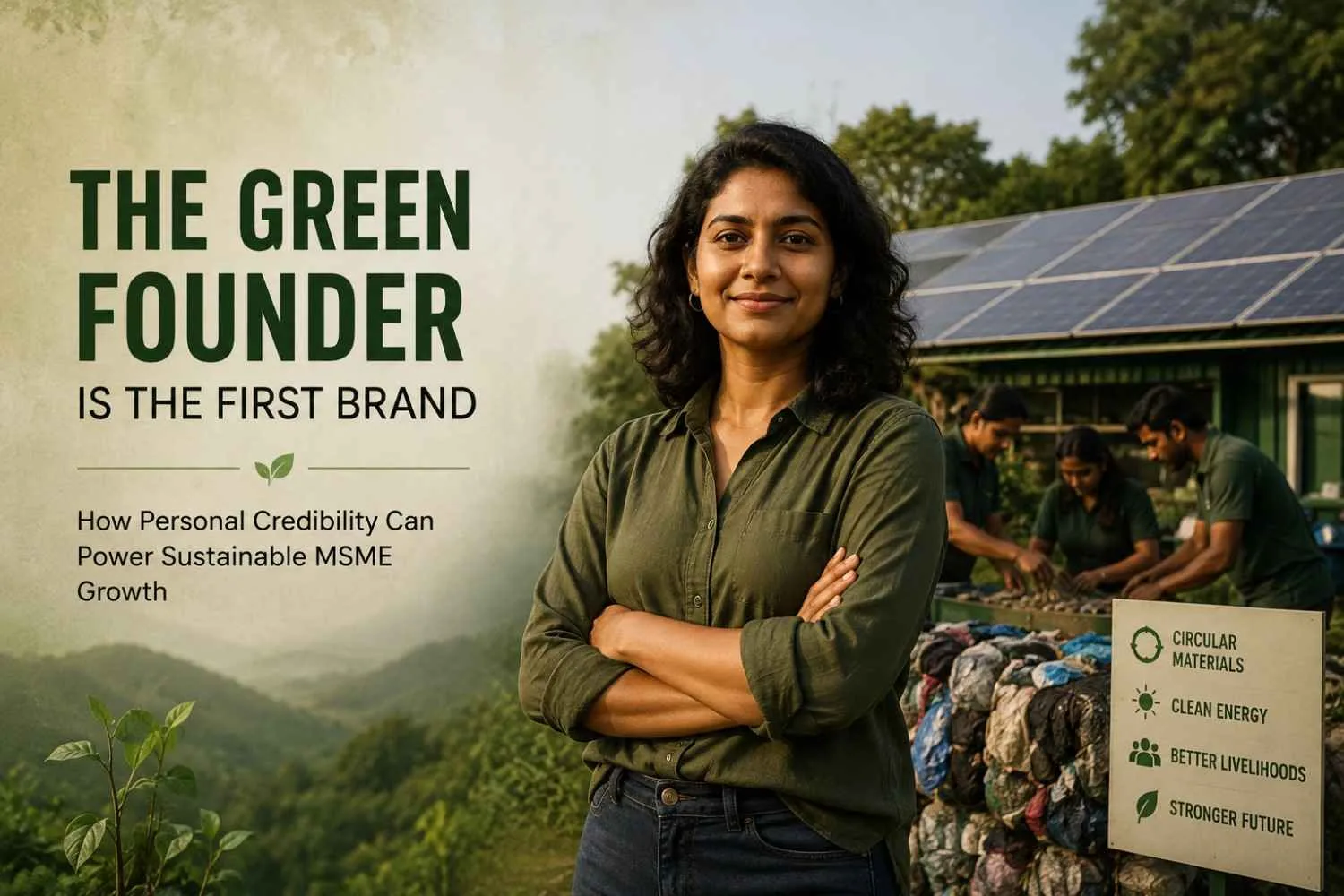
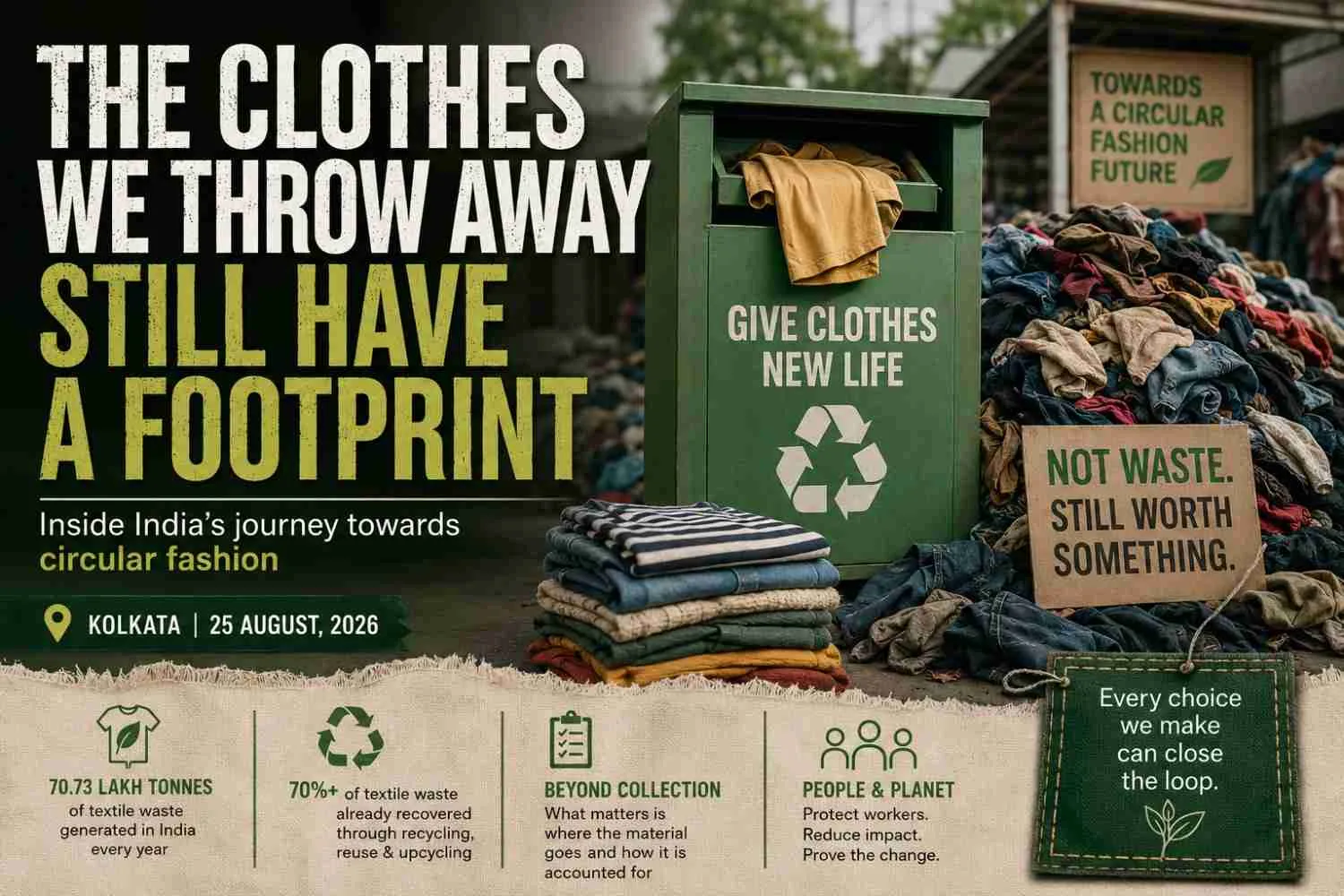
Kolkata | 25 August, 2026 India’s fashion industry is experimenting with textile recycling, cleaner production and circular retail models, but the real test is whether discarded clothes actually stay in the material loop - and whether companies can prove where they go. SummaryIndia generates about 70.73 lakh tonnes of textile waste every year, with around 58% coming from post-consumer disposal. At the same time, more than 70% of total textile waste is already being recovered through recycling, reuse, upcycling and downcycling, showing that India has an established recovery ecosystem rather than a complete absence of recycling. The bigger challenge is what happens to clothes after consumers stop wearing them. Garments can be reused, repaired, resold, downcycled or recycled, but blended and damaged textiles can be difficult to recover at their original value. Companies are responding through take-back programmes, recycled fibres, organic cotton sourcing, cleaner dyeing technologies and retail trade-ins. Yet a collection box or sustainability label does not automatically make fashion circular. The stronger test is whether companies can account for the material collected, show an audit trail for its destination, protect the workers handling discarded textiles and demonstrate measurable environmental gains against a clear baseline. Keywordstextile waste in India, circular fashion, textile recycling, sustainable fashion, textile waste management, fashion circular economy, textile circularity, post-consumer textile waste, textile waste recovery, textile recycling India, sustainable textiles, clothing waste, garment waste, textile upcycling, textile downcycling, recycled fibres, textile traceability, circular fashion supply chain, sustainable textile production, textile waste workers, informal waste workers, fashion sustainability, textile sustainability, circular textile economy, sustainable fashion India   What really happens to a T-shirt after we stop wearing it?For most of the consumers, a garment’s journey seems to end when it is placed in a donation bag, dropped into a collection box or thrown away. For the textile itself, however, that may be only the beginning.A discarded T-shirt can take several different paths. It may be worn again, repaired and resold, converted into wiping cloths or other products, or mechanically recycled into new fibres. But textiles that are heavily damaged, contaminated or made from difficult-to-separate blends can be much harder to recover and may ultimately end up as waste.This is where the idea of a circular fashion economy becomes more complex than simply collecting old clothes. India’s latest government mapping of the textile-waste value chain estimates that the country generates around 70.73 lakh tonnes of textile waste every year. About 42% is pre-consumer waste, generated during manufacturing, while the remaining 58% comes from post-consumer disposal. The study also estimates that more than 70% of total textile waste is already recovered through recycling, upcycling, downcycling or reuse. That changes the way the problem needs to be viewed. India is not starting from zero. A large share of textile waste is already finding its way back into the economy. The bigger challenge is what happens to the remaining material and whether textiles can be collected, sorted and recovered efficiently once they leave the formal manufacturing system. Collecting an old T-shirt does not, by itself, make fashion circular. True circularity begins when the garment has a clear path to its next use. FOLLOW THE FABRICConsumer discards garment↓Collection↓Sorting↓Reuse / Repair → Resale↓Recycling → New Fibre / Product↓Residual Waste → Documented Final Destination  The question: Does every kilogram collected have a documented destination? Can textile collection really make fashion circular?Post-consumer collection is becoming an increasingly visible part of sustainable-fashion efforts. Brands and retailers are encouraging consumers to return unwanted clothes through store collection points, take-back programmes and trade-in schemes. But collection numbers alone can give a misleading picture of circularity. Collecting 10 tonnes of used clothing may sound impressive, but the more important question is what happened to that material after collection.How much was reused? How much was recycled? How much was downcycled? How much was rejected? And where did the rejected material go? This is the difference between collection and actual material recovery.A credible circular-fashion programme therefore needs to maintain a clear mass balance - showing what entered the system, what was recovered, what was converted into another product and what ultimately remained as waste.India’s 2026 government assessment provides an important counterpoint. The country already has a substantial textile-recovery ecosystem, particularly for pre-consumer waste generated during manufacturing. High recovery rates in this segment show that parts of the domestic textile industry already have established systems for collecting and recovering material. The bigger challenge is what happens after a garment leaves the formal manufacturing system and enters the hands of consumers. That is where collection, sorting, logistics and end-market demand become critical to making post-consumer textiles genuinely circular. Is recycling always better than making new clothes?  Not necessarily. The environmental benefit of textile recycling depends on what material is being recycled, which technology is used and what the recovered fibre can replace. Cotton, polyester, nylon and blended fabrics behave differently during recycling. Mechanical recycling, for example, can shorten textile fibres and reduce the quality of the resulting material. More advanced recycling technologies may recover higher-quality fibres from difficult textiles, but they can also require greater investment, energy and specialised infrastructure. This creates an important competing view: Recycling is necessary, but recycling alone cannot solve the problem of overproduction and overconsumption. If brands continue producing large volumes of inexpensive clothing designed for short use, recycling systems may simply end up managing the waste created by a high-consumption model. That is why repair, reuse, resale and longer garment life need to be treated as equally important parts of the circular-fashion system. A garment that is worn for longer, repaired instead of replaced or resold to another consumer can delay the point at which recycling becomes necessary. The goal of circular fashion is therefore not simply to recycle more clothes. It is to keep garments and their materials in productive use for as long as possible. THE CIRCULARITY HIERARCHYLONGER USE↓REPAIR↓REUSE / RESALE↓RECYCLING↓DOWNCYCLING↓DISPOSALKeep the garment in use before breaking it back into material. Can fashion cut its water footprint before a garment even becomes waste?The environmental impact of clothing begins long before a garment reaches the end of its life. Processes such as dyeing and finishing during manufacturing can require significant amounts of water.This has led brands and technology companies to explore waterless and low-water dyeing technologies. Some emerging systems use alternatives such as supercritical carbon dioxide, while others use digital, foam-based or other processes designed to reduce conventional water consumption.The potential benefit is straightforward: using less water for the same production output can reduce pressure on freshwater resources while also lowering the volume of wastewater generated. But the technology still needs to pass an evidence test. A company should not simply state how many litres of water it saves per garment. It should explain what the saving is measured against and what the calculation includes.What exactly does the reported reduction cover? Is it limited to dyeing, or does it include finishing as well? Does the alternative process save water but consume more energy? Has it been proven at commercial scale? And how much has the company actually invested compared with what it originally announced? These questions matter because a technology can look highly efficient in a pilot project but deliver very different results when used across a large manufacturing operation. A water-saving technology becomes meaningful only when its environmental benefits can be demonstrated at commercial scale.Does organic cotton automatically make a garment sustainable?Organic cotton can be part of a lower-impact sourcing strategy, but the label alone cannot tell the complete sustainability story. What matters is how the cotton was produced, verified and traced through the supply chain. Companies need credible certification and traceability systems to establish whether suppliers are meeting the required environmental and production standards. There is also a crucial social question: Who is able to participate in this transition? Who are the farmers producing the cotton? What prices are they receiving? Can small producers afford certification? Who pays for compliance and verification? If sustainable sourcing requirements become too expensive or complicated, smaller farmers may find it harder to participate.Responsible sourcing therefore needs to look at both environmental performance and farmer inclusion. Certification can provide an important layer of verification, but it should be treated as a starting point for scrutiny rather than the final proof that a supply chain is sustainable.Can retail trade-ins actually make fashion more circular?Trade-in programmes are becoming another visible part of the circular-fashion model. Consumers return unwanted clothing to a retailer and receive a discount, store credit or another incentive towards a future purchase. The model can help solve one problem by giving retailers a way to bring used garments back into the system instead of allowing them to disappear into the waste stream. But there is also a potential contradiction. If a trade-in reward simply encourages consumers to buy another garment immediately, the programme could increase consumption rather than reduce it. A truly circular model would prioritise repair, resale and reuse for returned clothing, with recycling serving as the last option.The priority should be to keep the garment in use for as long as possible before breaking it down into fibre or treating it as waste.Who handles India’s discarded textiles?  India’s textile-recovery system cannot be understood without looking at the workers who already operate within it. Waste pickers, sorters, aggregators and small recycling units play an important role in collecting and recovering materials that formal systems may not reach. Yet much of this work remains invisible in corporate sustainability reporting. That raises an important CSR question: If companies want to build a circular fashion economy, what happens to the workers who are already recovering its materials? A responsible transition should consider fair wages, workplace safety, protective equipment, social-security access and stable incomes. Formalisation should not simply push informal workers out of the value chain. It should improve their working conditions, recognise their contribution and give them a more secure role in the circular economy. Organisations working with waste pickers and vulnerable communities, including Chintan and Goonj, can offer an important perspective on this issue. The worker’s voice matters because circularity cannot be considered fully sustainable if material recovery improves while the conditions of the people doing that work deteriorate.How can companies prove that their circularity claims are real?This is where the evidence test becomes the centre of the story. Saying that a company collected textiles, saved water, used organic cotton or launched a trade-in programme tells us what it did. The more important question is what difference those actions actually made.The more important question is what happened because of that activity.Companies should therefore disclose how much material was collected, how much was actually reused or recycled, what happened to rejected material, how much water was saved against a clear baseline, how much was invested and spent, who benefited and whether the programme continued after the initial funding or pilot period.The reporting boundary should also be clear. A garment collected is not necessarily a garment recycled. A garment recycled is not necessarily a garment returned to an equivalent use. And a sustainability claim is not meaningful unless the company can explain how the claimed benefit was calculated and what happened to the material afterwards. Circular fashion is ultimately not about making better claims about old clothes. It is about building a system in which materials, resources and livelihoods can be tracked from the beginning of the supply chain to what happens after the garment is no longer wanted. THE CIRCULAR FASHION EVIDENCE TEST  ClaimWhat should be proved?“We collected textiles”Total material collected and consumer/beneficiary denominator“We recycled them”Mass balance and material destination“We use recycled fibre”Fibre content and chain-of-custody evidence“We reduced water”Baseline, methodology and actual reduction“We use organic cotton”Certification and sourcing audit trail“We support waste workers”Wages, safety, income and benefit access“We invested in circularity”Budget versus actual expenditure“We reduced our footprint”Absolute and intensity results“Our programme is sustainable”Performance that continues over time This is the difference between a sustainability claim and a sustainability result. A percentage on its own does not tell the full story. Companies should clearly disclose what they measured, where they measured it, the period covered and how the improvement was calculated. A reported 30% reduction may sound significant, but the real questions are: 30% compared with what baseline? Across which facilities? Over what period? Did production increase or decrease? Was the saving measured in absolute terms or per garment? Without this context, sustainability figures can be difficult to verify or compare. Clear reporting boundaries and methodologies are therefore essential to show whether an environmental improvement represents a genuine change in performance. Can India turn textile waste into a resource without leaving its workers behind? India’s policy direction is also moving towards greater textile circularity. The Tex-Eco Initiative, announced in the Union Budget 2026–27, aims to promote globally competitive and environmentally sustainable textile and apparel manufacturing while helping the sector align with international sustainability standards and emerging green markets. Government efforts are also gradually focusing on textile-waste management, recycling technologies and value addition from discarded textiles.This creates an opportunity to move beyond isolated brand-led campaigns and build a wider circular textile system. But recycling cannot carry the entire burden. A genuinely circular apparel model would begin much earlier with durable products designed to last longer, followed by repair, reuse and resale before recycling becomes the final recovery option. That requires action across the entire value chain. Brands need to design garments that are easier to repair and recycle. Retailers need transparent take-back systems. Recyclers need reliable and traceable material flows. Governments need effective standards and enforcement. Consumers need clear information about garment durability, care and disposal. And there is one group that cannot be left out of this transition: the informal workers already collecting, sorting and recovering textile waste. They are not outside the circular economy. In many cases, they are already helping make it work. A truly sustainable textile system must therefore account not only for where the waste goes, but also who handles it, who earns from it and whether those livelihoods become safer and more secure as the system evolves.   THE REAL CIRCULAR-FASHION TESTDESIGN FOR LONGER USE↓REPAIR↓REUSE / RESALE↓COLLECT↓SORT↓RECYCLE↓TRACE THE MATERIAL↓MEASURE THE IMPACT   What should companies actually report?For CSR and corporate sustainability programmes, the most important question is not how many clothes were collected. It is what happened to those clothes afterwards, who handled them, who benefited and what environmental impact was actually avoided. A credible programme should report the total quantity of material collected, where it went and how much genuinely re-entered a productive material or product cycle. It should clearly distinguish between pre-consumer and post-consumer waste, disclose relevant certifications and audit trails, and explain how claims based on those certifications were verified. The people behind the system also need to be visible. When informal workers are involved in collecting, sorting or recycling textiles, companies should report their wages, working conditions, safety measures, access to social protection and how they are being brought into the formal circular economy. Financial reporting should be equally transparent: How much was budgeted? How much was actually spent? How much went towards collection, sorting, recycling, technology, worker protection and infrastructure? The reporting boundary must remain clear throughout. A kilogram collected is not automatically a kilogram recycled.A donated garment is not automatically a garment reused.A certified fibre is not automatically proof that the entire garment has a low environmental footprint.And a percentage reduction means little without a credible baseline and clearly defined methodology. Can fashion become circular without simply moving the waste problem somewhere else? That is the real test of India’s sustainable-fashion transition. India already has a significant textile-recovery ecosystem, with the latest government assessment indicating that more than 70% of textile waste is recovered through different pathways. But recovery alone does not equal circularity. The material still needs to be traced. Workers still need to be protected. Recycling processes still have their own environmental costs. Consumers still need to be encouraged to wear, repair, reuse and resell clothes for longer. And companies still need to demonstrate that their sustainability claims reflect what is actually happening on the ground. This is where the next phase of sustainable fashion will be decided. It will not be defined by how many collection bins a brand installs, how many take-back campaigns it runs or how many recycled garments appear in a catalogue. It will be defined by whether companies can follow a garment from the consumer’s wardrobe to its next useful life - and provide evidence for every major step along the way. Because a fashion system is not circular simply because it collects its waste. It becomes circular when materials stay in productive use, value reaches the people who make the system work, and environmental benefits can be measured and proven. That is the real standard India’s circular-fashion economy now needs to meet. Primary sources:  Ministry of Textiles — Mapping of Textile Waste Value Chain in India (2026)Covers the 70.73 lakh tonnes annual textile-waste estimate, 58% post-consumer / 42% pre-consumer split, recovery pathways, recycling technologies and post-consumer infrastructure gaps.Ministry of Textiles — Mapping of Textile Waste Value Chain in IndiaPress Information Bureau — Ministry of Textiles: Mapping of Textile Waste Value Chain in IndiaOfficial government release covering the report's headline findings, including 70.73 lakh tonnes of annual textile waste and more than 95% recovery of pre-consumer textile waste.PIB — Mapping of Textile Waste Value Chain in IndiaPress Information Bureau — Ministry of Textiles: Textile Recycling and Circular EconomyCovers the government's current textile-recycling and circular-economy initiatives, including the Tex-Eco Initiative.PIB — Textile Recycling and Circular EconomyPress Information Bureau — Ministry of Textiles: Innovative Textile Recycling TechnologiesCovers government support for textile-waste management, recycling, recycled fibres, new materials and value addition from discarded textiles under Tex-Eco.PIB — Innovative Textile Recycling TechnologiesPress Information Bureau — Environmentally Sustainable Production PracticesUseful for the article's cleaner-production, water/energy efficiency, hazardous-chemical reduction, organic textiles, natural dyeing and textile-waste management sections.PIB — Environmentally Sustainable Production PracticesCentral Pollution Control Board — Charter for Water Recycling and Pollution Prevention in Textile IndustriesPrimary regulatory material for the water-consumption, wastewater, chemical use and pollution-prevention angle.CPCB — Charter for Water Recycling and Pollution Prevention in Textile IndustriesPress Information Bureau — Textile Waste Innovation ChallengeDocuments the government's “What Is It Made Of?” Textile Waste Innovation Challenge and its focus on circularity, sustainable production and practical textile-waste solutions.PIB — Textile Waste Innovation ChallengePress Information Bureau — Union Budget 2026–27: Strengthening India's Textile Value ChainUseful for the wider policy context around Tex-Eco, sustainable manufacturing, textile modernisation and circularity.PIB — Union Budget 2026–27: Strengthening India's Textile Value ChainPress Information Bureau — Integrated Programme for the Textile SectorCovers the Budget's broader textile programme, including the Tex-Eco Initiative and sustainable textile manufacturing.PIB — Integrated Programme for the Textile SectorMinistry of Textiles — Textile Recovery Facility, Navi MumbaiParticularly useful for the newer collection, traceability and impact-measurement angle. In August 2026, the Ministry documented a proposed digital circular-textile infrastructure platform for collection, traceability and impact measurement.PIB — Textile Recovery Facility, Navi Mumbai ...Read more

24 Aug 2026

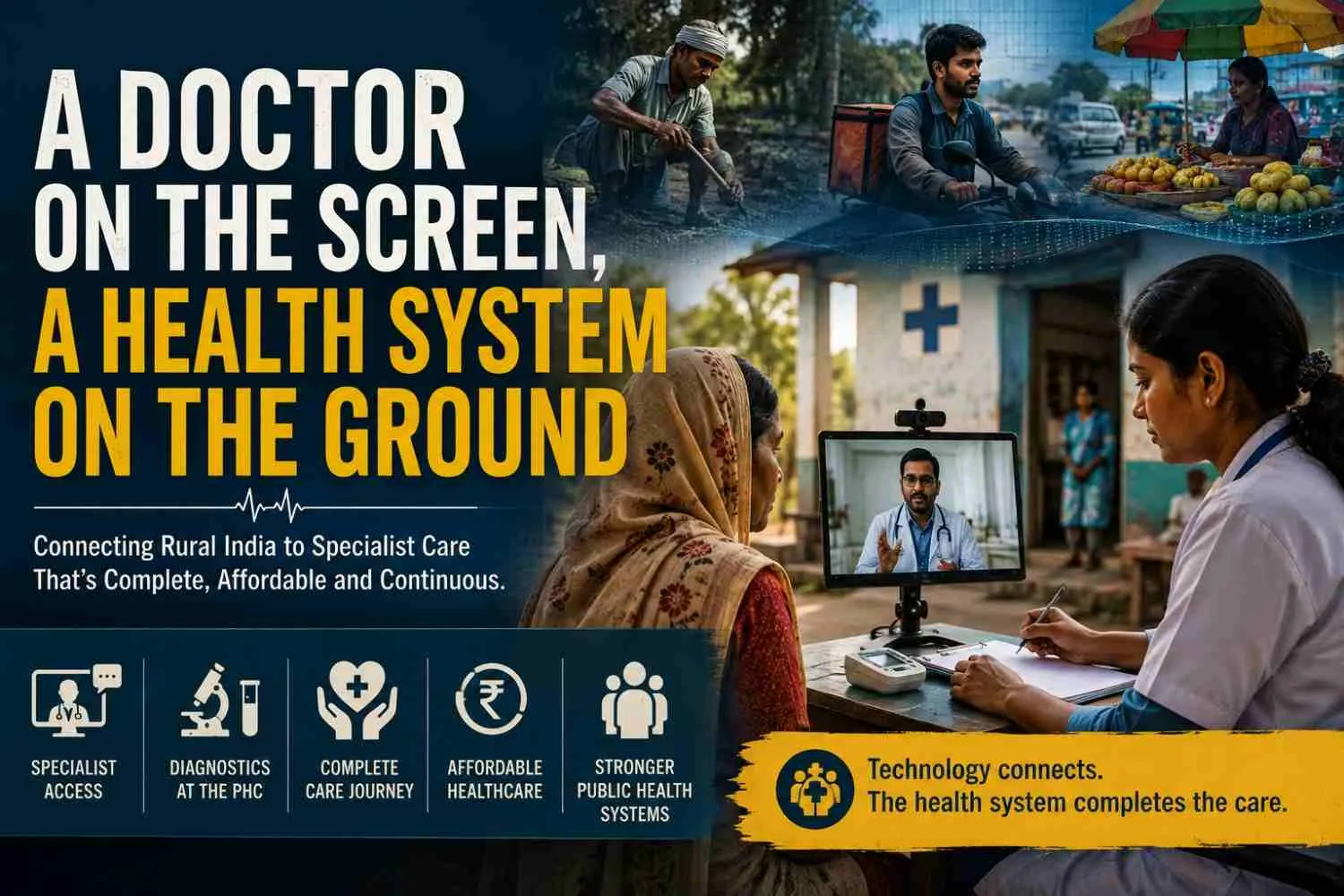
Kolkata |24 August, 2026  India’s telemedicine network is bringing specialist care closer to rural patients, but the real challenge is ensuring that a consultation leads to care that is complete, affordable and continuous. SummaryFor rural patients, seeing a specialist can mean a long journey, lost wages and repeated visits to a distant hospital. India’s telemedicine network is changing that equation by bringing specialist expertise closer to rural communities, while corporate partnerships are adding diagnostics, technology, mobile healthcare and specialist access to the mix. But a teleconsultation is only one part of the care journey. The real test is whether patients are diagnosed, treated and followed up without having to bear the same travel and financial burden. For CSR programmes, success also depends on whether public health facilities are strengthened, outcomes are measured against a clear baseline, money is actually spent as reported and systems continue functioning after corporate funding ends. KeywordsPhygital Healthcare, Rural Telemedicine, Digital Health India, eSanjeevani, Healthcare Access, Rural Healthcare, Primary Health Centres, Ayushman Arogya Mandirs, Digital Health Infrastructure, Teleconsultation, Diagnostics, Continuity of Care   Can a PHC become the gateway to a specialist hundreds of kilometres away? For many rural patients, the challenge is not simply finding healthcare. But is reaching the right doctor without travelling hundreds of kilometres, losing a day’s wages or making repeated trips to a distant hospital. India continues to face shortages and an uneven distribution of health professionals, particularly in rural and underserved areas, making specialist access a bigger challenge than simply counting the number of doctors available. Telemedicine can help change this equation by bringing specialist expertise closer to patients instead of requiring them to travel long distances for every consultation. India’s eSanjeevani platform has demonstrated the scale of this approach by connecting patients and health workers with doctors and specialists, including in rural and remote communities.But phygital healthcare cannot depend on a screen alone.The physical Primary Health Centre remains an important part of the care journey. A nurse or community health worker can examine the patient, record vital signs, conduct basic diagnostic tests, explain the specialist’s advice and help ensure that medicines, referrals and follow-up care are available. The technology can bring the specialist closer. But it is the local health system that turns a remote consultation into actual care. PHYGITAL CARE JOURNEY Village patient → Local PHC → Physical examination → Point-of-care diagnostics → Remote specialist → Treatment → Follow-up The screen connects the specialist. The PHC completes the care journey. What happens when telemedicine meets diagnostics? A specialist cannot always make a reliable diagnosis through a conversation alone. Basic diagnostic tests can provide the information needed to understand a patient’s condition and decide what treatment or referral is required. A blood-sugar or blood-pressure reading, pregnancy test, haemoglobin level or another point-of-care test can significantly change what happens after a teleconsultation. This makes diagnostics an important part of the phygital healthcare model, where digital specialist access is combined with physical healthcare services at the local level. NITI Aayog’s work across Aspirational Districts and Blocks includes healthcare interventions that bring together community outreach, frontline health workers, diagnostics and digital monitoring. The broader lesson is clear: technology works best when it is connected to the basic healthcare infrastructure patients can access locally. That means a teleconsultation should not end with a video call. It should connect to examination, diagnosis, medicines, referrals and follow-up care.Otherwise, a programme may be able to report thousands of consultations while leaving the more important question unanswered: Did those consultations actually lead to better care for patients? THE SCREEN IS ONLY ONE PART REMOTE SPECIALIST↓DIGITAL PLATFORM↓PHC / HEALTH WORKER↓DIAGNOSTICS + PHYSICAL EXAMINATION↓MEDICINES + REFERRAL↓FOLLOW-UP Technology connects the patient to expertise. Infrastructure turns that expertise into care. Can corporate partnerships strengthen the public health system? This is where corporate participation can become more than a funding exercise. Companies can bring technology, specialist networks, diagnostics, equipment, training and logistics that may help extend healthcare to communities that public facilities struggle to reach on their own.There are already examples of different approaches. Tata Trusts has worked with state governments on telehealth and mobile healthcare initiatives aimed at connecting underserved communities with doctors and specialist services. Apollo’s remote healthcare network offers another hybrid model. Its 2024–25 ESG report states that the network has delivered more than 16.5 million teleconsultations across 95 specialties, combining digital consultations with physical healthcare services. Meanwhile, Smile Foundation’s Smile on Wheels takes doctors, nurses, laboratory services and medicines directly to villages and other hard-to-reach communities through mobile medical units.These models also raise a bigger question for CSR: Should companies create separate healthcare systems of their own, or use their resources to strengthen the government facilities already serving these communities? The second approach could offer greater long-term value. Instead of creating parallel systems that may struggle to continue once funding ends, corporate partners can support existing PHCs with digital infrastructure, diagnostic equipment, specialist access, staff training and logistics, while keeping the public health system at the centre of care. The goal should not simply be to bring corporate healthcare to rural India. It should be to leave the rural healthcare system stronger than it was before the partnership began.WHO DOES WHAT? GOVERNMENT• PHCs• Health workers• Public health infrastructure• Referrals CORPORATES• Technology• Equipment• Diagnostics• Funding• Specialist networks NGOs / COMMUNITY GROUPS• Outreach• Awareness• Inclusion• Local access PATIENTS / COMMUNITIES• Care-seeking• Treatment• Follow-up• Feedback Can preventive healthcare produce a measurable social return? For CSR programmes, the focus needs to move beyond how many services were delivered to what actually changed for patients. Screening 10,000 people is an activity. Identifying patients with hypertension or diabetes, ensuring they begin treatment and helping them complete follow-up is an outcome. This distinction is particularly important when companies use technology to expand preventive healthcare. J-PAL South Asia has evaluated preventive-health interventions in India, including research on demand for hypertension screening and the impact of health camps on preventive-care investment. Its research also highlights an important limitation: technology and better monitoring systems do not automatically lead to better healthcare delivery. In Karnataka, for example, a biometric system successfully tracked the attendance of doctors at Primary Health Centres, but it did not improve attendance because the government struggled to enforce the incentives and penalties linked to the system.The lesson is relevant for corporate healthcare programmes too.A better dashboard does not automatically mean better healthcare.What matters is whether patients are being diagnosed earlier, starting treatment, completing follow-up and ultimately experiencing better health outcomes. The real measure of CSR is not the number of beneficiaries on a report, but the difference the programme makes to their lives. ACTIVITY VS OUTCOME 10,000 people reached↓7,500 screened↓2,100 diagnosed / referred↓1,600 started treatment↓1,200 completed follow-up Measure the care journey, not just the first contact. What do rural workers and migrant families need from these systems? Rural healthcare cannot be separated from the realities of work and income. For many people, accessing specialist care can mean more than a long journey. It can mean lost wages, travel costs, childcare difficulties and time away from work. A worker who has to travel to another town for a specialist consultation may lose a day’s earnings. Migrant workers may face additional barriers when their workplace and place of residence keep changing. Women may delay seeking medical care when travel, childcare responsibilities or the cost of treatment become difficult to manage. The Aajeevika Bureau’s work with migrant workers highlights how informal workers can face gaps in healthcare and social-security access, particularly when migration, low incomes and hazardous working conditions overlap. SEWA Bharat has similarly worked to improve women’s access to healthcare and social-security entitlements through community-based approaches. These experiences point to a simple principle:Healthcare technology should fit into people’s lives, rather than expect people to reorganise their lives around technology.That means rural healthcare systems also need to consider accessibility, language, affordability, mobility and physical access. These are particularly important for persons with disabilities, older people and workers who cannot easily travel. What should companies actually measure? This is where the evidence test becomes critical.Companies should report the full number of people covered, rather than using a single “beneficiaries reached” figure.If 10,000 people were enrolled, how many completed screening? How many were diagnosed? How many started treatments? And how many completed follow-ups? The baseline should be equally clear. If a programme claims that it reduced patients’ travel costs, companies should show what patients were spending before the intervention. If it claims to have improved access to specialist care, it should show how far patients previously had to travel and how that changed.The same applies to consultations. Reporting one lakh consultations does not show how many patients actually received the treatment, medicines or referrals they needed. Money also needs to be accounted for.How much was budgeted? How much was actually spent? How much went towards equipment, technology, staffing, diagnostics, training and maintenance? Companies should also report cost per outcome, rather than stopping at cost per consultation. For example, they could track the cost per completed treatment, cost per successfully screened patient or number of patients served per 1,000 people in the target population. Both absolute and intensity measures can provide a clearer picture. Absolute numbers show the scale of a programme, while intensity measures help show how efficiently resources are being used. Most importantly, the reporting boundary must remain clear.A consultation is not automatically a treated patient. A screening is not automatically a diagnosis. And a person reached by a programme cannot automatically be counted as someone whose health improved. The real evidence lies in what happened after the healthcare service was delivered. THE CORPORATE HEALTHCARE EVIDENCE SCORECARD MeasureWhat to askBeneficiary denominatorHow many people were actually covered?CompletionHow many completed screening, treatment or follow-up?OutcomeWhat changed for patients?BaselineWhat was the situation before the programme?CostHow much was actually spent?Cost per outcomeWhat did each successful outcome cost?IntensityWhat was achieved per 1,000 people or per ₹1 lakh?ContinuityWhat continued after CSR funding ended? Measure outcomes, not just activities. What happens when the CSR funding ends? This may be the most important test of any corporate healthcare partnership. A company can install telemedicine equipment, bring specialists into the system and fund diagnostics for three years. But rural healthcare needs to function long after a CSR funding cycle ends. If a programme cannot continue without corporate support, its long-term impact remains limited. So, who maintains the equipment once the funding ends? Who pays for internet connectivity? Who trains new health workers when trained staff leave? Who ensures medicines and diagnostic supplies remain available? Who manages patient referrals and follow-up? And who is responsible for the infrastructure and patient data? ESIC’s teleconsultation model offers a useful public-sector example. Its hub-and-spoke approach connects dispensaries with hospitals that act as specialist hubs, helping reduce patient travel while keeping local doctors involved in treatment and follow-up.The broader lesson is clear:Telemedicine creates lasting value when it becomes part of the regular healthcare system - not when it remains a temporary CSR project. For companies, that means the success of a partnership should be judged not only by what it delivers during the funding period, but also by what the health system is still able to deliver after the funding ends. WHAT SURVIVES AFTER CSR? DURING CSR FUNDING• Equipment purchased• Specialists connected• Staff trained• Patients reached ↓ FUNDING ENDS WHAT REMAINS?• Equipment maintained?• PHC staff still trained?• Specialist network still available?• Diagnostics still functioning?• Connectivity still paid for?• Patient follow-up still happening? CONTINUITY = REAL SYSTEM STRENGTH So, can corporate partnerships really bridge India’s rural specialist-care gap? Yes - but only if corporate healthcare moves beyond delivering services and starts strengthening the system that delivers them. India already has a network of Primary Health Centres, frontline health workers, digital platforms and an expanding telemedicine system. Corporate partnerships can add what many rural facilities struggle to access: specialists, diagnostics, technology, training, logistics and investment. But the real value of these partnerships will not be measured by how many teleconsultations were delivered or how many devices were installed. Nor should success be defined by the size of a CSR announcement.The stronger model is one in which corporate support makes the existing public health system more capable, more accessible and more sustainable. That means the evidence test has to go much further:Who was actually reached? Who completed care? How many patients received the treatment or referral they needed? What changed compared with the baseline? How much did patients save in travel, time or lost wages? What did the PHC gain? What did each successful outcome cost? And, most importantly, what continued after the corporate funding ended? These questions determine whether phygital healthcare is creating a lasting healthcare solution or simply another successful CSR activity on paper. For rural patients, however, the measure of success is much simpler.It means not having to travel hundreds of kilometres just to see the right specialist. It means being able to get basic diagnostics close to home, receive treatment without unnecessary delays and know that follow-up care will still be available.That is the real promise of phygital healthcare: bringing specialist expertise closer without leaving rural patients dependent on a screen - or on a company’s funding. The real CSR test is not whether a company can bring a doctor to a village once. It is whether its partnership can help build a rural healthcare system that continues to deliver care long after the company steps away. THE REAL TEST ACCESSCan patients reach specialist care?→ OUTCOMEDid their health actually improve?→ VALUEWas the intervention worth the cost?→ CONTINUITYDid the system survive after CSR funding? A consultation is an activity.Completed, affordable and continuous care is the outcome. The promise of phygital healthcare is not to replace the rural doctor with a screen. It is to bring specialist expertise, diagnostics and continuity of care closer to patients through the health system already in place. And ultimately, the strongest corporate partnership will not be the one that creates the biggest programme. It will be the one that leaves the rural health system more accessible, more capable and more sustainable - and less dependent on the corporate partner than it was before. Sources: Ministry of Health & Family Welfare — eSanjeevani National Telemedicine Service SourceMinistry of Health & Family Welfare — Telemedicine Services Guidelines SourceNational Health Authority — Ayushman Bharat Digital Mission (ABDM) SourceNational Health Authority — ABDM and Telemedicine FAQs SourceMinistry of Health & Family Welfare — Ayushman Arogya Mandirs, diagnostics and teleconsultation SourceMinistry of Health & Family Welfare — Annual Report 2024–25: eSanjeevani and digital health SourceMinistry of Health & Family Welfare / ABDM — eSanjeevani’s scale and assisted teleconsultation model Source Press Information Bureau — eSanjeevani integration with ABDM and continuity of care Source ...Read more

20 Aug 2026

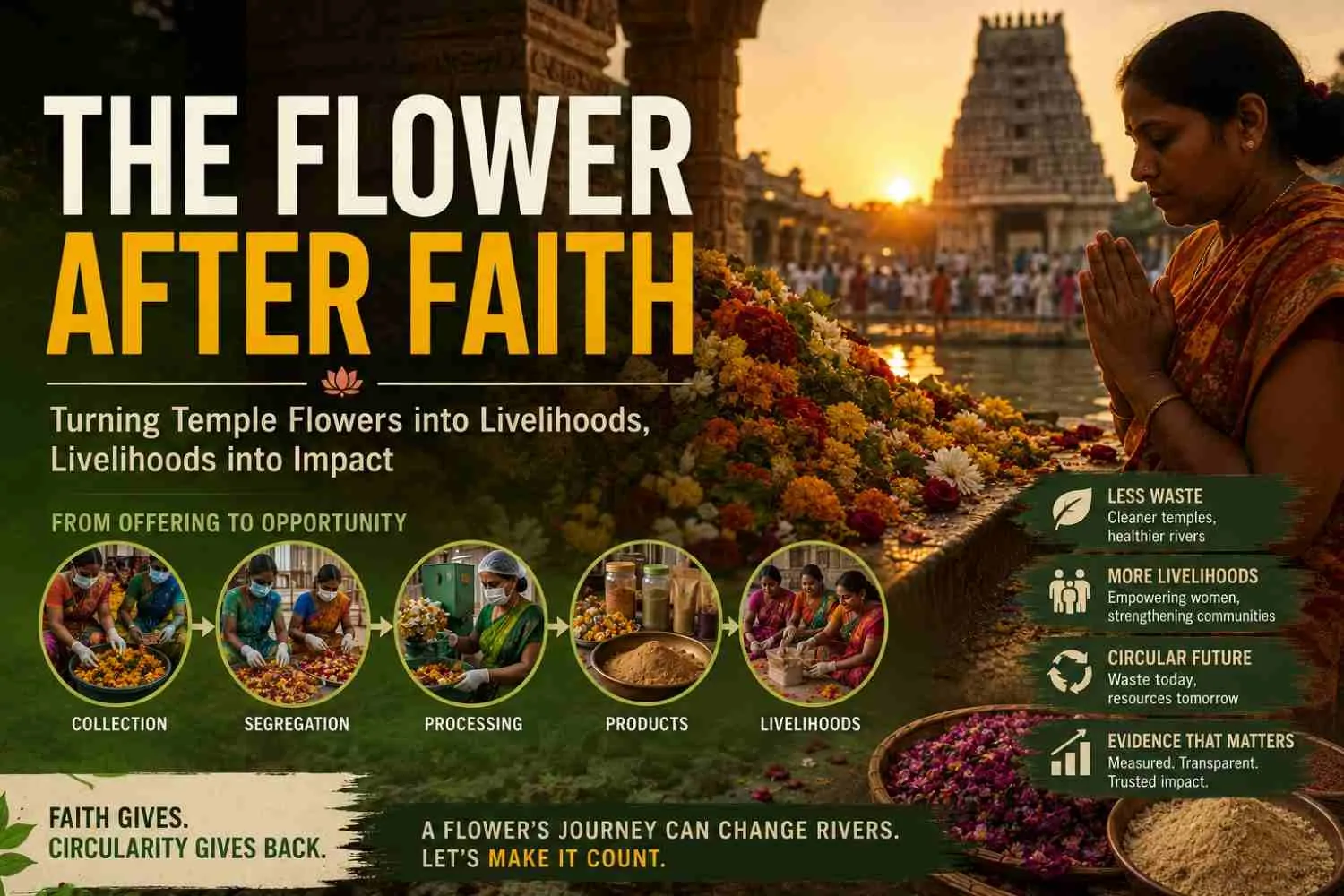
Kolkata | 20 August, 2026  Every day, millions of flowers are offered at India’s temples. Once the prayer is over, however, those flowers become part of a growing waste-management challenge. Across pilgrimage towns, municipalities, temple trusts, women’s self-help groups and private enterprises are trying to give them a second life - as incense, natural colours, compost, flower powder and other products. The bigger opportunity is not simply to prevent flowers from reaching rivers. It is to build a system where ritual waste creates reliable rural livelihoods, supports women and waste workers, and can prove every environmental claim it makes. SummaryTemple flowers can become more than biodegradable waste. They can become products, income and a reason to strengthen local circular economies. But a credible model must answer difficult questions. How much waste was actually collected? Where would it have ended up without the intervention? How much was successfully converted into usable products? Where did the remaining material go? How much did the workers earn? What did the project cost? And, most importantly, can the claimed reduction in river pollution be supported with clear evidence? The future of India’s temple economy may depend less on how many flowers are collected and more on whether the entire chain can be measured and trusted. KeywordsTemple Flower Waste, Floral Waste Management, Circular Economy India, Temple Waste Recycling, Women Self-Help Groups, Sustainable Livelihoods, Circular Economy, Waste to Wealth, River Pollution, Environmental Impact, CSR, Sustainable Communities When Devotion Becomes a Waste-Management ChallengeFor a devotee, flowers are an offering made with faith and devotion. But for temples that receive thousands of visitors every day, those offerings eventually become a large and regular source of organic waste. The problem arises when floral waste is mixed with other garbage or dumped in drains, open spaces and water bodies. Although flowers are biodegradable, that does not make them harmless when large quantities are disposed of, without proper treatment. When floral waste enters water bodies in large amounts, it can increase organic pollution, reduce dissolved oxygen and put additional stress on aquatic ecosystems. The scale of the waste can be significant. At Ujjain’s Mahakaleshwar Temple, which receives an estimated 75,000–100,000 visitors a day, around 5-6 tonnes of floral and other waste are generated daily. A processing plant with a reported capacity of three tonnes per day is part of the temple’s waste-management system, while women’s self-help groups also help turn collected floral waste into useful products. Tirupati offers another example. More than six tonnes of floral waste are reportedly handled every day, with around 150 women from self-help groups involved in recycling the material. These examples highlight an important reality: a major temple is not only a place of worship. It is also a large local ecosystem involving visitors, livelihoods, waste management and the environment. Temple floral-waste scale  Ujjain: 75,000–100,000 visitors/day | 5–6 tonnes floral + other waste/day | 3-tonne/day processing capacityTirupati: 6+ tonnes floral waste/day | 150 women involved in recyclingGulf of Mannar: 849 kg garland waste collected → 155 kg usable flower powder | 60 women involved Can Temple Flowers Become a Source of Livelihood?Floral waste is often discussed as an environmental problem, but it can also become an economic opportunity when it is collected, processed and reused properly. A model in the Gulf of Mannar Biosphere Reserve shows how this can work. Temples were used as collection points, with 15 collection drums installed across five temples, according to UNESCO. Between May and August 2025, around 849 kg of garland waste was collected and processed. After segregation and drying, 155 kg was converted into usable flower powder, while 60 women received training in processing, quality control, packaging, pricing and managing micro-enterprises. The numbers also show why waste processing cannot be measured simply by comparing what is collected with what is sold. 849 kg went into the process, while 155 kg became usable flower powder. That difference is expected. Flowers contain significant moisture, while temple offerings can also contain threads, plastic, synthetic decorations and other unwanted material. Some of the material is removed during sorting, while further losses can occur during drying and processing. Not all collected waste will necessarily be suitable for the final product. This is why credible circular-economy projects need a clear mass balance - tracking how much material enters the system, how much is recovered, how much is converted into products and how much ultimately remains as waste. Collected → segregated → processed → converted into product → sold/used → residual material → final destination. Without that chain, “X tonnes recycled” can hide what happened between collection and the final product.  Who Benefits When Temple Flowers Get a Second Life? The strongest potential of floral-waste circularity may lie in its ability to address waste while creating local livelihoods. Women’s self-help groups can take part in collection, segregation, drying, processing, packaging and sales. This can keep more of the economic value within pilgrimage centres and nearby communities, instead of sending the waste to a distant processing facility.But formalising the waste stream can also affect people who already depend on it for their livelihoods. Before a new floral-waste system is introduced, it is important to ask: Who was collecting, sorting or recovering value from this waste before the project began?Informal waste workers may already be earning an income from these activities. If a formal system replaces their work without including them, it could solve a waste-management problem while creating a new livelihood problem.A responsible circular-economy model should therefore examine whether informal workers are:included in the new system or offered alternative livelihoods;provided formal contracts or predictable payments; given appropriate protective equipment and training;included in decisions that affect their work;given opportunities to participate in higher-value stages of processing and sales; andactually, earning more or receiving a more stable income as a result.The same principle applies to women-led self-help groups. Saying that a project has “created 100 jobs” does not narrate the full story. It is important to know whether these are full-time or occasional jobs, how much workers are paid, who pays them and whether the income will continue after the pilot or CSR funding ends.A circular-economy project should create value not only from discarded flowers, but also for the people whose work keeps that system running.  VALUE-CHAIN FLOW   FLOWER OFFERED → TEMPLE COLLECTION → SEGREGATION → WOMEN/WASTE-WORKER NETWORK → PROCESSING → PRODUCT → MARKET → INCOMEWaste residue → documented destination  Can Temple Trusts Turn Faith-Based Giving into Environmental Action?India’s religious institutions already play a major role in supporting education, healthcare, food distribution, welfare and other community programmes. This gives temple trusts and endowment bodies an opportunity to extend that work into environmental management and circular-economy initiatives.Instead of leaving floral waste entirely to municipal systems, temple administrations could invest in the infrastructure needed to manage it properly, including: separate collection points;storage and transportation systems;processing equipment and facilities;training and protective equipment for workers;support for women-led enterprises;market development for products made from floral waste; andregular monitoring and independent audits. Tirumala Tirupati Devasthanams, for instance, already operates several social-service and charitable programmes through dedicated trusts and institutional structures. This established model of organised giving could be expanded to support environmental stewardship, responsible waste management and sustainable livelihood opportunities for local communities. But funding a circular-economy project is only the beginning. Temple trusts should also be able to demonstrate how that money is being used and what it is achieving. Capital expenditure, operating costs, worker payments, equipment purchases and actual programme spending should be clearly documented. A large budget announcement does not necessarily mean the money has been spent. A large processing facility does not automatically mean the system is functioning. And a finished product on a shelf does not prove that the wider floral-waste stream is being managed responsibly. The real measure of a temple’s circular-economy investment is not how much it announces or builds, but how effectively it turns waste into environmental and social value. Can Private Companies Help Take Temple-Waste Circularity to Scale?Taking temple floral-waste circularity to a larger scale will likely require more than temple trusts and municipal bodies. Private companies can bring the technology, logistics, packaging, market access, training and investment needed to build a more efficient system. Different industries can contribute in different ways. FMCG companies could support product development and distribution, while packaging companies could help create lower-impact packaging for products made from floral waste. Recyclers and producer-responsibility organisations could bring expertise in collection, traceability and material management. Companies in sectors such as automobiles, electronics and batteries could also support floral-waste initiatives through CSR funding, livelihood programmes and wider circular-economy partnerships. Businesses involved in repair and reuse can bring another useful lesson: materials retain greater value when they are kept in productive use instead of being discarded. But corporate participation should not turn floral-waste management into another branding exercise.If a company supports such a project through CSR, there should be clear answers to basic questions: How much money was committed? How much was actually spent? What was built? Who benefited? What results were achieved? And what continued after the funding ended? That transparency is what separates a CSR announcement from a functioning programme that delivers lasting environmental and social impact. Who Is Responsible for Making Temple-Waste Management Work?Temple floral waste does not exist separately from the wider urban waste-management system. In pilgrimage towns, municipal corporations are responsible for local waste collection, sanitation and supporting infrastructure. That makes coordination with temple administrations essential. Running two separate waste systems in the same town can create gaps, duplication and confusion over responsibility. The regulatory framework is equally important. The Central Pollution Control Board (CPCB) and State Pollution Control Boards play a role in pollution monitoring and environmental compliance, while the Ministry of Environment, Forest and Climate Change (MoEFCC) provides the broader policy framework. BIS may be relevant where standards apply to particular products or processes, while the Central Consumer Protection Authority (CCPA) has a role in addressing misleading environmental claims. This becomes especially important as circular-economy projects use environmental benefits as part of their public messaging. India’s 2024 Guidelines for Prevention and Regulation of Greenwashing and Misleading Environmental Claims require environmental claims to be truthful, clear and supported by evidence. Floral-waste projects should meet the same standard. If a project claims to have “saved a river,” the crucial question is whether that claim can be supported by clear, verifiable evidence. Can a Floral-Waste Project Prove Its Environmental Impact?Collecting waste does not automatically tell us how much pollution has been prevented. Suppose a project collects 1,000 kg of flowers. It cannot simply claim that 1,000 kg of waste was diverted from a river. To make that claim, the project needs to establish where that waste would have gone without the intervention. Was it entering a river or other water body? Was it being sent to a landfill? Was it already being composted? Was it being collected separately?The environmental benefit depends on the answer. A credible project should therefore report at least four things: Waste collected: How much floral waste entered the programme?Waste diverted: How much was demonstrably prevented from its documented previous disposal route?Product output: How much was converted into a usable product?Residual waste: Where did the remaining material go? The scale of the project should also be taken into account. Reporting both absolute and intensity-based results can provide a clearer picture.For example: Absolute: 10 tonnes of floral waste diverted in one year. Intensity: 10 kg of floral waste diverted per 10,000 visitors. The second measure can make comparisons between temples of very different sizes more meaningful. Is the Final Product Really the Measure of Circularity?Not necessarily.It is easy to focus on the visible end products - incense sticks, soaps, colours, compost, paper or decorative items made from flowers. But these products represent only one part of the circular-economy process.The system begins with segregation and collection and ends only when the material, money and people involved can be accounted for.That means asking: Material: Where did the collected flowers go?Money: How much was spent and how much revenue was generated?People: Who did the work, who benefited and was anyone’s existing livelihood affected?Environment: What pollution or waste was actually avoided?Market: Were the products actually sold and used, or simply produced?Longevity: Did the model continue after the initial grant, CSR funding or pilot ended?Organisations working on waste management, informal labour and environmental justice - including groups such as Chintan, Toxics Link, Waste Ventures India and Goonj - can bring an important perspective here: a circular system should not only change where waste goes; it should also improve the conditions and opportunities of the people handling it. What Would a Truly Circular Temple-Waste System Look Like?A genuinely circular temple economy would begin before the flower becomes waste.Temples would have dedicated collection systems and ensure that plastic, thread and other contaminants do not enter the floral-waste stream. Municipalities would integrate these systems into local waste-management plans. Temple trusts could support infrastructure, worker training and livelihood development. Women’s self-help groups and existing waste workers could participate across the value chain, rather than being restricted to the lowest-paid collection work. Private companies could contribute technology, logistics, packaging and market access. NGOs and waste-sector organisations could help monitor worker safety, inclusion and environmental outcomes. Regulators could ensure that environmental claims are backed by evidence. The final test is straightforward: Can the project trace the flower from the moment it is offered to its final destination? If it can, that flower becomes more than waste. It can become a product, a source of income, an opportunity for local enterprise and a measurable part of pollution prevention.But if a project cannot show where the waste went, how much became a usable product, how much workers earned, what the system actually cost or how its environmental claims were calculated, then “circularity” risks becoming little more than a label.India does not have to choose between faith and sustainability. It can build systems where faith supports environmental stewardship, environmental action creates local livelihoods and every claimed impact is supported by credible evidence. A flower offered at a shrine should not have to end its journey in a polluted river.But making that journey truly circular requires more than collecting the flowers - it requires tracking their journey and proving what happens to them at every stage.   THE CIRCULARITY TEST” SCORECARD  What a project claimWhat readers should ask“X tonnes recycled”How much was actually collected, processed and converted?“River pollution avoided”Where would the waste have gone without the project?“Women employed”How many women, doing what work, for how much income?“Waste diverted”What was the baseline disposal route?“Circular product”Where did processing residues go?“₹X crore invested”How much was actually spent and on what?“Sustainable”What evidence supports the environmental claim? Before You Call It Circular, Follow the Flower.  “849 KG → 155 KG”Use the Gulf of Mannar case as a simple mass-balance graphic:849 KG GARLAND WASTE↓SEGREGATION + DRYING + PROCESSING↓155 KG USABLE FLOWER POWDER Side panel: 60 women involved15 collection drums5 templesMay - August 2025 “Collected material ≠ final product.”   EDITORIAL EVIDENCE BOX:  For every floral-waste project studied, the reporting checklist should be:  Collection recordsWeighing/mass-balance recordsProcessing capacity vs actual throughputFinal-product quantityResidual-material destinationBaseline disposal routePollution or environmental baselineWorker numbers and actual incomeWorker safety provisionsCSR/temple/municipal budget and actual expenditureSales/market evidenceAudit or certification trailClear reporting boundaryAbsolute and intensity results  Primary sources:  PIB / Ministry of Housing & Urban Affairs — Floral Waste is boosting circularity in economy — Ujjain, Tirupati, temple trusts, SHGs, processing capacity and employment. PIB sourceUNESCO — Advancing Circular Economy and Inclusive Waste Management in the temples of Gulf of Mannar Biosphere Reserve — 5 temples, 15 collection drums, 849 kg collected/processed, 155 kg flower powder, 60 women and processing workflow. UNESCO sourcePIB — Flower Power: India’s Temple Waste Transformation — Ujjain, Siddhivinayak, Phool, HolyWaste and Aaruhi case studies. PIB featureSwachh Bharat Mission Urban — Petals to Profit — official government resource on temple floral-waste recycling and circular-economy models. Swachh Bharat Mission sourceCCPA — Guidelines/Guidance on Prevention and Regulation of Greenwashing, 2024 — substantiation, verifiable evidence and accuracy of environmental claims. CCPA sourceTirumala Tirupati Devasthanams / Andhra Pradesh Endowments material — TTD funds, donations, offerings and permitted social/institutional uses of funds. TTD Endowment Act sourceUNESCO — Phool: A Story of Change — floral waste, river-pollution context, recycling into incense and employment of marginalised women. UNESCO / Phool sourceKolkata Municipal Corporation project — 2026 — temple flowers being collected for incense and herbal aabir, with an initial employment target for 15 women. The available report quotes a senior state municipal-affairs official, so I would treat this as reported municipal information, rather than an independently audited source. Kolkata floral-waste project report ...Read more

19 Aug 2026

Kolkata|19 August, 2026 India’s tourism economy is expanding across its mountains, coasts and biodiversity-rich landscapes, but fragile destinations are reaching the limits of what they can absorb. The next test for responsible tourism is whether growth can protect the ecosystems and communities that make these places worth visiting. SummaryTourism is creating valuable economic opportunities for communities across India’s Himalayan and coastal regions. But the rapid rise in visitors is also putting growing pressure on water, waste management, natural habitats and local infrastructure. A recent carrying-capacity study of Uttarakhand’s Char Dham shows why setting clear limits on tourist numbers is becoming important. At the same time, government policy is gradually promoting carrying-capacity assessments, responsible tourism and community-based models such as homestays. Waste-management partnerships and village-led tourism offer possible alternatives to high-volume tourism, but their success depends on what happens after the initial intervention. For CSR and private tourism investment, the real test is whether ecosystems remain protected, communities retain a meaningful share of the benefits and projects continue to work after the funding cycle ends. KeywordsSustainable Tourism, Responsible Tourism, India Tourism, Fragile Ecosystems, Tourism Carrying Capacity, Himalayan Tourism, Rural Tourism, Community-Based Tourism, Eco-Tourism, Sustainable Travel How Much Tourism Is Too Much for a Fragile Destination?For popular destinations, more tourists mean more hotels, restaurants, transport services, jobs and income for local communities. But fragile destinations cannot absorb unlimited growth. Mountain region often has limited land, vulnerable water sources, difficult terrain, waste-management challenges and sensitive ecosystems. Coastal areas face their own pressures, including erosion, cyclones, mangroves, wetlands, nesting sites and changing water conditions. The growing pressure is already visible in the Himalayas. A recent study found that visitor numbers to Uttarakhand’s Char Dham reached a record 5 million in 2023.Using geoscientific, biological, socioeconomic and cultural indicators, the study estimated sustainable daily visitor limits of 15,778 for Badrinath, 13,111 for Kedarnath, 8,178 for Gangotri and 6,160 for Yamunotri. These figures are more than tourism statistics. They represent an effort to understand how much pressure a destination can take before tourism begins to damage the natural resources and local communities that support it. The ability to accommodate more visitors is not simply a question of physical space. Water resources, waste systems, forests and local communities may be under significant pressure. Can Tourism Limits Work on the Ground?India is gradually recognising that tourism growth needs to be planned at the destination level, rather than simply focusing on attracting more visitors. The Ministry of Tourism’s National Strategy for Sustainable Tourism calls for better visitor management, physical site planning and greater community participation in tourism decisions. The government is also encouraging states and Union Territories to assess carrying capacity when planning new tourism projects. But the real challenge begins once these assessments are completed. A carrying-capacity report has little value if visitor numbers continue to exceed the limits it identifies. At the same time, restricting tourist numbers is not a simple solution. Fewer visitors may reduce pressure on water, waste systems and fragile habitats, but it can also affect hotels, transport operators, guides, vendors and other local businesses that depend on tourism income. This creates an important policy challenge: how can destinations protect their environment without cutting local communities out of the tourism economy? The answer could lie in better demand management. Timed entry, seasonal visitor limits, promoting less-crowded destinations and strengthening local businesses can help spread tourism more evenly. Instead of concentrating visitors and income in a few high-footfall locations, destinations can create opportunities for more communities to benefit while reducing pressure on fragile hotspots. Absolutely. The ideas are strong, but the language can be made more reader-friendly, smoother and less repetitive, while still keeping the article professional. I’d also simplify the headers so they feel more natural and engaging. Managing Tourism’s Waste, Not Just Measuring ItWaste is often one of the most visible signs of tourism pressure. In mountain regions, poorly managed waste can find its way into water sources, attract animals and affect both wildlife and local residents. In coastal areas, plastic and other waste can pile up along beaches, wetlands and marine ecosystems. This makes waste management an important area for collaboration between travel companies, local authorities and community organisations. But simply collecting waste is not enough. If a tourism company reports collecting hundreds of tonnes of waste, it is important to ask: How much was segregated? How much was recycled or composted? How much ended up in landfills? Who managed the system? And what happened after the CSR funding ended? A more meaningful approach would also measure waste per visitor. This helps destinations understand whether their environmental impact is actually decreasing as tourist numbers increase. The numbers need to be viewed in context. Higher waste collection may simply reflect a rise in tourist arrivals, rather than an improvement in waste management.  Can Communities Lead Tourism?One way to make tourism more inclusive is to spread its economic benefits beyond large hotels and commercial operators. Homestays and community-based tourism allow local households to earn directly from visitors while keeping accommodation smaller and closer to existing communities. Government policy is supporting this model. A 2026 rural-homestay initiative under Swadesh Darshan includes plans for 1,000 homestays in tribal areas, along with financial support for village-level needs, construction and renovation, as well as technical training for homestay owners. Ladakh also launched a Holistic Homestay Support Framework in March 2026, aimed at developing village-led tourism enterprises with a focus on quality, preparedness and sustainability. These efforts point to a broader idea: tourism growth does not always have to depend on large-scale infrastructure. A well-managed homestay can turn an existing household asset into a source of income while giving visitors a more direct experience of local culture. But homestays are not automatically sustainable. A 2026 study of Himalayan homestays in Kalimpong found that their sustainability depends on factors such as infrastructure, accessibility, social conditions and environmental performance. It also highlighted how poorly planned tourism can lead to waste accumulation, environmental damage and greater pressure on local resources. Community-based tourism, too, must operate within the limits of what a destination can sustainably support.   Who Really Benefits When Tourism Grows?For local communities, the real question is not how many tourists a destination attracts, but whether tourism creates stable local incomes without making everyday life more difficult for residents. In Himalayan villages, residents can earn through homestays, guiding, transport and food services. But alongside these economic benefits, communities may also face more waste, greater demands on local water resources and changes to land use.That is why community participation cannot stop at creating jobs. Who owns the land? Who controls tourism development? Who receives and shares the revenue? Who has the authority to decide where infrastructure is built? And do local communities have a meaningful voice when development puts their resources at risk? These questions are particularly relevant in regions where forests, grazing lands and other natural resources are managed through customary systems and community institutions. A stronger community-based tourism model therefore gives residents a meaningful role in decision-making, ownership and sharing of benefits, rather than treating them only as service providers. Recent policy thinking on Himalayan tourism has also emphasised community participation, local workforce development and stronger connections between tourism, conservation and local businesses. What Does Real Community Consent Look Like? Community consent should mean more than simply holding a consultation meeting. When a project affects forests, coastal areas or resources used by local communities, companies should clearly record who was consulted, what concerns were raised and whether those concerns influenced the final plans. For example, if a proposed resort is moved away from a sensitive forest after residents and environmental assessments identify the area as important, that shows avoidance. If local residents receive a share of tourism revenue or own a stake in the business, that is benefit sharing. But if a project moves ahead despite community objections, without showing how environmental and livelihood concerns were addressed, it becomes difficult to call the project genuinely “community-based.” That is why independent community interviews are important. The people living in the destination should be able to speak freely about both the benefits and the costs of tourism, without their responses being shaped by project management.  How Green Is an “Eco-Resort” Really? Certification can help set common standards for sustainable tourism. But having a certificate should not be treated as proof that a project is environmentally responsible. India’s tourism sector is promoting sustainable practices through initiatives such as Travel for LiFE and sustainability criteria for tourism businesses gradually. However, a resort can install solar panels, reduce plastic use and market itself as “eco-friendly” while still consuming large amounts of groundwater, being built on sensitive land or producing more waste than the local system can manage. The real test lies in the evidence. Ask: Was the local ecosystem assessed before construction began? Were sensitive habitats identified and avoided? How much water does the property use per guest? How much waste does it generate per guest? Were local communities meaningfully consulted? How many employees and suppliers are from the local area? And perhaps most importantly: Are these indicators being tracked year after year? A certification may confirm that a resort meets sustainability standards when it is awarded, but long-term environmental performance requires continued monitoring.   What Makes Tourism Regenerative?  THE RESPONSIBLE TOURISM EVIDENCE TEST  Ecological Baseline↓Avoid Sensitive Habitat↓Community Consent & Tenure↓Benefit Sharing↓Waste & Water Performance↓Multi-Year Habitat Monitoring↓Actual CSR Spend & Long-Term Continuity  CSR-funded projects should be judged by more than the numbers announced. Companies should disclose the original budget, actual expenditure and scope of their reporting. If ₹5 crore is announced but only ₹2 crore is spent, the gap deserves explanation. Likewise, a waste-management initiative cannot be considered a lasting success if it works only while CSR funding is available and disappears once the funding ends. For habitat restoration, the number of saplings planted is only a starting point. What matters more is how many survive and continue to grow three or five years later. The same principle applies to community tourism. Counting homestays is useful, but tracking how many remain active, how much income they generate and how much of that income reaches local households gives a far better measure of impact. Can Tourism Grow Without Consuming the Destination Itself? India does not have to choose between tourism and conservation. But it does have to decide what kind of tourism it wants to build and what it is willing to protect along the way. Tourism can create jobs, support local businesses and bring valuable income to communities. But when growth comes without limits, the same industry can put pressure on water resources, waste systems, habitats, infrastructure and the people who call these destinations home. A more responsible approach begins by recognising that growth cannot be measured by visitor numbers alone. It means managing tourist flows, spreading demand beyond overcrowded hotspots, strengthening local businesses, involving communities in decisions and building infrastructure that reflects the ecological limits of each destination. Homestays can help keep tourism income within communities. Waste-management partnerships can reduce the environmental burden of visitors. Carrying-capacity assessments can help establish clear limits. Certification can set standards for more responsible operations. But none of these measures is a guarantee of sustainability on its own. The real test comes years later. Is the destination healthier? Are its natural resources better protected? Are local communities earning more without bearing a greater burden? And are the systems created through tourism still working after the initial funding, publicity or project period has ended? For companies, this means measuring not just what was built, funded or promised, but what continues to deliver results. For communities, it means having a genuine voice in decisions, a meaningful share of the benefits and a say in how their resources are used. For governments, it means turning carrying-capacity assessments into clear and enforceable limits, rather than leaving them as recommendations on paper. A fragile mountain, forest or coastline cannot be treated as an endlessly expandable tourism asset. Its natural resources are not infinite, and neither is its ability to absorb the pressure of visitors. The destination is the asset. And if tourism damages the ecosystem, exhausts the resources and weakens the livelihoods that make a place worth visiting in the first place, the industry is not simply harming the destination - it is undermining its own future. That is why regenerative tourism must ask a different question. Not how many more tourists can this destination accommodate? but: What will still be here, thriving and protected, long after the tourists have gone?   Sources:  Ministry of Tourism, Government of India — National Strategy for Sustainable Tourism (https://tourism.gov.in/index.php/whats-new/national-strategy-sustainable-tourism) (Tourism India)Ministry of Tourism, Government of India — National Strategy and Roadmap for Development of Rural Tourism (https://tourism.gov.in/sites/default/files/2026-02/National%20Strategy%20and%20Roadmap%20for%20Development%20of%20Rural%20Tourism.pdf) (Tourism India)PIB / Ministry of Tourism — Development of 1,000 Tribal Homestays under PM-JUGA (https://www.pib.gov.in/PressReleasePage.aspx?PRID=2212575) (Press Information Bureau)UT Ladakh Administration — Holistic Homestay Support Framework, March 2026 (https://ladakh.gov.in/secretary-tourism-launches-holistic-homestay-support-framework/) (Ladakh Government)Scientific study — Carrying capacity and strategic planning for sustainable tourism practices in the Char Dham, Uttarakhand (https://pmc.ncbi.nlm.nih.gov/articles/PMC12534453/) (PubMed Central (PMC))PubMed — Char Dham carrying-capacity study (https://pubmed.ncbi.nlm.nih.gov/41107367/) (PubMed)Scientific study — Sustainable homestay tourism in the Himalayas: A multicriteria evaluation approach (Kalimpong) (https://www.sciencedirect.com/science/article/abs/pii/S2211464525002568) (ScienceDirect)Ministry of Tourism — Travel for LiFE (https://nidhi.tourism.gov.in/home/page/travel-for-life) (NIDHI) ...Read more

18 Aug 2026

Kolkata| 18 August, 2026  As renewable energy, electric mobility and sustainable agriculture create new livelihood opportunities, the real test for CSR is whether women gain lasting access to skills, decent wages, finance and leadership - not just training certificates. SummaryIndia’s green transition is opening opportunities across solar energy, electric mobility, sustainable agriculture and other emerging sectors. Yet women remain underrepresented in many technical clean-energy jobs. A 2026 CEEW-NRDC analysis found that women account for only 11% of the workforce in India’s solar and wind deployment and manufacturing sectors, while more than half of the women working in these sectors are in non-technical roles. At the same time, India’s clean-energy ambitions could create more than 44 lakh full-time-equivalent jobs. The opportunity is therefore significant, but access remains uneven. CSR can help women enter technical occupations and build green enterprises by combining training with employment, finance, market access, safety and social protection. Its success, however, should be measured by wages, retention, benefits and income growth rather than the number of women trained alone. Keywords: Women in Green Economy, Green Jobs, Women in Renewable Energy, Green Skills, Women’s Employment, CSR, Clean Energy, Women Entrepreneurs, Sustainable Agriculture, EV Jobs, Gender Equality Can Women Become a Key Workforce in India’s Green Transition?India’s green economy is opening up job opportunities in areas that were once seen as highly technical or largely male-dominated. Solar installation and maintenance, electric-vehicle servicing, battery management, climate-resilient agriculture, waste management and energy-efficient construction are creating new career possibilities for women, including jobs with potential for long-term income and growth. But women are still significantly underrepresented in these roles. The latest CEEW-NRDC analysis shows that women account for only 11% of the workforce across solar and wind deployment and manufacturing. Their representation is highest in rooftop solar, at 15%, while wind manufacturing has only around 6% women workers. More than half of the women employed across the clean-energy sectors studied are still working in non-technical roles such as administration, accounting and human resources. This raises an important question for companies supporting green CSR and skilling programmes: Are they actually preparing women for technical careers, or are they mainly directing them towards support roles? India’s clean-energy targets could generate more than 44 lakh full-time-equivalent jobs. If women remain largely excluded from technical positions, a significant share of this employment opportunity could remain out of reach for them. Where Is the Missing Link?India already has programmes aimed at building a skilled renewable-energy workforce. The government’s Suryamitra programme, for instance, trains solar photovoltaic technicians in installation, operation and maintenance, with more than 51,000 Suryamitras trained by the end of 2022. But completing a training programme does not mean automatically securing a job. A woman may earn a technical certificate and still struggle to find employment because of limited transport to project sites, lack of equipment, workplace barriers or the challenge of balancing paid work with unpaid care responsibilities. This is where CSR programmes need to rethink how they measure success. Reporting that 1,000 women completed a training course shows the reach of a programme, but it does not show whether the training improved their livelihoods or not. The more meaningful questions are: How many women found jobs? How much did they earn? How many remained employed after six or 12 months? How many moved into technical roles? How many received social-security benefits? And how many were able to progress in their careers? The focus therefore needs to shift from how many women were trained to how many women are earning, staying employed and moving forward in the green economy.Can Women Turn Green Skills into Real Jobs? Women are already entering technical and clean-energy roles, showing that green-skills training can create real employment opportunities when it is linked to actual jobs and local demand. Government programmes have documented women receiving training in solar installation and maintenance, while other clean-energy initiatives are helping women from communities whose traditional livelihoods are changing to access new opportunities in the renewable-energy sector.The key lesson is clear: training creates greater impact when it is designed around the skills and jobs that are actually in demand in the local economy. For example, A CSR programme in a region experiencing rapid growth in solar installations could equip women with skills in installation, maintenance and after-sales services, helping them access emerging employment opportunities in the sector. Near an electric-mobility hub, training could focus on EV diagnostics, battery maintenance and charging infrastructure. The same approach can work in agriculture. Women farmers could be trained in climate-resilient farming, efficient irrigation, solar-powered agricultural equipment, soil management, livestock services and value-chain activities. The goal should not be to simply add more people to the list of training certificate holders. Instead, it should be to create sustainable local green livelihoods that provide a steady source of income and remain viable even after CSR funding ends. Can Green Skills Help Women Build Their Own Businesses? A job is not the only way women can participate in the green economy. For many, entrepreneurship could offer a more flexible and sustainable route to earning a livelihood. A woman trained in solar maintenance could become a local service provider. A group of women could run a farm-equipment service centre. An EV-trained technician could start a small repair business. A farmer could adopt climate-smart practices and better equipment to improve productivity and access higher-value markets. But training alone is not enough to turn these skills into viable businesses. Women also need working capital, equipment, access to credit, digital payment systems and reliable market connections. India already has a strong institutional network that can support this transition. By February 2026, DAY-NRLM had mobilised more than 10.05 crore rural women into over 90.90 lakh self-help groups, while cumulative bank credit to women’s SHGs had crossed ₹11.10 lakh crore. This creates an opportunity for CSR programmes to connect green skilling with existing women-led financial and community networks, instead of creating separate systems from scratch.The government’s SVEP model similarly supports rural entrepreneurs in setting up businesses and provides assistance until they become more stable. CSR can strengthen these existing systems by providing targeted support for green enterprises, helping women turn their skills into viable businesses, reliable incomes and long-term economic opportunities. Could Financial Inclusion Decide Whether Women Stay in the Green Economy?Access to finance can determine whether green-skills training leads to real economic independence. A woman may have the technical skills to provide solar maintenance or run a green enterprise, but without the money to purchase tools, equipment or basic business inputs, she may remain dependent on an employer. Access to small-business finance, on the other hand, can give her the opportunity to build and manage her own livelihood. But finance alone is not enough. Women also need access to markets. Providing loans without ensuring access to customers, procurement opportunities or business support can leave women with financial obligations but without a stable and sustainable source of income. This is where companies can use their own supply chains to create stronger opportunities. Large businesses in sectors such as construction, logistics, healthcare and education could create procurement opportunities for women-led enterprises providing solar maintenance, waste-management services, sustainable food supplies or energy-related solutions. Such an approach can move CSR from simply training women for employment to helping them build sustainable sources of income and participate in the wider green economy. Are Green Jobs Creating Better Work for Women?The quality of employment matters just as much as the number of women entering the green workforce. Green jobs are often presented as automatically better opportunities, but a job does not become a decent job simply because it is linked to renewable energy or sustainability. Women entering these sectors still need fair wages, safe workplaces, reasonable working conditions, effective grievance mechanisms and access to social protection. These factors also influence whether women remain in technical roles over the long term. If women leave their jobs within a few months because of low wages, unsafe working conditions or limited opportunities for career growth, a programme may appear successful on paper while failing to create lasting employment opportunities. Companies therefore need to look beyond job placements and understand what happens after women enter the workforce. Regular feedback and worker interviews, conducted independently and without management present, can help identify issues that may not appear in official programme reports - such as harassment, wage disputes, unsafe conditions, inadequate transport or difficulties accessing workplace benefits. The real measure of success is not simply whether women get green jobs, but whether those jobs provide the security, dignity and opportunity needed to build lasting livelihoods. What Should Companies Actually Measure? For women-focused green CSR programmes, measuring activities alone is not enough. The real test is whether those activities lead to meaningful and lasting improvements in women’s employment, income and economic opportunities. FROM TRAINING TO GREEN LIVELIHOOD  Women Enrolled↓Training Completed↓Job / Enterprise Started↓Wage or Business Income↓6–12 Month Retention↓Benefits + Grievance Access↓Career / Business GrowthCompanies should also report the starting point or baseline against which changes in income or employment are measured. If a programme reports an increase in women’s earnings, it should clearly establish their income levels before the intervention to demonstrate the actual change achieved. The same clarity is needed when reporting beneficiaries. For example, if an NGO trained 1,000 women, but only 400 completed the course and 180 found employment, these figures should be reported separately rather than combined into one broad “beneficiaries reached” number. Financial reporting should follow the same approach. Companies should clearly state: How much was budgeted? How much was actually spent? How much went towards training, equipment, job placement and support for women-led enterprises? Clear reporting of these numbers helps show the difference between a CSR announcement and a programme that is actually being implemented and creating results.So, Can Women Actually Lead India’s Green Economy?India’s green economy is opening up new opportunities for women, but participation alone will not be enough. The real opportunity lies in ensuring that women can enter the sector, build stable livelihoods and progress into roles with greater skills, responsibility and decision-making power. The clean-energy transition is creating a new employment landscape in India, but women are still underrepresented in the technical roles that will shape its future. CSR can help close this gap by connecting women with opportunities in renewable-energy technology, EV maintenance, sustainable agriculture and green enterprises. But the strongest programmes will not end when the training period does. Training must be the starting point - not the finish line. Its impact should continue through employment, fair wages, access to finance and markets, safe working conditions, social protection and opportunities for career progression. For companies, the real measure of success goes beyond training numbers.They need to ask whether women are earning more, staying employed, receiving workplace benefits and moving into higher-skilled and better-paid roles. For women, being part of the green workforce should only be the beginning. They should have opportunities to grow into technicians, entrepreneurs, supervisors and decision-makers who help shape India’s green future.India is preparing for a greener economy. The real CSR test is whether women are being given the skills, opportunities and support to lead it.Sources: CEEW–NRDC — Driving Energy Transition: Workforce, Skills, and Gender in India’s Renewable Energy Sector (https://www.ceew.in/publications/driving-energy-transition-workforce-skills-and-gender-in-indias-renewable-energy-sector) (CEEW)CEEW–NRDC — India’s clean energy targets could create over 44 lakh jobs by 2030 (https://www.ceew.in/press-releases/india%E2%80%99s-clean-energy-targets-could-create-over-44-lakh-jobs-2030-rooftop-solar) (CEEW)Ministry of New and Renewable Energy (MNRE) — Suryamitra Skill Development Programme (https://mnre.gov.in/en/skill-development-programme/) (Ministry of New and Renewable Energy)Ministry of Rural Development / PIB — DAY-NRLM and Self-Help Groups (https://www.pib.gov.in/PressReleasePage.aspx?PRID=2224571) (Press Information Bureau)Ministry of Rural Development / PIB — DAY-NRLM financial inclusion and SHG credit (https://www.pib.gov.in/PressReleasePage.aspx?PRID=2222697) (Press Information Bureau)Ministry of Rural Development / PIB — Start-up Village Entrepreneurship Programme (SVEP) (https://www.pib.gov.in/PressReleasePage.aspx?PRID=2205172) (Press Information Bureau)Ministry of Rural Development / PIB — Women-led enterprises and public procurement under DAY-NRLM (https://www.pib.gov.in/PressReleasePage.aspx?PRID=2229449) (Press Information Bureau)Ministry of Rural Development / PIB — DAY-NRLM outcomes and financial inclusion, 2026 (https://www.pib.gov.in/PressReleasePage.aspx?PRID=2287316) (Press Information Bureau) ...Read more

17 Aug 2026

How Personal Credibility Can Power Sustainable MSME Growth By Professor Ujjwal K Chowdhury Communication Specialist A sustainability startup may begin with a cleaner technology, circular product, climate solution or social mission. But before the market believes the solution, it often has to believe the human being building it. For India’s green MSMEs, founder credibility can become the low-cost capital that wins the first customer, attracts the first investor, opens the first institutional door and turns a worthy idea into a trusted movement. The challenge is not to become famous. It is to become trusted for something that matters. SummaryFor sustainability-driven MSMEs, personal branding is not vanity marketing. It is strategic trust infrastructure. Early-stage founders can rarely outspend large corporations, but they can out-explain, out-teach, out-listen, out-network and out-humanise them. A credible founder can make complex green technologies understandable, impact propositions investable and behavioural change desirable. But green businesses carry an additional burden: purpose must be supported by economics, claims by evidence, and storytelling by integrity. The founder’s journey must therefore progress from Founder Brand → Startup Brand → Category Brand → Institutional Brand. KeywordsGreen MSMEs, Sustainable Startups, Founder Branding, Personal Brand, Climate Entrepreneurship, Circular Economy, Social Enterprise, Impact Investment, Green Business, Sustainability Communication, Founder Credibility, ESG, ClimateTech, Clean Energy, Bengal Startups, Purpose-driven Entrepreneurship Hashtags#GreenEntrepreneurship #MSME #SustainableStartups #FounderBrand #PersonalBranding #GreenBusiness #ClimateTech #CircularEconomy #SocialEnterprise #ImpactInvesting #Sustainability #StartupIndia #BengalStartups #BuildInIndia #PurposeToProfit Before They Buy Your Product, They Buy the Possibility Imagine a small entrepreneur entering the market with a solar-powered solution for rural enterprises. The technology may work. The economics may make sense. The environmental case may be compelling. Yet a customer encountering the company for the first time does not possess ten years of audited performance with which to judge it. Neither does an impact investor, distributor, corporate partner, employee or journalist. They are being asked to believe in an unfinished future. And therefore, before they completely understand the company, they inevitably examine the people behind it. Who is this founder? Does she understand the problem? Has he spent enough time in the field? Can this team execute? Are the sustainability claims real? Will they still be accountable when something goes wrong? This is why, particularly during the first thousand days of a sustainability-led MSME, credibility is not decoration. It is operating capital. The company may still be unknown. The founder need not be. A logo identifies a company. A credible founder gives people a reason to examine it. That distinction can determine whether the first email gets answered, whether an incubator offers a meeting, whether an employee leaves a safer job to join, whether a CSR head takes the pilot seriously, or whether an investor agrees to hear the story. Large companies can purchase enormous attention. Green MSMEs usually cannot. But the smaller enterprise can sometimes out-explain, out-teach, out-listen, out-network and out-humanise the corporation several hundred times its size. That is the green founder's asymmetric advantage. Do Not Ask: “How Do I Become Famous?” Ask: “What Must I Become Trusted For?” This is perhaps the most important shift a startup founder can make. “Green entrepreneur” is not positioning. “Sustainability professional” is not positioning. “Visionary founder” tells the market almost nothing. Consider the difference: Generic: Sustainable fashion entrepreneur. Memorable: Building commercially desirable products from post-consumer textile waste while creating decentralised livelihoods. Or: Generic: Climate entrepreneur. Memorable: Building climate-resilient livelihood enterprises for vulnerable coastal communities. Or: Generic: Renewable-energy founder. Memorable: Developing decentralised clean-energy systems that help rural micro-enterprises become more productive. Suddenly the founder has a territory. A useful personal brand builds a mental chain: Name → Problem → Expertise → Evidence → Trust. The goal is not maximum visibility. The goal is maximum relevance among the people who can change the trajectory of the enterprise. A green MSME does not initially need one million followers. It may need 20 serious customers, ten knowledgeable mentors, ten aligned investors, ten journalists or sector communicators, ten institutional partners and a handful of people capable of opening the right doors. The founder-brand playbook therefore emphasises disciplined relationship-building over algorithmic popularity. Green Businesses Sell More Than Products. They Sell Transition. Selling an ordinary product is difficult. Selling behavioural change is harder. The sustainable entrepreneur may be asking customers to: change a familiar material; segregate waste; switch an energy source; accept an unfamiliar technology; pay differently; reuse rather than discard; alter transportation habits; trust decentralised production; change farming practices; or believe that environmental responsibility and commercial success can coexist. You are therefore not simply selling solar panels, EV technology, an upcycled handbag, bio-packaging, regenerative agricultural inputs or a waste-management service. You are selling the credibility of the transition. The stronger the behavioural change required, the greater the need for explanation. And that turns the founder into something larger than a salesperson. The founder becomes an educator of the market. Teach Before You Sell One of the greatest mistakes green startups make is turning every communication channel into an advertisement. “Buy our sustainable product.” “We are transforming the planet.” “We are disrupting the industry.” “We are revolutionising sustainability.” The language becomes bigger while the evidence remains small. A stronger founder takes the opposite route. Explain why the existing system wastes resources. Explain why recycling economics is difficult. Explain lifecycle costs. Explain why rural clean-energy adoption sometimes fails. Explain financing barriers. Explain consumer behaviour. Explain why apparently sustainable materials contain hidden trade-offs. Explain policy changes. Explain what you discovered from customers. Explain where your first prototype failed. A circular-fashion founder can teach textile waste and reuse economics. A clean-energy founder can explain financing and last-mile distribution. A ClimateTech entrepreneur can interpret climate risk and adaptation for MSMEs. A sustainable-food founder can intelligently discuss soil, sourcing, packaging, logistics and consumption. The documents recommend five particularly powerful forms of impact-founder content: problem explanation, field learning, business-model explanation, impact reporting and informed commentary on the larger system. The principle is simple: Own the problem conversation before trying to own the market. When the ecosystem repeatedly learns something useful from you, you stop appearing as another vendor. You begin becoming an authority. Purpose Is Not a Business Model Sustainability entrepreneurs often possess something extraordinarily powerful: conviction. But conviction can create a dangerous blind spot. A noble intention does not repair weak unit economics. A powerful story does not compensate for poor distribution. An SDG logo does not prove impact. A successful pilot does not automatically mean scalability. Serious impact investors eventually ask two questions: Can this enterprise become financially viable? and Can it genuinely produce the social or environmental outcomes it claims? A strong green-founder brand must therefore communicate four things simultaneously: Connection: Why do you care about the problem? Understanding: What have you learned about it? Business Model: Who pays, why, how much, how repeatedly and at what cost? Impact: What verifiably changes because your intervention exists? This is where green entrepreneurs must learn perhaps the most important vocabulary of impact: Outputs are not outcomes. Distributing 5,000 solar lamps is an output. Households consistently using those lamps, reducing kerosene expenditure or obtaining better evening study conditions are outcomes. Demonstrating durable health, educational or household-economic improvement to which the intervention plausibly contributed takes the argument further towards long-term impact. Do not make your impact claim larger than your evidence. Make your evidence stronger. An entrepreneur who tells an investor, “We have reached 10,000 households, but verified outcome data currently covers 3,200,” may appear less spectacular. The founder may actually appear more investable. Because transparency signals maturity. Heart. Head. Hands. The Green Founder's Three Tests Social and environmental entrepreneurs face an ethical burden ordinary consumer businesses may not. Their stories may involve poverty, farmers, women, climate disasters, vulnerable communities, water scarcity, waste pickers, energy poverty or public health. People cannot become scenery for the founder's hero story. A credible sustainability entrepreneur therefore requires three dimensions: Heart Empathy. Respect. Listening. Consent. Human connection. Head Economics. Systems understanding. Policy awareness. Evidence. Behaviour. Structural causes. Hands Execution. Team-building. Finance. Operations. Measurement. Course correction. Too much heart without evidence becomes sentimentalism. Too much data without humanity becomes bureaucracy. Too much founder glorification converts communities into marketing props. The discipline is beautifully simple: Tell the story. Do not steal the story. Credit local partners. Let communities possess agency. Obtain consent. Acknowledge weak numbers. Share what did not work. In green business, transparency is not a communications weakness. Transparency is a trust technology. Harish Hande: Speak About the System Around the Product SELCO offers a powerful lesson. The important founder-brand insight is not merely that Harish Hande spoke about solar energy. His public identity became connected to the ecosystem around decentralised energy: affordability, financing, livelihoods, infrastructure and underserved communities. That produces a much larger leadership territory. He is not merely explaining a solar device. He is discussing the conditions under which energy access becomes economically and socially useful. The founder-brand lesson distilled by the source is crucial: Speak about the system around your product. Finance. Behaviour. Livelihoods. Infrastructure. Policy. Distribution. Because category advocacy creates institutional relevance.  ONergy: Sometimes Friction Is the Better Story Green entrepreneurship loves success stories. Markets contain friction. And talking intelligently about friction can make founders more believable. The Bengal-linked ONergy example underscores that decentralised clean-energy adoption is not merely a technology challenge. Affordability and distribution substantially affect market creation. Hence an unusually useful communications insight emerges: “Why adoption is difficult” can be more persuasive than “why our technology is exciting.” Founders should stop pretending every sustainability transition is effortless. Show that you know why it is difficult. Then demonstrate how your business systematically attacks each barrier. That is not negative communication. That is competence. Twirl.store: Turn the Abstraction of Circularity Into a Living Story “Circular economy” can sound like language from a conference brochure. Consumers need to see it. The example of Twirl.store and founder Sujata Chatterjee connects fabric waste, upcycling and women's livelihoods. The abstraction becomes tangible. For a founder communicating circularity: show the material before; show the material after; show who collects it; show who transforms it; explain what the consumer pays for; explain the waste avoided; explain the livelihood supported; and publish only the numbers you can verify. Then “circularity” stops being jargon. It becomes an economic and human story. This approach can apply equally to recycling, construction waste, bio-materials, food waste, repair businesses and sustainable packaging. Make sustainability visible. Goonj: Sometimes the Founder Changes the Language of the Category Anshu Gupta and Goonj present another important lesson. The public framing of discarded clothing moved beyond the conventional vocabulary of leftover charity towards dignity, development and community action. That illustrates the extraordinary potential of founder communication. A founder can sometimes change not only a product category, but the language through which society understands a problem. That is category leadership. Tomorrow's great green businesses may similarly redefine: what society calls waste; what society considers mobility; what constitutes responsible fashion; what “affordable” energy really means; what sustainable food should cost; what resilient housing looks like; and what responsible consumption actually requires. The greatest entrepreneurs do not merely occupy categories. They help rewrite them. The Bengal Advantage: Build Here. Speak to the World. Bengal gives sustainability entrepreneurship an unusual intellectual and social base: design, culture, academic institutions, rural-development experience, social innovation, creative communities and a global diaspora. Yet good ventures can suffer from small communication ambition. The better positioning is not: “We are a Kolkata startup.” It is: “We are an Indian startup built from Kolkata.” And for green ventures, the opportunity becomes even larger. A Sundarbans entrepreneur developing climate-resilient livelihoods is not addressing a merely “local” problem. Lessons from coastal Bengal can be relevant to Bangladesh, Indonesia, island economies, parts of Africa and climate-vulnerable coastal communities around the world. A Bengal circular-fashion venture can participate in global textile-waste conversations. A Kolkata clean-energy company can enter international energy-transition networks. The source captures the progression powerfully: Bengal → Bharat → World Build credibility locally.Build markets nationally.Build knowledge globally. Geography need no longer determine intellectual reach. A founder can work in Sundarbans and contribute to a global climate-adaptation conversation. Turn Visibility Into Business Infrastructure There is an uncomfortable truth founders must remember: Followers do not pay salaries. Likes do not automatically produce customers. A viral reel is not necessarily an investment strategy. Applause is not cash flow. Therefore every significant founder-brand asset should possess a plausible conversion path. A LinkedIn article can lead to a technical note, case study or demonstration. A conference speech can lead through a QR code to a partnership page. A webinar can generate qualified enquiries. A newsletter can build recurring relationships. Media coverage can become sales collateral, recruitment credibility or investor validation. Networking must enter a founder CRM containing who was met, where, why the relationship matters, what value can be offered and what the next action should be. The source makes the principle explicit: Personal branding without relationship management becomes wasted visibility. Measure accordingly. Not followers alone. Track: qualified customer enquiries; demo requests; referrals; investor conversations; institutional introductions; CSR conversations; partnership meetings; speaking invitations; strong job applications; media citations; content-assisted sales; repeat stakeholder engagement; and verified impact outcomes. That is founder-brand ROI. Your 90-Day Green Founder Brand Sprint For a sustainability MSME ready to start immediately, the documents suggest a practical progression. Days 1–15: Own a Territory Choose the exact sustainability problem you want your name associated with. Interview customers. Talk to communities. Listen to sector specialists. Do not begin by proclaiming your solution. Begin by understanding the problem better than most people discussing it. Days 16–30: Build the Proof Stack Collect your genuine credentials: domain experience; prototype evidence; research; pilot learnings; testimonials; partnerships; customer evidence; and at least three impact metrics you can genuinely substantiate. Days 31–45: Build an Intellectual Identity Publish useful explanations. Share one serious field-learning story. Explain your business model plainly. Develop one distinctive but defensible point of view. Do not merely repeat the industry's fashionable language. Have something useful to say. Days 46–60: Enter the Ecosystem Connect intelligently with customers, incubators, researchers, investors, CSR leaders, journalists, policymakers and entrepreneurs. Enter with a better networking question than: “What can you do for me?” Ask: “How can I become useful here?” Days 61–75: Demonstrate, Don't Announce Publish evidence. A pilot learning. An impact dashboard. A material journey. A customer case. A before-and-after process. An insight showing what changed because customers or communities challenged your assumptions. Days 76–90: Convert Credibility Connect articles, webinars, media appearances, speeches and professional networking to: sales; partnerships; investment; talent; distribution; and customer acquisition. Then ask one ruthless question: Which activities produced serious conversations—and which produced merely engagement? Greenwashing Can Destroy in Days What Branding Built in Years Sustainability founders face one final danger. The temptation to exaggerate goodness. Do not call yourself revolutionary without evidence. Do not present a pilot as national scale. Do not inflate beneficiary numbers. Do not claim carbon reduction you cannot measure. Do not imply institutional endorsement that does not exist. Do not convert vulnerable people into marketing props. Do not confuse an award with evidence of impact. Do not decorate an ordinary business with SDG language and assume that constitutes sustainability. Impact investors specifically distrust inflated claims, unverified carbon assertions, sentimental storytelling unsupported by outcomes and generic SDG alignment disconnected from the actual business model. This is not merely about ethics. It is risk management. Employees talk. Customers compare. Communities remember. Investors investigate. Journalists verify. Digital records survive. The truth scales better than hype. AI can certainly help entrepreneurs research, organise, translate, edit and repurpose their communication. But technology should amplify the founder's mind—not manufacture one. As generic machine-produced “thought leadership” proliferates, original judgement, genuine field experience and demonstrable knowledge become more valuable, not less. And Finally, Become Smaller Than the Institution Here lies the paradox of successful personal branding. At the beginning: Founder = Company The enterprise borrows reputation from the person. Customers trust the founder. Employees follow the founder. Investors evaluate the founder. Journalists quote the founder. But if the company succeeds, the equation must change: Company > Founder Credibility must migrate. Into the product. Into processes. Into measurable outcomes. Into intellectual property. Into customer experience. Into other leaders. Into research. Into communities. Into institutional reputation. Otherwise the powerful founder becomes the company's greatest key-person risk. The destination prescribed in the founder-brand framework is therefore: Founder Brand → Startup Brand → Category Brand → Institutional Brand That is the real ambition. Not becoming an influencer. Becoming an institution builder. Not accumulating followers. Accumulating trust. Not appearing green. Building something whose sustainability can be seen, measured, experienced and believed. India does not merely need thousands of entrepreneurs selling eco-friendly products. It needs a new generation of founders capable of making sustainable choices attractive, sustainable technologies understandable, sustainable enterprises profitable and sustainable transformation scalable. So build the cleaner technology. Perfect the circular product. Solve the water problem. Create the renewable-energy model. Reimagine agriculture. Reduce the waste. Protect the ecosystem. Strengthen the community. But while doing all of this, remember that markets do not encounter ideas in isolation. They encounter people who carry those ideas. Build the solution. Prove the impact.Teach the market.Own the problem conversation.Earn the trust. Then allow your reputation to open the door through which the enterprise can grow. And never build a personal brand bigger than the truth of your business. Build a reputation powerful enough to help that truth travel farther. Because the planet does not need more entrepreneurs who merely look green. It needs founders who can make better ideas understandable, better businesses investable, better practices desirable—and sustainable change unstoppable.   ...Read more

14 Aug 2026

Kolkata | 14 August, 2026 As corporate investment in sports grows, the real CSR impact lies beyond medals - in better education, nutrition, safety and opportunities for young athletes. Summary: Sports is taking on a bigger role in India’s CSR landscape, with spending on “training to promote sports” rising from ₹311.71 crore in FY2021-22 to ₹542.53 crore in FY2022-23 and ₹692.09 crore in FY2023-24.  But higher spending does not automatically translate into greater social impact. The real measure is whether these programmes help young people stay in education, access proper nutrition and healthcare, train and compete safely, and build opportunities both within and beyond sport.  For girls and children from underserved communities, meaningful impact also requires equal access, strong safeguarding and support that continues beyond the CSR funding period. Keywordssports-for-development, sports CSR, CSR in sports, corporate sports initiatives, grassroots sports India, sports and poverty alleviation, CSR and youth development, corporate philanthropy in sports, grassroots sports academies, sports for social development, girls in sports, women in sports India, athlete development,sports nutrition, sports education, athlete safeguarding, sports talent development, CSR impact assessment, sustainable sports development, sports CSR India Can Sport Become More Than Just a Sponsorship? For years, corporate involvement in Indian sport has largely focused on sponsoring teams, tournaments and elite athletes. While this brings funding and visibility to sports, a broader approach is now gaining attention: sports for development. Under this model, sport is not just about competitions or brand promotion.   It becomes a way to give young people access to coaching, education, nutrition, healthcare, mentoring and career opportunities. The timing is important. Corporate spending on sports-related training increased substantially between FY2021-22 and FY2023-24, reflecting growing corporate support for sports development programmes. The bigger question is whether CSR reporting is also moving beyond simply measuring the number of equipment distributed, tournaments organised and participants enrolled. CSR Spending on Training to Promote Sports   Financial YearCSR SpendingFY 2021–22₹311.71 croreFY 2022–23₹542.53 croreFY 2023–24₹692.09 crore   For example, a programme that trains 500 children may look successful on paper. The real test comes after the training ends: How many participants complete the programme, remain in school, continue playing and progress to district, state or national-level competitions?These questions highlight the difference between sports sponsorship and sports for development- one supports the sport, while the other aims to use sport as a pathway to improve young people's lives.   Where Can CSR Make the Biggest Difference in Sports?  India already has a strong public sports ecosystem through programmes such as Khelo India, which supports grassroots participation, talent identification, sports infrastructure, academies and community-level sports development. This gives CSR an opportunity to fill important gaps rather than duplicate existing efforts. Companies can support areas where public resources may be limited, including specialised coaching, sports science, better equipment, technology, nutrition, travel for competitions and academy infrastructure. However, CSR support should not create another standalone programme that operates separately from existing systems. The greater opportunity lies in connecting corporate funding with schools, government sports departments, local academies and communities. Companies can bring in specialised coaches, technology and equipment, while public institutions can provide access to young athletes and existing facilities. This approach can also make the impact of CSR easier to measure. If a programme aims to increase sports participation, companies should first establish what participation looked like before the programme began. If the goal is to improve performance, there should be a clear starting point against which progress can be measured. And if the programme promises to create new opportunities, those opportunities should be visible beyond the training ground - in education, competitions, careers or continued participation in sport. From Participation to Progress: Can Girls Stay in Sport?  Girls’ participation is one of the clearest tests of whether a sports CSR programme is creating lasting opportunities rather than simply increasing enrolment. Government data shows that nearly 3 lakh women have participated in around 2,600 ASMITA leagues across 33 disciplines, while around 1.59 lakh women took part in 1,287 leagues during the 2025-26 season. These figures indicate that opportunities for women and girls to participate in sport are expanding. But getting girls onto the field is only the beginning. For many girls, staying in sport depends on factors beyond training itself. Safe transportation, family support, suitable changing facilities, access to female coaches, proper nutrition and healthcare, and protection from harassment can all play an important role in helping girls continue in sport. A CSR programme should not be considered truly inclusive simply because girls are included in its list of beneficiaries. It should also look beyond enrolment and ask: How many girls joined the programme? How many completed the training? How many continued the following year? How many progressed to competitive levels? And do they have a safe and reliable way to raise concerns or report problems? Most importantly, safeguarding should be built into the programme from the start - not added later as a compliance requirement.   How Sport Can Shape a Child’s Future  A child’s ability to participate in sport is closely linked to the circumstances in which they live. For children from low-income families, regular training can become difficult when access to nutritious food, healthcare and education is limited, or when they struggle to balance school with sporting commitments. This is why effective sports-for-development programmes need to look beyond coaching. Nutrition support can help young athletes stay healthy and recover from training, while education support can help them remain in school. Access to healthcare can also help address injuries and other health concerns that might otherwise force children to leave sport. This broader approach also changes how success should be measured. “Children trained” is an output. “Children who completed training, remained in education and moved towards sporting or other opportunities” is an outcome. The distinction matters because not every child will become a professional athlete and professional success should not be the only measure of a sports CSR programme. For some children, participation may build confidence, discipline, physical fitness, social skills and stronger engagement with education. For others, sport may open the door to district, state or national-level competition and future opportunities. Both forms of progress are meaningful, and a strong CSR programme should be able to recognise them. From Grassroots Training to Sporting Success  Some corporate-backed programmes are moving beyond one-time sponsorships and trying to build long-term pathways for athletes. The Infosys Foundation and GoSports Foundation’s Gear for Gold programme, which builds on the earlier Girls for Gold initiative, now supports male, female and para-athletes across several Olympic disciplines. Its approach combines academies, coaching, sports science, infrastructure, technology, scholarships, nutrition, injury management and competition support. That makes the model different from simply sponsoring a tournament or funding a single event. The aim is to create a complete pathway through which athletes can develop over time: Talent identification → Academy → Coaching → Sports science → Nutrition → Competition → Progression Another example is JSW Sports’ Inspire Institute of Sport, which focuses on high-performance training and athlete development across Olympic disciplines. These programmes show how corporate funding can potentially help strengthen the larger sporting ecosystem, rather than being limited to events and sponsorships. But the real test lies in the results. How many athletes enter the programme? How many continue? How many progress to higher levels of competition? What does it cost to achieve those outcomes? And how much of that progress can reasonably be linked to the CSR intervention? These are the questions that can help distinguish a well-funded sports programme from one that creates a genuine talent pipeline.   Is CSR Creating Lasting Opportunities or Just Counting Activities?  This is where sports CSR needs greater transparency and stronger evidence of impact. Companies should report the full number of people eligible for a programme, rather than highlighting only how many beneficiaries were reached. They should also report how many participants completed the programme, how many dropped out, what outcomes were set at the outset and what the programme ultimately achieved.Financial reporting needs the same level of clarity. Companies should distinguish between money committed and money actually spent. A large CSR commitment may attract attention, but a financial announcement does not necessarily mean the funds have already been used. The same distinction applies to infrastructure. Building an academy is an output. An academy that remains operational, has the right staff and resources, is regularly used and continues to benefit athletes is an outcome. Medals should also be viewed in context. A medal can demonstrate sporting achievement, but it does not automatically measure the wider social impact of a CSR programme. For example, if a programme supports 1,000 children but only 20 reach elite competition, the remaining 980 should not automatically be considered unsuccessful. Their progress may be reflected in better school participation, improved health, greater confidence, stronger social skills or continued involvement in sport. Ultimately, the success of a sports CSR programme should not be judged only by participation numbers or medals won, but by the meaningful and lasting change it creates in the lives of the people it aims to support.   Can CSR Impact Last After Funding Ends? Perhaps the biggest test of a sports CSR programme begins when the funding ends.A company may support an academy for three or four years, but an athlete’s journey does not end when the CSR cycle does. Coaches still need to be paid, equipment needs to be replaced, facilities need to be maintained, and athletes may continue to need support for travel, nutrition, healthcare and competition. If there is no plan for these needs, even a successful programme can become dependent on continuous corporate funding. Long-term sustainability therefore needs to be built into the programme from the very beginning. Companies can work with state sports departments, schools, local organisations and sporting bodies, while also training local coaches and developing systems that communities can continue to manage. The goal should be to make programmes less dependent on a single donor over time, rather than simply extending the CSR funding cycle year after year. This brings us to the bigger question: What should sports-for-development actually measure? The future of sports CSR should not be measured by how many tournaments are organised, kits are distributed or academies are launched, but by the lasting impact these initiatives create. It should be judged by the progress that continues after the activity is over. The real measure of impact lies in what happens to participants over time: Who joined the programme? Who stayed? Who completed the training? What difference did it make in their lives? Did children continue their education? Did girls remain involved in sport? Did athletes receive adequate nutrition and healthcare? Did promising players progress to higher levels of competition? Did the programme open up opportunities beyond sport? And, most importantly, what continued after the funding came to an end? India does not need CSR that simply puts more children on playing fields. It needs corporate investment that makes those fields safe, accessible and connected to real opportunities for growth. The strongest sports CSR story may not always be about the athlete who wins a medal. It could be the girl who found the support to continue her sporting journey, the child who remained in school, the athlete who gained access to essential nutrition and professional coaching, or the young guy who built confidence, developed new skills and found greater opportunities through sport. That is when sport stops being just a CSR activity - and becomes a lasting pathway to opportunity, empowerment and development.  Sources: Ministry of Youth Affairs & Sports — Khelo IndiaFor the article’s discussion of grassroots sports, talent identification, sports academies, women’s participation, disability inclusion and sport as a tool for development. Press Information Bureau — Government of India, Ministry of Youth Affairs & SportsFor the current Khelo India ecosystem, including training centres, academies, athlete support, sports science, nutrition and athlete pathways. Infosys Foundation & GoSports Foundation — Gear for GoldFor the article’s Infosys/GoSports case study covering academies, coaching, infrastructure, sports science, scholarships, nutrition, injury management, competition support and athlete progression. Infosys Foundation — Girls for Gold ProgrammeFor the article’s discussion of girls’ participation, women athletes aged 13–19, scholarships, coaching, academies and the development of sustainable sporting careers. GoSports Foundation — Programmes & Sports DevelopmentFor the broader athlete-development and academy ecosystem, including Gear for Gold and programmes supporting athletes, academies and communities. JSW Foundation / JSW SportsFor the article’s discussion of JSW’s sports-promotion work and its integration of sport with wider community-development areas. JSW Energy — Annual Report 2023–24, “Empowering Communities”Particularly relevant to the article because it documents Project Shikhar, rural boxing development, infrastructure, training and nutrition support, and collaboration with government agencies and sports associations. Infosys Foundation Annual Report 2023–24For the Girls for Gold evidence around academy-driven development, sports-science centres, athlete monitoring, international competition exposure and holistic education/upskilling.  ...Read more

13 Aug 2026

Kolkata | August 13, 2026 As the government pushes development deeper into India’s border areas, corporate CSR could bring money, technology and new livelihood opportunities- but the real test is whether those investments work beyond the launch event. SummaryIndia’s remote border villages are receiving greater attention through the Vibrant Villages Programme and other government-led development efforts. Corporate CSR can complement these initiatives by supporting areas such as off-grid solar, rural infrastructure, digital connectivity and livelihood opportunities. But reaching India’s geographic frontiers requires more than announcing projects or allocating funds. CSR interventions need to respond to documented local needs, coordinate with government programmes, involve communities and demonstrate that the money committed actually translates into functioning infrastructure and lasting benefits. For companies, the real measure of border-area CSR should therefore be what reaches communities, what changes after implementation and what continues to work once the funding ends. KeywordsCSR in border villages, corporate CSR India, CSR and rural development, Vibrant Villages Programme, VVP-II, border area development India, CSR impact, last-mile CSR, corporate philanthropy India, border village development, rural infrastructure, off-grid solar, rural livelihoods, CSR-government convergence, community-led development, CSR impact assessment, sustainable rural development, India border villages, CSR projects India, corporate social responsibility   Can CSR Fill the Gaps in India’s Border Development? For years, corporate CSR in India has largely focused on familiar areas such as education, healthcare, sanitation and rural development. Border villages, however, often require a different kind of approach. Many of these communities are located in remote and difficult terrain, far from major markets and essential services. Limited connectivity can make access to basic facilities difficult, while a lack of local employment opportunities often pushes younger residents to move elsewhere in search of work. The government’s Vibrant Villages Programme aims to address some of these challenges by improving infrastructure, connectivity, renewable energy access, education, healthcare, tourism and livelihood opportunities in border communities. As these efforts expand, corporate CSR could play a useful supporting role. However, that role needs to be clearly defined. CSR should not simply duplicate projects that government agencies are already responsible for delivering. Instead, companies can focus on gaps where private funding, technology, specialised expertise or stronger implementation support can make a meaningful difference. This could allow CSR programmes to complement government efforts while addressing specific needs that may otherwise remain overlooked. CSR support could focus on areas such as decentralised solar power, digital connectivity, livelihood opportunities, skill development and support for local businesses. The key is to address genuine gaps rather than duplicate existing efforts. A village benefits little from repeated funding for the same project when other essential needs continue to go unaddressed. The most effective CSR initiatives should therefore begin with two simple questions: What does the community actually need, and what is already being covered by government programmes? Answering these questions requires coordination with district administrations and local authorities before projects are planned. Most importantly, it means listening to local communities and ensuring that their needs and priorities shape the projects designed for them. A company may see solar power as the most urgent need, while local residents may place greater importance on roads, healthcare, irrigation, market access or livelihood opportunities. Without meaningful community participation, even well-funded CSR initiatives can end up addressing the wrong priorities. The same approach should continue after a project is launched. Installing solar panels alone does not make a project successful.  Its real value depends on whether households receive reliable electricity, whether the system remains functional over time and whether access to power improves everyday activities and livelihoods. This becomes especially important in remote communities, where repairing or maintaining infrastructure can be costly and difficult. The bigger opportunity may lie in linking basic infrastructure directly to local livelihoods and economic opportunities. Reliable electricity, for instance, could support small shops, local businesses, refrigeration, digital services, tourism facilities and small-scale processing units. Better road and digital connectivity could help local producers reach wider markets, while skill-development programmes could have greater value when they are connected to actual jobs or opportunities to start local businesses. However, these benefits should be measured, not simply assumed. Before a project begins, companies should establish a clear baseline: What is the current situation? Who needs support? And what change is the project expected to achieve? After a project is implemented, its success should not be judged only by how many people attended a programme or how many facilities were installed.Instead, companies should ask more meaningful questions: How many households are actually benefiting? Is the infrastructure still functioning? Has access or income improved? Who may still be left out? And can the project continue to deliver benefits after CSR funding ends? Government programme → CSR gap-filling → Community participation → Working infrastructure → Livelihood outcome  Effective border- area CSR should complement public programmes and end with a measurable community outcome- not simply a completed project. The real question is not how much is spent, but how effectively it is used. A large CSR announcement can create the impression of substantial investment, but a financial commitment is not the same as actual expenditure. Transparent reporting should clearly distinguish between the amount promised, the amount actually spent and the number of people who benefited. The same distinction applies to infrastructure projects. A completed building is an output; a facility that remains functional and is regularly used by the community is an outcome.   The real measure of success is not what was delivered, but the lasting difference it makes. To understand the true impact of a CSR project, companies should compare results with the situation before the intervention or with similar villages.This can help determine how much of the change can reasonably be linked to the CSR initiative, rather than to government spending, economic changes or other development programmes in the area. This is particularly important in border regions, where development is rarely the work of a single organisation. In many communities, development efforts involve multiple stakeholders, including government departments, local authorities, NGOs and companies.CSR reporting should therefore be clear about what the company actually contributed. If improved electricity access was achieved through the combined efforts of several agencies, a company should clearly acknowledge the shared contribution rather than presenting the entire outcome as its own impact.The credibility of CSR depends on accurately reporting the change a company has contributed to, rather than taking sole credit for outcomes achieved through collective efforts. The most credible CSR approach should clearly show the entire journey of a project: the problem identified, the solution planned, the money spent, the people reached and, most importantly, the change achieved.It should also explain who will maintain the project after CSR funding ends. This could involve training local operators, working with community groups or setting up a maintenance arrangement with the relevant local administration. Without a plan for what happens next, even a well-funded project can gradually become an unused asset in a village that already has limited resources. For CSR in border areas to create lasting value, companies need to move beyond the traditional question of “How much did we give?” The more important question is: “What changed because we gave it?” India’s border communities do not need CSR that is simply more visible. They need initiatives that are better targeted, better coordinated and more accountable. Ultimately, the success of corporate philanthropy is not measured by the distance between a company’s headquarters and a remote village. It is measured by the distance between a CSR announcement and a lasting improvement in people’s lives.What Should the Last Mile of CSR Really Look Like? For India’s border villages, CSR can play a valuable role-but only when it complements government efforts and responds to the needs of the communities it aims to serve.The opportunity is significant.  VVP-II covers 1,954 villages across 15 states and two Union Territories, focusing on livelihoods, connectivity, energy, infrastructure, skills, tourism and telecom access. But the scale of these efforts should not become the only measure of success. A stronger CSR approach would begin by identifying and documenting a genuine local need, coordinating with the administration and involving residents in planning. Companies should clearly define their own contribution and track more than just the money spent or assets created. The real question is whether those assets continue to function and whether they lead to measurable improvements in people's lives and livelihoods. This becomes even more important because the government has acknowledged that no third-party evaluation has yet been conducted for VVP-I. While hundreds of projects have been completed and many more are being implemented through different government programmes working together, stronger evidence is still needed to understand their long-term impact. For companies, this gap should be seen as an opportunity - not a limitation. Rather than treating border-area CSR as another category of philanthropy, businesses can approach it as a long-term development partnership, where infrastructure, reliable energy, skills and livelihoods work together to create lasting value. Ultimately, the last mile of CSR is not measured by the distance between a corporate office and a remote border village. It is measured by the distance between money being announced and meaningful change being sustained. Hence, the future of corporate philanthropy will be judged by the lasting change it helps create. Primary Sources  Ministry of Home Affairs, Government of India. Vibrant Villages Programme-II (VVP-II). 18 March 2026.Covers the ₹6,839 crore outlay, 1,954 villages, 15 States and 2 UTs, and the programme’s focus on livelihoods, roads, energisation, village infrastructure, skills, tourism, education and telecom connectivity. PIB — Vibrant Villages Programme-IIMinistry of Home Affairs, Government of India. Vibrant Villages Programme. 28 July 2026.Provides the latest VVP-I implementation figures, including projects sanctioned/completed, funds released, road connectivity, electricity, off-grid solar and other convergence projects. It also states that no third-party evaluation has been conducted under VVP-I. PIB — VVP-I Implementation UpdateMinistry of Home Affairs, Government of India. Funds for Border Area Development Programme (BADP). 1 April 2026.Important for the article's discussion of BADP, government convergence and the transition toward VVP. The release states that BADP is currently in its sunset phase, with funds being allocated for committed liabilities. PIB — Border Area Development Programme Ministry of Home Affairs, Government of India. Vibrant Villages Programme — Scheme Details.Useful for the programme's original objectives, including livelihood generation, renewable energy, roads, village infrastructure, telecom connectivity and reversing outmigration, as well as its outcome-oriented approach. PIB — Vibrant Villages Programme Background Ministry of Home Affairs, Government of India. Vibrant Villages Programme-II — Scheme/Programme Document.Details VVP-II's objectives, funding structure and focus areas, including livelihoods, electrification, roads, skills, SHGs/FPOs, tourism, education and telecom connectivity. Ministry of Home Affairs — Scheme Document ...Read more

12 Aug 2026

International Youth Day 2026: from “Different Contexts, Common Aspirations” to youth climate leadership, SDG acceleration, India and Bengal By Prof Ujjwal K Chowdhury International Youth Day 2026 is not officially a “climate day.” Its theme is broader: “Different Contexts, Common Aspirations.” Yet few issues reveal that idea more sharply than climate change. From Samoa to Sudan, Kampala to Stockholm, Tamil Nadu to the Sundarbans, young people are moving from beneficiaries of development to organizers, innovators, litigants, negotiators, translators, journalists and implementers of the SDGs. The challenge now is not to praise their courage from a distance, but to give them the skills, finance, protection and institutional power to shape the future they will live in. SUCCINCT SUMMARYThe UN observes 12 August as International Youth Day following a 1998 ministerial recommendation endorsed by General Assembly Resolution 54/120 in 1999. The 2026 theme, “Different Contexts, Common Aspirations,” is built around Global Solidarity, Shared Challenges and Youth Innovation. This feature uses climate leadership as an SDG lens: climate action intersects with food, health, education, water, clean energy, jobs, inequality, cities, ecosystems, governance and partnerships. It profiles twelve global youth voices, examines practical models of youth-led action, and places India—especially West Bengal—at the centre. Bengal’s opportunity is to graduate from episodic green activities to youth climate governance through a Sundarbans Youth Climate Corps, Kolkata climate labs, Bangla knowledge systems, green-skills pathways, micro-grants and youth seats in decision-making. KEYWORDS  International Youth Day 2026; youth climate leadership; SDGs; climate justice; youth innovation; Indigenous knowledge; climate literacy; green skills; India; West Bengal; Kolkata; Sundarbans; youth governance HASHTAGS  #InternationalYouthDay #YouthDay2026 #DifferentContextsCommonAspirations #YouthClimateLeadership #SDGs #ClimateAction #ClimateJustice #GreenSkills #YouthInnovation #India #Bengal #Sundarbans #Kolkata #ActNow   12 AUGUST: NOT A GREETING CARD, A GOVERNANCE QUESTION On 12 August, the United Nations does more than “celebrate youth.” International Youth Day is a reminder that the generation expected to live longest with today’s decisions must have power in making them. The date itself carries a policy lineage. Young people at the first World Youth Forum of the United Nations System in Vienna proposed an international youth day in 1991. The World Conference of Ministers Responsible for Youth, meeting in Lisbon from 8–12 August 1998, recommended 12 August as the observance. The UN General Assembly endorsed that recommendation on 17 December 1999 through Resolution 54/120, and the first International Youth Day was observed in 2000. The purpose was deliberately larger than ceremony: to draw public attention to youth issues and strengthen awareness of the World Programme of Action for Youth. In other words, 12 August is a day of visibility, participation and accountability. It asks governments, universities, businesses, civil society and the UN system to stop treating young people as a future constituency and start treating them as present-tense partners. That is especially urgent in a decade defined by climate disruption and a race to rescue the Sustainable Development Goals. Young people are not simply inheriting climate change. They are already living through heat stress, floods, wildfire smoke, polluted air, water insecurity, displacement, disrupted education, precarious work and climate anxiety. UNICEF’s 2026 Children’s Climate Risk Report says more than a billion children face at least three overlapping climate hazards. Youth climate leadership therefore is not a fashionable add-on to sustainable development. It is increasingly one of the places where the SDGs become real.   2026: DIFFERENT CONTEXTS, COMMON ASPIRATIONS GLOBAL SOLIDARITYSHARED CHALLENGESYOUTH INNOVATIONFair access to finance, technology, education and opportunity.Jobs, education, climate, digital inclusion and mental well-being cross borders.Youth-led social enterprise, climate tools, community action and civic innovation.   The official UN theme for International Youth Day 2026 is “Different Contexts, Common Aspirations.” That distinction matters. “Youth Climate Leadership and the SDGs” is a powerful lens through which to interpret the day, but it is not the formal UN theme. The 2026 framing begins with a simple truth: a young entrepreneur in a Small Island Developing State, a student in a landlocked country, a climate organizer in a Least Developed Country and a graduate in Kolkata may inhabit radically different economies and ecologies, yet share remarkably similar aspirations—quality education, decent work, health and mental well-being, a voice in decisions, dignity and the chance to build a viable future. UN DESA organizes the 2026 observance around three connected ideas. First, Global Solidarity: opportunities for youth depend on cooperation, fair access to finance, technology, education and resources. Second, Shared Challenges: employment, education gaps, climate change, digital exclusion and mental stress cross borders even when their intensity differs. Third, Youth Innovation: young people are not simply describing problems; they are building social enterprises, climate tools, community networks and new forms of civic action. Climate change runs through all three. It exposes inequality between countries and communities; it multiplies shared risks in food, water, health, cities and jobs; and it is generating some of the most inventive youth-led responses. For young people in SIDS, climate risk can mean the physical survival of homelands. For youth in the Sundarbans, it can mean salinity, embankment failure and migration. For city youth, it can mean lethal heat, air pollution or flooded streets. Different contexts; unmistakably common aspirations.   CLIMATE IS NOT JUST SDG 13 The mistake is to place youth climate action in a box marked SDG 13. Climate leadership is an SDG multiplier. A young farmer using climate-resilient methods touches SDG 2 on hunger, SDG 8 on livelihoods and SDG 13. A student campaign for clean air intersects with SDG 3 on health and SDG 11 on sustainable cities. Mangrove restoration links climate action with SDGs 14 and 15 on oceans and terrestrial ecosystems while protecting incomes and settlements. Climate education connects SDG 4 with future green skills. Clean-energy innovation links SDG 7 with decent work. Youth participation in municipal planning and litigation activates SDG 16 on accountable institutions. Partnerships for finance, technology and scale invoke SDG 17. Young people add a distinctive political force to this web. They translate complex science into peer language. They organize through networks faster than many institutions. They expose the gap between promises and implementation. They experiment with technology and behaviour. Above all, they introduce intergenerational justice into public reasoning: what does a development decision look like when the people who will bear its longest consequences are in the room? KEY IDEA  |  Climate leadership is an SDG multiplier: one youth-led intervention can move health, education, water, energy, jobs, cities, ecosystems, justice and partnerships at the same time.  WHY YOUTH LEADERSHIP WORKS DIFFERENTLY Youth leadership also changes the method of development. Traditional programmes often begin with institutions, budgets and sectoral silos; young organizers frequently begin with lived friction—a flooded lane, an unsafe water source, plastic in a lake, a missing tree canopy, a school without cooling, a community that cannot access climate information. They then connect the problem to networks, media, science and public authority. This “problem-first” approach can make the SDGs legible at neighbourhood scale. A UN example from Mathare in Kenya illustrates the pattern. Youth-led community work around clean-ups, tree planting and water initiatives can simultaneously advance sustainable cities, climate action and clean water while mobilizing residents and local authorities. The point is not that volunteering substitutes for public infrastructure. It is that young people can act as connectors between community evidence and systems that otherwise operate at a distance. Young leaders also insist on intersectionality because their lives do not arrive in ministerial departments. A cyclone is simultaneously an education event if schools close, a health event if water is contaminated, a gender event if care burdens rise, an employment event if livelihoods disappear, and a migration event if families move. Climate anxiety similarly cannot be dismissed as a soft issue when insecurity about heat, jobs, disasters and the future affects mental well-being. The 2026 UN theme recognizes exactly this interconnectedness. Finally, youth networks are unusually capable of combining local identity with global solidarity. A student in Kolkata can learn from Pacific advocacy on sea-level rise; a Sundarbans youth group can exchange tools with mangrove communities elsewhere; an Indigenous Indian activist can connect land rights to global biodiversity debates. Digital platforms make those bridges possible, although unequal access means digital inclusion itself remains part of the agenda.   TWELVE VOICES THAT CHANGED THE CLIMATE CONVERSATION Twelve youth voices show how wide this repertoire has become. Greta Thunberg of Sweden turned a solitary school strike in 2018 into the global Fridays for Future movement. At the 2019 UN Climate Action Summit, her accusation that leaders were “failing us” made the credibility gap between climate science and political action impossible to discuss as a technical matter alone. Her enduring contribution is intergenerational accountability: targets mean little without delivery. Vanessa Nakate of Uganda brought African climate justice into a conversation too often dominated by wealthier countries. Through the Rise Up Climate Movement and work around renewable energy, schools and the Congo Basin, she has insisted that climate change is about people, livelihoods and survival. She helped normalize demands that adaptation, loss and damage and climate finance must reflect those already on the frontlines. Xiye Bastida, an Indigenous Otomi-Toltec activist from Mexico based in the United States, co-founded the Re-Earth Initiative and has pushed climate movements to center Indigenous knowledge and frontline communities. Her public argument is that Indigenous peoples are not decorative “stakeholders” in climate policy; their rights, land stewardship and knowledge must shape decisions. Elizabeth Wathuti of Kenya founded the Green Generation Initiative. Its model joins environmental education with greening schools, fruit-tree planting, food forests and an adopt-a-tree culture. Her example shows why restoration works best when biodiversity, nutrition, education and community ownership reinforce one another. Autumn Peltier, an Anishinaabe water protector from Canada, brought clean water and Indigenous rights to global forums while still very young. Her leadership reframed water security as a moral, treaty and human-rights issue—not merely an infrastructure problem. In a warming world, that is also climate adaptation. Brianna Fruean of Samoa has carried Pacific youth perspectives into global climate spaces, including COP26. Her presence makes an essential point: Small Island Developing States are not marginal to the climate debate. Their experience turns abstract arguments about sea-level rise, adaptation and finance into questions of culture, sovereignty and survival. Nisreen Elsaim of Sudan moved from activism into climate negotiation and served in the UN Secretary-General’s first Youth Advisory Group on Climate Change. Her work connects climate vulnerability with renewable energy, development, governance and security. She embodies the transition from youth being invited to side events to youth participating in policy architecture. Sophia Kianni of the United States founded Climate Cardinals, which has worked to translate climate information into more than 100 languages. That is climate justice through knowledge. If science, warnings and policy options remain linguistically inaccessible, millions are excluded from meaningful participation before a meeting even begins. Archana Soreng of India, from the Kharia Indigenous community, served on the Secretary-General’s Youth Advisory Group and advocates documenting and protecting traditional knowledge. Her core message is radical in its clarity: Indigenous people and young people should be leaders of climate action, not victims of climate policy. She places land rights, identity and ecological knowledge inside contemporary governance. Ridhima Pandey of India showed that the courtroom can also be a youth climate arena. She petitioned the Indian government on climate inaction when she was nine and later joined an international child-rights climate complaint. Her contribution is to frame climate failure as a question of children’s rights and duties owed across generations. Licypriya Kangujam of India began campaigning as a child and has pushed climate education, stronger environmental laws and public attention to pollution and disasters. Her persistence shows the importance of making climate literacy part of basic civic education rather than leaving it to specialist environmental courses. Vinisha Umashankar of Tamil Nadu represents another route: invention. Her solar-powered ironing cart was designed as an alternative to charcoal-fired street irons, linking cleaner air and renewable energy with the livelihoods of ironing vendors. As an Earthshot Prize finalist and a COP26 speaker, she turned a locally observed problem into a globally legible clean-tech idea. Together these leaders break the stereotype of the youth climate activist as only a protester. The contemporary repertoire includes protest, litigation, negotiation, translation, engineering, ecological restoration, Indigenous knowledge, entrepreneurship, journalism and policy design.   FROM PROTEST TO PRACTICE: THREE MODELS THAT SCALE Three case studies reveal why this breadth matters. First, Wathuti’s “school as ecological laboratory” model. When students plant and tend fruit trees or food forests, climate learning leaves the textbook. Children observe soil, water, shade, biodiversity, nutrition and the long time-scale of living systems. The lesson for education systems is profound: sustainability becomes a practice, not a chapter. Second, Kianni’s multilingual climate knowledge. Climate information is still heavily concentrated in English and technical language. Translation expands who can act. In India, this principle should move climate information through Bangla, Hindi, Odia, Tamil and Indigenous languages so that a cyclone warning, heat-risk protocol, farming adaptation guide or waste handbook is genuinely public knowledge. Third, Vinisha’s solar ironing cart. Climate innovation is strongest when it solves several problems together. The cart tackles charcoal smoke and deforestation pressures while preserving a familiar livelihood and adding the possibility of phone charging and mobility. That is the SDG mindset at its best: clean energy without forgetting jobs.   INDIA: FROM BENEFICIARIES TO CLIMATE PARTNERS India is one of the world’s most consequential arenas for youth climate leadership because its scale is immense and its vulnerabilities are diverse. UNICEF describes young Indians organizing in courtrooms, classrooms, neighbourhoods and online spaces; national youth statements have demanded that children and young people be placed at the centre of resilience and climate policy. The UN in India’s #WeTheChange campaign has likewise showcased young people working across renewable energy, forestry, climate finance, sustainable agriculture, disaster-risk reduction, ecosystem restoration, water and waste. There is also an institutional turn. The UNDP-TERI Mission LiFE Youth Ambassadors Programme, launched in 2026, aims to put young leaders and higher-education institutions at the forefront of sustainability through behaviour change and zero-waste campus systems. This is significant because the next phase of youth action cannot depend only on heroic individuals. It needs repeatable pathways: climate education, green skills, grants, procurement opportunities, internships, representation in public bodies and access to data. India’s youth climate agenda should therefore move from “awareness” to co-governance. A climate club is useful; a youth seat on a city climate committee is more consequential. A hackathon is exciting; seed finance and public procurement for its best solution are better. A plantation drive is valuable; youth participation in biodiversity budgeting and survival audits is deeper.   BENGAL: A LIVING CLIMATE CLASSROOM West Bengal may be one of India’s most complete classrooms for climate leadership because the state compresses multiple climate realities into one geography. In the Sundarbans, sea-level rise, cyclones, salinity, embankment stress, erosion, livelihoods, migration and mangrove ecology meet each other every day. In Kolkata, the agenda shifts to urban heat, air quality, mobility, solid waste, ponds, wetlands and development pressure. In the western plateau and northern districts, water, forests, agriculture and Indigenous ecological practices form another set of realities. “Different Contexts, Common Aspirations” could almost have been written for Bengal. The most telling youth stories are often local. In Murshidabad, UNICEF’s Community Youth Reporter Programme, designed with IMAGIN Community Media and the Press Club Kolkata, enabled 17-year-olds Rimjhim Mandal, Soumiki Chakraborty and Shraddha Sarkar to document a pond near their school that had deteriorated into a garbage dump. They did not stop at reporting. They proposed cleaning and deepening the pond, helping trigger conversations among residents and local authorities. In one modest story, SDG 6 on water, SDG 11 on communities, SDG 13 on resilience and SDG 16 on civic accountability meet. In Kolkata in March 2026, NGO SHER, Scottish Church College and TERI School of Advanced Studies brought representatives from 28 schools into a “Knowing Climate Change” workshop and launched a Climate Ambassador Programme. Students encountered climate science, urban resilience, policy, analytical tools and applications of AI in environmental monitoring. The significance lies in the progression: from climate literacy to a role identity—ambassador—and then to local projects. At Subhas Sarobar, a 2026 plogging and wetland-conservation activity organized by the West Bengal Pollution Control Board, WWF West Bengal and KMDA involved 32 students from Classes VI to VIII. A clean-up alone will not solve urban waste systems, but it makes pollution visible, turns a waterbody into a learning site and can recruit long-term citizen stewardship. These examples echo the attached source document’s larger insight: Bengal must move from scattered “green activities” to youth climate governance. SEVEN MOVES BENGAL SHOULD MAKE NOW A serious Bengal strategy could be built around seven moves. One: create a Sundarbans Youth Climate Corps. Train local young people in mangrove ecology, salinity and water monitoring, cyclone preparedness, citizen science, sustainable aquaculture, solar systems, climate communication and resilient livelihoods. Pay them where the work provides public value. Two: establish Kolkata Youth Climate Labs. School, college and university teams could audit ward-level heat, trees, ponds, wetlands, waste, mobility and energy, with standardized data feeding municipal planning rather than ending as exhibition posters. Three: launch a Bangla Climate Knowledge Mission. Translate rigorous climate science, disaster guidance and green-skills material into accessible Bangla and local dialects. Make climate knowledge usable by schools, panchayats, fishers, farmers, self-help groups and local media. Four: reserve meaningful youth participation in climate-relevant governance—municipal consultations, biodiversity committees, wetland dialogues, disaster planning and panchayat-level resilience work. Representation must include girls, rural youth, Indigenous and marginalized communities, not only metropolitan student leaders. Five: create green innovation micro-grants. Small sums, quickly disbursed, could finance prototypes in water, cooling, waste, clean energy, mangroves, sustainable agriculture and climate-tech. Pair grants with mentors and routes to procurement. Six: build a Bengal Green Skills Pathway across schools, ITIs, polytechnics and universities for solar, EV systems, batteries, green buildings, sustainable tourism, biodiversity, environmental data, ESG and climate-resilient agriculture. Climate leadership must also lead to dignified work. Seven: create district youth climate-journalism networks. The Murshidabad model shows why. Environmental damage often remains politically invisible until it is documented. Train young reporters in evidence, mobile storytelling, data, verification and solutions journalism. The principle behind all seven is the same: do not romanticize youth action while withholding power and resources.   DON’T OUTSOURCE THE CRISIS TO THE YOUNG There is a danger in celebrating young climate heroes. Governments, companies and older generations can applaud a teenager planting mangroves while continuing the policies that destroy coasts; praise students carrying steel bottles while failing to regulate industrial pollution; celebrate clean-ups while underfunding waste systems. That reverses responsibility. Youth leadership must supplement, not absolve, state responsibility, corporate accountability and adult political leadership. The right response to youth courage is not to outsource the crisis to them. It is to give them knowledge, finance, safety, institutional authority and access to decisions, while those with larger legal and economic power meet their own obligations.   LEADERS OF TODAY—BECAUSE TOMORROW IS TOO LATE Perhaps the most outdated compliment we still offer young people is: “You are the leaders of tomorrow.” For the climate generation, tomorrow is not an adequate timetable. Greta Thunberg changed political language before she could vote. Autumn Peltier addressed global leaders as a child. Ridhima Pandey used legal institutions before adulthood. Archana Soreng carried Indigenous knowledge into a UN advisory structure. Vinisha Umashankar turned a street-side observation into a clean-energy prototype. Three schoolgirls in Murshidabad used reporting to make a polluted pond a civic question. These are not rehearsals for citizenship. They are citizenship in practice. That is the deeper meaning of International Youth Day 2026. Different contexts: a Samoan island, an African school, an Indigenous forest, a Tamil Nadu street vendor, a Kolkata wetland, a Murshidabad pond, a cyclone-threatened Sundarbans village. Common aspirations: clean water, breathable air, meaningful work, education, dignity, participation, justice and a planet on which adulthood remains worth looking forward to. Young people have already answered the question of whether they care. The harder question is directed at institutions: will we give them the seat, the skills, the finance and the authority to convert concern into measurable change? On 12 August, celebration should become a contract. Listen to youth. Fund youth. Protect youth civic space. Teach climate literacy. Build green skills. Put youth into decision-making. And then judge success not by the number of speeches made on International Youth Day, but by whether a generation with everything at stake is finally allowed to help shape the future it will inherit.   SOURCES & VERIFICATION NOTES This feature integrates the uploaded YouthDay.docx as its editorial base, then independently checks the 2026 theme, UN history and key current/local claims. Current-event facts were verified on 12 August 2026 (IST). The article does not rely on unverified assertions from the source document. 1. United Nations — International Youth Day: Background 2. UN DESA Voice (July 2026) — What unites young people across borders? 3. United Nations — Closing Remarks at the 2026 ECOSOC Youth Forum 4. UNICEF — The Children’s Climate Risk Report 2026 5. UNICEF India — India’s Youth and Climate Change 6. United Nations in India — #WeTheChange youth climate leaders 7. United Nations — Youth Advisory Group on Climate Change 8. United Nations — Archana Soreng: Our voice matters 9. United Nations — Vanessa Nakate: Climate change is about the people 10. UNEP — Elizabeth Wathuti, Young Champions of the Earth 11. The Earthshot Prize — Vinisha Umashankar 12. UNICEF India — West Bengal’s Community Youth Reporters Drive Social Change 13. TERI — Mission LiFE Youth Ambassador Programme (2026) 14. Scottish Church College — “Knowing Climate Change” workshop listing, 30 March 2026 15. Times of India — 2026 Kolkata climate-literacy / Climate Ambassador workshop 16. Times of India — Students help make Subhas Sarobar plastic-free Verification caveat: As this document was prepared at the start of 12 August 2026 in India, it relies on UN DESA’s official July 2026 IYD framing and the April 2026 ECOSOC Youth Forum remarks for the 2026 theme and pillars. No unverified 2026 Secretary-General IYD message is quoted. ...Read more

11 Aug 2026

August 11, 2026 | Kolkata Bangladesh has launched three villages as SDG Villages, bringing sustainable development goals closer to everyday rural life. The experiment offers India a possible blueprint - but an Indian model would need to add climate resilience, local livelihoods, digital access and community- led planning to suit the country's diverse villages. SummaryBangladesh has launched an SDG Village pilot across three villages, bringing poverty reduction, healthcare, education, water, sanitation, livelihoods, women's empowerment, environmental protection and infrastructure together under a single local development plan. For India, the initiative highlights the possibility of developing SDG Villages across states, each designed around its own geographical and social challenges while using existing Panchayat-level systems to track and measure progress. KeywordsSDG Villages, Sustainable Development Goals, Bangladesh, India, Rural Development, Panchayati Raj, Sustainable Rural Development, Climate Resilience, Community Development, SDG Localization Can Bangladesh’s SDG Village experiment offer India a blueprint for turning global goals into local action? Bangladesh has taken the Sustainable Development Goals from national policy to the village level through its first SDG Village pilot. On August 10, Prime Minister Tarique Rahman inaugurated three villages under the initiative: Mitingachhari in Rangamati, Pankhali in Khulna and Nafanagar in Dinajpur. The villages were selected to represent different geographical and socioeconomic conditions. The idea is to bring several development priorities together instead of addressing them through separate programmes. Health, education, clean water, sanitation, livelihoods, women's empowerment, renewable energy, environmental protection and digital access are all part of the approach. This matters because rural challenges rarely exist in isolation. Poor connectivity can affect education, healthcare and employment at the same time, while water shortages can influence health, farming and household incomes. The pilot is therefore testing a simple but important idea: Can the SDGs become a local development plan rather than remain mainly national targets?  Why should India pay attention to three Bangladeshi villages? The question is not whether India should copy Bangladesh. India's villages are far more diverse in terms of geography, population and economic conditions. But the broader lesson is relevant: development works better when national goals are connected to local needs. India already has systems that could support such an approach. The SDGs have been localised through Panchayati Raj Institutions, while the Panchayat Advancement Index assesses Gram Panchayats across areas linked to sustainable development. This means India may not need another standalone scheme. Instead, existing systems could be used to identify demonstration villages across states and build development plans around their most urgent needs. The process could begin with a village-level baseline covering health, education, poverty, water, sanitation, livelihoods, energy, environment, digital access and climate risks.   What Would an SDG Village Change on the Ground? For ordinary residents, the SDGs matter only when they improve everyday life. Can families access safe drinking water? Can children receive better education? Can farmers increase their incomes without damaging natural resources? Can women access healthcare and livelihood opportunities more easily? Can villages prepare for floods, droughts, cyclones or extreme heat? An Indian SDG Village should be built around these practical questions. However, every village should not receive the same development package.  A coastal village may need to prioritise cyclone preparedness, mangrove restoration, safe drinking water, fisheries and saline-water management. A drought-prone village may focus on rainwater harvesting, groundwater recharge, efficient irrigation and climate-resilient farming. Himalayan villages could prioritise landslide preparedness, spring-water conservation, resilient infrastructure and responsible tourism. Agricultural regions could focus on soil health, crop diversification, storage, food processing and farmer-led enterprises. The Northeast could place greater emphasis on connectivity, healthcare, biodiversity, digital services and locally owned businesses. Tribal and forest-dependent communities may need stronger support for nutrition, healthcare, forest-based livelihoods and biodiversity protection. The principle should remain simple: one national framework, different local priorities. But who decides what a village needs? This is where community participation becomes essential. An SDG Village cannot be planned entirely from government offices. The Gram Sabha should play a central role in identifying the problems residents consider most urgent. A farmer may prioritise irrigation. Women may identify healthcare, water access or employment as bigger concerns. Young people may want better digital connectivity, skills and local job opportunities. These priorities should directly shape the village development plan. Government departments can then bring existing schemes together around those needs instead of making residents navigate multiple programmes separately. The result could be a more coordinated system: one village plan, multiple government programmes and one set of measurable outcomes. How can India make sure it is more than a label?This may be the biggest challenge. India already has numerous rural development schemes. The problem is often not a lack of programmes, but weak coordination, uneven implementation and limited measurement. An SDG Village should therefore be judged by outcomes, not announcements. If a water project is completed, officials should measure whether households actually receive reliable, safe water. If a skill-development programme is introduced, its success should be reflected in employment or income. If healthcare facilities improve, residents should be able to access services more easily. \Each village could publish an annual SDG scorecard covering a focused set of indicators such as water, health, education, livelihoods, gender, environment and resilience. Funding should follow the village plan. Existing government schemes can form the foundation, while state and local resources fill gaps. Businesses, universities and civil society organisations can provide valuable expertise where needed, but the needs and priorities of local communities should remain at the heart of the model. Most importantly, the approach should allow programmes to be reviewed and improved along the way. If an intervention does not deliver the expected results, it should be changed and strengthened rather than simply marked as successful. Could Bangladesh’s Village Experiment Work for India? Bangladesh's initiative is still a pilot, so its long-term success will depend on implementation and whether the approach can be replicated effectively. But its central idea is worth watching. India already has the policy architecture needed to localise the SDGs. What it can strengthen is the connection between village-level data, community priorities, government schemes and measurable outcomes. A national SDG Village programme could begin with demonstration villages across every state and Union Territory. Each village could follow common national indicators while adding priorities based on its geography, economy and climate risks. The goal should not be to make every village follow the same development model. Instead, each village should receive the resources and support needed to address its own local challenges. As Bangladesh tests whether sustainable development can begin at the village level, India has an opportunity to build on the idea by turning SDG Villages into real-world models for water security, climate resilience, livelihoods, healthcare, education and inclusive rural development.   The true measure of success will not be the signboard at the village entrance, but the difference people can actually see and feel in their everyday lives.  Sources: United Nations in Bangladesh – Sustainable Development Goals (https://bangladesh.un.org/en/sdgs) Bangladesh Planning Commission / Social Security Policy Support – Local Collective Action for Accelerating SDGs (https://socialprotection.gov.bd/2026/01/local-collective-action-for-accelerating-sdgs/) United Nations Statistics Division – Bangladesh SDG Localization (https://unstats.un.org/capacity-development/UNSD-FCDO/bangladesh/) United Nations University – Localisation of Sustainable Development Goals in Bangladesh (https://collections.unu.edu/view/UNU:8935) Sustainability – Localisation of Sustainable Development Goals (SDGs) in Bangladesh: An Inclusive Framework under Local Governments (https://www.mdpi.com/2071-1050/14/17/10817) United Nations in Bangladesh – SDG Localization & Gender-Disaggregated Data (https://bangladesh.un.org/en/316977-advocacy-session-gender-disaggregated-data-collection-advance-sdg-localization-bangladesh) Ministry of Panchayati Raj, Government of India – Panchayat-level SDG Localization (https://panchayat.gov.in/) NITI Aayog – Sustainable Development Goals India (https://sdgindiaindex.niti.gov.in/) UNDP – Sustainable Development Goals (https://www.undp.org/sustainable-development-goals) ...Read more

10 Aug 2026

Tribal India at 79 - The Republic's Unfinished Promise of Rights, Resilience and Renewal International Day of the World's Indigenous Peoples | 9 August 2026 They protected forests before biodiversity became policy language, practised circularity before ESG became a boardroom metric, and built community institutions long before participatory development entered textbooks. Yet tribal India has also carried a disproportionate burden of displacement, poor health, educational exclusion and loss of control over land. On the International Day of the World's Indigenous Peoples, the real question is not how to bring Adivasis into a supposedly superior mainstream, but how India can guarantee mobility without uprooting, prosperity without dispossession and modernity without cultural disappearance. Quick SummaryIndia's Scheduled Tribe population was 10.45 crore, or 8.6% of the population, in Census 2011 - still the latest completed Census benchmark used in official reporting. Globally, the ILO estimates about 476.6 million Indigenous Peoples, 6.2% of humanity. Seventy-nine years after Independence, India has an unusually extensive architecture of reservations, Scheduled Area protections, self-government, forest rights, schools, health missions and livelihood programmes. Progress is visible: ST literacy has risen, EMRS coverage has expanded and major mission-mode investments now target tribal-majority villages and Particularly Vulnerable Tribal Groups. But nutrition, health, land security, community forest rights, local decision-making and enterprise ownership remain unfinished. Ladakh shows the contemporary edge of the debate: job and domicile safeguards were strengthened in 2025, while 2026 negotiations over constitutional protection and democratic representation remain unresolved. The next tribal compact must therefore move from welfare for communities to rights, ownership and governance with them. Keywords: Scheduled Tribes, Adivasi, Indigenous Peoples, Fifth Schedule, Sixth Schedule, PESA, Forest Rights Act, Ladakh, EMRS, tribal health, tribal entrepreneurship, PM-JANMAN, Dharti Aaba, sustainability, Indigenous knowledge, Gen Z Hashtags: #WorldIndigenousPeoplesDay #TribalIndia #Adivasi #IndigenousPeoples #TribalRights #ForestRights #PESA #SixthSchedule #Ladakh #Sustainability #IndigenousKnowledge #TribalEntrepreneurship FACTS AT A GLANCE India10.45 crore ST citizens | 8.6% of population | Census 2011World476.6 million Indigenous Peoples | 6.2% of humanity | ILO estimateLiteracyST 73.4% vs overall 80.9% | PLFS 2023-24HealthST infant mortality 41.6 vs overall 35.2 per 1,000 | NFHS-5EMRS511 functional schools | 167,045 students | 728 sanctioned locationsForest Rights23.88 lakh individual + 1.21 lakh community titles by March 2025Political representation47 of 543 Lok Sabha seats reserved for STs in 2024Mission modePM-JANMAN ₹24,104 crore | Dharti Aaba/PM-JUGA about ₹79,156 crore   The real test is not whether development reaches tribal India, but whether it reaches without requiring people to surrender land, language, memory or the right to decide their own future.   A DAY OF PRIDE - AND A DAY OF RECKONING August 9 is the United Nations' International Day of the World's Indigenous Peoples, widely marked in India as Adivasi Divas or Tribal Day. The 2026 observance carries the theme 'Honouring Indigenous Midwives: Safeguarding Life and Well-being' - a useful reminder that Indigenous knowledge is not decorative heritage. It can be a living system of care, ecology, language and social trust. The statistics need precision. India's constitutional category is Scheduled Tribes, notified under Article 342; 'Adivasi' has deep social and political resonance, while 'Indigenous Peoples' is the international rights vocabulary. These categories overlap substantially but are not perfect synonyms. India has more than 700 notified ST groups, ranging from Gonds, Bhils, Santhals and Mundas to Khasi, Garo, Naga, Mizo, Toda, Dongria Kondh, Nicobarese and Ladakhi communities. There is no single tribal language, economy, religion or ecological practice. Officially, Census 2011 counted 10.45 crore Scheduled Tribe citizens - 8.6% of India. The global ILO estimate is about 476.6 million Indigenous Peoples, or 6.2% of the world's population. The frequently quoted 11% for India and 9% globally are therefore useful reminders of demographic scale, but they are higher than the principal official baselines. The deeper story is a paradox. Tribal cultures are celebrated in festivals, museums, handicraft fairs and tourism campaigns; tribal lands have simultaneously supplied minerals, timber, hydropower, infrastructure corridors and conservation landscapes. The citizen can be protected by the Republic and displaced in the name of the Republic. That contradiction is one of India's longest-running democratic tests.   79 YEARS LATER: PROGRESS, BUT NOT YET PARITY The most defensible assessment is neither despair nor triumph. It is progress with a persistent structural gap. PLFS 2023-24 data cited by the Government put ST literacy at 73.4%, compared with 80.9% for the overall population. This is a major advance over Census 2011, when ST literacy was about 59%, though the two surveys are methodologically different and should not be treated as a single uninterrupted series. Health has improved in access and institutional delivery, but the gap remains visible. NFHS-5 reported infant mortality among STs at 41.6 per 1,000 live births, compared with 35.2 for the general population. Among ST children under five, 40.9% were stunted, 23.2% wasted and 39.5% underweight, all above national levels. Geography is part of the inequality: a health centre that exists on paper is not accessible if a pregnant woman must cross a river, forest track or mountain road to reach it. Education illustrates the same two-sided reality. The National Education Society for Tribal Students currently lists 511 functional Eklavya Model Residential Schools serving 167,045 students, with 728 locations approved. Scholarships, hostels and digital access have expanded opportunity. Yet a school can still alienate if the child's first language is absent, local history appears nowhere in the curriculum, teachers rotate rapidly and achievement is defined as distance from one's own culture. Reservation remains an indispensable ladder. In all-India Central Government direct recruitment through open competition, the ST benchmark is 7.5%; seats are also reserved in legislatures and education under the constitutional and statutory framework. In the 2024 Lok Sabha, 47 of 543 seats are reserved for ST candidates. These measures have helped create generations of tribal teachers, administrators, doctors, engineers, academics, police officers, elected representatives and professionals. But reservation becomes meaningful only when a child reaches the starting line. A reserved seat cannot repair a failed primary school, and a vacancy cannot help a young person pushed out of education at 14.   LAND IS HOME, MEMORY, MARKET - AND POWER For many tribal communities, land is not merely a transferable asset. A hill may be sacred; a grove can be temple, pharmacy, watershed and community archive; a pasture may embody seasonal rights; a forest can carry food, fuel, medicine, ritual and ancestry. When such a landscape is lost, compensation per acre cannot recreate the social ecosystem that disappears with it. This is why displacement is more than moving a house. It can mean loss of common grazing, burial grounds, fishing access, sacred sites, minor forest produce, customary institutions and intergenerational ecological knowledge. It can also shift a household from subsistence security into precarious wage labour. 'Ease of doing business' in tribal territory must therefore be tested against an equally fundamental question: whose ease, whose consent and whose long-term costs? The Forest Rights Act, 2006 attempted a historic correction by recognising individual and community rights that colonial and post-colonial forest administration often failed to record. Government data up to March 2025 reported 23.88 lakh individual titles and 1.21 lakh community titles, covering about 232.66 lakh acres. That is significant. But the next frontier is community forest-resource governance, not merely individual pattas. A forest governed as a commons is institutionally different from a forest fragmented into private plots. The principle should now be rights before irreversible projects. Forest-right claims, community-resource boundaries, Gram Sabha processes, cultural impacts and rehabilitation obligations should be settled before mining, infrastructure, mass tourism or conservation restrictions lock in a new reality. Consultation cannot become a ritual held after the decision has effectively been made.   THE CONSTITUTIONAL SHIELD: STRONG ON PAPER, UNEVEN ON THE GROUND India did not leave tribal citizens constitutionally unprotected. The Fifth Schedule under Article 244(1) creates a special administrative framework for Scheduled Areas in ten states, including protections around tribal land and Tribes Advisory Councils. The Sixth Schedule under Article 244(2) goes further in specified tribal areas of Assam, Meghalaya, Tripura and Mizoram by creating Autonomous District and Regional Councils with legislative, executive, financial and certain judicial powers. PESA - the Provisions of the Panchayats (Extension to the Scheduled Areas) Act, 1996 - carried a radical democratic idea: the Gram Sabha should not be a spectator where community resources, traditions and local development are concerned. Three decades later, implementation still depends on state rules and whether mining, forest, excise, land, water and police procedures genuinely respect that authority. There has been recent movement. By 2026, nine of the ten PESA states had framed rules; the Ministry of Panchayati Raj added Jharkhand's PESA Rules 2025 to its official repository on July 27, 2026, while Odisha's rules were still being finalised. This is progress - and also evidence of how slowly a transformative law can travel from Parliament to the village meeting. The lesson is institutional: constitutional protection is not self-executing. A Gram Sabha needs legal literacy, records, funds, technical support and officials willing to treat it as a democratic authority rather than an inconvenience. The Fifth Schedule, PESA and FRA work best as a connected architecture, not as isolated files in separate departments.   LADAKH: THE NEW FRONTIER OF THE AUTONOMY DEBATE Ladakh has become the clearest contemporary illustration of the difference between welfare protection and political autonomy. When it became a Union Territory without a legislature in 2019, the National Commission for Scheduled Tribes recommended bringing Ladakh under the Sixth Schedule. The Commission noted the region's overwhelmingly tribal character and argued that constitutional devolution could protect culture, agrarian rights and local development. The Centre and Union Territory administration have since strengthened employment and domicile protections. The 2025 recruitment framework reserves 80% of direct-recruitment posts for Scheduled Tribes, 4% for residents of areas adjoining the Line of Control, 1% for Scheduled Castes and 10% for Economically Weaker Sections, leaving 5% unreserved. Domicile rules were also formalised. These measures address an important fear: that local youth could be crowded out of public employment. But Ladakh's movement has never been only about jobs. Its core demands have included statehood, stronger democratic representation, constitutional safeguards for land and culture, a public-service architecture and greater local control over an ecologically fragile high-altitude region. Violent clashes and police firing in Leh in September 2025 left four people dead, deepening mistrust. The 2026 dialogue has therefore evolved. In May and July, representatives of the Leh Apex Body and Kargil Democratic Alliance reported discussions with the Union Home Ministry around an elected territory-level democratic structure and constitutional safeguards modelled partly on Article 371-type provisions. By July 31 they were still awaiting a formal draft, and on August 7 leaders warned of renewed agitation over cases and compensation arising from the 2025 violence. The original statehood and Sixth Schedule demands have not vanished. Ladakh is now a live constitutional negotiation over how land, identity, ecology and democratic power can be secured together.   HEALTH: RESPECT KNOWLEDGE, BUT BUILD A REFERRAL CHAIN The UN's 2026 focus on Indigenous midwives makes a central point: cultural trust can determine whether modern healthcare is reached in time. Tribal communities possess extensive empirical knowledge of medicinal plants, food diversity, childbirth, seasonal disease and local ecology. The correct response is neither to romanticise every traditional remedy nor to dismiss knowledge simply because it did not originate in a laboratory. India's tribal health architecture is increasingly moving toward targeted missions. PM-JANMAN, with an outlay of ₹24,104 crore, focuses on 75 Particularly Vulnerable Tribal Group communities across 18 states and one Union Territory through housing, water, education, nutrition, health, roads, telecom and livelihoods. The National Sickle Cell Anaemia Elimination Mission targets elimination by 2047 and has prioritised screening and management in tribal and high-prevalence regions. The next step should be continuity, not camps: locally recruited health workers, mobile units linked to real referral hospitals, telemedicine where it works, reliable transport, nutrition surveillance, mental-health services and evidence-based engagement with tribal healers and midwives. A trusted community practitioner can become the first node in a safe referral chain rather than the last alternative before a crisis.   EDUCATION: GIVE THE CHILD THE WORLD WITHOUT TAKING AWAY HER WORLD The objective of tribal education should not be assimilation disguised as opportunity. A Santhal child should be able to learn artificial intelligence without being taught that Santhali is a lesser language. A Gond student should encounter global science without finding Gondi knowledge absent from every page. A Khasi or Mizo student should not have to become culturally invisible to become professionally mobile. The strongest model is multilingual in the early years, locally staffed where possible, academically ambitious and technologically enabled without becoming technology-dependent. It should place tribal history, literature, ecology, art, law and contemporary role models beside STEM, English, communication, entrepreneurship and digital skills. Elders, artisans, healers, farmers and storytellers can be knowledge partners, not museum exhibits. This is also a Gen Z question. Young tribal Indians now move between village and university, forest and city, hostel and home, local market and digital platform. The policy challenge is not to force a choice between roots and routers. It is to give young people the capability to carry both.   FROM LIVELIHOOD TO OWNERSHIP: THE ENTERPRISE QUESTION Tribal India is economically active, but too much value still leaves the producer before the product reaches the consumer. Forest-produce gatherers, farmers, pastoralists and artisans often sell raw mahua, lac, bamboo, tamarind, honey, millet, textiles or medicinal products while intermediaries capture the margin through processing, certification, packaging, finance and distribution. Van Dhan, TRIFED, minimum-support-price mechanisms, cooperatives, self-help groups and concessional finance have helped create market access and local value addition. A newer policy signal is equally important: at Dharti Aaba TribePreneurs 2025, more than 45 ST-founded startups were showcased and a ₹50-crore Venture Capital Fund for Scheduled Tribes was highlighted. That begins to expand the image of the tribal entrepreneur beyond souvenirs. The next generation should be able to found food companies, community-owned tourism platforms, design labels, media studios, logistics businesses, drone services, climate-tech ventures and AI enterprises. Ease of enterprise should mean working capital, simpler compliance, broadband, warehousing, laboratories, logistics, procurement preference, design support, intellectual-property protection and patient capital. A Gond artist should not remain the anonymous supplier while a distant company owns the brand built around Gond art. The Dharti Aaba Janjatiya Gram Utkarsh Abhiyan adds a system-level opportunity: about ₹79,156 crore, 17 ministries and 25 interventions aimed at critical gaps in tribal-majority villages. Its promise lies in convergence, because deprivation does not arrive department-wise. A malnourished girl in a village without secondary school, secure forest tenure or transport does not have four separate problems. She has one systems problem.   THE PEOPLE WHO PRACTISED SUSTAINABILITY BEFORE IT HAD A NAME Tribal communities should not be frozen into the romantic stereotype of the 'noble ecological savage'. Poverty, market pressure, population change and shortened fallow cycles can make once-resilient practices unsustainable. But many Indigenous institutions contain principles that modern climate and sustainability policy is urgently rediscovering: collective management of commons, seasonal harvesting, mixed cropping, seed diversity, repair and reuse, climate-responsive architecture, sacred groves, locally adapted food systems and knowledge of ecological indicators. The Apatani landscape of Ziro Valley is an Indian illustration. UNESCO's tentative-list documentation describes meticulous irrigation channels, wet-rice cultivation and forest conservation around the valley's watersheds, reinforced by customary rules. Sacred groves across tribal and Indigenous landscapes similarly show how culture can create de facto conservation zones long before a statutory protected-area notification. Globally, FAO notes that Indigenous Peoples manage roughly 28% of the world's land surface, including some of the most ecologically intact forest areas. Evidence from forest regions also shows a powerful relationship between secure collective tenure and lower deforestation. The lesson is not that tradition is automatically green. It is that people protect landscapes more effectively when they possess long-term rights, local knowledge and a reason to care what the ecosystem will look like two generations later. Modern science and Indigenous knowledge therefore need not behave like rivals. Satellite imagery can meet the herder's route memory. Weather forecasts can meet a farmer's reading of insects and flowering. GIS can map a watershed while villagers identify the spring that fails first in drought. Biotechnology can analyse a medicinal plant while community knowledge identifies where inquiry should begin - with benefit-sharing and consent built in.   GEN Z ADIVASI: ROOTS WITH ROUTERS The most visible transformation may be generational. A young musician can sing in a tribal language and distribute the song globally. An artisan can photograph work on a phone and sell beyond the local haat. A student can learn Python while recording oral folklore. A designer can transform inherited motifs into contemporary fashion while asking the modern legal question: who owns the design? A filmmaker can tell a community's story without waiting for an outsider to arrive with a camera. Digital life can therefore preserve as well as erode culture. It creates archives, audiences, markets and political visibility; it also accelerates language loss, algorithmic homogenisation and commercial appropriation. In the twenty-first century a community can lose something without losing an acre of land: it can lose control over its songs, motifs, medicinal knowledge, biological data or oral history. Cultural copyright, biodiversity benefit-sharing, community-controlled archives and data sovereignty should consequently become part of tribal-rights policy. The smartphone need not silence the drum. It can broadcast it - if the community retains agency over what is recorded, circulated and monetised.   WHAT THE REST OF INDIA CAN LEARN The question cannot remain only, 'What can India do for tribal communities?' It must also ask, 'What can India learn from them?' The answer is not imitation but institutional humility. Tribal and Indigenous experience can remind a hyper-individualised economy that communities are infrastructure; remind cities drowning in waste that repair and reuse were normal before disposability became a business model; remind industrial agriculture that seed diversity and seasonal foods are forms of risk management; remind climate policy that a forest is more than stored carbon; remind democracy that participation is more than voting every five years; remind architecture that climate-responsive design existed before green-building labels; and remind economics that commons can carry immense value even when they have no market price. Most importantly, many tribal worldviews refuse to separate economy, ecology, culture and social responsibility as completely as industrial modernity has done. Prosperity and possession are not identical concepts. The world does not need to 'become tribal'; it needs the humility to recognise that modern industrial systems did not invent every form of intelligence.   WHAT THE STATE MUST DO NEXT: AN EIGHT-POINT COMPACT 1. Rights before projects. Complete and transparently audit FRA claims and community forest-resource rights before irreversible mining, infrastructure, tourism or conservation decisions. Measure cultural and livelihood loss, not only land value. 2. Make PESA real. Align state land, mining, forest, water, excise and minor-forest-produce laws with PESA; give Gram Sabhas legal literacy, records, funds and technical support; complete Odisha's rules and audit implementation in every PESA state. 3. Build multilingual excellence. Recruit local-language teachers, co-create textbooks with communities, digitise languages, bring elders and artisans into classrooms, and pair cultural grounding with first-rate STEM, AI, communication and entrepreneurship. 4. Create a tribal public-health architecture. Strengthen nutrition, maternal and child health, sickle-cell screening, mental health, mobile medicine and referral networks. Engage Indigenous midwives and healers through evidence-based training and referral, not token celebration. 5. Move from livelihood to ownership. Use Van Dhan, TRIFED, concessional credit and startup funds to build producer-owned brands, processing companies, tourism enterprises and technology businesses. Add procurement, certification, logistics and patient capital. 6. Protect land, culture and digital sovereignty. Enforce safeguards against alienation and coercive transfer. Let communities determine how songs, designs, stories, medicinal knowledge, biological resources and digital data are documented and commercialised, with benefit-sharing. 7. Pay for stewardship. Route a greater share of climate finance, watershed restoration, biodiversity and community-forest budgets to Gram Sabhas and accountable local institutions. Conservation should create an economic stake for the people doing it. 8. Govern with tribal citizens. Put tribal youth, women, entrepreneurs, scholars, traditional institutions and Gram Sabhas inside programme design and evaluation. Measure success by health, learning, income, ecological security, mobility and control over the future - not merely allocations and inaugurations.   DEVELOPMENT WITHOUT DISAPPEARANCE For generations, development quietly assumed that the future would make tribal cultures less tribal: forests would give way to markets, customary institutions to formal administration, local languages to dominant ones, and young people would prove their progress by leaving inherited worlds behind. That assumption should end. A young Adivasi woman becoming a surgeon is progress; she should not have to stop speaking her language to prove it. A tribal entrepreneur building a large company is progress; the community's forest should not have to disappear for the company to exist. A highway reaching a remote settlement is progress; it should not become the road through which the settlement loses control of its land. A child learning artificial intelligence is progress; it is richer if that child also knows the songs, plant names and ecological memory of a grandmother. The goal is mobility without uprooting, prosperity without dispossession, education without cultural erasure, conservation without exclusion and modernisation without disappearance. The forest was never empty. The mountain was never empty. The island and grassland were never empty. They held knowledge systems that conventional economics often failed to count because much of their wealth was shared rather than sold. At the precise moment when humanity is searching for resilient food systems, biodiversity protection, low-carbon lifestyles and stronger communities, India's tribal worlds contain knowledge that should be engaged with - not extracted from. The Republic's task is therefore neither to freeze Adivasi citizens in a romantic past nor absorb them into a homogenised future. It is to protect the power to choose: the right to remain, the freedom to move, the opportunity to prosper, the authority to govern, the confidence to modernise and the dignity to remain themselves. That would be a far greater tribute than one commemorative day each year.   SOURCES & VERIFICATION NOTE This feature integrates the substantive themes and arguments of the uploaded 73-page working document, while reconciling duplicated drafts and updating time-sensitive claims to 10 August 2026. Census, PLFS, NFHS and programme dashboards measure different things in different years; figures are therefore labelled by source/year rather than blended into a false single timeline. Ladakh is described as an evolving negotiation, not as a settled constitutional outcome. • United Nations DESA: International Day of the World's Indigenous Peoples 2026 - theme and observance. Source • ILO: Implementing ILO Convention No. 169: estimate of 476.6 million Indigenous Peoples, 6.2% of world population. Source • Press Information Bureau / Ministry of Tribal Affairs: ST population 10.45 crore (8.6%); policy and TRIFED context. Source • Press Information Bureau: PLFS 2023-24 literacy and NFHS-5 health/nutrition comparisons for STs. Source • NESTS: Current EMRS dashboard: functional schools, students and sanctioned locations. Source • Ministry of Panchayati Raj: PESA Rules framed by states; Jharkhand Rules 2025 added July 27, 2026. Source • Press Information Bureau / NCST: 2019 NCST recommendation to include Ladakh under the Sixth Schedule. Source • Ladakh Administration: 2025 domicile and reservation framework / recruitment protections. Source • The New Indian Express: July 31, 2026 status of Ladakh negotiations on elected body and Article 371-type safeguards. Source • Press Information Bureau: PM-JANMAN scope and ₹24,104-crore outlay. Source • Press Information Bureau: Dharti Aaba Janjatiya Gram Utkarsh Abhiyan: convergence across 17 ministries and tribal-majority villages. Source • Press Information Bureau: Dharti Aaba TribePreneurs 2025 and ₹50-crore Venture Capital Fund for ST entrepreneurs. Source • Press Information Bureau: FRA progress to March 2025: individual/community titles and area vested. Source • FAO: Indigenous Peoples manage about 28% of the world's land surface and are key forest/biodiversity stakeholders. Source • UNESCO World Heritage Centre: Apatani Cultural Landscape: customary watershed conservation and irrigation in Ziro Valley. Source • Election Commission of India: 2024 Lok Sabha Atlas: 47 seats reserved for Scheduled Tribes. Source Editorial note: The phrase 'tribal' is used because it remains common in Indian law and public discourse; 'Scheduled Tribes' is the precise constitutional category, while 'Adivasi' and 'Indigenous Peoples' carry wider cultural and international meanings.   ...Read more